Vertigo & Balance Disorder Care in San Diego
Regain your stability and independence. Comprehensive balance rehabilitation and fall prevention through advanced functional neurology.
Living with Vertigo and Balance Problems
Balance disorders affect approximately 15% of American adults, and the prevalence increases significantly with age. For many people, the combination of recurring vertigo episodes and chronic unsteadiness creates a devastating cycle: vertigo triggers fear, fear leads to reduced activity, reduced activity causes deconditioning, and deconditioning worsens balance. Falls resulting from balance disorders are the leading cause of injury-related death in adults over 65.
Your balance relies on the seamless integration of three sensory systems: the vestibular system (inner ear motion detectors), the visual system (spatial orientation through sight), and proprioception (position sensors in your joints, muscles, and spine). The cerebellum, located at the back of the brain, acts as the central coordinator, processing and integrating these three inputs to maintain your upright posture, stable vision, and coordinated movement.
When one or more of these systems is impaired, or when the cerebellum's integration is compromised, the result is vertigo, imbalance, and increased fall risk. Our functional neurology approach identifies exactly which systems are underperforming and targets them with precise rehabilitation.
If your episodes are short bursts of spinning set off by rolling over in bed or tipping your head back, displaced inner ear crystals are the likely cause, and our BPPV evaluation and repositioning treatment is the appropriate starting point.
Signs of a Balance Disorder
If you're experiencing any of these, a comprehensive balance assessment can identify the cause.
- Recurring vertigo episodes with spinning or tilting sensations
- Chronic imbalance or unsteadiness, especially when walking
- Fear of falling that limits your daily activities or independence
- Difficulty walking on uneven surfaces or in the dark
- Feeling unsteady in crowded or visually busy environments
- Poor coordination or clumsiness that has worsened over time
- Difficulty with head movements during walking or exercise
- History of falls or near-falls in the past year
What Causes Balance Disorders?
Balance is a complex skill involving multiple body systems
Vestibular System Dysfunction
Damage to the inner ear from infection, aging, or trauma reduces the accuracy of balance signals sent to your brain. Even after the acute phase resolves, residual vestibular hypofunction can leave you chronically unsteady if the brain does not fully compensate.
Visual-Vestibular Integration Failure
Your brain must seamlessly merge information from your eyes and inner ears to maintain balance. When these systems send conflicting signals (common after concussion, vestibular neuritis, or aging), the brain cannot determine your true position in space, creating chronic instability.
Proprioceptive Decline
The position sensors in your joints, muscles, and especially the cervical spine become less accurate with age, neuropathy, or cervical dysfunction. Since proprioception provides approximately 70% of your balance information when your eyes are closed, its decline dramatically increases fall risk.
Cerebellar and Brainstem Dysfunction
The cerebellum is the brain's balance coordination center, integrating input from all three balance systems. Stroke, degeneration, medication effects, or chronic vestibular dysfunction can impair cerebellar processing, resulting in ataxia, gait instability, and poor coordination.
Autonomic and Cardiovascular Factors
Orthostatic hypotension, cardiac arrhythmias, and autonomic dysfunction can cause sudden drops in blood pressure during position changes, producing lightheadedness and syncopal (fainting) episodes that lead to dangerous falls.
Your 5-Part Balance Recovery System
A systematic approach to restoring stability and preventing falls
Comprehensive Balance Assessment
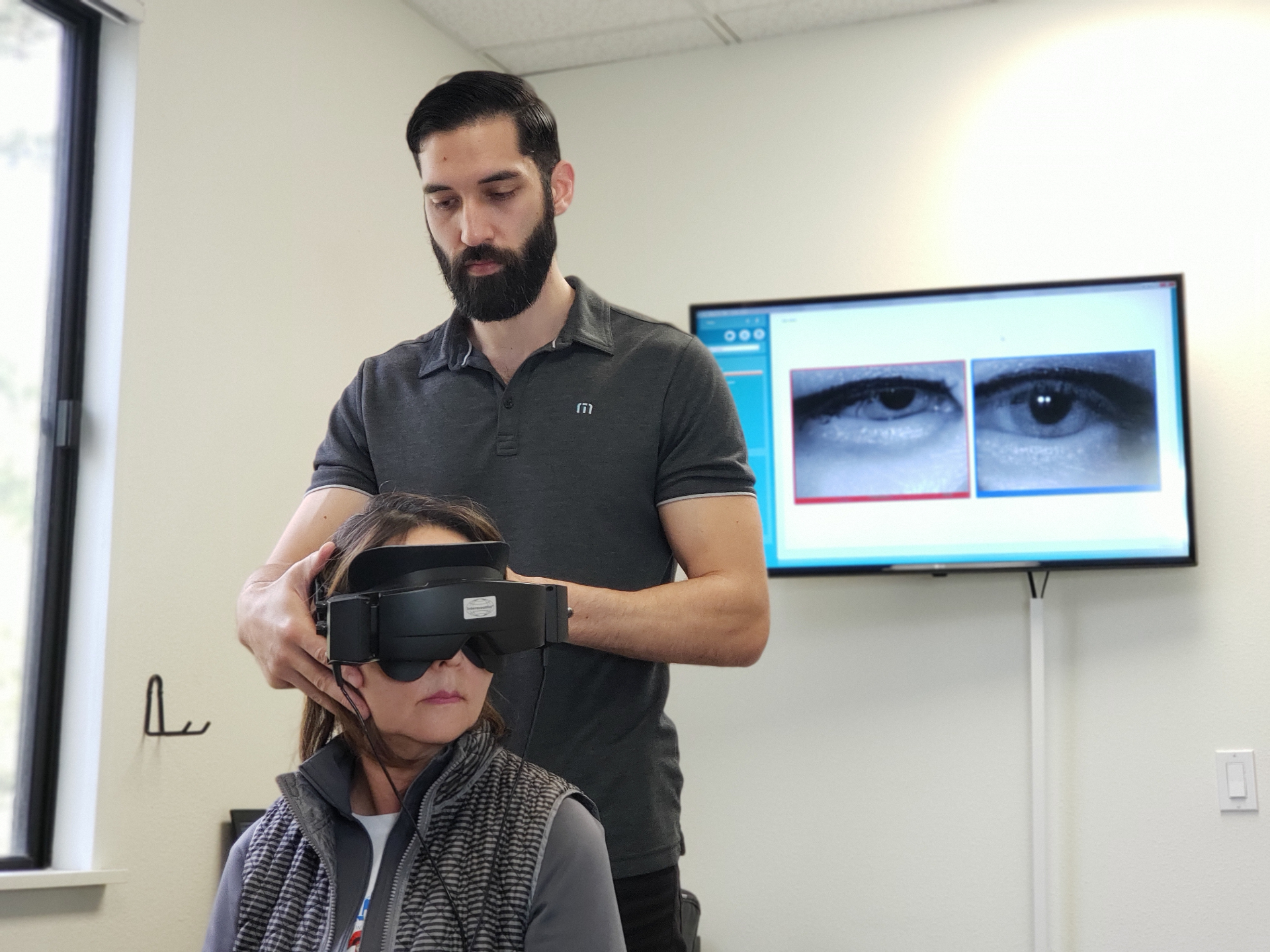
We evaluate all three balance systems (vestibular, visual, proprioceptive) plus cerebellar function and autonomic regulation. Testing includes dynamic posturography, gait analysis, vestibular function tests, and oculomotor assessment to identify every contributing factor.
Vestibular Rehabilitation
Customized exercises targeting your specific vestibular deficits. Habituation exercises reduce dizziness triggers, adaptation exercises retrain the vestibulo-ocular reflex, and substitution strategies teach your brain to rely on stronger balance systems.
Coordination and Gait Training
Progressive balance challenges on varied surfaces (firm, foam, wobble boards) with eyes open and closed rebuild your brain's ability to maintain stability in real-world conditions. Gait training improves walking confidence and reduces fall risk.
Visual-Vestibular Integration Therapy
Neuro-visual rehabilitation exercises retrain how your eyes and vestibular system work together. Optokinetic stimulation, smooth pursuit training, and gaze stabilization exercises resolve the visual-vestibular mismatch that causes instability in complex environments.
Fall Prevention and Functional Independence
We progressively challenge your balance system with activities that mirror your daily life: walking outdoors, navigating stairs, turning your head while walking, and managing uneven terrain. The goal is full functional independence with lasting confidence.
Why Choose Us for Balance Rehabilitation?
One of San Diego's most comprehensive balance and fall prevention programs.
Measurable Progress
Objective balance testing tracks improvement
Functional Neurology Trained
Specialized in brain-based balance care
All Three Systems
Vestibular, visual, and proprioceptive
Fall Prevention Focus
Reducing fall risk is our priority
Drug-Free Approach
Natural balance restoration
At 72, I had fallen three times in six months. I was terrified to walk alone. After balance rehabilitation here, I feel steadier than I have in years. I can walk my neighborhood, go shopping, and even hike again. It changed my life.
Individual results vary. Testimonials reflect personal experience and are not a guarantee of outcome.
Margaret W.
Balance Patient, San Diego
Frequently Asked Questions
Common questions about vertigo, balance disorders, and fall prevention.
Related Conditions
Vertigo
Spinning vertigo from BPPV, vestibular neuritis, and vestibular migraine.
Learn about VertigoCervicogenic Dizziness
Unsteadiness driven by the upper neck when inner ear testing comes back normal.
Learn about Cervicogenic DizzinessConcussion
Post-concussion balance dysfunction and vestibular impairment.
Learn about ConcussionPOTS
Autonomic dysfunction causing lightheadedness and orthostatic intolerance.
Learn about POTSTreatments That May Help
Vestibular Therapy
Inner ear rehabilitation exercises to restore vestibular function.
View serviceCoordination, Balance & Gait Therapy
Progressive balance training for fall prevention and functional independence.
View serviceNeuro-Visual Rehabilitation
Visual-vestibular integration training to improve stability.
View serviceRegain Your Balance and Confidence
Don't let vertigo and balance problems limit your life. Our team is ready to help you stand steady and move with confidence again. Schedule a free 15-minute phone consultation.
Call (619) 344-0111 to speak with one of our doctors
Related Articles From Our Blog

Which Ear Is Causing Your Vertigo - And Why It Keeps Coming Back
How clinicians identify which ear is triggering BPPV, what the Dix-Hallpike test shows, and why treating the wrong side makes the Epley maneuver fail.
Read article
Vertigo & Head Injuries: An Essential Guide to Maneuvering Dizziness after a Concussion or Traumatic Brain Injury (TBI)
Concussions also known as mild traumatic brain injuries (mTBI) are commonly talked about among the media nowadays with football players and other professional...
Read article
What Kind of Therapy Helps With Dizziness? 4 Options That Work
Dizziness therapy options compared: Epley maneuver, vestibular and balance therapy, neuro-visual rehabilitation, and at-home remedies, plus how to know which one fits your cause.
Read article