Spinal Stenosis & Degenerative Disc Disease Treatment in San Diego
Non-surgical, drug-free care to relieve nerve compression, restore mobility, and get you back to an active life—from San Diego's experienced spine care team.
Quick Answer
Understanding Spinal Stenosis and Degenerative Disc Disease
Spinal stenosis and degenerative disc disease are among the most common causes of chronic stenosis-related and DDD-related back pain, particularly in adults over 50. While they are distinct conditions, they frequently occur together and share many of the same symptoms—making accurate diagnosis and comprehensive treatment essential for lasting relief.
Your spinal canal is a bony tunnel that protects the spinal cord and the nerve roots that branch off from it. At each vertebral level, nerves exit through openings called foramina to travel to different parts of the body. When these spaces narrow—whether from disc bulging, bone spur formation, ligament thickening, or a combination of factors—the result is compression of the spinal cord or nerve roots, producing pain, numbness, weakness, and difficulty with mobility.
The good news is that most people with spinal stenosis and degenerative disc disease respond well to conservative, non-surgical treatment—especially when the approach addresses both the structural compression and the neurological consequences.
How These Conditions Develop
What is Spinal Stenosis?
Spinal stenosis occurs when the spaces within your spine narrow, putting pressure on the nerves that travel through it. This narrowing typically develops gradually over years due to wear-and-tear changes including bone spur formation (osteophytes), thickening of the ligamentum flavum, disc bulging, and facet joint hypertrophy.
Lumbar stenosis affects the lower back and is the most common form, causing leg pain, heaviness, and cramping with walking—a symptom pattern called neurogenic claudication. Patients often find relief by leaning forward on a shopping cart or sitting down.
Cervical stenosis affects the neck and can compress the spinal cord itself, potentially causing balance problems, hand clumsiness, and gait changes in addition to neck and arm pain.
Non-surgical care can effectively relieve the pressure and restore your quality of life.
What is Degenerative Disc Disease?
Despite its name, degenerative disc disease is not truly a disease—it describes the natural process of disc wear over time. Your intervertebral discs are composed of a tough outer ring (annulus fibrosus) surrounding a gel-like center (nucleus pulposus). Beginning as early as your twenties, these discs gradually lose water content, becoming less flexible and providing less cushioning between vertebrae.
As discs dehydrate and shrink, several changes occur: the vertebrae move closer together, increasing pressure on facet joints; the disc may bulge outward, narrowing the spinal canal; bone spurs form as the body attempts to stabilize the segment; and the disc's ability to absorb shock diminishes, accelerating further degeneration.
Key MRI findings that indicate DDD include disc desiccation (loss of signal on T2-weighted images), loss of disc height, annular tears, Modic changes in the vertebral endplates, and osteophyte formation.
With the right approach, we can slow degeneration, reduce pain, and help your discs heal naturally.
How they relate: Spinal stenosis and DDD often occur together in a cascade of degeneration. As discs degenerate, they lose height and bulge outward, narrowing the spinal canal. The body responds by forming bone spurs to stabilize the segment, which further reduces the space available for nerves. Meanwhile, the facet joints enlarge from increased loading, and the surrounding ligaments thicken. Our recovery protocols address all of these contributing factors simultaneously.
Types of Spinal Stenosis: Central vs. Foraminal
Central Stenosis
Central stenosis involves narrowing of the main spinal canal, which houses the spinal cord (in the cervical and thoracic spine) or the cauda equina bundle of nerve roots (in the lumbar spine). This type of narrowing is typically caused by a combination of disc bulging from the front, facet joint hypertrophy and ligament thickening from the back, and bone spur formation.
Characteristic symptoms: Bilateral leg pain and heaviness with walking (neurogenic claudication), progressive difficulty with balance, and relief with sitting or forward bending.
Foraminal Stenosis
Foraminal stenosis occurs when the neural foramina—the openings through which individual nerve roots exit the spinal canal—become narrowed. This is often caused by disc height loss (bringing the vertebrae closer together and compressing the foramen), bone spur formation at the margins of the foramen, or lateral disc bulging.
Characteristic symptoms: Pain that follows a specific nerve pathway (radiculopathy), such as stenosis-related leg pain from a compressed lumbar nerve root. Symptoms are often one-sided and may include numbness, tingling, or weakness in the distribution of the affected nerve root.
Why this matters for treatment: Understanding which type of stenosis you have guides the specific decompression angles and treatment parameters we use. Central stenosis responds well to flexion-distraction and axial decompression, while foraminal stenosis often requires lateral flexion positioning to maximally open the compressed nerve exit. Our computerized decompression table allows precise positioning for each patient's specific stenosis pattern.
Do These Symptoms Sound Familiar?
If you're experiencing any of these, you may be suffering from spinal stenosis or degenerative disc disease.
- Pain in the lower back or neck that worsens with standing or walking
- Numbness, tingling, or weakness in your arms or legs
- Radiating leg pain from stenosis-related nerve root compression
- Stiffness or reduced range of motion in the spine
- Pain that improves when sitting or bending forward
- Difficulty walking long distances without needing to rest
- Chronic, dull aching in the back that comes and goes
What is Neurogenic Claudication?
Neurogenic claudication is the hallmark symptom of lumbar spinal stenosis and one of the most common reasons patients seek our care. Unlike vascular claudication (caused by blood flow problems), neurogenic claudication results from compression of the spinal nerves during standing and walking.
The classic pattern is progressive leg pain, heaviness, weakness, or cramping that develops after walking a certain distance—sometimes just a block or two—and is relieved within minutes of sitting down or bending forward. Many patients describe leaning on a shopping cart for relief, which opens the spinal canal by flexing the lumbar spine.
This pattern occurs because standing and walking cause the lumbar spine to extend slightly, which further narrows an already compromised spinal canal. The compressed nerves become oxygen-deprived, producing the characteristic symptoms. Forward bending opens the canal and restores nerve blood flow, providing relief.
Neurogenic claudication progressively limits walking distance over time if left untreated. Our spinal decompression and rehabilitation program directly addresses the nerve compression, helping patients significantly increase their walking tolerance and return to normal activities.
Non-Surgical Treatment vs. Surgery for Stenosis
Conservative Care (Our Approach)
- No surgical risk, anesthesia, or hospital stay
- No recovery downtime—continue daily activities during treatment
- Addresses multiple contributing factors simultaneously
- Builds long-term spinal stability through rehabilitation
- Effective for mild to moderate stenosis (majority of cases)
- Can always pursue surgery later if conservative care is insufficient
Surgical Options
- Laminectomy: Removes bone to widen the spinal canal
- Foraminotomy: Enlarges the nerve exit openings
- Spinal fusion: Stabilizes the segment but eliminates motion
- Involves surgical risks, anesthesia, and 6-12 week recovery
- Adjacent segment disease may develop after fusion
- Reserved for severe cases or when conservative care fails
Research supports conservative care first: Studies show that patients with lumbar spinal stenosis who undergo structured conservative treatment achieve outcomes comparable to surgery at two to four year follow-up, with the added benefit of avoiding surgical risks and complications. We always recommend exhausting non-surgical options before considering surgery.
Our 5-Part Non-Surgical Recovery System
A comprehensive approach designed to relieve pain, restore function, and prevent recurrence
Comprehensive Consultation & Exam
We start with a thorough evaluation including orthopedic and neurological tests, posture analysis, and review of any imaging to understand your unique condition.
Spinal Decompression
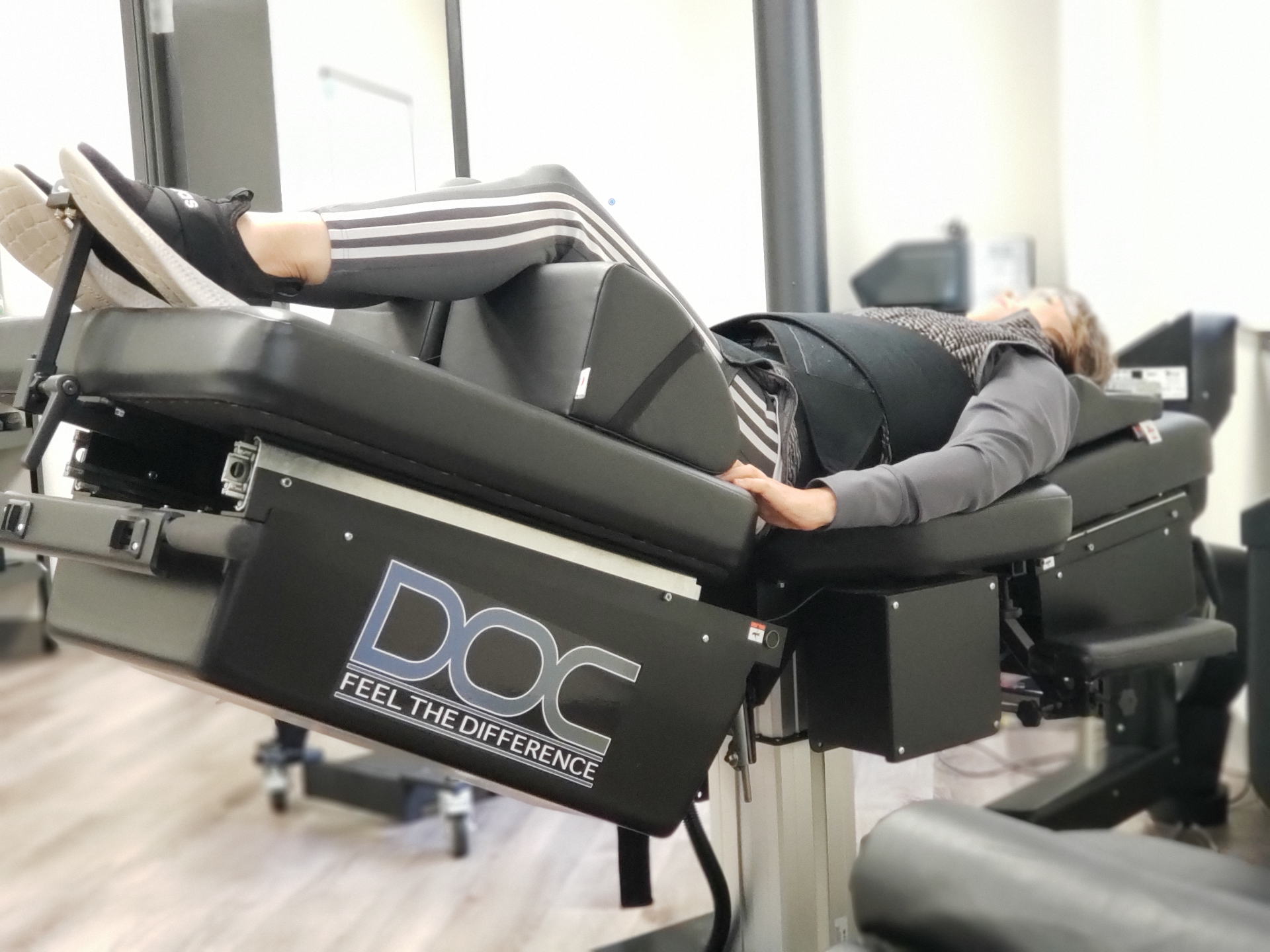
FDA-cleared computerized traction gently creates negative pressure in the disc, relieving nerve compression and promoting disc healing.
Laser Therapy
Cold laser therapy reduces inflammation at the cellular level, accelerates tissue repair, and provides drug-free pain relief.
Chiropractic Adjustments + Soft Tissue Work
Precise adjustments restore proper spinal alignment while soft tissue techniques release muscle tension and improve mobility.
Rehabilitative Exercises + Posture
Customized exercises strengthen supporting muscles and correct postural imbalances to prevent future flare-ups.
Why Choose Us?
San Diego's trusted clinic for non-surgical spine care
30+ Years Experience
Decades of specialized spine care
Functional Neurology Trained
All doctors trained in neurologic rehab
Advanced Technology
Decompression & laser therapy
Real 5-Star Reviews
Hundreds of success stories
Personalized One-on-One Care
Customized recovery plans
I was diagnosed with spinal stenosis and degenerative disc disease. After just a few weeks of care here, my pain decreased dramatically. I can now walk my dog again and enjoy my grandchildren. The team truly cares about optimizing your recovery, not just masking symptoms.
Individual results vary. Testimonials reflect personal experience and are not a guarantee of outcome.
Margaret T.
Spinal Stenosis & DDD Patient
Frequently Asked Questions About Spinal Stenosis & DDD
Expert answers to common questions about spinal stenosis, degenerative disc disease, and treatment options.
Related Conditions
Sciatica
Stenosis and disc degeneration are leading causes of sciatic nerve compression.
Learn about SciaticaHerniated Disc
Disc herniation often occurs alongside degenerative disc disease as discs weaken.
Learn about Herniated DiscBack Pain
Stenosis and DDD are among the most common structural causes of chronic back pain.
Learn about Back PainTreatments That May Help
Non-Surgical Spinal Decompression
Our primary treatment for stenosis and DDD—FDA-cleared traction that relieves nerve compression.
View serviceChiropractic Care
Gentle adjustments to restore joint mobility and reduce facet joint inflammation.
View serviceFascial Mobilization
Soft tissue techniques to release muscle tension and improve spinal flexibility.
View serviceTake the Next Step: Lasting Relief Without Surgery
Don't let spinal stenosis or degenerative disc disease control your life. Our non-surgical approach has helped hundreds of San Diego patients find lasting relief.
More questions? Visit our FAQs page
Related Articles From Our Blog
Understanding Spinal Stenosis Symptoms
Intro Imagine your spine as a delicate, intricate highway for signals that connect your brain to every part of your body. Now, picture this highway slowly...
Read articleWhat Causes Spinal Stenosis?
What Causes Spinal Stenosis? Your spine runs the length from your neck down to your tailbone. It acts as protection for your spinal cord and spinal nerves....
Read articleAre There Hereditary Risks for Spinal Stenosis? The Genetic Connection: Decoding
Introduction Millions of people worldwide are afflicted by the prevalent medical ailment known as spinal stenosis. The spinal canal constriction that...
Read articleWhat a spinal stenosis specialist evaluates
Spinal stenosis specialist San Diego guide to symptoms, evaluation, conservative care, and when to seek urgent medical review.
Read articleTreating spinal stenosis without surgery
Learn when spinal stenosis treatment without surgery in San Diego may help, what conservative care includes, and when to seek specialist evaluation.
Read article