How Vision Therapy (Neuro-Visual Rehabilitation) Works
Vision is far more than 20/20 eyesight. Over 50% of the brain's neural pathways are involved in processing visual information—from controlling the six muscles that move each eye, to interpreting depth, motion, color, and spatial relationships. When these neural pathways are damaged or dysfunctional, the result is visual symptoms that glasses and contacts cannot fix because the problem isn't optical—it's neurological.
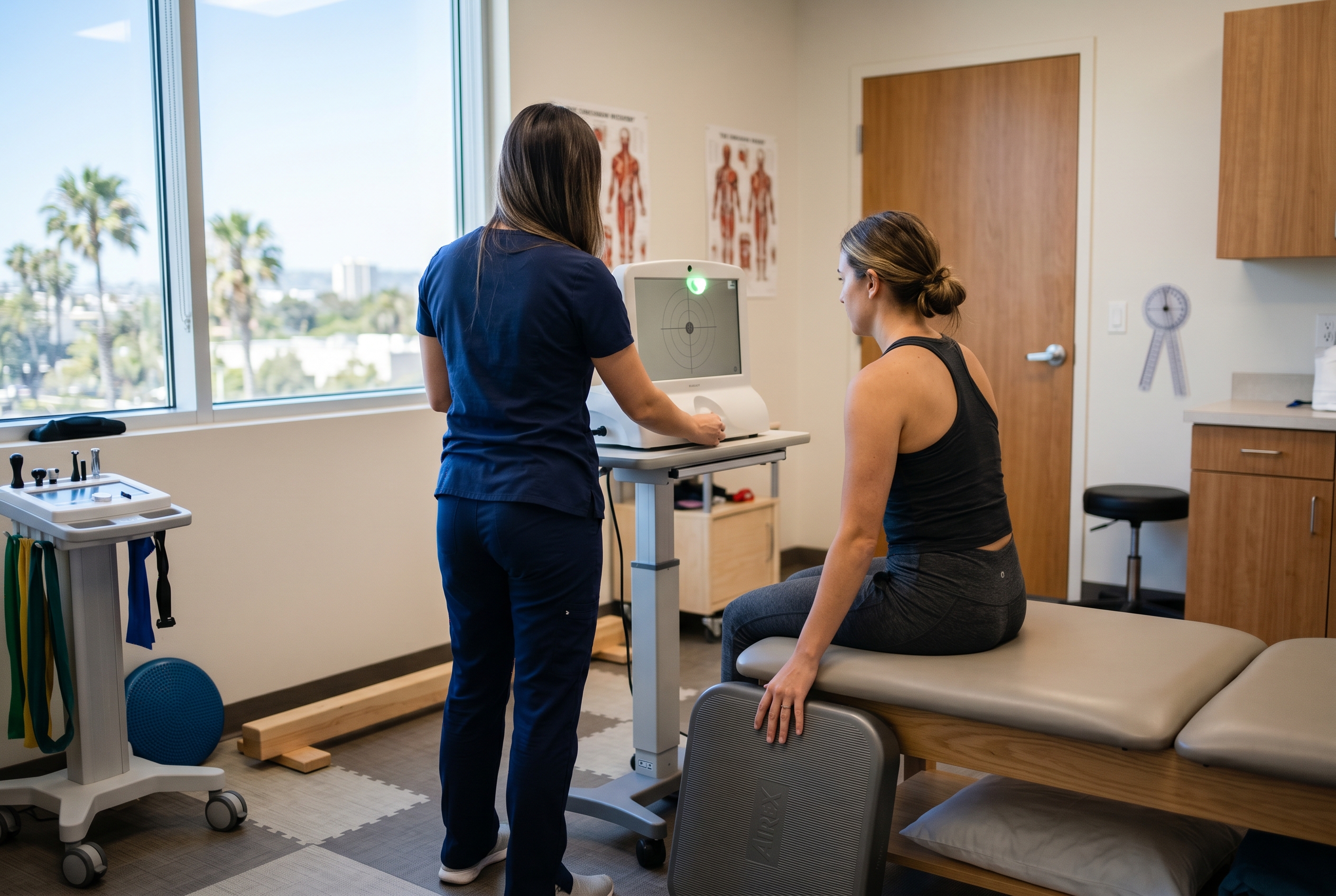
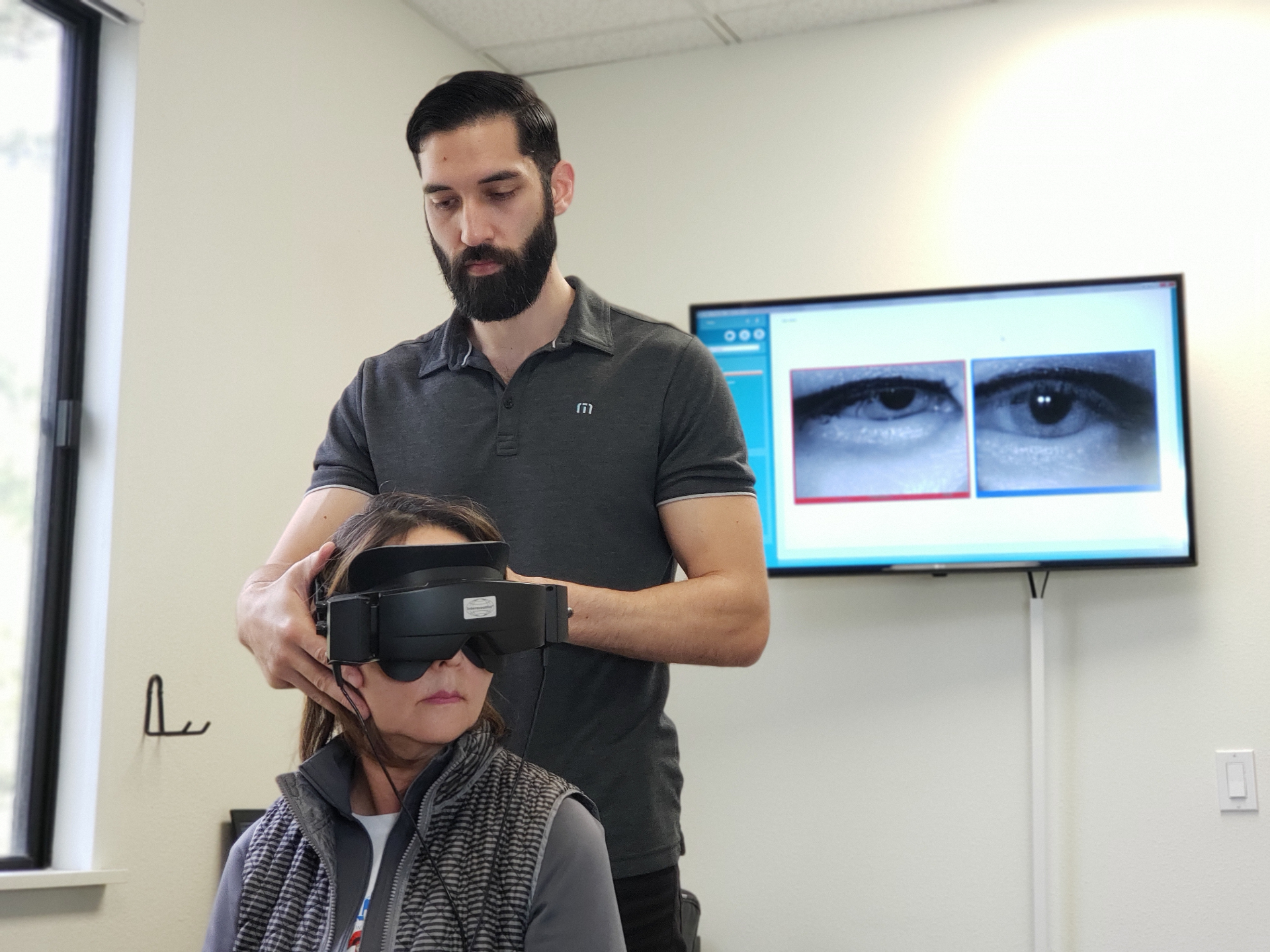
Neuro-visual rehabilitation uses a series of guided eye movement exercises designed to stimulate specific brain regions and rebuild the neural connections that control visual function. Different types of eye movements—saccades (rapid jumps), pursuits (smooth tracking), convergence (turning inward), and accommodation (focus shifting)—activate different brain pathways. By targeting the specific movements that are impaired, we can rehabilitate the exact neural circuits causing your symptoms.
This neuroplasticity-based approach means neuro-visual rehabilitation doesn't just manage symptoms—it creates lasting structural changes in how your brain processes visual information. Over time, patients experience sharper focus, smoother eye movements, reduced headaches and dizziness, and the ability to read, work on screens, and navigate complex environments comfortably again.
At San Diego Chiropractic Neurology, our doctors are trained in functional neurology, giving us unique insight into how the visual system integrates with the vestibular, motor, and cognitive systems—for truly comprehensive vision rehabilitation.
Signs You May Need Neuro-Visual Rehabilitation
These symptoms suggest a neurological visual problem that neuro-visual rehabilitation can address—even if your eye exam was "normal."
- Blurry or double vision (diplopia)
- Difficulty reading or losing your place frequently
- Words appearing to move or swim on the page
- Eye strain or fatigue, especially with screen use
- Headaches centered behind or around the eyes
- Dizziness or nausea triggered by visual input
- Sensitivity to light or busy visual environments
- Poor depth perception or difficulty judging distances
Visual Conditions We Treat
Our neuro-visual rehabilitation program addresses a range of functional vision disorders.
Post-Concussion Vision Problems
Concussions frequently damage the neural pathways that control eye movements. Even when the eyes themselves are healthy, the brain's ability to coordinate them can be disrupted, causing double vision, reading difficulty, light sensitivity, and dizziness. Neuro-visual rehabilitation systematically rebuilds these neural connections.
Convergence Insufficiency
When the eyes struggle to turn inward together for near tasks like reading, the result is eye strain, headaches, double vision, and difficulty concentrating. Neuro-visual rehabilitation strengthens the convergence system, improving comfort and efficiency for all near-point work.
Oculomotor Dysfunction
Problems with eye tracking (pursuits), jumping between targets (saccades), or maintaining fixation cause reading difficulty, skipping lines, and poor attention. Targeted exercises improve the precision and speed of these essential eye movements.
Visual-Vestibular Mismatch
When the visual and vestibular (balance) systems send conflicting signals to the brain, the result is motion sensitivity, dizziness in busy environments, and chronic disorientation. Neuro-visual rehabilitation combined with vestibular rehabilitation resolves the conflict and restores stable spatial perception.
Accommodative Dysfunction
Difficulty shifting focus between near and far distances creates blurry vision, slow focus changes, and visual fatigue. Neuro-visual rehabilitation trains the focusing system to respond quickly and accurately, improving clarity and comfort throughout the day.
Our 5-Step Neuro-Visual Rehabilitation Program
A systematic approach to restoring visual function through targeted neurological rehabilitation.
Comprehensive Neuro-Visual Assessment
Detailed evaluation of all visual skills: eye tracking (saccades and pursuits), convergence, accommodation, peripheral awareness, visual processing speed, and visual-vestibular integration. This goes far beyond a standard eye exam.
Saccadic & Pursuit Training
Exercises that improve the accuracy and speed of eye movements—the ability to jump between targets and smoothly follow moving objects, which are essential for reading, driving, and sports performance.
Convergence & Focus Exercises
Progressive training that strengthens the eyes' ability to work together at near distances and shift focus between distances, reducing strain, double vision, and headaches.
Visual-Vestibular Integration
Combining eye movement exercises with head and body movements to rebuild the critical connection between your visual and balance systems, reducing dizziness and improving spatial orientation.
Functional Application & Home Program
Translating improved visual skills to real-world tasks like reading, screen work, driving, and navigating busy environments, plus a daily home exercise program to reinforce gains.
Home Exercises to Support Your Vision Recovery
Your brain builds new visual pathways through repetition. Performing daily home exercises between sessions is essential for lasting improvement. Here are general exercises that support neuro-visual rehabilitation progress:
Near-far focus shifts. Hold your thumb 6 inches from your nose and focus on it for 5 seconds, then shift focus to a distant target (20+ feet away) for 5 seconds. Repeat 10 times. This trains your accommodative (focus-shifting) system.
Pencil push-ups for convergence. Hold a pencil at arm's length, focus on the tip, and slowly bring it toward your nose while maintaining a single, clear image. Stop when the image doubles, hold for 3 seconds, then push the pencil back out. Repeat 10 times, twice daily.
Smooth pursuit tracking. Hold a target (pen, finger) at arm's length and slowly move it in a large H pattern, following it with only your eyes (keep your head still). Perform for 1 minute, twice daily. This improves smooth eye tracking for reading and driving.
Take visual breaks. Follow the 20-20-20 rule: every 20 minutes of screen or near work, look at something 20 feet away for 20 seconds. This prevents visual fatigue and supports the neural pathways you're rebuilding.
Why Choose San Diego Chiropractic Neurology for Neuro-Visual Rehabilitation?
Neurological Approach
Brain-based, not just eye-based
Advanced Testing
Full neuro-visual assessment
Drug-Free Relief
No medications or surgery
Concussion Care Team
Experts in post-injury vision recovery
Integrated Care
Vision + vestibular + cognitive combined
Neuro-Visual Rehabilitation FAQs
Common questions about neuro-visual rehabilitation and neuro-visual rehabilitation in San Diego.
Related Conditions
Concussion
Up to 90% of concussion patients experience visual dysfunction that responds to neuro-visual rehabilitation.
Learn moreMigraine
Visual processing dysfunction can trigger migraines. Neuro-visual rehabilitation reduces migraine frequency by improving visual efficiency.
Learn moreVertigo
Visual-vestibular mismatch is a common cause of dizziness. Neuro-visual rehabilitation helps resolve the conflict.
Learn moreTreatments That May Help
Vestibular Therapy
The visual and vestibular systems are deeply linked—combining both therapies produces the best balance outcomes.
View serviceCognitive Therapy
Visual processing problems often impair concentration and memory. Cognitive therapy addresses these higher-order challenges.
View serviceCoordination, Balance & Gait Therapy
Stable vision is essential for coordinated movement. These therapies work synergistically for full functional recovery.
View service