How Does Spinal Decompression Work?
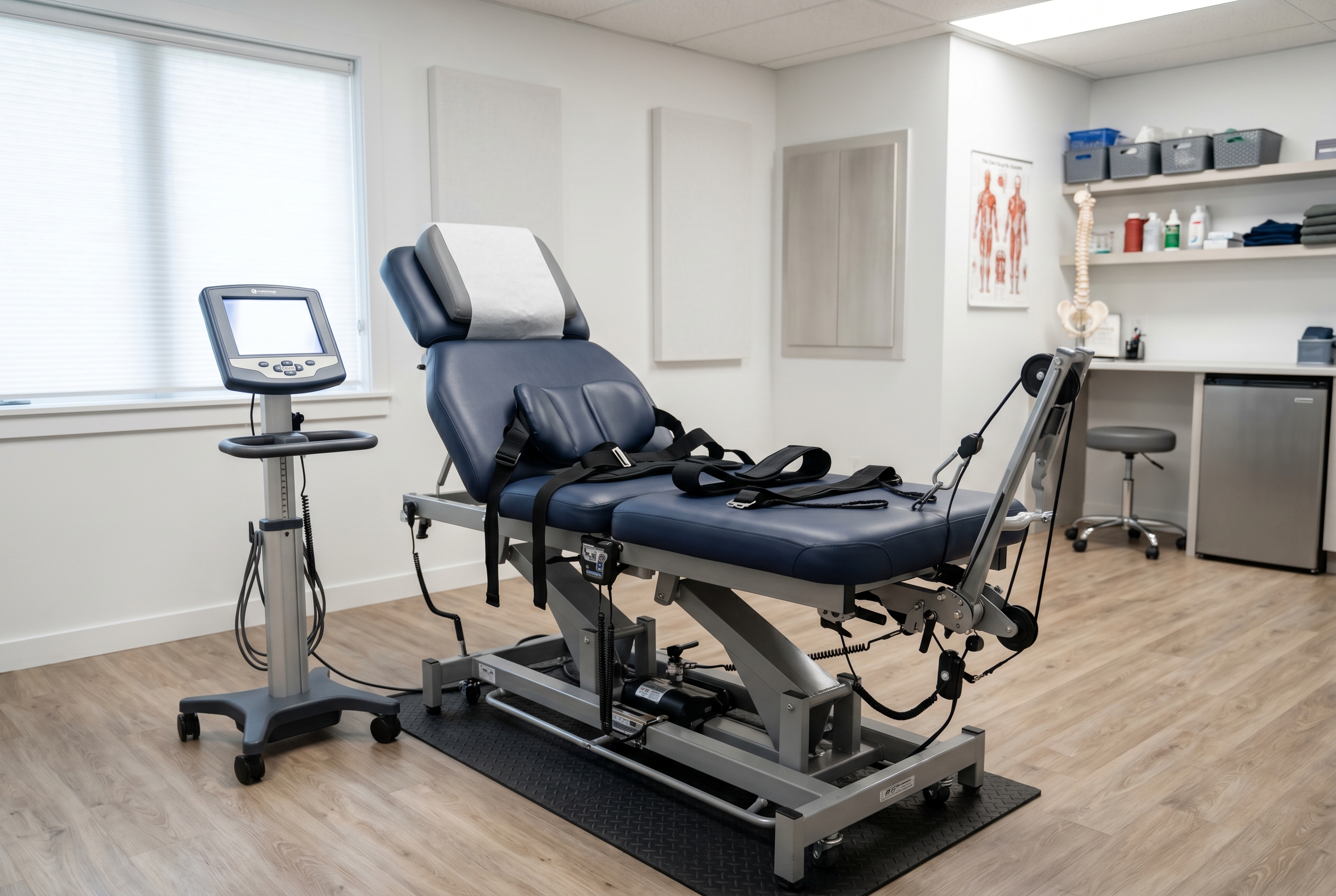
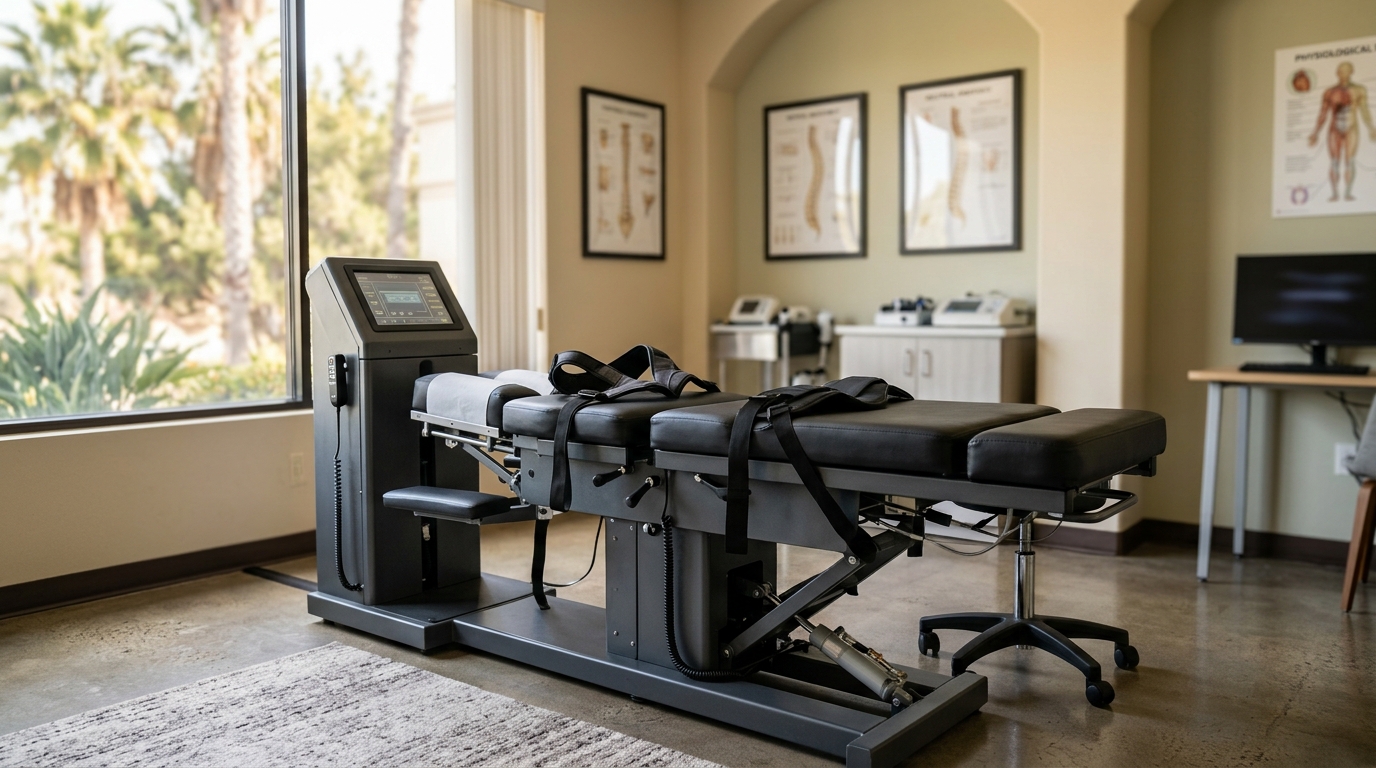
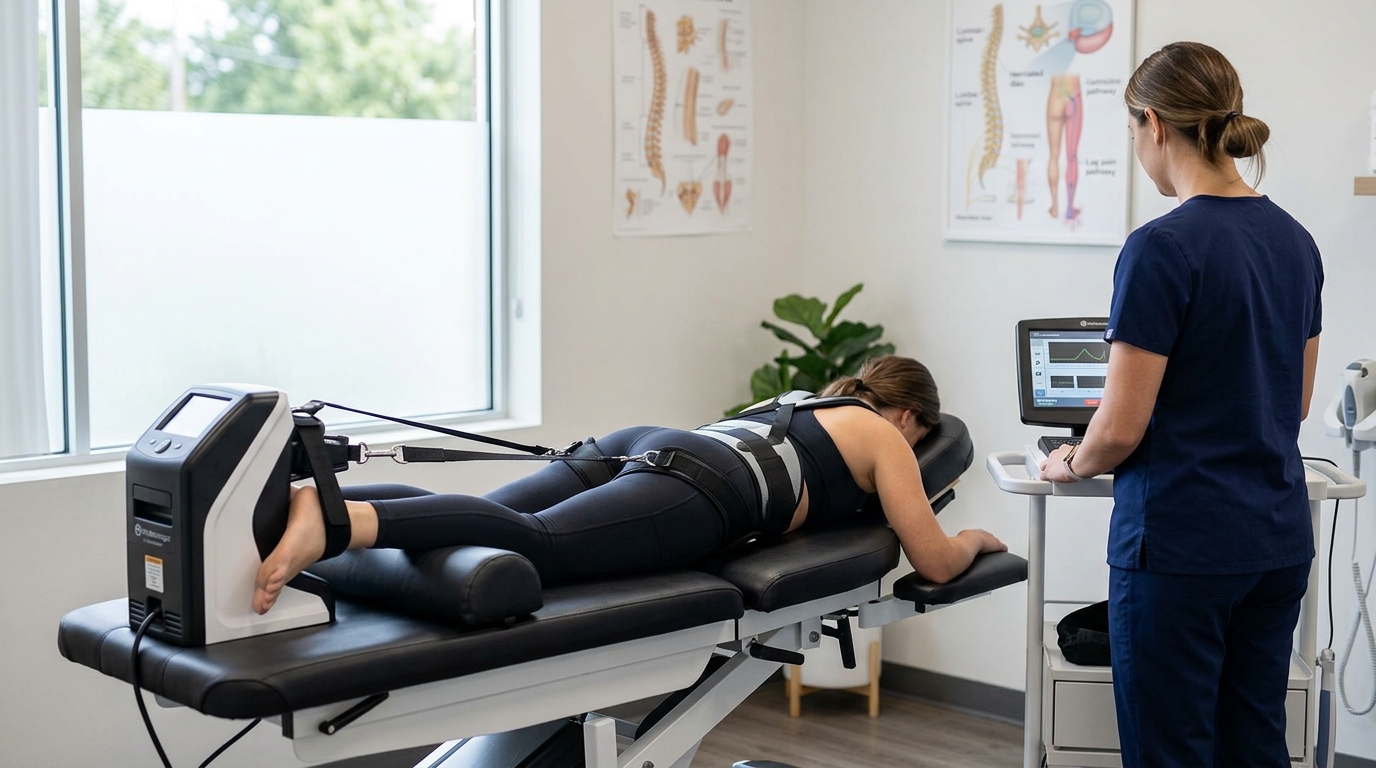
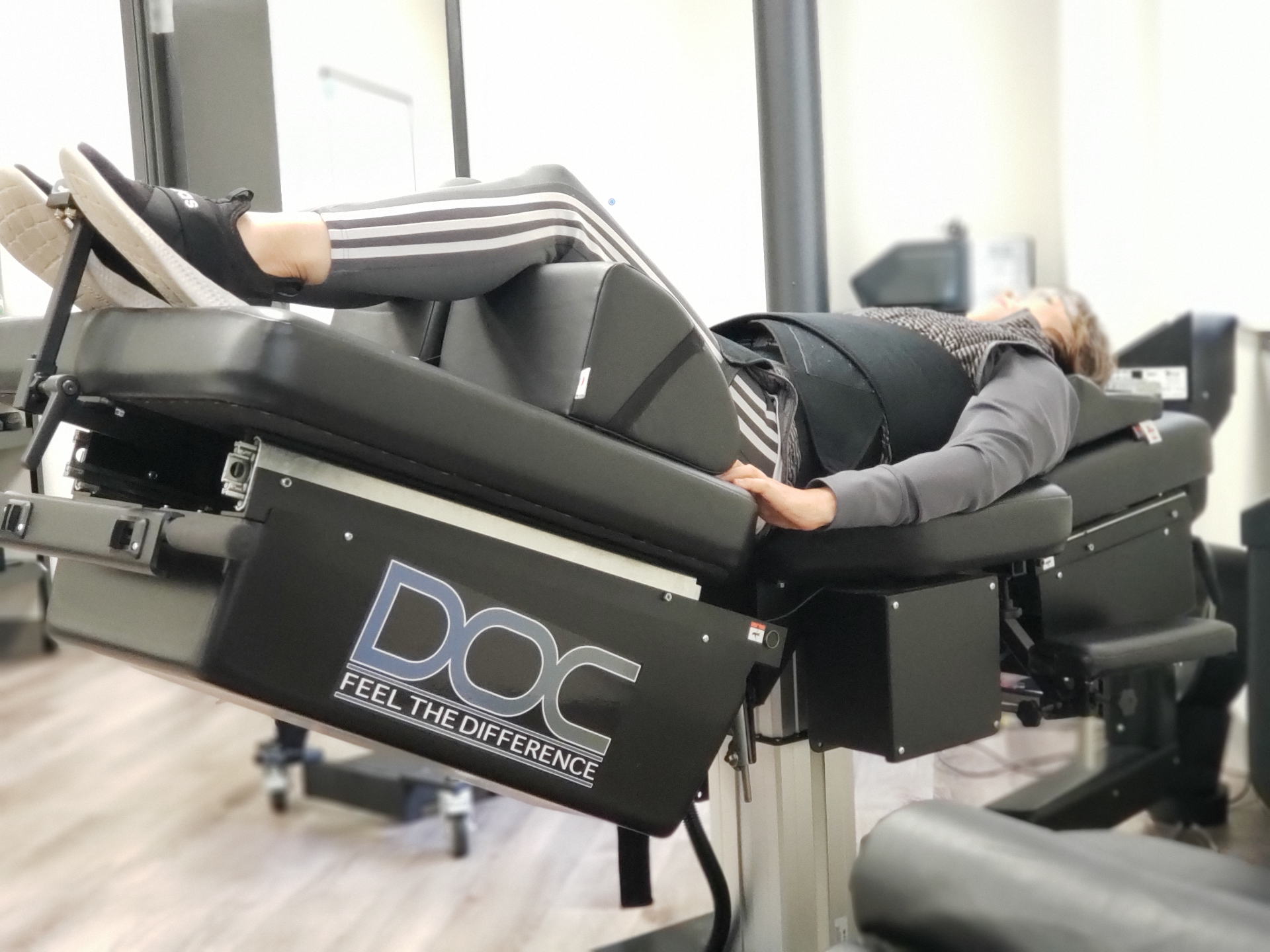
Non-surgical spinal decompression uses a specialized, FDA-cleared motorized table to gently stretch the spine in a precise, controlled manner. Unlike traditional traction, which applies a constant pull, decompression therapy uses a computerized system that cycles between stretching and relaxation phases. This cyclical pattern is key—it prevents your muscles from tensing against the stretch and allows true negative pressure to develop inside the spinal discs.
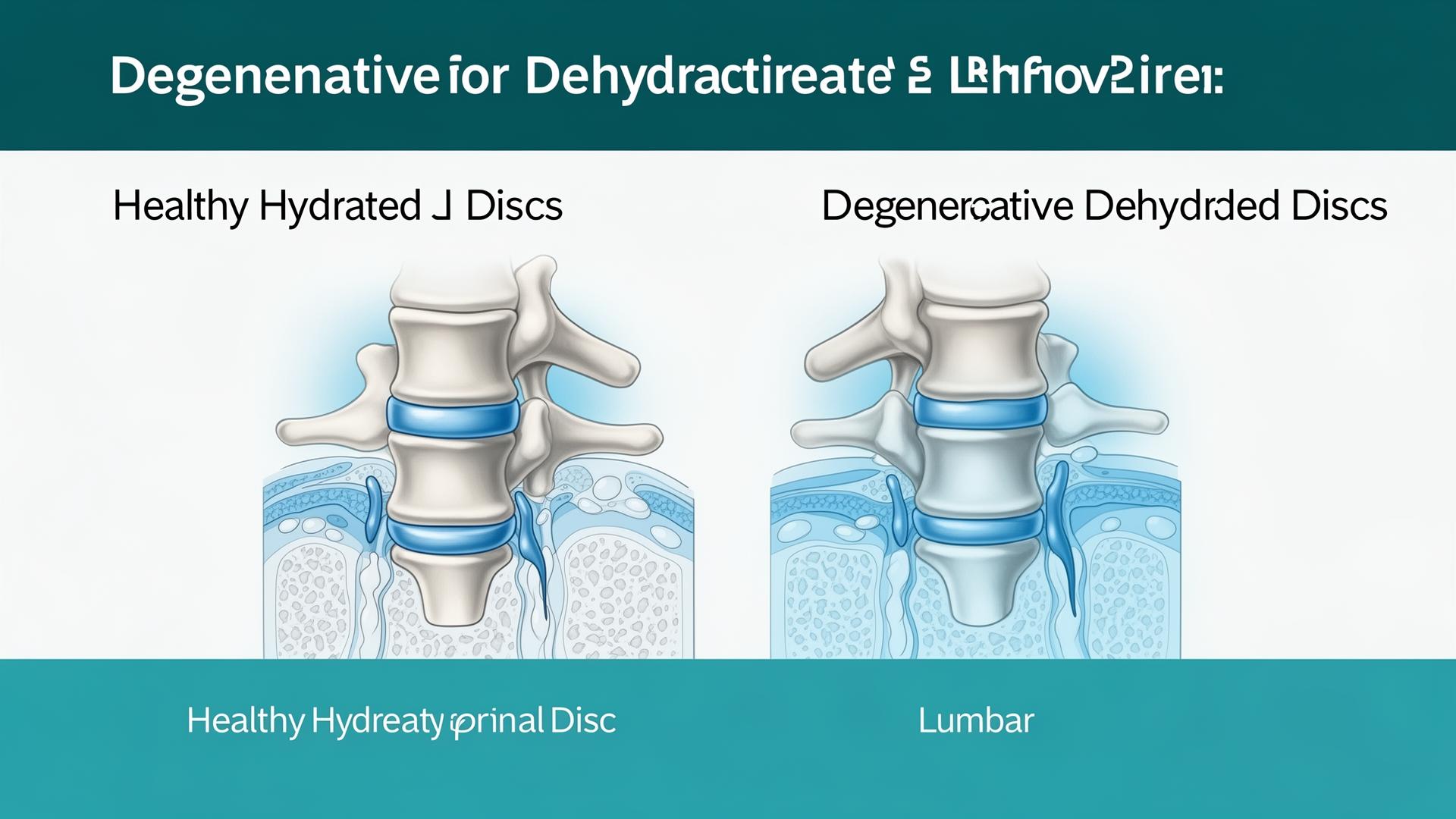
When negative intradiscal pressure is created, several beneficial things happen simultaneously. Bulging or herniated disc material is drawn back toward the center of the disc, away from the compressed nerve. Nutrient-rich fluids are pulled into the disc, rehydrating it and promoting cellular repair. And the pressure on pinched nerves is relieved, reducing pain, numbness, and tingling.
Each session is programmed specifically for your condition. The computerized table adjusts the angle of pull, the amount of force, and the duration of each cycle based on which disc level is affected and the nature of your injury. This precision targeting is what makes modern spinal decompression so much more effective than older traction methods.
At San Diego Chiropractic Neurology, we combine decompression with our chiropractic neurology expertise to ensure every aspect of your spine and nervous system is addressed for comprehensive, lasting relief.
Signs You May Benefit from Spinal Decompression
If you're experiencing any of the following symptoms, spinal decompression may be the right treatment for you.
- Chronic lower back pain that worsens with sitting or bending
- Shooting pain radiating into the buttocks, hips, or legs
- Numbness or tingling in the arms, hands, legs, or feet
- Neck pain that radiates into the shoulders or arms
- Stiffness and reduced range of motion in the spine
- Pain that intensifies after prolonged standing or walking
- Muscle weakness in the extremities
- Pain relief when lying down but returns upon standing
Conditions Treated with Spinal Decompression
Spinal decompression is effective for a wide range of disc-related and nerve compression conditions.
Herniated & Bulging Discs
When disc material pushes outward and compresses spinal nerves, decompression creates negative intradiscal pressure that draws the herniated material back toward the center, relieving nerve compression and reducing inflammation.
Degenerative Disc Disease (DDD)
As discs lose hydration and height over time, the reduced space between vertebrae can irritate nerves. Decompression restores disc height, promotes nutrient flow, and slows degenerative changes by rehydrating disc tissue.
Spinal Stenosis
Narrowing of the spinal canal compresses the spinal cord and nerve roots. Decompression gently opens these spaces, reducing pressure on the nervous system and alleviating pain, numbness, and weakness.
Sciatica
Compression of the sciatic nerve root in the lumbar spine causes radiating leg pain. Decompression targets the specific disc level causing compression, providing relief from shooting pain, tingling, and leg weakness.
Facet Joint Syndrome
Irritated or arthritic facet joints cause localized back pain that worsens with extension. Decompression reduces the load on these joints, allowing inflammation to subside and normal motion to return.
What to Expect During a Session
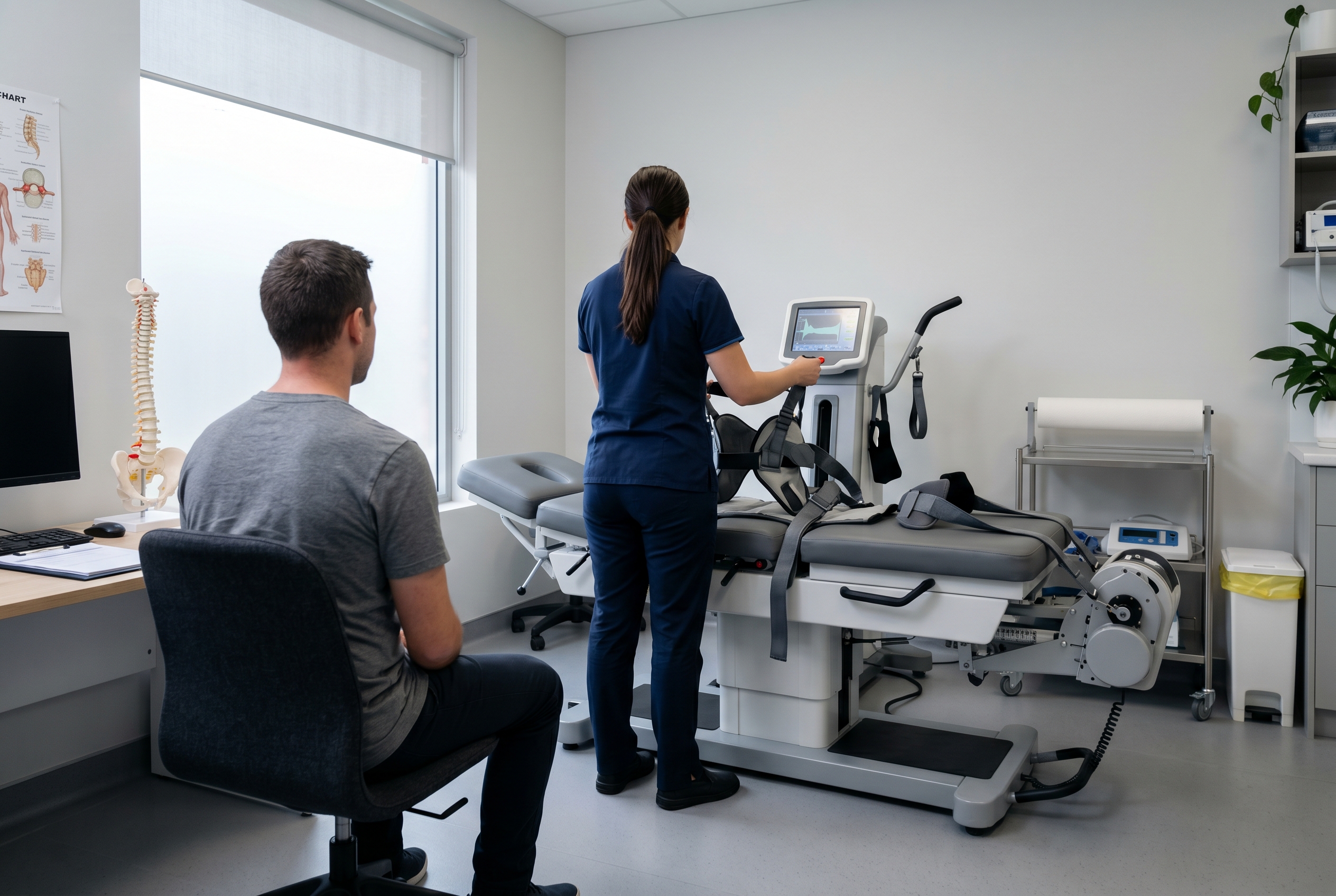
During a spinal decompression session, you'll lie comfortably on a motorized table—face up for lumbar (lower back) treatment or face down for cervical (neck) treatment. A harness is gently fitted around your hips or attached to a head cradle, depending on the area being treated.
The computerized system then begins alternating between periods of gentle distraction (stretching) and relaxation. You'll feel a smooth pulling sensation, but the treatment should never be painful. Many patients find the rhythmic cycling deeply relaxing—it's common for patients to doze off during their sessions.
Each session lasts approximately 30 to 45 minutes. Afterward, adjunctive therapies such as cold laser treatment, electrical muscle stimulation, or ice therapy may be applied to maximize the healing response. Most patients can drive themselves to and from appointments and continue their normal daily activities after each session.
Our 5-Step Spinal Decompression Program
A comprehensive approach that combines decompression with complementary therapies for optimal results.
Comprehensive Spine Evaluation
Thorough examination including orthopedic and neurological testing, posture analysis, and imaging review to pinpoint the exact disc level and nature of your compression.
Customized Decompression Protocol
Using our FDA-cleared computerized table, we program precise distraction forces, angles, and durations tailored to your specific disc injury and spinal segment.
Adjunctive Therapies
Each session is complemented by cold laser therapy to reduce inflammation, electrical muscle stimulation to relax spasms, and cryotherapy to manage pain.
Chiropractic Alignment
Precise spinal adjustments ensure proper vertebral alignment, maximizing the effectiveness of decompression and preventing re-compression of treated discs.
Core Stabilization & Prevention
Progressive strengthening exercises build the deep core muscles that support your spine, creating a natural internal brace to protect healed discs long-term.
Supporting Your Decompression Results at Home
Spinal decompression works best as part of a holistic recovery strategy. Between sessions, there are several things you can do to maximize your results and accelerate healing.
Stay hydrated. Your discs are largely composed of water, and proper hydration is essential for the rehydration process that decompression promotes. Aim for at least 8 glasses of water per day, and increase intake on treatment days.
Walk regularly. Gentle walking promotes circulation to the spine and helps prevent the muscles around your discs from tightening between sessions. Aim for 15 to 20 minutes of flat-surface walking daily.
Avoid heavy lifting. During your treatment course, avoid lifting anything over 10 to 15 pounds. Heavy loads compress the very discs we're working to decompress and can slow your progress.
Use proper ergonomics. Whether at your desk, in your car, or sleeping, maintaining proper spinal alignment throughout the day protects the gains made during each session. We'll provide specific ergonomic recommendations during your treatment.
Why Choose San Diego Chiropractic Neurology for Spinal Decompression?
30+ Years Experience
Decades of specialized spine care in San Diego
FDA-Cleared Technology
Computerized decompression tables
Non-Surgical Approach
Avoid surgery & medication dependency
Proven Results
Thousands of successful outcomes
Integrated Care
Decompression + neurology combined
Spinal Decompression FAQs
Common questions about non-surgical spinal decompression therapy in San Diego.
Related Conditions
Herniated Disc
Spinal decompression is one of the most effective non-surgical treatments for herniated and bulging discs.
Learn about Herniated DiscSciatica
Decompression relieves the disc compression that causes sciatic nerve pain radiating down the leg.
Learn about SciaticaSpinal Stenosis & DDD
Decompression opens narrowed spinal spaces and rehydrates degenerating discs to slow disease progression.
Learn about Spinal Stenosis & DDDTreatments That May Help
Chiropractic Care
Precise spinal adjustments complement decompression by maintaining proper vertebral alignment.
View serviceLow-Level Laser Therapy
Cold laser reduces disc inflammation at the cellular level, enhancing decompression outcomes.
View serviceARP Wave Therapy
Neuromuscular stimulation accelerates healing and strengthens the muscles supporting decompressed discs.
View service