Spine Care in San Diego: Discs, Nerves & Back Pain
Start here to find the right care path for sciatica, herniated and bulging discs, spinal stenosis, and long-standing neck and back pain. Every plan begins with an exam, not a protocol.
Spine Conditions We Treat
Low back and neck symptoms rarely have one cause. Each condition below has its own evaluation, its own timeline, and its own page explaining what care actually involves.
Sciatica
Radiating leg pain, numbness, and tingling caused by irritation of the sciatic nerve in the lower spine.
Learn about SciaticaHerniated & Bulging Discs
Lumbar and cervical disc injuries that press on nerve roots and cause arm or leg symptoms.
Learn about Herniated & Bulging DiscsSpinal Stenosis & Degenerative Disc Disease
Narrowing of the spinal canal and age-related disc changes that limit standing and walking tolerance.
Learn about Spinal Stenosis & Degenerative Disc DiseaseChronic Neck & Back Pain
Persistent neck and low back pain that has not responded to rest, medication, or previous care.
Learn about Chronic Neck & Back PainWhiplash & Neck Injury
Neck strain and cervical joint injury after a collision, fall, or sports impact.
Learn about Whiplash & Neck InjuryHow We Evaluate Spine Problems
A disc, a narrowed canal, an irritated nerve root, and a joint restriction can all produce low back pain, and they respond to different care. Our exam is built to tell them apart before anything is recommended.
- Symptom behavior: what makes it worse standing, sitting, walking, or bending
- Neurological testing of reflexes, strength, and sensation
- Imaging review when a scan already exists, correlated with the exam
- Gait, posture, and balance assessment
- Clear criteria for when medical or surgical referral is the right call
Not sure which page fits your symptoms? Radiating leg pain usually starts at sciatica, arm or leg symptoms after a disc injury at herniated and bulging disc care, and pain that eases when you lean forward at spinal stenosis and degenerative disc disease.
Symptoms That Bring People In:
- Pain that radiates into the leg, buttock, or arm
- Numbness, tingling, or weakness in a hand or foot
- Back pain that worsens with sitting or with standing
- Shorter walking tolerance or needing to lean forward
- Neck pain and headaches after a collision or fall
- Symptoms that returned after surgery or injections
Non-Surgical Treatment Options
Care is matched to the diagnosis. Most spine plans combine two or three of the following.
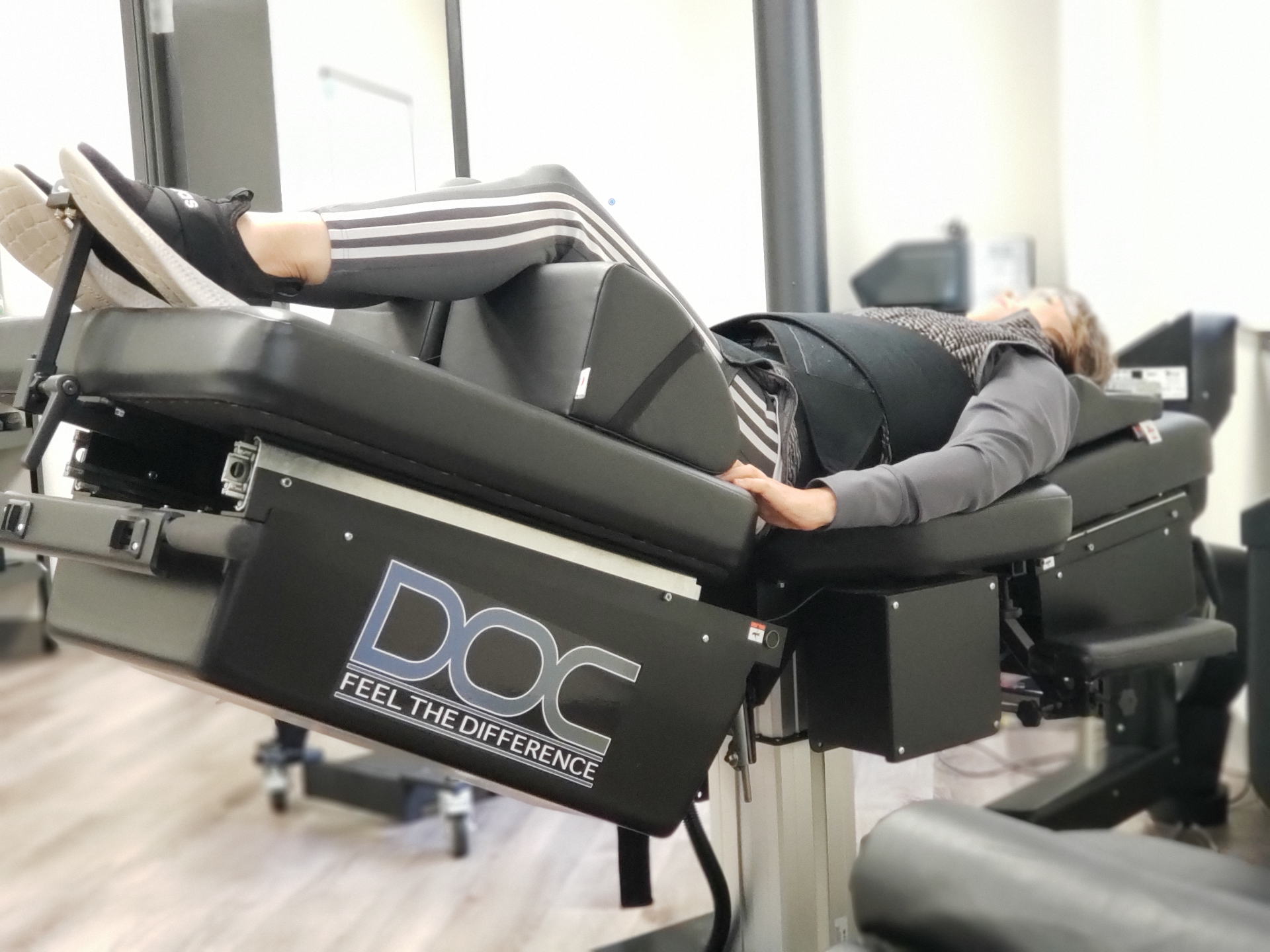
Non-Surgical Spinal Decompression
Computerized decompression for qualifying disc and stenosis cases. See the full service page for candidacy and what a course of care involves.
Chiropractic Care
Joint and segmental care to restore spinal motion and reduce mechanical pain.
Cold Laser Therapy
Low-level laser to calm inflammation and support tissue repair at the injury site.
Fascial Mobilization
Soft-tissue work for the muscles and fascia that guard an irritated spinal segment.
What Spine Care Looks Like Here
Diagnosis first, then a plan matched to the findings, then the work that keeps it from coming back
Exam and Diagnosis
A neurological and orthopedic exam, imaging review, and symptom history to identify which structure is driving the pain.
Condition-Matched Treatment
Decompression, chiropractic care, laser, or soft-tissue work, chosen for the diagnosis rather than applied to everyone.
Spinal Stabilization
Targeted exercises strengthen the muscles that support your spine for long-term relief.
Success Stories From Our Spine Patients
Harrison K.
After herniating my L4-L5 and L5-S1 discs, I couldn't walk, stand, or sleep. I literally crawled into my first appointment. My progress has been nothing short of incredible, and I'm finally getting my life back.
Joe W.
I completed a 24-session spinal decompression program for a documented herniated disc. I now experience little to no daily pain. With decompression and rehabilitation exercises, I completed a 16-mile hike at Haleakalā in Maui without issues.
Jaime O.
I suffered from a severe herniated disc that completely changed my life. I tried everything: massage, acupuncture, chiropractic, with little improvement. Surgery felt like my only option. Today, I'm back to enjoying the things I love without pain and avoided surgery altogether.
Patricia Y.
My MRI showed a 9.2mm disc bulge at C6-7 pressing into my spinal cord. I had lost much of the function on my left side. Less than three months later, my follow-up MRI shows the disc has reabsorbed. The pressure on my spinal cord is gone.
Disclaimer: Individual results vary. Testimonials and patient stories reflect personal experience and are not a guarantee, promise, or prediction of outcome. Results depend on each patient's condition, adherence to care, and other factors.
Frequently Asked Questions About Spine Care
Common questions about disc injuries, sciatica, stenosis, and non-surgical spine treatment.
Book Your Spine Consultation
Find out what is actually driving your back, neck, or leg symptoms. The evaluation includes a comprehensive exam and clear treatment recommendations.
Have more questions? Read our FAQs