Call Now
    Autonomic Dysfunction Care

    POTS Care in San Diego

    Regain control of dizziness and fatigue. Integrative neurological rehabilitation to steady your heart rate, end lightheaded episodes, and improve daily life without invasive procedures.

    What is POTS?

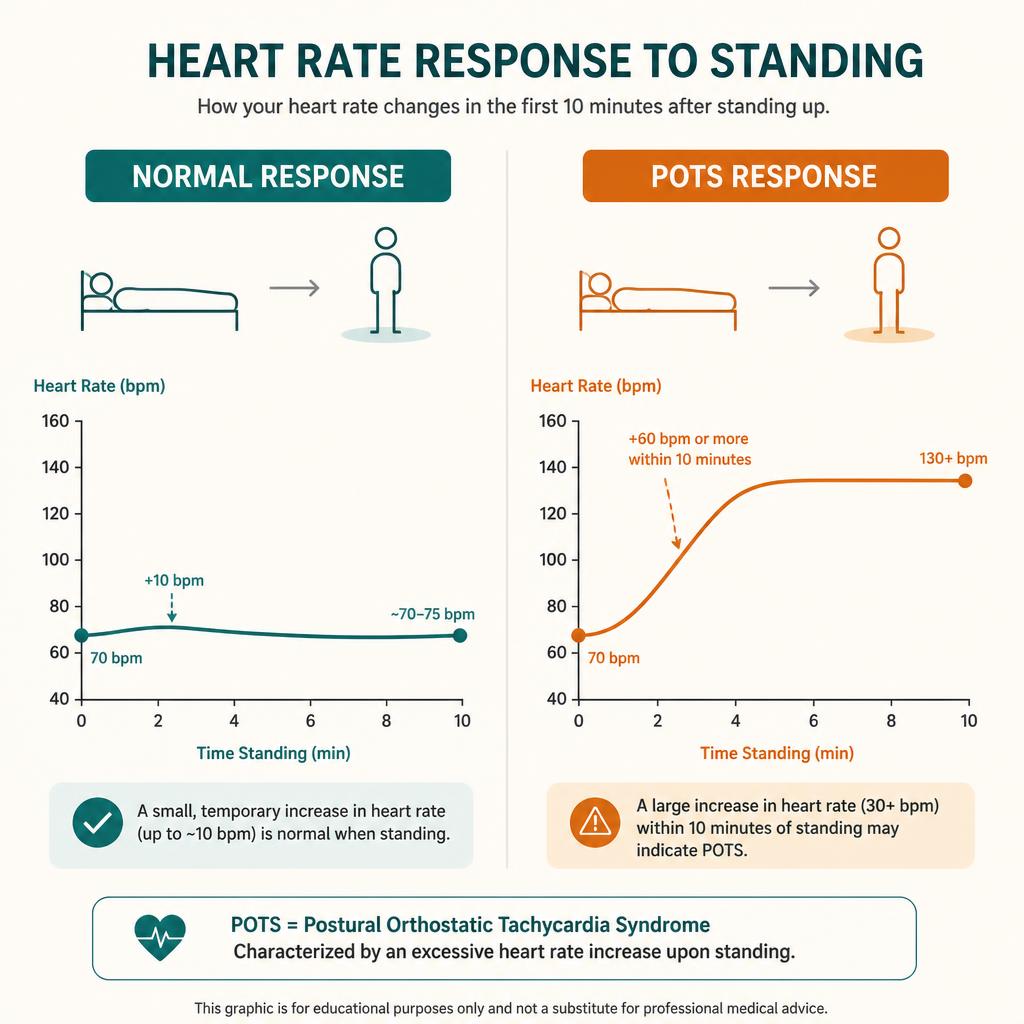
    POTS (Postural Orthostatic Tachycardia Syndrome) is a form of dysautonomia, a disorder of the autonomic nervous system. If you have POTS, you might feel dizzy or even faint when you stand up, experience a racing heartbeat, fatigue, brain fog, and other symptoms when changing position.

    POTS affects an estimated 1-3 million Americans, predominantly women between the ages of 15 and 50. Despite its prevalence, the average POTS patient sees 7 doctors over 4 years before receiving a correct diagnosis. Many are told their symptoms are "just anxiety" or are dismissed entirely. This diagnostic delay is frustrating and harmful—but it also means that many patients have never received targeted autonomic rehabilitation.

    At our San Diego clinic, we offer innovative, non-drug approaches that can make a real difference in POTS symptoms. We take your symptoms seriously, and we have the specialized training to help.

    Common POTS Symptoms

    If you're experiencing any of these, our integrative approach may help.

    • Dizziness or lightheadedness when standing up
    • Racing heartbeat (tachycardia) upon standing
    • Fatigue that doesn't improve with rest
    • Brain fog and difficulty concentrating
    • Nausea or digestive issues
    • Exercise intolerance
    • Fainting or near-fainting episodes
    • Anxiety or feeling of impending doom

    Understanding Your Autonomic Nervous System

    Why POTS happens and what's going wrong in your body

    The Autonomic Balancing Act

    Your autonomic nervous system (ANS) operates like a seesaw between two branches: the sympathetic ("fight or flight") and parasympathetic ("rest and digest") systems. In a healthy person, when you stand up, the sympathetic system quickly constricts blood vessels in your legs and abdomen to push blood back up to your brain, while slightly increasing heart rate—a seamless adjustment you never notice.

    In POTS, this automatic adjustment fails. Blood pools in the lower body, and the brain detects reduced blood flow. The sympathetic system overcompensates by dramatically increasing heart rate—sometimes to 120-160+ bpm—to try to maintain circulation. This excessive heart rate, combined with inadequate blood flow to the brain, produces the dizziness, brain fog, palpitations, and fatigue that define POTS.

    The Three Types of POTS

    Neuropathic POTS

    The most common type. Small nerve fiber damage impairs blood vessel constriction in the legs and abdomen.

    Key features: Blood pooling in legs, purplish discoloration of feet/legs upon standing, reduced sweating in feet.

    Hyperadrenergic POTS

    Excessive norepinephrine release causes an amplified sympathetic response upon standing.

    Key features: Significant blood pressure increase with standing, tremor, anxiety, pale appearance, sometimes elevated BP.

    Hypovolemic POTS

    Abnormally low blood volume means insufficient circulation when upright.

    Key features: Low blood pressure tendency, significant benefit from fluid/salt loading, often worsened by dehydration or heat.

    The Vagus Nerve Connection

    The vagus nerve is the longest cranial nerve in your body and serves as the primary highway of the parasympathetic nervous system. It connects your brainstem to your heart, lungs, and digestive organs. In many POTS patients, vagal tone—the baseline activity level of this nerve—is significantly reduced.

    Low vagal tone means your parasympathetic "brake" is weak, allowing the sympathetic "accelerator" to dominate. This creates a state of chronic sympathetic overdrive: elevated resting heart rate, poor heart rate variability, impaired digestion, anxiety, and difficulty recovering from physical or emotional stress.

    Our functional neurology approach specifically targets vagal tone improvement through vagus nerve stimulation, specific breathing techniques, and neurological rehabilitation exercises. By strengthening the parasympathetic brake, we help restore the autonomic balance that POTS disrupts.

    How We Evaluate Your POTS

    A comprehensive autonomic and neurological assessment

    1

    Orthostatic Vital Signs & Active Standing Test

    We measure your heart rate and blood pressure lying, sitting, and standing at 1, 3, 5, and 10 minute intervals. This confirms the POTS diagnosis and quantifies the severity of your orthostatic intolerance—providing a baseline to measure your improvement against.

    2

    Heart Rate Variability (HRV) Assessment

    HRV measures the variation in time between heartbeats and reflects the balance between your sympathetic and parasympathetic nervous systems. Low HRV indicates poor vagal tone and autonomic inflexibility. We use HRV as both a diagnostic tool and a progress marker throughout your rehabilitation.

    3

    Autonomic Reflex Testing

    Deep breathing ratio, Valsalva maneuver response, and sustained handgrip tests evaluate specific autonomic pathways. These tests tell us whether your sympathetic system is overactive, your parasympathetic system is underactive, or both—critical information for designing your treatment protocol.

    4

    Neurological & Vestibular Examination

    Because POTS often coexists with vestibular dysfunction, visual processing problems, and cervical spine issues, we perform a complete neurological evaluation including cranial nerve testing, oculomotor assessment, vestibular screening, and cervical spine examination.

    5

    Comorbidity Screening

    We screen for commonly associated conditions including Ehlers-Danlos Syndrome (joint hypermobility), mast cell activation syndrome, autoimmune markers, and thyroid dysfunction. Understanding the full clinical picture allows us to address all contributing factors and coordinate with your other healthcare providers.

    Our Integrative Approach to POTS

    Because POTS is complex, we address it from multiple angles. Our Neurology Center focuses on retraining and balancing your autonomic nervous system, while ensuring your spine and nerves are functioning optimally.

    Autonomic Conditioning Therapy

    Gentle neural exercises to improve how your body regulates blood pressure and heart rate. Think of it as physical therapy for your autonomic nerves.

    Vagus Nerve Stimulation

    Safe, non-invasive techniques to stimulate the vagus nerve, helping calm an overactive 'fight or flight' response.

    Vestibular & Balance Rehab

    Vestibular rehabilitation to help your body handle position changes better and reduce lightheadedness.

    Chiropractic Adjustments

    Focused on the upper neck and spine to ensure no compression on nerves and to improve blood flow and nervous system function.

    Lifestyle Guidance

    Advice on fluid and salt intake, compression garments, and safe exercise as part of a holistic plan.

    This comprehensive approach is designed to reduce your POTS symptoms and improve your quality of life. We aim for measurable improvements: fewer dizzy spells, better tolerance for standing, more energy, and a return to daily activities.

    Self-Management Strategies for POTS

    Evidence-based techniques to manage symptoms between clinic visits.

    Counter-Maneuvers for Immediate Relief

    Physical counter-maneuvers can quickly reduce blood pooling and improve blood return to the brain when you feel symptoms coming on.

    1. Calf pumping: Rise up on your toes repeatedly while standing—the calf muscles squeeze blood back toward your heart
    2. Leg crossing & tensing: Cross your legs at the ankles while standing and tense your thigh and buttock muscles for 30 seconds
    3. Squatting: If you feel lightheaded, squatting immediately increases blood return to the heart
    4. Abdominal compression: Tighten your abdominal muscles while standing—this prevents blood pooling in the splanchnic (gut) circulation
    5. Practice these maneuvers regularly so they become automatic when symptoms begin

    Vagal Breathing Technique

    Extended exhale breathing activates the vagus nerve and shifts autonomic balance toward parasympathetic dominance—directly counteracting the sympathetic overdrive of POTS.

    1. Sit or lie comfortably with one hand on your belly
    2. Inhale slowly through your nose for 4 seconds, expanding your belly
    3. Hold gently for 2 seconds
    4. Exhale slowly through pursed lips for 6-8 seconds—the long exhale is the key to vagal activation
    5. Practice for 5 minutes twice daily; also use before standing up from seated or lying positions

    Recumbent Exercise Protocol

    Based on the modified Dallas/Levine protocol, this is the gold standard exercise approach for POTS patients.

    1. Start with recumbent exercises only: recumbent bike, rowing machine, or swimming
    2. Begin with 15-20 minutes at a comfortable pace (you can talk during exercise)
    3. Exercise 3-4 times per week, increasing duration by 5 minutes every 1-2 weeks
    4. After 4-6 weeks of consistent recumbent exercise, gradually add semi-upright activities
    5. Add lower body strength training 2x per week—strong legs help pump blood back to your brain

    Important: POTS exercise should always start recumbent and progress gradually. Pushing too hard too fast can worsen symptoms. Your in-clinic program will be precisely calibrated to your current tolerance and progressed systematically.

    Why Choose Our Neurology Clinic for POTS?

    Functional Neurology Trained

    All doctors trained in neurologic rehab

    Collaborative Care

    Works with your other providers

    Compassionate Support

    We listen and believe you

    Proven Track Record

    Measurable improvements

    High-Trust Environment

    Never dismissive

    "
    I felt hopeless, but now I can do so much more without getting dizzy. This team understood POTS like no one else and helped me feel human again!

    Rowena V.

    POTS Patient, San Diego

    Frequently Asked Questions

    Common questions about POTS, dysautonomia, and autonomic nervous system rehabilitation.

    Take the First Step

    Living with POTS can feel overwhelming, but you're not alone and there is hope. Imagine standing up without fear of fainting, having energy to do the things you love, and feeling in control of your body again.

    Schedule a consultation with our POTS specialists today. It's a free 15-minute call to answer your questions and explain our approach. Or call (619) 344-0111

    More questions? Visit our FAQs page