Understanding Your Disc Injury
Your spinal discs are cushion-like structures that sit between each vertebra, acting as shock absorbers and allowing your spine to flex, bend, and twist. Each disc has two parts: a tough outer ring called the annulus fibrosus and a soft, gel-like center called the nucleus pulposus.
When the outer ring weakens or tears—due to age, injury, or repetitive stress—the inner material can push outward and compress nearby spinal nerves. This compression triggers inflammation, pain, and neurological symptoms that can be debilitating. The severity of symptoms depends on how much material has escaped and which nerves are affected.
The good news: discs have the ability to heal. With the right treatment, herniated disc material can retract, inflammation resolves, and nerve function is restored—often without surgery.
Types of Disc Injuries: Bulge vs. Herniation vs. Sequestration
Not all disc injuries are the same. Understanding the type and severity of your disc injury helps determine the most effective treatment approach.
Disc Bulge (Protrusion)
The disc's outer wall (annulus) weakens and the disc bulges outward, but the outer layer remains intact. This is the mildest form and most responsive to conservative treatment. The bulge may press on nearby nerves, causing localized or radiating pain.
Disc Herniation (Extrusion)
The inner gel-like material (nucleus pulposus) pushes through a tear in the outer wall and extends beyond the disc space. This creates more significant nerve compression and typically causes stronger radiating symptoms like sciatica or arm pain.
Disc Sequestration
A fragment of disc material breaks free from the main disc and migrates into the spinal canal. This is the most severe type and may require surgical intervention if conservative treatment doesn't provide relief, though many sequestrations are reabsorbed by the body over time.
Herniated Disc Symptoms
Symptoms depend on the location and severity of the herniation. Lumbar herniations cause leg symptoms; cervical herniations cause arm symptoms.
- Severe back pain with stiffness that limits movement
- Pain that radiates into the arms (cervical) or legs (lumbar)
- Numbness, tingling, or weakness in extremities
- Pain that worsens with bending, lifting, or twisting
- Muscle spasms near the affected disc
- Difficulty sitting or standing for extended periods
- Sciatica symptoms if the lower back is affected
- Pain that increases when coughing or sneezing
Which Discs Are Most Commonly Herniated?
The lower lumbar spine bears the most weight and is subject to the greatest mechanical stress during daily activities, making it the most vulnerable region for disc herniations.
Lumbar Herniations (Lower Back)
- L4-L5: Most common. Causes pain and numbness in the top of the foot and big toe. May cause foot drop (difficulty lifting the front of the foot).
- L5-S1: Second most common. Causes sciatica with pain down the back of the leg to the outer foot. May weaken the ankle push-off reflex.
- L3-L4: Less common. Causes pain in the front of the thigh and may weaken the knee extension (straightening the leg).
Cervical Herniations (Neck)
- C5-C6: Most common cervical herniation. Causes pain and numbness in the bicep area and thumb side of the hand.
- C6-C7: Causes pain radiating down the arm to the middle finger. May weaken the triceps and grip strength.
- C4-C5: Causes shoulder pain and weakness in the deltoid muscle.
The specific nerve root being compressed determines the exact pattern of your symptoms. Our neurological examination maps these patterns to identify the precise disc level involved, often before imaging is even reviewed.
Our Non-Surgical Disc Recovery Approach
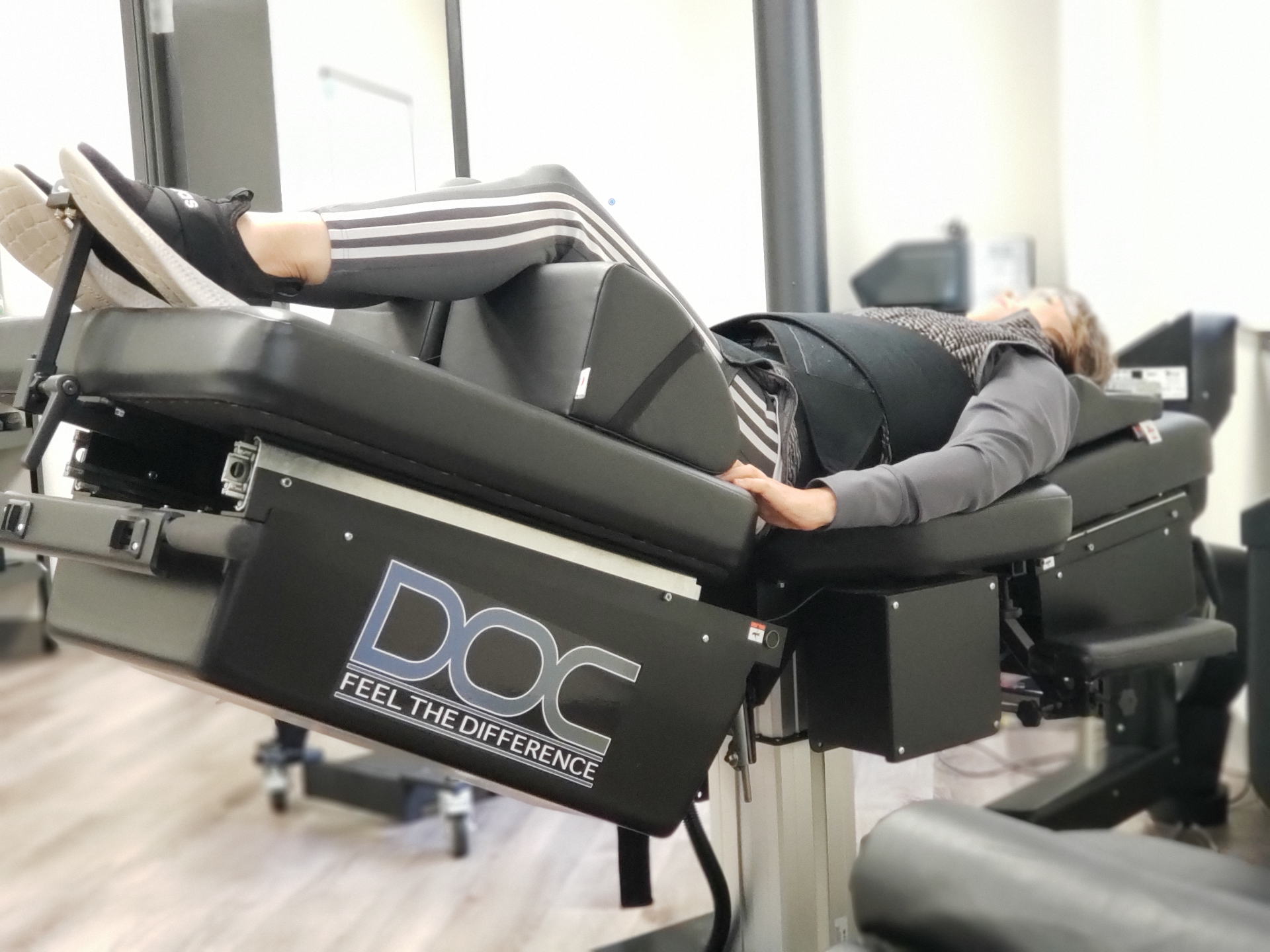
At San Diego Chiropractic Neurology, we focus on disc injury rehabilitation with non-invasive, drug-free care. Our approach combines spinal decompression therapy using FDA-cleared technology with gentle chiropractic adjustments to restore proper alignment and reduce mechanical stress on the injured disc.
Additionally, our functional neurology rehabilitation addresses any nerve irritation, muscle weakness, or sensory changes caused by the disc compression. We use cold laser therapy to accelerate cellular healing and targeted core exercises to build the muscular support system that protects your discs long-term.
This comprehensive approach promotes natural disc healing from the inside out, helping you avoid spinal injections, medications, and surgery.
Understanding Your MRI Results
An MRI is a valuable diagnostic tool that shows the structural condition of your discs. However, it's important to understand that MRI findings don't always correlate with symptoms. Research has shown that up to 60% of people with no back pain have disc abnormalities visible on MRI—meaning many disc bulges and even small herniations cause no symptoms at all.
This is why our approach goes beyond just looking at images. We perform a thorough clinical examination—testing reflexes, sensation, muscle strength, and specific orthopedic maneuvers—to determine whether the disc abnormality seen on MRI is actually responsible for your symptoms. This clinical correlation ensures we're treating the right problem.
Common MRI terminology you might see on your report includes "disc dessication" (loss of disc water content), "annular tear" (a tear in the outer disc wall), "disc protrusion" (bulge), "disc extrusion" (herniation), and "neural foraminal narrowing" (nerve exit narrowing). We'll explain exactly what your report means and how it relates to your symptoms during your consultation.
Herniated Disc Recovery Timeline
What to expect during your healing journey with our spinal decompression program
Weeks 1-2: Acute Relief Phase
Initial decompression sessions begin reducing disc pressure. Many patients notice pain starting to decrease. Inflammation begins to subside with laser therapy. We focus on pain management and preventing further aggravation.
Weeks 3-4: Healing Phase
Significant pain reduction for most patients. Disc material begins retracting as negative pressure draws it inward. Nerve irritation decreases. Gentle core exercises are introduced to support healing.
Weeks 5-8: Strengthening Phase
Majority of patients report substantial or complete relief. Focus shifts to strengthening and stabilization. Progressive exercise programs build core support. Decompression sessions may decrease in frequency.
Months 3-6: Full Healing
Complete disc healing at the cellular level. Home exercise program maintains results. Periodic maintenance visits as needed. Full return to normal activities for most patients.
Benefits of Non-Surgical Disc Treatment
Rapid Pain Relief
Reduce nerve pressure and pain from the very first sessions of decompression and therapy.
Avoid Surgery
80-90% of herniated discs heal with conservative care—surgery is rarely the first answer.
Regain Mobility
Restore flexibility and strength so you can bend, lift, and move comfortably again.
Advanced Technology
State-of-the-art spinal decompression equipment and proven therapies for optimal results.
Whole-Body Approach
We address overall spine health and nerve function—not just the disc—to prevent recurrence.
Our 5-Part Disc Recovery System
A comprehensive approach designed to heal your disc, relieve nerve compression, and restore full function
Comprehensive Consultation & Imaging Review
Thorough evaluation including MRI review, orthopedic and neurological tests to pinpoint the exact location, type, and severity of your disc injury and determine the best treatment approach.
Spinal Decompression Therapy
FDA-cleared computerized traction creates negative intradiscal pressure, encouraging bulging or herniated material to retract back toward center while promoting nutrient flow and hydration for disc healing.
Cold Laser Therapy
Erchonia cold laser therapy reduces inflammation at the cellular level, accelerates disc and tissue repair, and provides drug-free pain relief by stimulating mitochondrial energy production.
Chiropractic Adjustments + Soft Tissue Work
Precise, gentle adjustments restore proper spinal alignment while soft tissue techniques release surrounding muscle tension, reduce protective spasms, and improve circulation to the injured area.
Core Rehabilitation + Posture Training
Customized exercises to strengthen the deep core stabilizers, improve posture mechanics, and build the muscular support system that protects your discs from future injury.
Herniated Disc Questions & Answers
Common questions our San Diego patients ask about disc injury treatment
Related Conditions
Non-Surgical Spinal Decompression
The FDA-cleared decompression therapy we use to relieve disc pressure and nerve compression without surgery.
Learn about Non-Surgical Spinal DecompressionSciatica
Herniated discs in the lumbar spine are the leading cause of sciatica. Learn how we treat sciatic nerve compression.
Learn about SciaticaBack Pain
Disc injuries are one of the most common sources of chronic back pain. See our comprehensive back pain approach.
Learn about Back PainSpinal Stenosis & DDD
Degenerative changes often accompany disc herniation. Learn about treatment for stenosis and disc degeneration.
Learn about Spinal Stenosis & DDDTreatments That May Help
Non-Surgical Spinal Decompression
Our primary treatment for herniated discs. FDA-cleared traction creates negative disc pressure to promote healing.
View serviceLow-Level Laser Therapy
Erchonia cold laser accelerates cellular repair and reduces disc inflammation for faster recovery.
View serviceChiropractic Care
Gentle spinal adjustments restore alignment and reduce the mechanical stress on damaged discs.
View serviceWhy Choose Our Spine & Neurology Center?
San Diego's premier non-surgical spinal decompression center, led by experienced chiropractors and neuro-rehab doctors with over 30 years of combined expertise
30+ Years Experience
Decades of specialized disc care
Functional Neurology Trained
All doctors trained in neurologic rehab
Advanced Technology
State-of-the-art decompression
Proven Results
Hundreds of success stories
Personalized Care
Custom recovery protocols
I was facing back surgery for a herniated disc. Thanks to their spinal decompression program, my pain is gone and I never needed surgery!
Individual results vary. Testimonials reflect personal experience and are not a guarantee of outcome.
Jane D.
Herniated Disc Patient, San Diego