Visual Problems After Concussion: What Symptoms May Mean and When Evaluation Helps
Free phone consultation with our San Diego functional neurology team. No obligation.
Visual Problems After Concussion: What Symptoms May Mean and When Evaluation Helps
Visual problems after concussion are common, but they are also easy to misunderstand. Many patients assume that if they can still read an eye chart, their vision must be fine. In reality, post-concussion visual symptoms often come from disrupted eye-movement control, visual processing, vestibular-ocular coordination, or focusing ability rather than a simple change in eyeglass prescription. That is why a person can have a normal routine eye exam and still struggle with blurred vision, light sensitivity, reading fatigue, dizziness in busy places, or a sense that the visual world is not keeping up.
For patients in San Diego, these symptoms can show up after sports injuries, falls, car accidents, or other head trauma. They may appear immediately, or they may become more obvious once the person tries to return to work, school, exercise, or regular screen use. When symptoms persist, the next step is not guessing. It is a structured evaluation that looks at the visual, vestibular, cervical, and neurologic systems together so the treatment plan matches the actual problem.
At San Diego Chiropractic Neurology, concussion-related visual complaints are approached as functional problems that may involve how the brain coordinates the eyes, balance system, neck input, and attention systems. Patients can start with the clinic's concussion evaluation resources when symptoms continue beyond the expected early recovery window.
What Visual Problems Are Common After a Concussion?
Visual symptoms after concussion vary from person to person. Some are obvious, while others are only noticeable during reading, scrolling, driving, shopping, or working in visually busy environments. Common post-concussion visual complaints include:
- Blurred vision: Vision may look intermittently fuzzy, especially during reading or screen use.
- Difficulty focusing: Shifting between near and far targets may feel slow or uncomfortable.
- Light sensitivity: Bright indoor lights, sunlight, headlights, or busy screens may trigger pain, squinting, nausea, or headaches.
- Double vision: Some people notice overlapping words or images, especially during near work.
- Reading fatigue: Words may appear to move, lines may be skipped, or concentration may drop quickly.
- Eye tracking problems: Following moving targets or shifting gaze from one target to another may feel effortful or provoke symptoms.
- Visual motion sensitivity: Grocery stores, traffic, crowds, scrolling, or patterned floors may create dizziness or disorientation.
- Headache around the eyes: Visual tasks may trigger pressure, strain, or fatigue around the forehead and eye muscles.
A 2025 review of concussion-related vision disorders notes that blurry vision, difficulty focusing, reading difficulty, double vision, and photophobia are among the most common visual symptoms after concussion, reflecting how widely the visual system is represented in the brain . That broad brain involvement helps explain why visual symptoms can feel so disruptive even when the eyes themselves appear structurally healthy.
Why Vision Changes After a Concussion
A concussion is not just a local bump to one area. It temporarily disrupts how brain networks communicate. Visual function depends on coordination among the eyes, brainstem, cerebellum, vestibular system, parietal and frontal attention systems, and neck-body spatial feedback. If those networks become inefficient after injury, symptoms can appear during tasks that require rapid visual processing and stability.
Several mechanisms may contribute:
- Accommodation problems: The eyes may have trouble adjusting focus between near and far objects.
- Convergence insufficiency: The eyes may struggle to work together during near work, producing blur, eye strain, or double vision.
- Saccadic dysfunction: Rapid eye jumps between targets may become inaccurate or fatiguing.
- Smooth pursuit impairment: Tracking moving objects may become jerky or symptom provoking.
- Vestibulo-ocular mismatch: The eyes and balance system may stop coordinating smoothly during head movement.
- Cervicogenic contribution: Neck injury can distort body-position signals that help stabilize gaze and orientation.
- Migraine and sensory sensitization: Concussion can amplify light sensitivity, motion sensitivity, and intolerance for complex visual environments.
These patterns often overlap. A patient may have both eye-teaming problems and vestibular sensitivity, or both light sensitivity and neck-related dizziness. That is one reason simple advice such as “rest and wait” can stop being enough when symptoms linger.
Why Routine Eye Exams Can Miss the Problem
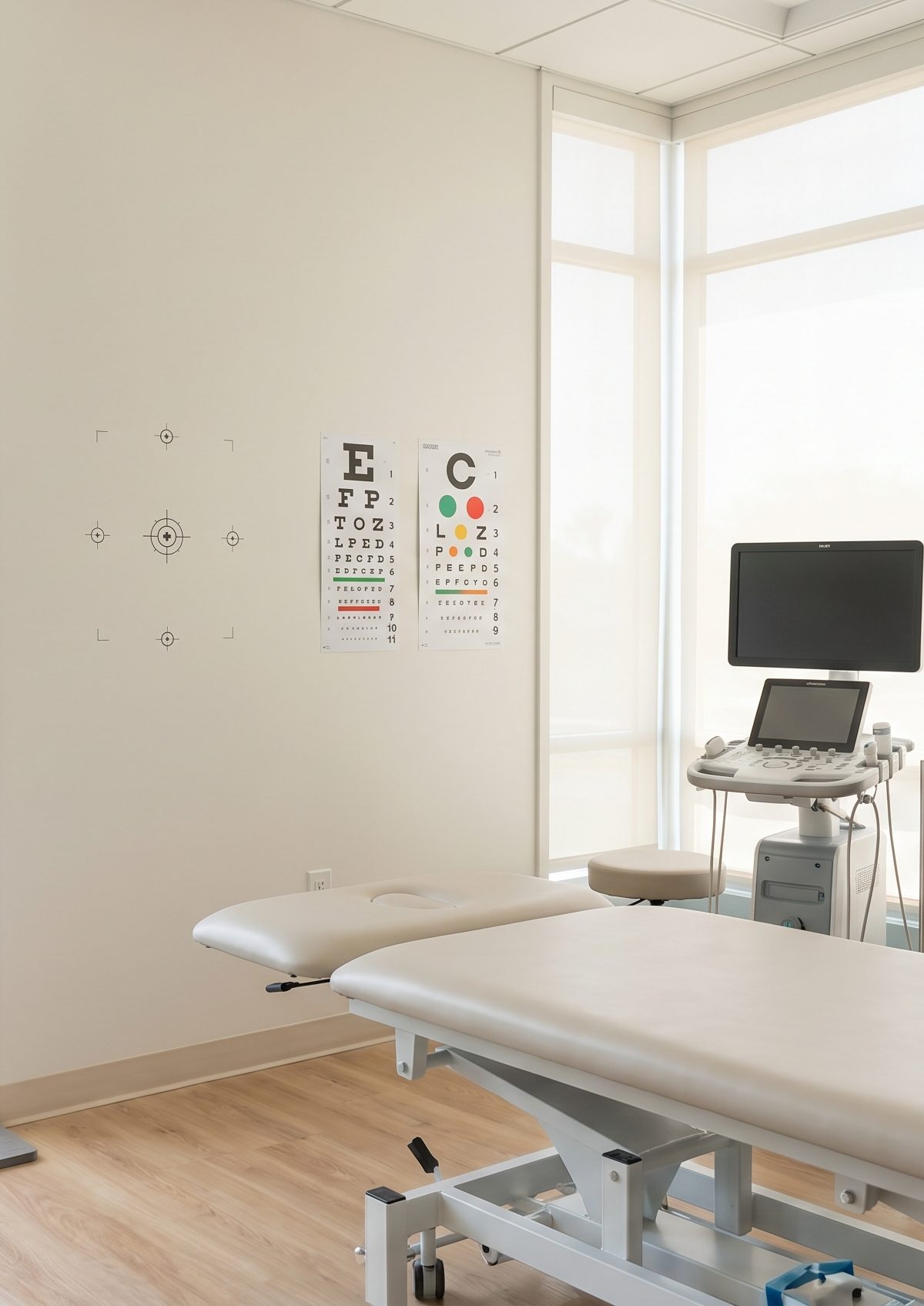
Patients are often frustrated when they are told that their eyes look normal even though reading and daily visual tasks feel much harder. A standard eye exam is important for checking eye health and visual acuity, but it may not fully capture the functional demands involved in concussion recovery. A person can have 20/20 distance acuity and still have measurable problems with convergence, saccades, visual motion tolerance, gaze stability, or sustained near work.
The 2022 American Academy of Ophthalmology and pediatric ophthalmology guidance emphasized that concussion-related visual symptoms often require a symptom-specific history and targeted examination of visual alignment, smooth pursuit, saccades, vestibulo-ocular reflex, convergence, and accommodation rather than acuity testing alone . In other words, seeing clearly on an eye chart does not rule out post-concussion visual dysfunction.
What a Structured Evaluation Should Include
When visual symptoms persist after concussion, the right question is not “Are the eyes normal?” The better question is “Which systems are producing the symptoms?” A useful evaluation often includes:
- Detailed symptom history: When symptoms occur, what triggers them, and whether they are tied to reading, screens, head movement, bright light, shopping, exercise, or posture.
- Oculomotor testing: Assessment of saccades, smooth pursuits, fixation, convergence, and focusing ability.
- Vestibular screening: Evaluation of dizziness with head movement, visual motion sensitivity, gaze stability, and balance control.
- Cervical screening: Review of neck pain, posture, range of motion, and whether neck movement changes dizziness or visual symptoms.
- Autonomic screening: Checking for lightheadedness on standing, exercise intolerance, or other signs that orthostatic dysregulation is part of the picture.
- Functional task review: Understanding how symptoms affect work, school, exercise, driving, and device use.
This kind of multidomain evaluation matters because a patient with convergence problems needs a different plan than a patient whose main problem is visual motion sensitivity, and both need a different plan than someone whose symptoms are being driven by neck dysfunction or migraine activation.
Which Findings Suggest Recovery May Take Longer?
Not every patient with visual symptoms will have a prolonged recovery, but certain findings deserve attention. A 2024 systematic review found that positive vestibular and oculomotor screening findings are routinely associated with longer recovery after concussion, and that a positive Vestibular Ocular Motor Screening test appears to consistently predict longer recovery time . That does not mean a slow recovery is guaranteed. It means that these findings should be taken seriously instead of minimized.
In practical terms, patients who cannot tolerate reading, scrolling, head movement, or visually busy spaces without a strong symptom flare often benefit from an earlier targeted assessment rather than waiting for symptoms to disappear on their own.
Can Rehabilitation Help Visual Problems After Concussion?
Rehabilitation may help when testing identifies specific deficits, but the evidence should be described carefully. The strongest and most consistent takeaway from current research is not that one universal therapy fixes every visual symptom. It is that targeted rehabilitation can support recovery when matched to the patient’s actual impairment profile.
A 2020 systematic review found moderate evidence that near point of convergence can remain impaired for several months after concussion and low-level evidence that oculomotor therapy may improve these deficits in selected patients . A 2024 systematic review and meta-analysis reported a trend toward improvement in oculomotor deficits and visual tasks after restitutive interventions for adults with mild traumatic brain injury, while also emphasizing that the overall certainty of evidence remains low because of study-quality limitations .
That is why a responsible clinic should avoid overpromising. Visual rehabilitation is not a magic reset button. It may be useful when testing shows problems with eye teaming, focusing, tracking, or visual-vestibular interaction, and it should be adjusted based on symptom response over time.
Patients with persistent visual symptoms may also benefit from coordinated care that includes the clinic’s neuro-visual rehabilitation services and vestibular therapy services when findings support that approach.
How Visual Problems Affect Daily Life
One reason concussion-related vision problems are underappreciated is that they interfere with ordinary tasks in ways that are difficult to describe. A patient may say “I feel off,” “I get dizzy in stores,” or “I cannot read for more than ten minutes” without realizing those are visual-oculomotor clues.
Common daily effects include:
- Reading more slowly and forgetting what was just read
- Difficulty tolerating emails, spreadsheets, or prolonged screen work
- Losing place while reading paragraphs or subtitles
- Feeling worse under fluorescent lighting or when driving at night
- Becoming dizzy in grocery stores, gyms, or crowded sidewalks
- Feeling mentally drained after visual concentration
- Struggling to return to school or office work despite “normal” imaging
These symptoms can be especially frustrating because they are often invisible to everyone else. The patient may look recovered from the outside while still feeling limited during the very tasks required for work, school, and independence.
Visual Motion Sensitivity, Dizziness, and Balance
Many concussion patients do not just have “vision” symptoms in isolation. They also experience dizziness, unsteadiness, motion sensitivity, or nausea in visually complex places. That often reflects interaction between the visual system and the vestibular system rather than a purely optical problem. Busy aisles, patterned flooring, scrolling on a phone, or fast head turns can overload an already stressed visual-vestibular network.
This overlap is why concussion assessment often needs to consider both visual and balance systems together. Patients who also notice spinning, head-motion intolerance, or balance changes may want to review related resources on vertigo and dizziness as part of the broader picture.
When Visual Symptoms Need Urgent Medical Attention
Most post-concussion visual symptoms are evaluated in an outpatient setting, but some situations require urgent medical care. Immediate evaluation is appropriate if visual symptoms are accompanied by sudden severe headache, new weakness or numbness, speech difficulty, repeated vomiting, loss of consciousness, rapidly worsening confusion, or abrupt worsening after a new head injury. Those features raise concern for a more serious neurologic problem that should not be managed as routine concussion rehabilitation.
Even without emergency red flags, persistent symptoms beyond the early recovery period deserve attention if they interfere with reading, work, school, driving, exercise, or daily activities.
What Recovery Usually Looks Like
Recovery timelines vary. Some patients improve within a few weeks as brain networks settle and activity is progressed appropriately. Others need a longer course because their symptoms are being maintained by a combination of visual, vestibular, cervical, autonomic, or migraine-related factors. The goal is not just fewer symptoms at rest. The goal is better function during real life.
That means progress is measured by practical milestones: tolerating reading longer, working on screens without a major crash, walking through busy environments more comfortably, handling light better, returning to exercise, and eventually resuming normal work or school demands.
For many patients in San Diego, the most helpful shift is moving from vague symptom management to a clearer explanation of which systems are impaired and what the recovery plan is targeting. Patients can also review the clinic's FAQ page for broader questions about concussion recovery and rehabilitation.
FAQ
What visual problems are common after a concussion?
Common symptoms include blurred vision, difficulty focusing, light sensitivity, double vision, reading fatigue, eye tracking problems, and dizziness in busy visual environments. These symptoms often reflect oculomotor or visual-processing disruption rather than a simple eyesight problem.
Can a concussion cause blurred vision or light sensitivity?
Yes. Concussion can disrupt the brain networks involved in eye movement control, focusing, and sensory regulation, which may produce blurred vision, photophobia, visual strain, and visual motion intolerance.
Why does reading feel harder after a concussion?
Reading depends on precise eye jumps, accurate tracking, focusing, and attention. If concussion affects convergence, saccades, accommodation, or visual endurance, reading may become slower, more tiring, and more symptom provoking.
When should visual symptoms after concussion be evaluated?
Evaluation is appropriate when symptoms persist, worsen with reading or screens, interfere with work or school, trigger dizziness in busy places, or do not seem to be steadily improving. Urgent evaluation is needed when symptoms come with severe headache, new neurologic deficits, repeated vomiting, or rapid worsening.
Can rehabilitation help post-concussion visual symptoms?
It may help when testing shows specific deficits such as convergence, focusing, tracking, or visual-vestibular coordination problems. The best approach is individualized rehabilitation based on exam findings rather than a generic protocol.
Next Step
If visual problems after concussion are making reading, screens, work, school, or daily movement harder, the next step is a focused evaluation. San Diego Chiropractic Neurology evaluates concussion-related visual, vestibular, cervical, and neurologic contributors to help clarify what is driving persistent symptoms and whether rehabilitation is appropriate. Call (619) 344-0111 or book a free consultation.
References
- Optimal Diagnostic Strategies for Concussion-Related Vision Disorders: A Review. 2025. PMCID: PMC12083490. https://pmc.ncbi.nlm.nih.gov/articles/PMC12083490/
- Vision and Concussion: Symptoms, Signs, Evaluation, and Treatment. American Academy of Ophthalmology and partner guidance, 2022. https://www.aao.org/education/clinical-statement/vision-concussion-symptoms-signs-evaluation-treatm
- Barnhart M, et al. The Ability of Vestibular and Oculomotor Screenings to Predict Recovery in Patients After Concussion: A Systematic Review. J Athl Train. 2024. PMID: 36913634. https://pubmed.ncbi.nlm.nih.gov/36913634/
- Santo AL, et al. Near Point of Convergence Deficits and Treatment Following Concussion: A Systematic Review. J Sport Rehabil. 2020. PMID: 32131046. https://pubmed.ncbi.nlm.nih.gov/32131046/
- Biscardi M, et al. Efficacy of restitutive interventions for oculomotor deficits in adults with mild traumatic brain injury: a systematic review and meta-analysis. Brain Inj. 2024. PMID: 38433498. https://pubmed.ncbi.nlm.nih.gov/38433498/
Medical disclaimer: This article is for educational purposes only and does not provide medical advice, diagnosis, or treatment. Concussion-related visual symptoms require individualized evaluation by a qualified licensed medical professional. Sudden severe headache, new neurologic deficits, repeated vomiting, loss of consciousness, or rapidly worsening symptoms require immediate medical attention.
Not sure what is driving your symptoms?
Talk with our Functional Neurology Trained team on a free phone consultation. We will tell you honestly whether we can help.