Vestibular Rehabilitation San Diego: A Targeted Approach for Vertigo, Dizziness, and Balance Problems
Free phone consultation with our San Diego functional neurology team. No obligation.
People searching for vestibular rehabilitation San Diego are usually not looking for a generic definition. They are trying to find out why they feel dizzy, off balance, motion-sensitive, or visually overwhelmed, and whether the right kind of treatment can help them get back to driving, working, exercising, and moving through daily life with more confidence.
At San Diego Chiropractic Neurology, the focus is on matching care to the cause of symptoms. Vestibular rehabilitation is often useful, but it is not one standard protocol for every person with dizziness. Some cases fit exercise-based vestibular therapy. Some fit repositioning maneuvers for positional vertigo. Some require broader neurologic, visual, or medical screening before a treatment plan makes sense.
That distinction matters. A patient in San Diego, La Jolla, Carmel Valley, or the 92121 area may describe “vertigo” the same way, but the source of symptoms can be very different. A targeted exam helps determine whether symptoms are more consistent with benign paroxysmal positional vertigo, vestibular hypofunction, post-concussion dizziness, visual motion sensitivity, migraine-related dizziness, or another issue that deserves a different referral or workup.
The clinic’s approach is conservative and non-invasive. The goal is to improve function, reduce symptom triggers, and build a treatment plan around what is actually driving dizziness rather than simply trying random exercises.
Because dizziness can come from several different systems, patients should consult their provider or a qualified clinician for an individual assessment before starting treatment. When symptoms suggest a different medical issue, referral for additional evaluation is the safer next step.
Patients should consult their provider or another qualified clinician for an individual assessment before starting vestibular rehabilitation, because some dizziness patterns may call for medical referral, repositioning maneuvers, or a different diagnostic workup instead of a standard exercise program.
What Vestibular Rehabilitation Is
Vestibular rehabilitation is a form of therapy used to address dizziness, vertigo, imbalance, motion sensitivity, and gaze instability. It typically includes a customized combination of eye-head coordination work, balance retraining, graded movement exposure, walking tasks, and home exercises designed to help the brain and body adapt more effectively to vestibular dysfunction.
Current clinical practice guidelines support vestibular rehabilitation for adults with unilateral and bilateral peripheral vestibular hypofunction because it can improve symptoms, postural stability, gaze stability, and daily function. A foundational Cochrane review also found moderate to strong evidence that vestibular rehabilitation is safe and effective for unilateral peripheral vestibular dysfunction.
In practical terms, vestibular therapy in San Diego is often considered when a person has problems such as:
- dizziness when turning the head quickly
- imbalance while walking or changing surfaces
- difficulty focusing visually during movement
- motion sensitivity in stores, traffic, or busy environments
- ongoing symptoms after an inner ear event or concussion
Not every dizzy patient needs the same program, and not every patient with vertigo needs vestibular exercises first. That is why the evaluation is central to the process.
Who May Benefit From Vestibular Therapy in San Diego
Vestibular rehabilitation may be appropriate for adults dealing with several common patterns of dizziness and balance dysfunction. The clinic often evaluates people whose symptoms interfere with work, workouts, surfing, gym training, driving on local freeways, or simply walking through visually busy settings like grocery stores and crowded public spaces.
People who may benefit include those with:
- vestibular hypofunction after an inner ear disorder
- residual dizziness or imbalance after vestibular neuritis
- motion sensitivity and gaze instability
- balance complaints related to vestibular dysfunction
- post-concussion dizziness
- visual motion intolerance
- persistent dizziness that seems worse with head movement or visual complexity
Vestibular neuritis is one example where rehabilitation may play an important role. A recent systematic review and meta-analysis found that vestibular rehabilitation is recommended in vestibular neuritis, and combined rehabilitation plus steroid treatment may improve outcomes more than steroids alone in some cases.
Some people also have overlap between vestibular symptoms and other problems such as concussion, migraine, neck pain, or autonomic dysfunction. In those cases, care may need to integrate or coordinate with related services. Patients with concussion-related symptoms, for example, may also benefit from evaluation for post-concussion issues or related visual challenges that can overlap with dizziness complaints.
Why Accurate Diagnosis Matters: BPPV Is Not the Same as Vestibular Hypofunction
One of the most important parts of a strong vertigo treatment San Diego plan is recognizing that not all vertigo has the same cause.
BPPV
Benign paroxysmal positional vertigo, or BPPV, is one of the most common vestibular disorders in adults. It often causes short episodes of spinning dizziness triggered by position changes such as lying down, rolling in bed, tipping the head back, or getting up quickly.
The updated clinical practice guideline recommends diagnosing posterior canal BPPV with the Dix-Hallpike maneuver and treating or referring for a canalith repositioning procedure. That is important because BPPV is typically not best managed with a generic exercise-only plan. When the pattern fits BPPV, repositioning maneuvers are usually the preferred first-line intervention.
The same guideline also emphasizes reducing unnecessary imaging, vestibular suppressant use, and delays in appropriate care. In other words, the best next step is often a correct bedside assessment rather than guesswork.
Vestibular Hypofunction
Vestibular hypofunction is a different problem. Instead of brief positional spinning episodes, patients may notice blurred vision with head movement, difficulty stabilizing their gaze, unsteadiness while walking, or persistent disequilibrium. For these patterns, exercise-based vestibular rehabilitation is often appropriate and is supported by guideline-level evidence.
This is one of the main reasons the team uses a condition-matched evaluation. If the cause is BPPV, the plan may focus on repositioning. If the cause is vestibular hypofunction, the plan may focus on gaze-stability training, balance work, walking progression, and home exercise dosing over time. If symptoms do not fit either pattern, the clinic can identify whether further neurologic or medical follow-up is more appropriate.
Vestibular Rehabilitation After Concussion
Dizziness after concussion is common, but it is rarely as simple as “just rest longer.” Some patients develop problems with head movement tolerance, eye tracking, balance, visual motion sensitivity, or sensory integration. Others may have a layered presentation that includes neck-related symptoms, migraine features, or autonomic stress responses along with vestibular complaints.
A 2022 systematic review of randomized controlled trials found that vestibular rehabilitation appears useful for reducing dizziness-related symptom burden after concussion, though study methods and protocols remain heterogeneous. That makes it reasonable to include vestibular rehabilitation in a broader conservative plan when symptoms and exam findings support it, without overstating what therapy can do for every case.
For some patients, the most effective plan is not vestibular rehab alone. It may involve a broader neurologic and visual-motor strategy, especially when dizziness is triggered by reading, screens, busy visual environments, or dual-task activity. That is one reason the clinic may also coordinate findings with services such as neuro-visual rehabilitation when the symptom pattern suggests visual involvement.
People looking for concussion vestibular rehabilitation in San Diego often want to know when they can return to work, exercise, driving, school, or recreational activity. Those decisions should be guided by symptom behavior, exam findings, and gradual progression rather than a fixed timeline.
What Vestibular Rehabilitation May Include
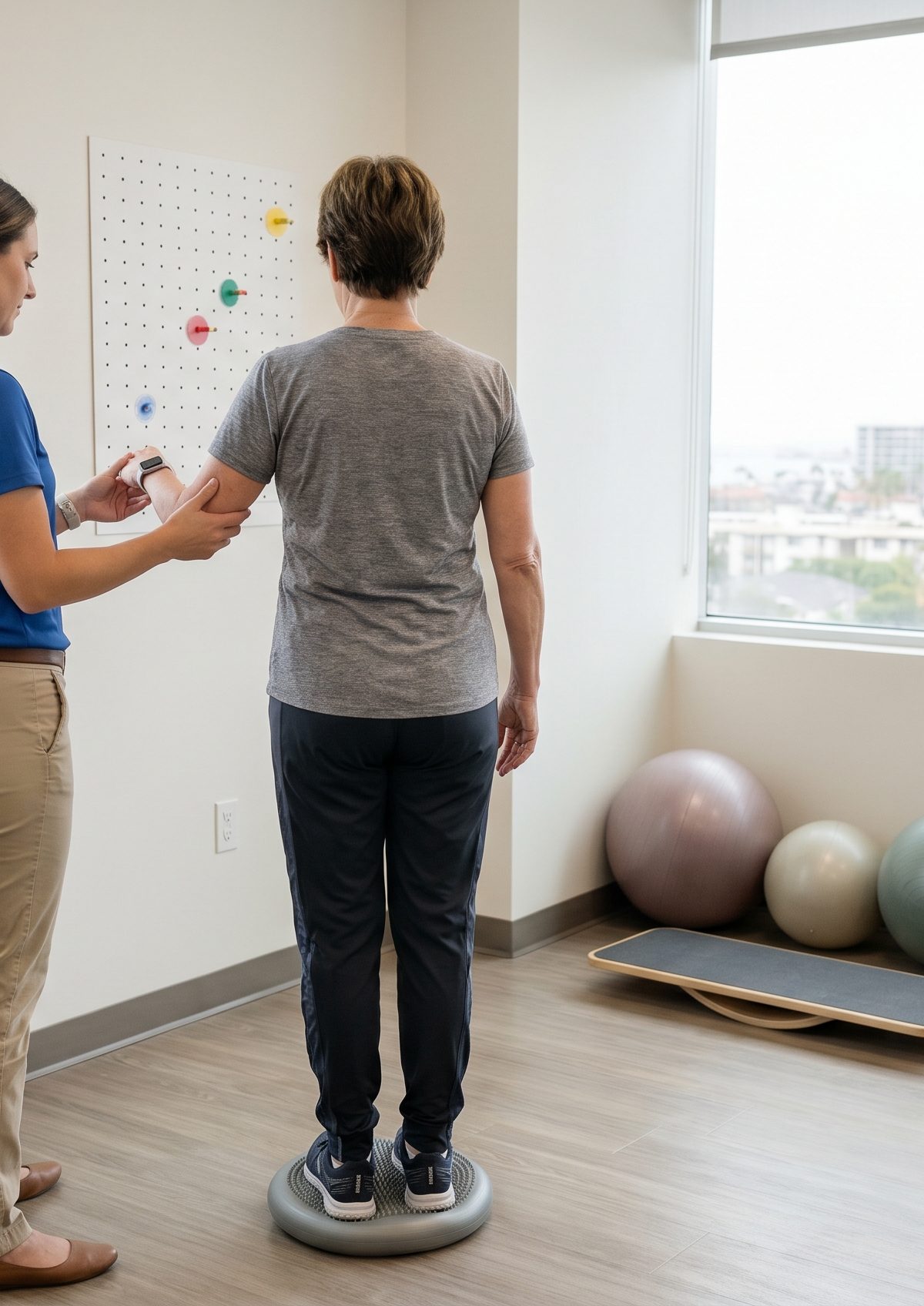
A vestibular therapy plan is built around the specific deficits found on evaluation. Depending on the pattern, treatment may include:
- gaze-stability exercises to improve visual clarity during head movement
- balance retraining on stable and unstable surfaces
- walking and turning drills for dynamic stability
- graded exposure to motion or visual triggers
- canalith repositioning maneuvers when BPPV is identified
- home exercises with progression based on response and tolerance
The 2022 guideline for peripheral vestibular hypofunction supports supervised vestibular rehabilitation and outlines minimum exercise dosing ranges for gaze-stability and balance work. That supports an individualized plan with follow-up visits and home programming rather than a one-time instruction sheet.
For patients looking specifically for vestibular therapy, this means treatment should be targeted, repeatable, and adjusted based on how symptoms change with real activity.
What To Expect at a Vestibular Rehabilitation Evaluation
The first visit is designed to clarify what type of dizziness is present and what next step makes the most sense. This usually starts with a detailed history. The team wants to know:
- when symptoms began
- whether symptoms feel like spinning, rocking, lightheadedness, or imbalance
- what triggers episodes
- whether head movement, screens, reading, driving, or crowded environments make symptoms worse
- whether there is a history of concussion, migraine, ear infection, recent illness, or falls
From there, the exam may include eye movement assessment, positional testing, balance screening, gait observation, head movement tolerance, and other neurologic or sensorimotor checks as appropriate. The purpose is not to force every person into vestibular rehab. The purpose is to determine whether vestibular rehab is the right fit, whether repositioning is needed, whether another service should be included, or whether outside referral is more appropriate.
This evaluation-first approach is especially important for patients who have already tried unspecific dizziness therapy without much change. If the original diagnosis was incomplete, repeating the same general exercises may not solve the problem.
How Long Vestibular Rehabilitation Usually Takes
There is no universal timeline for dizziness therapy San Diego because recovery depends on the cause of symptoms, symptom duration, comorbid factors, and how consistently the home program is followed.
Some examples:
- BPPV may respond quickly when the correct repositioning maneuver is used.
- Vestibular hypofunction often improves over a series of visits with structured home exercises.
- Post-concussion dizziness may take longer when vestibular symptoms overlap with visual motion sensitivity, neck issues, migraine features, or broader neurologic stress responses.
The updated practice guideline supports individualized dosing and progression rather than a one-size-fits-all schedule. In a San Diego practice, that usually means setting expectations based on the patient’s specific exam findings and response over time. A person whose symptoms are mild and recent may progress faster than someone dealing with months of motion sensitivity and balance avoidance.
When Vestibular Rehabilitation May Not Be the Only Answer
Vestibular rehabilitation can be very useful, but it is not a catch-all treatment for every type of dizziness. Some patients need further medical assessment, particularly when symptoms suggest causes outside the most common vestibular patterns. Examples can include new neurologic symptoms, significant hearing changes, unexplained fainting, concerning headache patterns, acute medical issues, or symptom presentations that do not fit a musculoskeletal or vestibular profile. Patients should consult their provider promptly when symptoms are new, worsening, or unusual.
Other patients have overlapping contributors. For example, a person may have dizziness tied partly to migraine-related triggers, partly to concussion, and partly to deconditioning or visual intolerance. In those cases, progress usually depends on a more complete plan rather than treating vestibular symptoms in isolation. Patients with overlapping dizziness and headache patterns may also want to review related information on migraine if that history is part of the clinical picture.
Choosing Vestibular Rehabilitation in San Diego
When looking for vestibular rehabilitation for vertigo in San Diego, the main question is not just whether a clinic offers the service. The better question is whether the clinic can determine what is actually causing the dizziness and match treatment accordingly.
That means asking:
- Does the evaluation distinguish BPPV from vestibular hypofunction and from other dizziness patterns?
- Is treatment customized instead of generic?
- Are home exercises progressed based on response?
- Does the clinic consider concussion, visual motion sensitivity, migraine, and broader neurologic context when relevant?
- Will the clinic refer when symptoms suggest a different medical workup is needed?
At San Diego Chiropractic Neurology, the goal is to provide a non-invasive, evidence-informed process that identifies the most likely driver of symptoms and builds a practical next step around it. For many patients, that can mean less guesswork and a clearer plan for getting back to normal daily activity.
FAQ: Vestibular Rehabilitation San Diego
What is vestibular rehabilitation and who in San Diego typically needs it?
Vestibular rehabilitation is a targeted therapy approach for dizziness, vertigo, gaze instability, balance problems, and motion sensitivity. It is often appropriate for people with vestibular hypofunction, residual symptoms after inner ear disorders, some post-concussion cases, and certain balance-related complaints when the evaluation supports that diagnosis.
Can vestibular rehabilitation help vertigo, dizziness, and balance problems?
It can help many cases, but results depend on the cause. Evidence strongly supports vestibular rehabilitation for peripheral vestibular hypofunction, and it can also be useful after vestibular neuritis or concussion when findings match that treatment approach.
Is vestibular therapy the right treatment for BPPV, or do I need repositioning maneuvers instead?
If symptoms fit BPPV, repositioning maneuvers are often the preferred first-line treatment rather than generic exercise-only care. That is why positional testing matters before starting therapy.
Can vestibular rehabilitation help after a concussion?
Yes, it may help when dizziness relates to vestibular dysfunction after concussion. The best plan depends on whether symptoms also involve visual motion sensitivity, neck issues, migraine features, or other neurologic contributors.
How long does vestibular rehabilitation usually take?
There is no single timeline. Some positional vertigo cases improve quickly with the correct maneuver, while vestibular hypofunction and post-concussion cases may require a longer course of supervised treatment and home exercises.
If you are dealing with vertigo, dizziness, imbalance, or post-concussion motion sensitivity and want a clearer answer on what type of care fits your symptoms, call (619) 344-0111 or book a consultation with San Diego Chiropractic Neurology.
References
- Hall CD, et al. Vestibular Rehabilitation for Peripheral Vestibular Hypofunction: An Updated Clinical Practice Guideline. 2022. https://pubmed.ncbi.nlm.nih.gov/34864777/
- McDonnell MN, Hillier SL. Vestibular rehabilitation for unilateral peripheral vestibular dysfunction. 2015. https://pubmed.ncbi.nlm.nih.gov/25581507/
- Huang HH, et al. Efficacy of Vestibular Rehabilitation in Vestibular Neuritis: A Systematic Review and Meta-analysis. 2024. https://pubmed.ncbi.nlm.nih.gov/37339059/
- Bhattacharyya N, et al. Clinical Practice Guideline: Benign Paroxysmal Positional Vertigo (Update). 2017. https://pubmed.ncbi.nlm.nih.gov/28248609/
- Galeno E, et al. Effectiveness of Vestibular Rehabilitation after Concussion: A Systematic Review of Randomised Controlled Trial. 2022. https://pubmed.ncbi.nlm.nih.gov/36611549/
Medical disclaimer: This article is for educational purposes only and does not provide a medical diagnosis or individualized treatment advice. Dizziness, vertigo, and balance problems can have multiple causes. Evaluation and treatment recommendations should be based on an individual clinical assessment and referral when appropriate.
Not sure what is driving your symptoms?
Talk with our Functional Neurology Trained team on a free phone consultation. We will tell you honestly whether we can help.