Vestibular Migraine Specialist: What to Look for and What an Evaluation Should Include
Free phone consultation with our San Diego functional neurology team. No obligation.
People searching for a vestibular migraine specialist are often dealing with more than occasional dizziness. They may have recurrent vertigo, visual motion sensitivity, nausea, imbalance, brain fog, head pressure, or episodes that seem to come out of nowhere. Some have been told it is "just vertigo." Others have been treated for sinus issues, neck tension, anxiety, or standard migraine without a clear reason the dizziness keeps returning.
Vestibular migraine is one of the more common neurologic causes of recurrent vertigo, and it can occur with or without headache. Evaluation matters because there is no single confirmatory test. The condition is identified through a careful history, symptom pattern, and a structured process of ruling in vestibular migraine while ruling out other causes of dizziness.
At San Diego Chiropractic Neurology, the functional neurology team uses a non-invasive, systems-based approach to assess dizziness, balance, visual motion sensitivity, eye movements, cervical involvement, and vestibular function. For people in San Diego, La Jolla, Carmel Valley, Torrey Pines, and the 92121 area who are trying to determine whether their symptoms fit vestibular migraine, the goal is to identify the pattern, clarify likely drivers, and determine whether individualized rehabilitation and coordinated care may be appropriate.
What Kind of Specialist Treats Vestibular Migraine?
There is no single job title that automatically makes someone the right provider for vestibular migraine. What matters more is whether the clinician or team has experience evaluating migraine-related dizziness, distinguishing it from common mimics, and building a practical care plan.
A strong vestibular migraine evaluation usually involves providers who understand:
- How migraine biology can affect balance, spatial orientation, and motion sensitivity
- How dizziness symptoms overlap with benign paroxysmal positional vertigo (BPPV), Meniere's disease, persistent postural-perceptual dizziness (PPPD), concussion-related vestibular dysfunction, and cervical contributors
- How to assess eye movements, postural stability, visual dependence, and symptom triggers
- When vestibular rehabilitation may be appropriate as part of a broader management plan
- When medical collaboration or referral is necessary
That is why many people looking for a vestibular migraine doctor are really looking for a team that can connect the dots. Vestibular migraine often sits at the intersection of migraine, balance dysfunction, visual motion sensitivity, and sensory processing. An evaluation should reflect that complexity rather than focusing on one symptom alone.
Patients who are still sorting out whether their dizziness is migraine-related may also benefit from reviewing the clinic's resources on migraine care and vertigo evaluation, since vestibular migraine often overlaps with both symptom categories.
Signs Your Dizziness May Be Vestibular Migraine
Vestibular migraine can present in different ways. Some people have obvious migraine symptoms with dizziness. Others have more subtle patterns, such as repeated episodes of motion-provoked disequilibrium without severe head pain.
Symptoms that commonly raise suspicion for vestibular migraine include:
- Episodes of vertigo, rocking, swaying, or internal spinning
- Dizziness triggered by busy environments, scrolling screens, stores, or driving
- Visual motion sensitivity
- Unsteadiness or a floating sensation
- Nausea with movement or head turns
- Headache, head pressure, light sensitivity, sound sensitivity, or aura
- A history of migraine, even if headaches are infrequent now
- Symptoms that fluctuate rather than staying exactly the same all day
Vestibular migraine can happen without a classic headache during every episode. That is one reason people are often underdiagnosed or diagnosed late. They may think migraine is not relevant because the main complaint is dizziness.
The pattern matters. Timing, triggers, visual symptoms, movement sensitivity, migraine history, sleep changes, stress load, hormonal shifts, neck involvement, and concussion history can all contribute to the clinical picture. For some patients, the dizziness begins after a concussion or a viral illness and then persists because migraine susceptibility, vestibular sensitivity, and visual dependence start feeding into each other.
Conditions That Can Mimic Vestibular Migraine
Several conditions can look similar. Contemporary reviews emphasize the importance of differential diagnosis because vestibular migraine overlaps with other disorders, especially in people with chronic dizziness.
BPPV
BPPV often causes brief, position-triggered vertigo, especially with rolling in bed, looking up, or bending over. It tends to follow a more mechanical pattern than vestibular migraine, though some patients can have both conditions.
Meniere's disease
Meniere's disease may involve vertigo together with fluctuating hearing changes, ear fullness, or tinnitus. Distinguishing Meniere's disease from vestibular migraine remains a recognized diagnostic challenge because symptoms can overlap.
Persistent Postural-Perceptual Dizziness
PPPD often features chronic non-spinning dizziness, visual dependence, and discomfort in upright or visually complex environments. It may coexist with vestibular migraine rather than appearing as a completely separate problem.
Concussion-related dizziness
After head injury, patients may develop vestibular dysfunction, visual motion sensitivity, headache, autonomic changes, or cervical issues. Some post-concussion presentations fit a vestibular migraine pattern, while others do not. This is why a history-based and exam-based assessment matters. Patients with prior head injury may also want to review the clinic's page on concussion-related symptoms.
Cervical contributors
Neck dysfunction does not explain every dizziness case, but cervical input can influence balance and spatial orientation. In some patients, neck pain, migraine sensitivity, and vestibular symptoms interact in ways that need to be examined together rather than separately.
A local page that simply labels dizziness as vertigo treatment is often not enough. Patients need to know whether the provider can sort through these overlapping possibilities and explain what is most likely driving the symptoms.
How Vestibular Migraine Is Diagnosed
Vestibular migraine is a clinical diagnosis. There is no blood test, scan, or single office test that confirms it on its own. That does not mean the diagnosis is vague. It means the diagnosis depends on a structured assessment of symptom history, recognized diagnostic criteria, associated migraine features, episode patterns, and exclusion of alternative explanations.
A vestibular migraine specialist should typically assess:
- The exact description of dizziness: spinning, rocking, swaying, floating, lightheadedness, imbalance, or visual disorientation
- Episode duration and frequency
- Specific triggers such as motion, visual complexity, sleep disruption, stress, hormonal changes, certain foods, or exertion
- Headache history and migraine-related symptoms
- Hearing symptoms, ear pressure, or tinnitus
- Concussion history, infection history, and medication history
- Whether symptoms are episodic, chronic, or mixed
Testing may be used to rule out other vestibular conditions or to map out functional deficits, but testing alone does not make the diagnosis. That distinction matters for patients who have already had imaging or lab work and were told everything looked normal. A normal scan does not rule out vestibular migraine.
What a Vestibular Migraine Evaluation Should Include
If someone is looking for vestibular migraine treatment, the evaluation is where the process should start. The functional neurology team at San Diego Chiropractic Neurology focuses on identifying patterns that can help distinguish migraine-related dizziness from other disorders and guide conservative care planning.
A thorough evaluation may include:
Detailed symptom history
This includes timing, onset, progression, environmental triggers, visual triggers, migraine features, and prior diagnoses or treatments. In many cases, the history is the most important part of the exam because it helps clarify whether the pattern is consistent with vestibular migraine criteria.
Eye movement assessment
Tracking, saccades, gaze stability, convergence, smooth pursuit, and visual motion tolerance can offer useful information about how the brain is processing motion and visual input. These findings do not diagnose vestibular migraine by themselves, but they can help identify areas of dysfunction contributing to symptoms.
Balance and gait testing
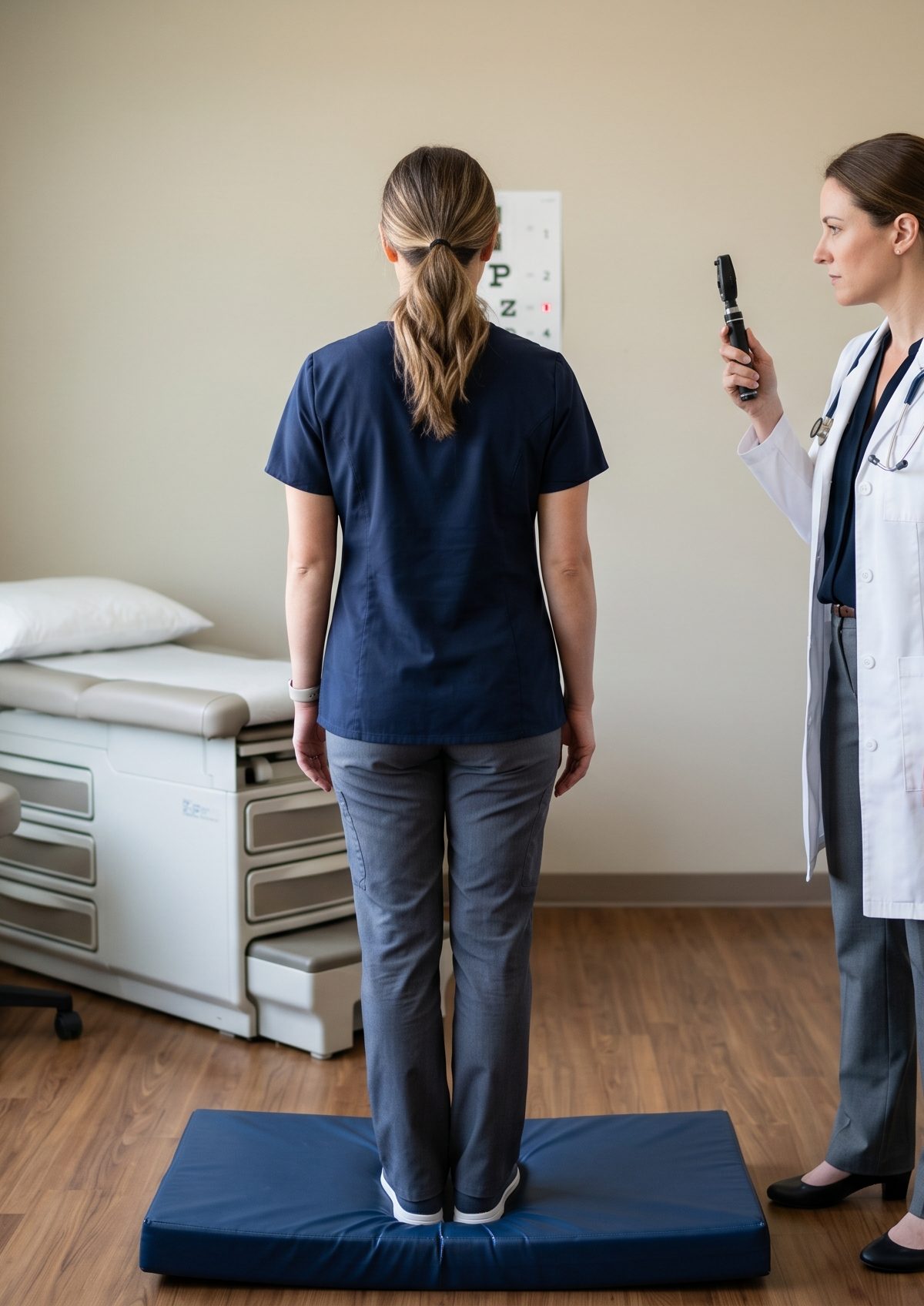
Postural control, stance, walking patterns, head-movement tolerance, and sensory integration can show where instability is most pronounced and how symptoms change with task demand.
Vestibular and positional screening
Positional testing helps determine whether BPPV or another positional vestibular issue may be contributing. This is important because some patients have a mixed presentation rather than a single diagnosis.
Visual motion sensitivity assessment
Many vestibular migraine patients feel worse in grocery stores, crowded streets, scrolling environments, or while driving. Looking directly at visual motion sensitivity can help explain day-to-day limitations that basic office testing sometimes misses.
Cervical and sensorimotor review
Neck mobility, neck-related symptom provocation, and sensorimotor control may be relevant when dizziness is associated with neck pain, whiplash, or prolonged desk posture.
Care coordination needs
Some patients need concurrent medical evaluation, medication discussion, imaging review, hearing assessment, or ENT or neurology referral. Conservative care works best when it is integrated appropriately rather than treated as a stand-alone answer for every case.
This kind of structured exam is especially useful for patients searching for vestibular migraine San Diego after months of unresolved symptoms. A good assessment should leave the patient with a clearer understanding of what fits, what does not, and what next steps make sense.
When Vestibular Therapy May Help
Vestibular migraine management is typically multimodal. Reviews note that care may include trigger management, lifestyle strategies, medication approaches when appropriate, and rehabilitation-based treatment. Vestibular rehabilitation has been reported as a potentially useful component, particularly for dizziness, balance-related disability, and motion sensitivity, although study quality varies and treatment should be individualized.
Vestibular therapy may be considered when a patient has:
- Persistent motion sensitivity between episodes
- Balance deficits or fear of movement because of symptoms
- Visual dependence in complex environments
- Residual dizziness after a major flare
- Combined vestibular migraine and post-concussion or PPPD features
The goal is not to force symptoms or to use a one-size-fits-all exercise sheet. The right plan depends on symptom threshold, trigger profile, visual sensitivity, balance findings, and how reactive the patient is to motion. For some people, therapy starts with gentle exposure and progression. For others, the emphasis is more on gaze stabilization, postural control, or integrating visual and vestibular inputs more effectively.
Patients who want to understand this side of care in more detail can review the clinic's page on vestibular therapy and, when visual motion intolerance is a major issue, neuro-visual rehabilitation.
Finding Vestibular Migraine Care in San Diego
For patients in San Diego, choosing a vestibular migraine specialist should come down to evaluation quality and clinical reasoning. It is reasonable to ask:
- Does the team evaluate dizziness patterns in detail, or only treat symptoms broadly?
- Can they distinguish vestibular migraine from BPPV, Meniere's disease, PPPD, or concussion-related dizziness?
- Do they assess eye movements, balance, and visual motion sensitivity?
- Do they offer conservative rehabilitation strategies when appropriate?
- Will they coordinate with other providers if the case needs additional medical workup?
San Diego Chiropractic Neurology serves patients looking for a non-invasive, structured assessment of recurring dizziness, balance problems, and migraine-related vestibular symptoms. The clinic's approach is rooted in identifying functional patterns and building individualized rehabilitation plans when appropriate. It does not rely on broad promises or assume every dizzy patient has the same diagnosis.
That is often what patients need most: a clearer explanation of why symptoms are happening, what needs to be ruled out, and what practical next step may help them move forward.
When to Seek an Evaluation
It may be time to schedule an evaluation if dizziness keeps returning, if you avoid driving or stores because of motion sensitivity, if prior treatment has not explained the pattern, or if symptoms are interfering with work, exercise, or daily function. Early assessment can help reduce repeated guessing, especially when symptoms overlap with migraine, vertigo, and post-concussion complaints.
To learn whether your symptoms may fit vestibular migraine and whether conservative rehabilitation may be appropriate, call (619) 344-0111 to schedule an evaluation with San Diego Chiropractic Neurology.
Frequently Asked Questions
What kind of specialist should I see for vestibular migraine?
The best specialist is usually one with experience evaluating migraine-related dizziness, ruling out similar vestibular disorders, and determining whether rehabilitation, medical management, or both may be appropriate. The right fit depends more on evaluation depth than on a single job title.
Can you have vestibular migraine without a headache?
Yes. Vestibular migraine can cause vertigo, imbalance, and motion sensitivity even when headache is absent during some episodes. A past history of migraine or other migraine features can still be relevant.
How is vestibular migraine different from vertigo or BPPV?
Vertigo is a symptom, not a diagnosis. BPPV is one specific cause of positional vertigo. Vestibular migraine is a migraine-related disorder that can cause vertigo, rocking, visual motion sensitivity, and imbalance, often with a broader trigger pattern and associated migraine features.
What tests are used to diagnose vestibular migraine?
There is no single confirmatory test. Diagnosis is based on symptom history, recognized criteria, and careful differential diagnosis. Office testing may be used to rule out other causes and identify functional deficits that can help guide treatment.
Can vestibular therapy help vestibular migraine symptoms?
For some patients, yes. Vestibular rehabilitation may help reduce motion sensitivity, improve balance, and decrease dizziness-related disability, especially when integrated into a broader management plan tailored to the individual's trigger profile and exam findings.
References
- Villar-Martinez MD, et al. Vestibular migraine: an update. Curr Opin Neurol. 2024. https://pubmed.ncbi.nlm.nih.gov/38619053/
- Hac NEF, Gold DR. Advances in diagnosis and treatment of vestibular migraine and the vestibular disorders it mimics. Neurotherapeutics. 2024. https://pubmed.ncbi.nlm.nih.gov/38845250/
- Eggers SDZ, Staab JP. Vestibular migraine and persistent postural perceptual dizziness. Handb Clin Neurol. 2024. https://pubmed.ncbi.nlm.nih.gov/38307659/
- Chen JY, et al. Vestibular migraine or Meniere's disease: a diagnostic dilemma. J Neurol. 2023. https://pubmed.ncbi.nlm.nih.gov/36562849/
- Byun YJ, et al. Treatment of Vestibular Migraine: A Systematic Review and Meta-analysis. Laryngoscope. 2021. https://pubmed.ncbi.nlm.nih.gov/32083732/
- Chu H, et al. Prophylactic treatments for vestibular migraine: a systematic review and network meta-analysis of randomized clinical trials. Front Pharmacol. 2023. https://pubmed.ncbi.nlm.nih.gov/38186654/
- Alghadir AH, Anwer S. Effects of Vestibular Rehabilitation in the Management of a Vestibular Migraine: A Review. Front Neurol. 2018. https://pubmed.ncbi.nlm.nih.gov/29946294/
- El Ahdab J, et al. The effect of vestibular rehabilitation in the management of vestibular migraine in adults: A systematic review and meta-analysis. Headache. 2026. https://pubmed.ncbi.nlm.nih.gov/41288240/
- Dunlap PM, et al. Vestibular rehabilitation: advances in peripheral and central vestibular disorders. Curr Opin Neurol. 2019. https://pubmed.ncbi.nlm.nih.gov/30461465/
- Cantillo-Martinez M, et al. Insights into Vestibular Migraine: Diagnostic Challenges, Differential Spectrum and Therapeutic Horizons. J Clin Med. 2025. https://pubmed.ncbi.nlm.nih.gov/40725521/
Medical disclaimer: This article is for educational purposes only and does not diagnose or treat any medical condition. Individual symptoms of dizziness, vertigo, imbalance, and migraine can have multiple causes. Please consult your provider for diagnosis and treatment decisions based on an in-person assessment and, when appropriate, coordination with your medical team.
Not sure what is driving your symptoms?
Talk with our Functional Neurology Trained team on a free phone consultation. We will tell you honestly whether we can help.