How to Choose a Vertigo Specialist in San Diego
Free phone consultation with our San Diego functional neurology team. No obligation.
Vertigo Specialist San Diego: How to Choose the Right Evaluation Path
If you are searching for a vertigo specialist in San Diego, it helps to start with one important idea: vertigo is a symptom, not a final diagnosis. A spinning sensation, rocking feeling, motion sensitivity, imbalance, or chronic dizziness can come from several different causes. That is why the most useful question is often not, “Who treats vertigo?” but, “What kind of specialist or clinic can identify what is actually driving these symptoms?”
At a practical level, a good vertigo evaluation should help sort out whether symptoms fit a more common inner-ear pattern such as benign paroxysmal positional vertigo (BPPV), a vestibular migraine pattern, persistent postural-perceptual dizziness (PPPD), concussion-related dizziness, or a mixed balance-system problem involving vestibular, visual, and proprioceptive inputs. In a city as large and active as San Diego, that matters. People are trying to stay functional for work, family life, driving, exercise, and normal daily movement, and persistent dizziness can interrupt all of it.
For patients looking for a non-invasive, rehabilitation-focused path, the clinic team approach is centered on understanding how the balance system is performing as a whole. That means looking not only at the inner ear, but also at eye movements, motion tolerance, posture, sensory integration, and how the nervous system is compensating. This can be especially relevant when symptoms have lasted longer than expected or when previous care answered only part of the problem.
What Kind of Specialist Should You See for Vertigo?
The right starting point depends on the pattern of symptoms. Some people do need an ENT, neurotologist, neurologist, or emergency evaluation. Others need a clinic that can evaluate dizziness in a broader, function-based way and coordinate rehabilitation. The key is matching the symptom pattern to the right level of care.
In general, a useful dizziness specialist in San Diego should be able to do the following:
- Take a detailed history of when symptoms started, what triggers them, and whether they involve spinning, rocking, swaying, nausea, headache, visual sensitivity, neck symptoms, or imbalance.
- Screen for common vestibular causes such as BPPV, vestibular neuritis, or unilateral vestibular dysfunction.
- Consider central or mixed contributors such as vestibular migraine, concussion history, visual-motion sensitivity, and reduced balance-system compensation.
- Identify when symptoms do not fit a straightforward pattern and need medical referral, imaging, or specialist co-management.
- Build a rehabilitation plan when appropriate instead of relying only on symptom suppression.
This is where patients often get stuck. They may have seen one type of provider, received a basic explanation, and still not know why grocery stores, computer screens, fast head turns, rolling in bed, or busy environments make them feel worse. A more complete workup can clarify whether the issue is strongly positional, migraine-related, visually triggered, post-concussion, or part of a chronic maladaptation pattern.
Why Vertigo Evaluation Should Go Beyond “Inner Ear or Not”
The balance system depends on multiple inputs working together: vestibular input from the inner ear, visual information, proprioceptive input from muscles and joints, and central processing that coordinates these signals. When one system is irritated or when the brain is not compensating well, dizziness may persist even after the original trigger changes.
That is one reason a purely symptom-based approach can fall short. For example, the symptoms of BPPV can be very different from the symptoms of vestibular migraine or PPPD. BPPV often causes brief positional spinning with specific head movements and is commonly diagnosed with the Dix-Hallpike maneuver. Guideline-based care also recommends canalith repositioning when posterior canal BPPV is identified, rather than defaulting to routine imaging or long-term vestibular suppressant medication in straightforward cases.
By contrast, vestibular migraine may involve episodic vertigo, motion sensitivity, light sensitivity, or visually triggered dizziness, and headache is not always the dominant symptom. PPPD, another common cause of chronic vestibular symptoms, is typically defined by dizziness, unsteadiness, or non-spinning vertigo lasting at least three months and worsened by upright posture, motion, or visually complex environments such as busy stores or traffic. Those distinctions matter because the rehabilitation strategy and referral decisions are different.
Common Causes a Vertigo Specialist Should Consider
BPPV
BPPV is one of the most common causes of positional vertigo. People often notice symptoms when rolling in bed, looking up, bending over, or changing head position quickly. A provider familiar with vestibular evaluation should know how to assess these patterns and when a repositioning maneuver may be appropriate under established guidelines.
Vestibular Migraine
Some patients are surprised to learn that migraine can present as dizziness, motion sensitivity, spatial disorientation, or recurrent vertigo even when headache is mild or inconsistent. Current review literature continues to emphasize that vestibular migraine remains underdiagnosed. That is why a neurological symptom history is often important when someone has recurrent episodes without a clean positional pattern.
Persistent Postural-Perceptual Dizziness
PPPD is especially relevant for people who say, “I am not spinning all the time, but I never feel normal.” Symptoms often include chronic swaying, rocking, unsteadiness, visual dependence, and discomfort in crowds or visually complex settings. This is a major content gap on many local vertigo pages, even though it is a common chronic presentation.
Concussion-Related Dizziness
After a concussion or head injury, dizziness may involve vestibular, visual, cervical, and central processing factors at the same time. If symptoms started after an accident, sports injury, or fall, that history should shape the evaluation and rehabilitation plan. Patients with this kind of mixed picture often benefit from an approach that looks at more than one sensory system.
Mixed Balance-System Dysfunction
Not every case fits neatly into one box. Some people have an old vestibular insult, then develop migraine features, visual motion sensitivity, reduced confidence with movement, and poor balance compensation. In those cases, a useful vertigo treatment in San Diego plan may need to combine triage, sensory retraining, graded exposure, and coordination with other medical providers when indicated.
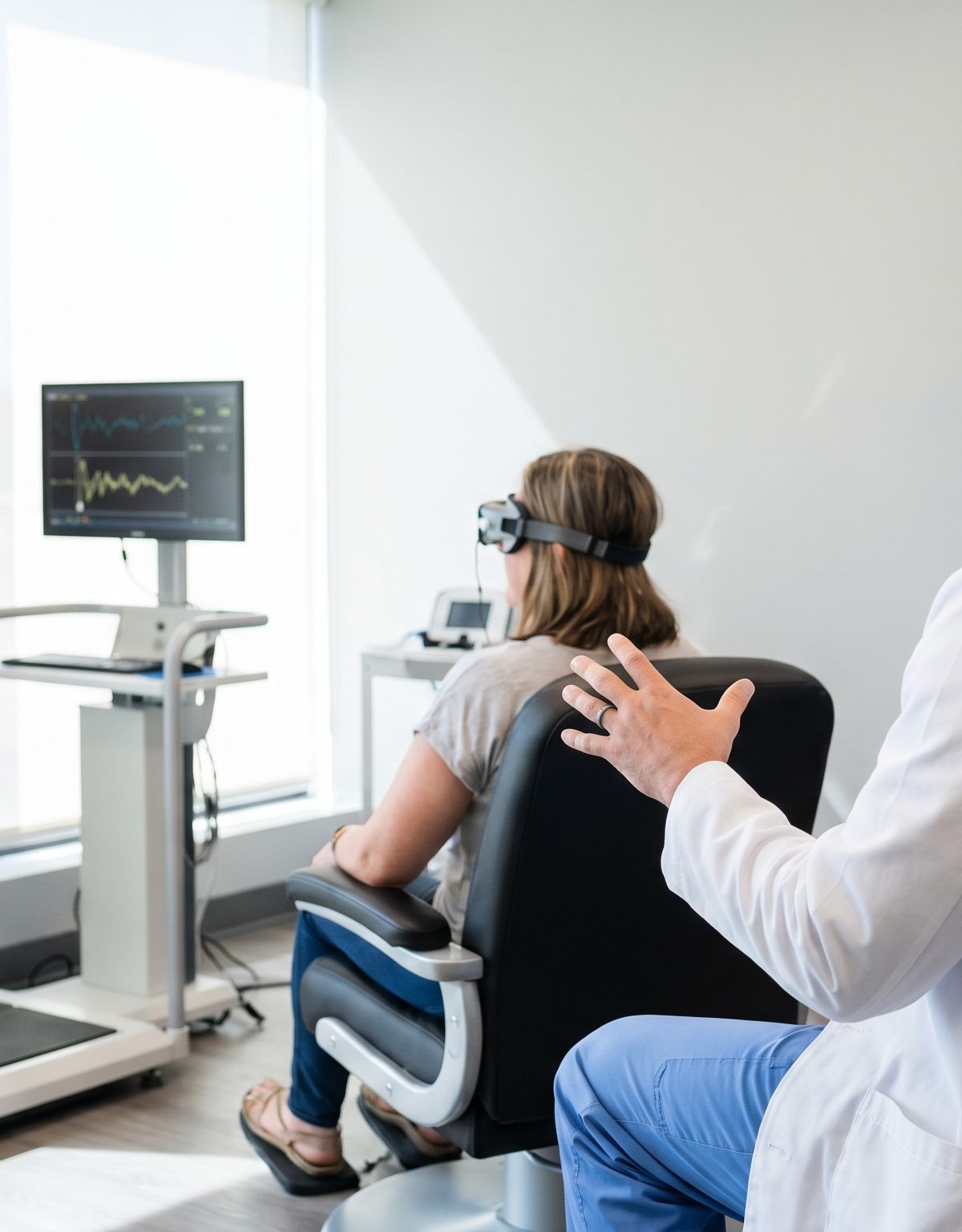
What a Useful Vertigo Workup Should Include
When patients compare clinics, this is the section that matters most. A helpful vertigo or vestibular assessment should not feel like guesswork. It should answer concrete questions about pattern, triggers, safety, and the next step.
A thorough evaluation may include:
- A symptom timeline, including whether symptoms are episodic, positional, constant, or visually triggered.
- Questions about migraine history, concussion history, recent illness, falls, medication changes, and autonomic symptoms if relevant.
- Eye movement and gaze-stability testing.
- Positional testing when BPPV is suspected.
- Balance and gait assessment.
- Screening for motion intolerance and visual dependence.
- Determining whether symptoms look peripheral, central, functional, or mixed.
- Referral recommendations when the presentation includes red flags or falls outside a rehab-oriented scope.
For patients exploring vestibular therapy or a broader neurologic rehabilitation approach, the goal is not to label every dizzy sensation with one term. The goal is to understand what system is underperforming, what triggers symptoms, what is safe to challenge, and how to progress function over time.
When Vestibular Rehabilitation Makes Sense
Many people assume dizziness care means medication, rest, or waiting it out. In reality, vestibular rehabilitation has evidence support for vestibular dysfunction, and more recent research also supports both in-person and remote delivery models for appropriate cases. That matters because active rehabilitation can be a meaningful part of care, especially when symptoms persist, movement tolerance has dropped, or compensation has not normalized.
Vestibular therapy in San Diego may be a reasonable next step when:
- BPPV has been identified and requires repositioning and follow-up.
- Dizziness persists after an acute vestibular event.
- Motion sensitivity, visual motion intolerance, or imbalance is limiting daily life.
- Symptoms linger after concussion.
- A patient has chronic dizziness patterns that respond to graded sensory and balance-system retraining.
From a functional neurology and rehabilitation perspective, the clinic's role is to support how the nervous system regulates motion, orientation, and balance performance. That means building tolerance, improving sensory integration, and restoring confidence with movement where appropriate. It does not mean making unsupported claims about curing every cause of dizziness. If a condition requires ENT, neurology, emergency, or other medical management, that distinction should be made clearly.
Is a Vertigo Specialist the Same as an ENT, Neurologist, or Vestibular Therapist?
No. Those roles can overlap, but they are not identical.
An ENT or neurotology clinic is often the right setting for inner-ear disorders, hearing changes, or specific vestibular pathology. A neurologist may be the right referral when the story points toward migraine, central nervous system issues, or broader neurologic disease. A vestibular rehabilitation setting focuses more on assessment and retraining of balance, gaze stability, motion tolerance, and functional performance.
For many patients, especially those with chronic or mixed dizziness, the real need is coordinated thinking rather than a single label. If symptoms have not resolved, a clinic that can screen multiple systems and determine whether to begin rehab, refer out, or co-manage may be more useful than choosing a provider based only on a directory title.
Patients who want to learn more about local support for related symptoms can also review the clinic pages on vertigo, migraine, and concussion.
When Dizziness Needs Emergency Evaluation
Not all vertigo is routine. Emergency evaluation is appropriate if dizziness or vertigo comes with sudden severe neurologic symptoms such as new one-sided weakness, facial droop, slurred speech, double vision, severe difficulty walking, fainting, chest pain, a sudden severe headache, or other stroke-like symptoms. Those symptoms should not wait for an outpatient vestibular evaluation.
This distinction is important because online searches for a “vertigo specialist” can include everything from simple positional vertigo to urgent neurologic conditions. Good triage starts with safety.
Do You Need Imaging for Vertigo?
Not always. In straightforward BPPV, current guideline recommendations do not support routine radiographic imaging unless other signs or symptoms warrant it. That helps patients understand an important point: the best evaluation is not necessarily the one that orders the most testing first. It is the one that matches the workup to the clinical pattern.
Imaging or specialist referral may be appropriate when the story suggests something outside a typical peripheral vestibular pattern, when neurologic deficits are present, or when the presentation raises concern for central causes. The decision should be based on the examination and symptom profile, not a one-size-fits-all approach.
Choosing a Vertigo Specialist in San Diego
If you are comparing options across San Diego, look for a clinic or provider who can explain what category your symptoms may fit, what testing is relevant, whether rehabilitation is appropriate, and when referral is necessary. The goal is not to chase every symptom separately. It is to understand the mechanism well enough to choose the right next step.
For patients with persistent dizziness, mixed triggers, or uncertainty about whether the issue is positional, migraine-related, post-concussion, or visually driven, a team-centered functional evaluation can offer a more practical path than symptom labeling alone. That is especially true when daily activities around San Diego, from commuting and shopping to exercise and screen-heavy work, keep triggering the same pattern.
If you are looking for a structured, non-invasive evaluation and rehabilitation plan, the clinic team can help determine whether your presentation appears consistent with common vestibular patterns, chronic dizziness syndromes, or a mixed sensory problem that may benefit from individualized retraining.
Call (619) 344-0111 or book a free consultation
Frequently Asked Questions
What kind of specialist should I see for vertigo in San Diego?
That depends on the symptom pattern. Positional spinning may point toward BPPV, while recurrent episodes with migraine features may need a different evaluation path. A rehab-oriented dizziness clinic can help determine whether symptoms fit a vestibular, neurologic, visual-motion, concussion-related, or mixed pattern and whether referral is needed.
Is a vertigo specialist the same as an ENT, neurologist, or vestibular therapist?
No. ENTs and neurotologists often focus on inner-ear disorders, neurologists help evaluate migraine or central causes, and vestibular rehabilitation focuses on functional assessment and retraining. Some patients need one of these, while others benefit from a clinic that can help sort out which path fits best.
Can vestibular therapy help if my dizziness has lasted for months?
It can in appropriate cases. Chronic dizziness may involve reduced balance-system compensation, visual dependence, motion sensitivity, or persistent functional vestibular patterns. Evidence supports vestibular rehabilitation for vestibular dysfunction, and the plan should be individualized to the symptom pattern and tolerance level.
What are the signs that vertigo might be something more serious?
Urgent evaluation is needed when vertigo or dizziness occurs with new one-sided weakness, slurred speech, double vision, fainting, chest pain, severe difficulty walking, or other stroke-like symptoms. Those presentations require immediate medical assessment rather than a routine outpatient workup.
Do I need imaging for dizziness or vertigo?
Not always. Straightforward BPPV does not typically require routine imaging unless other symptoms suggest a different or more serious cause. Imaging decisions should be guided by the history, exam findings, and presence of red flags.
References
- Bhattacharyya N, Gubbels SP, Schwartz SR, et al. Clinical Practice Guideline: Benign Paroxysmal Positional Vertigo (Update). Otolaryngology-Head and Neck Surgery. 2017;156(3_suppl):S1-S47. https://pubmed.ncbi.nlm.nih.gov/28248609/
- Perez-Heydrich CA, Saadi R, Sokolowski M, et al. Remote Delivery of Vestibular Rehabilitation for Vestibular Dysfunction: A Systematic Review. Otology & Neurotology. 2024. https://pubmed.ncbi.nlm.nih.gov/38865717/
- Staab JP. Persistent Postural-Perceptual Dizziness: Review and Update on Key Mechanisms of the Most Common Functional Neuro-otologic Disorder. Neurologic Clinics. 2023;41(3):425-441. https://pubmed.ncbi.nlm.nih.gov/37775196/
- Villar-Martinez MD, Espinosa-Sanchez JM, Lopez-Escamez JA. Vestibular migraine: an update. Current Opinion in Neurology. 2024;37(2):101-107. https://pubmed.ncbi.nlm.nih.gov/38619053/
Medical disclaimer: This article is for educational purposes only and is not medical advice. Vertigo and dizziness can have many causes, including urgent conditions. If symptoms are sudden, severe, or associated with neurologic or cardiac warning signs, seek immediate medical care. Individual evaluation is necessary to determine the appropriate diagnosis and care plan.
Not sure what is driving your symptoms?
Talk with our Functional Neurology Trained team on a free phone consultation. We will tell you honestly whether we can help.