Spinal Decompression vs Surgery: How to Compare Your Options
Free phone consultation with our San Diego functional neurology team. No obligation.
People searching for spinal decompression vs surgery are often trying to answer one practical question: is a non-invasive option reasonable first, or is it time to consider an operation? The difficulty is that the phrase “spinal decompression” can mean two very different things. In one setting, it refers to non-surgical spinal decompression therapy, which is a traction-based conservative treatment used in some spine clinics. In another setting, it refers to surgical decompression, such as a discectomy or laminectomy, performed to relieve pressure on nerves or the spinal canal.
That distinction matters. A patient with a disc herniation causing sciatica may need a different plan than someone with lumbar spinal stenosis, degenerative changes, or progressive weakness. At San Diego Chiropractic Neurology, the team uses a conservative-first, diagnosis-specific process based on examination findings, symptom behavior, and signs that justify surgical referral. For many people in San Diego, La Jolla, Carmel Valley, and nearby 92121 communities, the goal is simple: choose the least invasive option that still makes clinical sense.
Two Different Meanings of “Spinal Decompression”
Non-surgical spinal decompression therapy
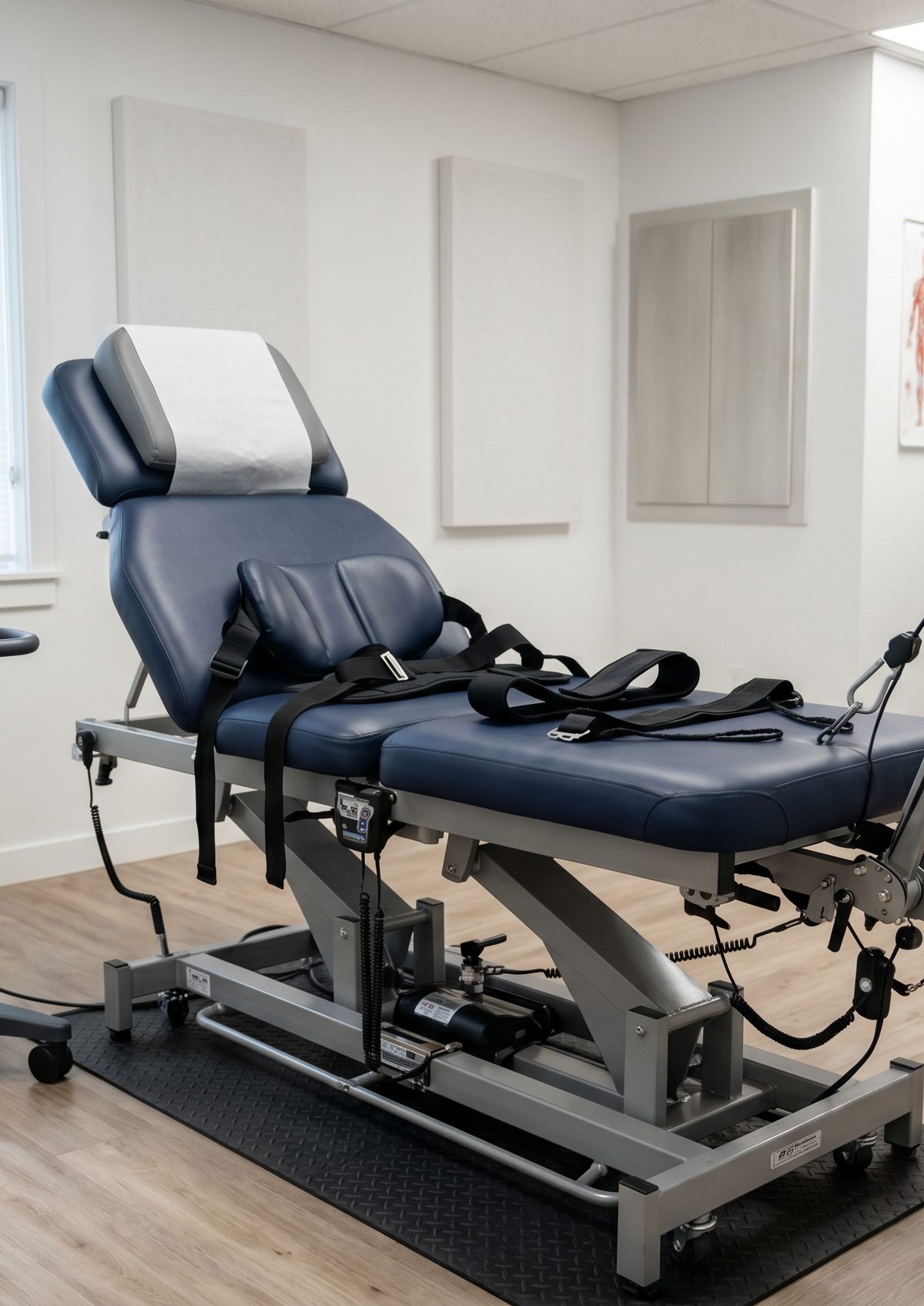
Non-surgical spinal decompression is a conservative treatment typically delivered on a motorized table. The aim is to change forces across the spine in a way that may reduce irritation around discs, joints, and nerve roots. It is often discussed for patients with back pain, disc-related pain, or radiating leg symptoms. In practice, it is usually part of a broader conservative plan rather than a stand-alone answer.
That broader plan may include movement modification, spinal and neurologic examination, targeted rehabilitation, and condition-specific care. At San Diego Chiropractic Neurology, non-surgical decompression is considered in the context of the full presentation rather than as a generic fix for every back problem. Patients looking into non-surgical spinal decompression should understand that the benefit depends on the diagnosis, severity, irritability of symptoms, and neurologic status.
Surgical decompression
Surgical decompression is different. It includes procedures designed to physically remove or reduce the structure compressing neural tissue. Depending on the diagnosis, this can include discectomy for lumbar disc herniation or laminectomy for spinal stenosis. In some cases, fusion is added, though that is not always necessary.
When people compare spinal decompression therapy vs back surgery, they are often comparing a conservative office-based treatment with an invasive procedure done in a surgical setting. Those are not interchangeable options. They serve different goals, involve different risks, and are appropriate for different clinical scenarios.
The Diagnosis Matters More Than the Buzzword
The decision is rarely based on the phrase “decompression” alone. It depends on what is actually causing the symptoms.
Herniated disc and sciatica
A lumbar disc herniation can irritate or compress a nerve root and cause sciatica, including leg pain, numbness, tingling, or weakness. Many patients improve with conservative care, especially in the early phases. MedlinePlus notes that herniated discs are often treated with non-operative strategies first, including medication and physical therapy, while surgery is reserved for selected cases when symptoms are severe or persistent.
For that reason, patients researching herniated disc care or sciatica are often appropriate for a structured trial of non-invasive treatment first, provided there is no major neurologic deficit or emergency presentation.
Lumbar spinal stenosis
Lumbar spinal stenosis involves narrowing that can affect the canal or foramina and may lead to back pain, leg pain, numbness, heaviness, or walking intolerance. These cases are sometimes more complex because symptoms can be driven by multiple structures, long-standing degeneration, and movement intolerance rather than a single acute disc problem.
Evidence comparing surgery with non-surgical care for lumbar stenosis is mixed. A Cochrane review found that the available evidence was low quality and that better studies were needed, even though some longer-term outcomes in selected studies favored decompression surgery by 24 months. The practical question is not simply “Is surgery better?” It is “Which patients are most likely to benefit from surgery, and which patients should begin with conservative management?”
Degenerative changes with instability questions
Some patients are told they need more than decompression alone, especially when stenosis coexists with degenerative spondylolisthesis or concerns about instability. But fusion is not automatically superior. A 2023 systematic review and meta-analysis found high-quality evidence that decompression alone often performed similarly to decompression plus fusion for pain and function at two years, while decompression alone involved less blood loss and shorter hospital stay. This is one reason a blanket recommendation for a larger operation deserves careful review.
Non-Surgical Spinal Decompression vs Surgery: A Practical Comparison
Goal of treatment
Non-surgical spinal decompression aims to reduce mechanical stress, calm symptoms, and support function without an operation. It is generally part of a conservative management strategy.
Surgery aims to directly relieve structural compression when symptoms, imaging, and neurologic findings indicate that conservative care is unlikely to be enough or has already failed.
Invasiveness
Non-surgical decompression is office-based and does not involve anesthesia, tissue cutting, or hospital recovery. Surgery is invasive and carries the typical considerations of an operative procedure, including anesthesia exposure, postoperative restrictions, and surgical risk.
Recovery timeline
Conservative care often allows patients to continue some level of normal activity while treatment is underway, though modifications may be necessary. Surgical recovery varies widely depending on the procedure, the tissues involved, the severity of the condition, and whether fusion is performed.
Evidence strength
Patients should be careful not to assume that a traction table has been proven superior to surgery. The available literature in the brief supports comparisons between surgery and broader conservative care in lumbar disc herniation and spinal stenosis, not a claim that table-based decompression is universally better. That distinction is essential.
For lumbar disc herniation, surgery can improve pain and function faster in appropriately selected patients. A separate network meta-analysis found lumbar discectomy superior to continuing conservative care in refractory cases for reducing leg pain and back pain. But faster improvement in selected cases is not the same as saying every patient needs surgery first. Many patients still warrant a conservative trial before making that decision.
When Conservative Care Often Makes Sense First
A conservative-first approach is often reasonable when symptoms are significant but stable, neurologic findings are not worsening, and there is no major loss of strength or emergency pattern. In these situations, the clinic may assess whether non-invasive management can reduce pain, improve tolerance for movement, and clarify whether the body is trending in the right direction. Patients should also consult their provider about whether their symptoms and imaging support continued conservative care.
Patients are often good candidates for a conservative trial when they have:
- Back pain with or without mild to moderate radiating symptoms
- Disc-related pain that has not yet gone through a structured non-operative plan
- Sciatica without progressive motor loss
- Lumbar stenosis symptoms that are bothersome but not rapidly declining
- A desire to avoid unnecessary procedures while still being monitored closely
This is where a functional neurology trained team can be useful. The goal is not only symptom reduction, but also ongoing triage. If the patient improves, conservative care may remain appropriate. If the patient plateaus, worsens, or develops new neurologic changes, the treatment plan should change with the facts.
When Surgery Becomes More Reasonable
There are cases where surgery moves higher on the list. Current literature on lumbar disc herniation suggests the most consistent indications for surgery are imaging-confirmed nerve root compression together with severe or refractory pain, while decisions around timing and motor deficits require careful clinical judgment.
In practical terms, surgery becomes more reasonable when:
- Severe pain persists despite appropriate conservative care
- Imaging and examination findings line up clearly with the symptoms
- Function continues to decline
- There is progressive weakness or worsening neurologic deficit
- The patient shows signs that suggest urgent surgical evaluation is needed
For some lumbar disc herniation cases, surgery may provide faster relief and better short-term improvement than continuing unsuccessful conservative management. That does not make surgery the default for everyone. It means there is a threshold where the risk-benefit balance changes.
Red Flags That Need Prompt Surgical Evaluation
Some symptoms should not be managed casually or delayed while trying repeated conservative options. A patient should seek urgent medical evaluation if they have:
- New or progressive motor weakness
- Loss of bowel or bladder control
- Saddle anesthesia or numbness in the groin region
- Rapidly worsening neurologic symptoms
- Pain so severe and refractory that normal function is collapsing despite appropriate care
These patterns can indicate a problem that requires immediate medical or surgical assessment. A conservative clinic should not be anti-surgery. It should recognize when the presentation has moved beyond conservative management.
Is Decompression Surgery Better Than Fusion for Lumbar Spinal Stenosis?
This question comes up often under searches like decompression surgery for spinal stenosis vs conservative treatment. In some stenosis cases, the operative decision is not just whether to operate, but whether decompression alone is enough or fusion should be added.
The evidence does not support automatically assuming fusion is better. In patients with lumbar spinal stenosis and degenerative spondylolisthesis, decompression alone often performs similarly to decompression plus fusion for pain and function at two years, while offering less blood loss and shorter hospital stay. That does not mean fusion is never indicated. It means the added procedure should be justified by the actual mechanics and clinical findings, not by habit.
How Long Should You Try Conservative Treatment Before Considering Surgery?
There is no single universal timeline because the right duration depends on the diagnosis, severity, neurologic findings, symptom progression, and effect on daily life. A person with stable disc-related sciatica may reasonably try a structured conservative plan before escalating. A person with worsening weakness may need surgical evaluation much sooner.
A useful way to think about timing is this: conservative care should show some signal that the patient is trending in the right direction. If pain intensity, walking tolerance, sleep, or neurologic findings are improving, it may make sense to continue. If there is no meaningful progress, or the patient is losing function, the treatment path should be reconsidered. The decision should be based on response to care, not arbitrary delay.
How San Diego Chiropractic Neurology Approaches the Decision
At San Diego Chiropractic Neurology, the clinic helps patients understand whether a non-invasive route is still reasonable or whether the case has crossed into surgical territory. That starts with separating common diagnoses such as disc herniation, sciatica, stenosis, and degenerative spine conditions rather than treating them as one category.
The team reviews symptom behavior, neurologic findings, tolerance for movement, and whether the current care plan is producing real change. For some patients, a program may include conservative management strategies and non-surgical decompression as part of a broader approach to back pain or disc-related symptoms. For others, the right recommendation is timely referral for imaging review or surgical consultation. That balanced approach matters for active adults in San Diego who want a clear answer without jumping straight to a procedure or staying too long in an ineffective treatment path.
Bottom Line on Spinal Decompression vs Surgery
The choice between spinal decompression vs surgery is not a simple yes-or-no decision. First, the term “spinal decompression” must be clarified, because non-surgical decompression therapy and decompression surgery are not the same thing. Second, the diagnosis matters. Disc herniation, sciatica, lumbar stenosis, and degenerative instability each change the comparison. Third, the patient’s neurologic status and response to conservative care are what determine whether a non-invasive plan still makes sense.
Many patients are appropriate for conservative care first. Some are not. The best path is the one that matches the severity of the condition, the examination findings, the imaging, and the rate of change in symptoms. If you are trying to determine whether a non-surgical option is appropriate or whether a surgical referral is now the better move, call (619) 344-0111 or book a consultation with San Diego Chiropractic Neurology for a diagnosis-specific evaluation.
Frequently Asked Questions
What is the difference between non-surgical spinal decompression and decompression surgery?
Non-surgical spinal decompression is a conservative, traction-based treatment used in some clinics. Decompression surgery is an operation, such as discectomy or laminectomy, intended to directly relieve pressure on nerves or the spinal canal. They are different interventions with different indications.
Can spinal decompression help a herniated disc without surgery?
Some patients with a herniated disc improve with conservative care, which may include non-surgical decompression as part of a broader management plan. The key issue is whether symptoms are stable and improving, and whether there is any progressive weakness or other neurologic concern.
When is surgery necessary for spinal stenosis or sciatica?
Surgery becomes more appropriate when symptoms are severe, persistent, or worsening despite appropriate conservative care, especially when imaging and examination findings match the complaint. Progressive weakness, bowel or bladder changes, and other serious neurologic signs require prompt evaluation.
Is decompression surgery better than fusion for lumbar spinal stenosis?
Not always. In selected cases of lumbar spinal stenosis with degenerative spondylolisthesis, decompression alone has shown similar pain and function outcomes to decompression plus fusion, with less blood loss and shorter hospital stay. Fusion should be based on clear clinical reasoning, not routine use.
How long should you try conservative treatment before considering back surgery?
There is no one timeline that fits every case. If symptoms are stable and improving, a conservative plan may remain appropriate. If pain remains severe, function declines, or neurologic findings worsen, surgical evaluation may be needed sooner.
References
- MedlinePlus. Herniated Disk. https://medlineplus.gov/herniateddisk.html
- Zaina F, Tomkins-Lane C, Carragee E, Negrini S. Surgical versus non-surgical treatment for lumbar spinal stenosis. Cochrane Database Syst Rev. 2016. https://pubmed.ncbi.nlm.nih.gov/26824399/
- Gadjradj PS, et al. Decompression alone or decompression and fusion in degenerative lumbar spondylolisthesis: a systematic review and meta-analysis. Eur Spine J. 2023. https://pubmed.ncbi.nlm.nih.gov/36609887/
- Chen BL, et al. Surgical versus non-operative treatment for lumbar disc herniation: a systematic review and meta-analysis. Clin Rehabil. 2018. https://pubmed.ncbi.nlm.nih.gov/28715939/
- Arts MP, et al. Surgery versus conservative care for persistent sciatica from lumbar disc herniation: a network meta-analysis. Medicine (Baltimore). 2019. https://pubmed.ncbi.nlm.nih.gov/30762743/
- Thavarajasingam SG, et al. Surgical indications for lumbar disc herniation: a systematic review. Brain Spine. 2025. https://pubmed.ncbi.nlm.nih.gov/41078967/
Medical disclaimer: This article is for educational purposes only and does not provide medical diagnosis or treatment advice. Treatment decisions depend on examination findings, imaging, symptom severity, neurologic changes, and individual health factors. Patients with progressive weakness, bowel or bladder changes, saddle anesthesia, or rapidly worsening symptoms should seek urgent medical evaluation.
Not sure what is driving your symptoms?
Talk with our Functional Neurology Trained team on a free phone consultation. We will tell you honestly whether we can help.