POTS Treatment Without Medication: What Actually Helps
Free phone consultation with our San Diego functional neurology team. No obligation.
For many patients, POTS syndrome treatment without medication is the starting point. Current clinical literature describes non-pharmacologic care as foundational in postural orthostatic tachycardia syndrome management, even when medication is later considered for selected cases . That matters because many people want practical steps that can improve daily function, reduce flares, and build better tolerance for standing, walking, exercise, work, and school.
The challenge is that POTS rarely responds to a one-page checklist. A patient may hear “drink more water, eat more salt, and exercise,” then find that standing in the kitchen still causes dizziness, compression garments feel confusing, or exercise advice is too aggressive to sustain. A better approach is individualized and progressive. San Diego Chiropractic Neurology focuses on non-invasive evaluation and rehabilitation strategies that can support patients dealing with dizziness, orthostatic symptoms, exercise intolerance, migraine overlap, vestibular complaints, or a history of concussion while coordinating with appropriate medical workup when needed.
This article explains what evidence-based, non-medication care for POTS usually includes, how to begin safely, and when home strategies are not enough.
Why non-medication care is usually first-line
POTS is a clinical syndrome marked by an excessive heart rate increase with upright posture along with symptoms such as lightheadedness, palpitations, fatigue, brain fog, weakness, nausea, or exercise intolerance. It is not a single-cause condition. Different patients may have overlapping contributors involving blood volume regulation, deconditioning, autonomic control, vestibular issues, hypermobility, migraine, post-viral onset, or concussion history. Because of that, management often begins with education and non-pharmacologic treatment rather than immediately trying medication .
That approach is also practical. There are currently no FDA-approved medications specifically for POTS, and medication effects are often modest or targeted to certain symptom patterns rather than providing a complete solution . By contrast, hydration strategy, salt intake, compression, physical countermaneuvers, pacing, and structured exercise reconditioning can address core physiologic stressors that contribute to orthostatic symptoms .
Non-medication care does not mean pushing through symptoms. It means building daily habits and a rehabilitation plan that make the nervous system and circulation easier to tolerate. For some people, that leads to meaningful improvement. For others, it creates a stronger base while physicians consider additional testing or medical treatment.
What a realistic non-pharmacologic treatment plan includes
Most patients do better when treatment is organized into practical areas instead of trying to change everything at once.
1. Hydration and fluid timing
Hydration is often a starting point because low circulating volume can worsen orthostatic symptoms. NIH guidance and peer-reviewed reviews support fluid expansion as a common part of POTS management . In practice, the goal is not simply to drink more water at random points in the day. The more useful question is whether fluid intake is adequate, consistent, and timed in a way that supports upright tolerance.
Many patients struggle because they go several hours without drinking, rely on caffeine alone in the morning, or only increase fluids after symptoms have already escalated. A structured plan may include getting fluids in earlier in the day, using electrolyte support when appropriate, and monitoring how symptoms change with heat, exercise, large meals, or prolonged standing. Patients with kidney disease, heart disease, hypertension, or other medical conditions should not increase fluid or electrolyte intake without medical guidance.
2. Salt intake when medically appropriate
Salt and fluid expansion are often discussed together because they work toward the same goal: improving circulatory support and reducing orthostatic stress . For some patients, increasing sodium intake helps improve symptom control. But “eat more salt” should not be treated as a universal instruction. Medical history matters, and patients need individualized guidance if they have blood pressure concerns, kidney issues, or other contraindications.
When clinicians recommend salt, success often depends on implementation. Patients may do better with a consistent daily strategy than with occasional high-salt meals. They may also need to track whether sodium changes reduce tachycardia, dizziness, headache, or post-exertional crashes. If symptoms do not change, another factor such as exercise progression, compression, meal timing, sleep disruption, vestibular dysfunction, or migraine overlap may be limiting progress.
3. Compression to reduce venous pooling
Compression garments can help reduce blood pooling in the lower body and abdomen, which is one reason they remain a standard non-pharmacologic tool in POTS care . Research reviews note that compression extending toward the abdomen or waist may be more effective than knee-high options alone because abdominal and pelvic pooling can play a major role in symptoms .
This is often underused because patients may try a garment that is hard to tolerate, too weak, or not the right style for their symptom pattern. Some do better with waist-high compression. Others tolerate an abdominal binder better than full stockings. A plan should be practical enough to use during school, work, errands, travel, or warm San Diego days.
4. Physical countermaneuvers for symptom spikes
Patients with POTS often need tools they can use in real time when symptoms surge. Physical countermaneuvers such as leg crossing, calf muscle pumping, glute contraction, or squatting can help reduce acute orthostatic symptoms by improving venous return . For someone who gets lightheaded in line at a store or during a presentation, knowing how to interrupt a symptom spike can improve safety and confidence.
5. Pacing, meal strategy, and trigger awareness
POTS symptoms are often influenced by more than standing alone. Heat, dehydration, sleep debt, skipped meals, large carbohydrate-heavy meals, hormonal shifts, illness, overtraining, and emotional stress can all change symptom intensity. Patients looking for POTS treatment naturally often make better progress when they identify patterns instead of assuming every flare is random.
Pacing matters because the nervous system and cardiovascular system may not tolerate abrupt changes well. A person may handle ten minutes of activity twice per day better than one twenty-minute effort that causes the rest of the day to collapse. Some patients also feel worse after large meals because blood flow shifts and upright tolerance drops. A structured care plan helps connect these day-to-day variables instead of treating symptoms as isolated events.
Exercise is essential, but the starting point has to be realistic
Exercise reconditioning is one of the strongest non-pharmacologic strategies in POTS care, but it is also where many patients struggle because the plan starts at the wrong level . A common misunderstanding is that if exercise helps POTS, then patients should begin with upright cardio, long walks, or generic high-intensity classes. For many, that makes adherence impossible.
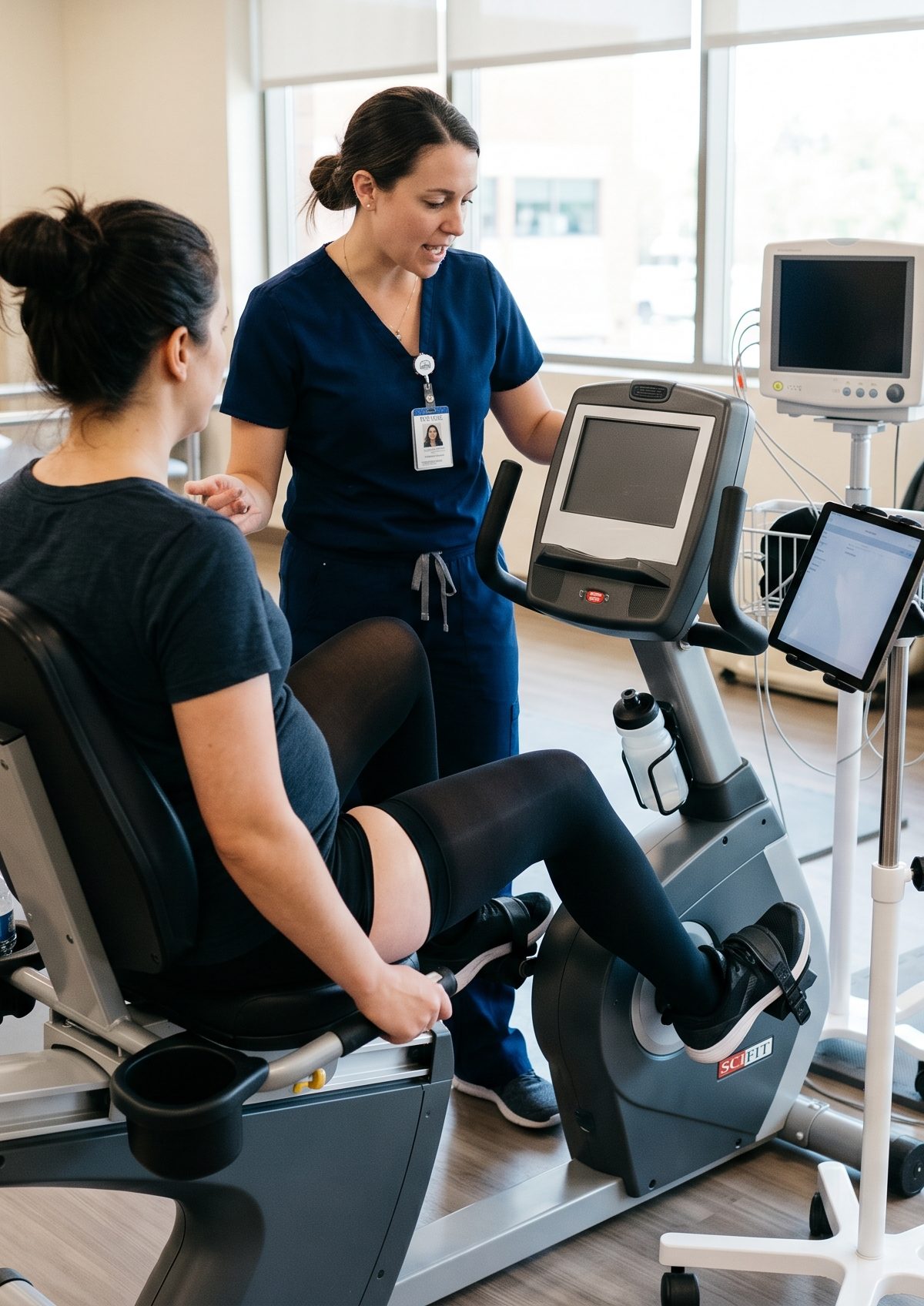
Evidence-based POTS exercise programs typically begin with recumbent or horizontal exercise to reduce upright symptom provocation while aerobic conditioning improves. Examples include recumbent biking, rowing, and swimming . The goal is not to prove effort. The goal is to build training the patient can repeat consistently.
Why recumbent exercise often works better at first
When someone becomes symptomatic simply standing in the shower or making breakfast, upright exercise may place too much demand on already unstable orthostatic control. Beginning in a horizontal or semi-recumbent position lowers that barrier. The patient can work on circulation, breathing control, muscular endurance, and exercise tolerance with less symptom escalation. Over time, the program can progress toward more upright loading as tolerated.
Recent literature also emphasizes individualized exercise progression because many patients cannot sustain rigid or overly demanding programs . In addition, a randomized trial reported better outcomes with a semi-supervised exercise training program than with standard care alone, which supports the value of structure and accountability .
What progression should look like
A useful program usually progresses by adjusting one variable at a time:
- Duration before intensity
- Frequency before complexity
- Recumbent or seated activity before prolonged upright loading
- Symptom response before arbitrary calendar deadlines
That often means starting with short sessions that feel almost too easy, then building gradually. If a session causes a severe flare lasting the rest of the day or the next day, the dose may be too high. In POTS care, consistency usually matters more than dramatic effort.
Why some patients need more than a home checklist
Home strategies can help, but they are not always enough. Some people have overlapping issues that make POTS harder to manage, including vestibular dysfunction, chronic migraine, visual motion sensitivity, post-concussion symptoms, sleep disruption, deconditioning after prolonged illness, or significant exercise intolerance. Others may not actually have POTS at all and need workup for anemia, thyroid disease, cardiac issues, medication effects, dehydration, or other causes of dizziness and tachycardia.
This is where a more complete evaluation matters. The team at San Diego Chiropractic Neurology often sees patients who are not just asking whether they have orthostatic symptoms, but why they are still struggling despite trying hydration, salt, and basic exercise advice. In those cases, a structured non-invasive assessment can help identify movement, balance, visual, autonomic, migraine, or post-concussion factors that may be limiting progress.
Patients dealing with dizziness may also benefit from related services when clinically appropriate, such as vestibular therapy. Those with overlapping autonomic regulation concerns may want to learn more about vagus nerve therapy and stimulation. For general condition information, the clinic’s POTS page and FAQ hub provide additional context.
How the clinic frames non-medication POTS care
Non-pharmacologic treatment for POTS should not be reduced to a generic lifestyle lecture. The clinic’s framework is to identify what is driving symptom load for the individual patient, then build a progression that is specific enough to follow. That may include:
- Reviewing orthostatic triggers and daily symptom patterns
- Assessing exercise tolerance and where graded activity should start
- Looking for vestibular, visual, migraine, or post-concussion overlap
- Discussing pacing, meal timing, and environmental triggers such as heat
- Coordinating with medical evaluation when red flags, medication questions, or diagnostic uncertainty are present
This matters because patients often get stuck in one of two extremes. Either they are told to manage everything on their own, or they are led to believe that only medication can help. The evidence does not support either extreme. Foundational lifestyle and rehabilitation strategies are important, but they work best when adapted to the person in front of the clinician .
What to expect from a conservative treatment timeline
POTS improvement usually happens in phases, not overnight. Early wins may include fewer symptom spikes, better tolerance for standing during daily tasks, less need to sit down suddenly, more stable exercise recovery, or better ability to get through work or school. Larger gains in conditioning often take more time.
If symptoms are worsening, fainting is frequent, chest pain is present, or the diagnosis remains uncertain, persistence alone is not the answer. Those situations require further medical evaluation.
When to seek evaluation instead of trying to manage it alone
Self-directed care has limits. A fuller evaluation is appropriate when:
- Symptoms are severe enough to disrupt school, work, exercise, or daily living
- There is frequent near-fainting or actual fainting
- Symptoms began after concussion, viral illness, pregnancy, or another major health event
- Dizziness, migraine, visual sensitivity, or balance problems occur alongside orthostatic symptoms
- Home strategies have been tried but progress remains minimal
- There are red flags such as chest pain, shortness of breath, new neurologic symptoms, or significant blood pressure concerns
Patients in San Diego looking for a structured, conservative plan often benefit from a setting that can evaluate more than heart rate alone. The right program should help clarify whether symptoms fit a straightforward POTS pattern or whether additional contributors need attention.
FAQ: POTS syndrome treatment without medication
Can POTS be treated effectively without medication?
Many patients begin with non-medication strategies, and these are commonly considered foundational in POTS care. Hydration, sodium support when medically appropriate, compression, physical countermaneuvers, and individualized exercise progression can all help. Some patients improve substantially with these steps, while others still need physician-directed medication or additional testing .
What is the best exercise for someone with POTS who gets dizzy standing up?
For many patients, the best starting point is recumbent or horizontal exercise rather than upright cardio. Recumbent biking, rowing, and swimming are commonly recommended because they allow conditioning with less upright symptom provocation. The most effective program is one the patient can tolerate consistently and progress gradually .
Do compression stockings or abdominal binders really help POTS symptoms?
They can. Compression may reduce venous pooling and improve upright tolerance, especially when support extends to the abdomen or waist rather than only the lower legs. The right garment depends on the patient’s symptoms, tolerance, climate, and ability to use it regularly .
How much salt and water do people with POTS usually need?
There is no single number that is right for everyone. Clinical guidance often includes increasing fluids and sodium, but the specifics should be individualized based on symptom pattern, blood pressure, kidney function, cardiovascular history, and physician guidance. Patients should avoid guessing if they have medical conditions that affect fluid or sodium safety .
When should someone with suspected POTS seek a full evaluation instead of trying home strategies alone?
A fuller evaluation is important when symptoms are severe, the diagnosis is uncertain, fainting occurs, symptoms started after concussion or illness, or there are overlapping issues such as migraine, dizziness, balance problems, chest pain, or significant exercise intolerance. In those situations, a structured assessment is safer and usually more efficient than trial-and-error self-management.
Take the next step
If you are looking for POTS syndrome treatment without medication, the most useful plan is usually not a random collection of internet tips. It is a structured progression built around your triggers, tolerance, and overlapping symptoms. San Diego Chiropractic Neurology provides non-invasive evaluation and rehabilitation for patients dealing with orthostatic symptoms, dizziness, exercise intolerance, migraine overlap, and related neurologic complaints.
To discuss whether a conservative care plan may be appropriate, call (619) 344-0111 or book a consultation.
References
- Vernino S, Bourne KM, Stiles LE, et al. Postural orthostatic tachycardia syndrome (POTS): State of the science and clinical care from a 2019 National Institutes of Health Expert Consensus Meeting - Part 1. Auton Neurosci. 2021. PMID: 34144933.
- Fu Q, VanGundy TB, Galbreath MM, et al. Exercise and non-pharmacological treatment of POTS. Auton Neurosci. 2018. PMID: 30001836.
- Fedorowski A. Postural orthostatic tachycardia syndrome: clinical presentation, aetiology and management. J Intern Med. 2019. PMID: 30372565.
- Trimble KZ, Switzer JN, Blitshteyn S. Exercise in Postural Orthostatic Tachycardia Syndrome: Focus on Individualized Exercise Approach. J Clin Med. 2024. PMID: 39597891.
- National Institute of Neurological Disorders and Stroke. Postural Tachycardia Syndrome (POTS). Available at: https://www.ninds.nih.gov/health-information/disorders/postural-tachycardia-syndrome-pots
- Wheatley-Guy CM, Shea MG, Parks JK, et al. Semi-supervised exercise training program more effective for individuals with postural orthostatic tachycardia syndrome in randomized controlled trial. Clin Auton Res. 2023. PMID: 37598401.
Medical disclaimer: This article is for educational purposes only and is not medical advice. POTS symptoms can overlap with other medical conditions, and treatment should be individualized. Patients should seek appropriate medical evaluation for diagnosis, red flags, or questions about fluid, sodium, compression, exercise, or medication safety.
Not sure what is driving your symptoms?
Talk with our Functional Neurology Trained team on a free phone consultation. We will tell you honestly whether we can help.