POTS Doctor San Diego: How to Find Real Autonomic Care
Doctor of Chiropractic, Functional Neurology Trained, practicing since 2012.·Medically reviewed July 26, 2026
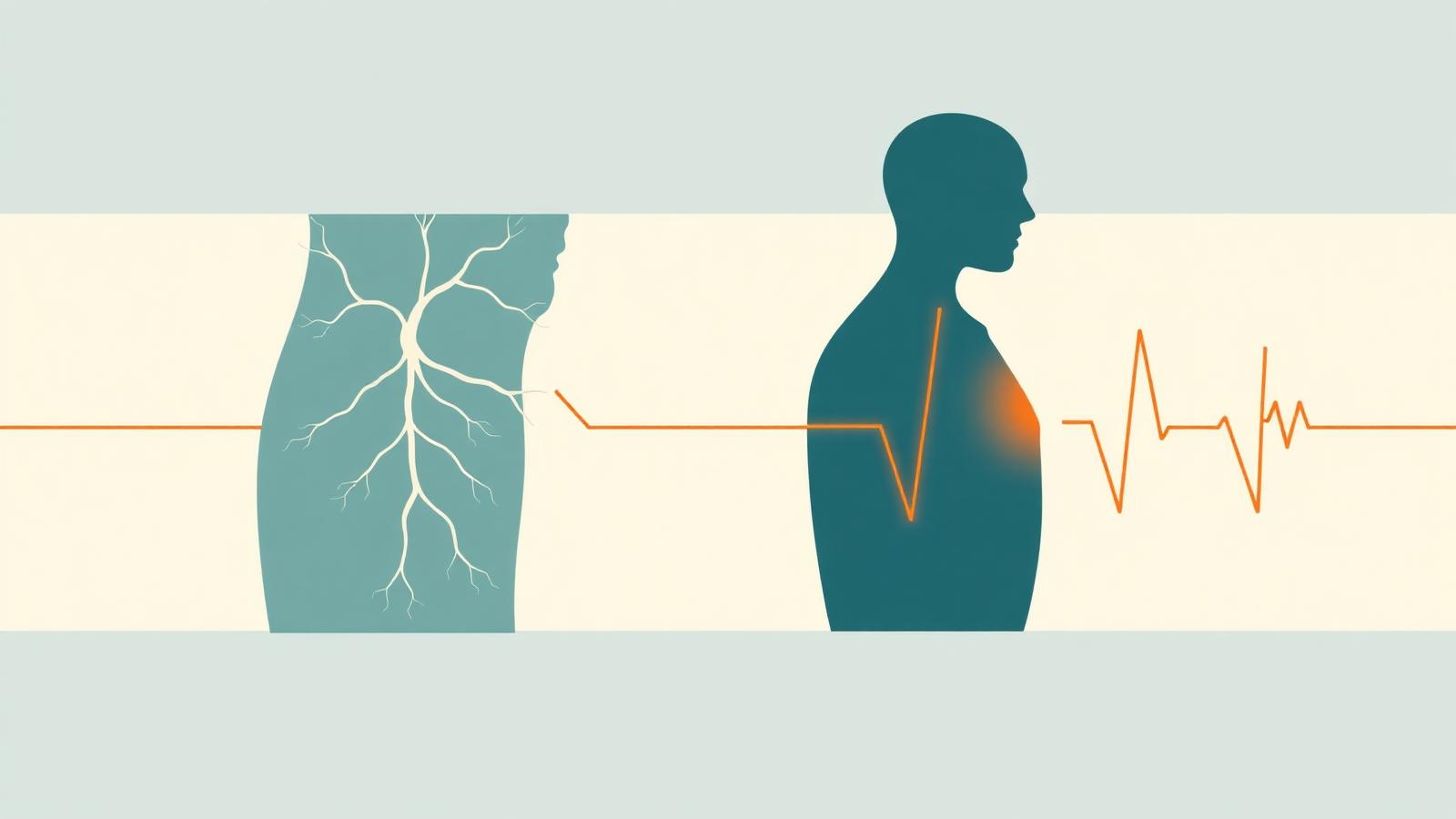
If you have been searching for a POTS doctor San Diego patients actually recommend, chances are you have already been to several offices, sat through several workups, and left with the same frustrating answer: your tests look normal. This article walks through why that keeps happening, what a functional neurological evaluation actually looks at, and how our clinic approaches the kind of dysautonomia San Diego patients are often told is just anxiety when standard testing comes back normal.
Already Diagnosed With POTS but Still Struggling?
If you've already tried the standard approaches for POTS and you're still limited by symptoms, our San Diego clinic takes a broader look at how your nervous system is regulating your body and builds rehabilitation around what we find.
Most POTS patients in San Diego see multiple doctors before getting answers
The pattern is remarkably consistent. Someone starts noticing their heart racing every time they stand up. They get lightheaded in the shower. Grocery store lines become an exercise in trying not to pass out. Fatigue and brain fog make full workdays feel impossible. They see their primary care doctor, get referred to a cardiologist, and eventually make their way to a neurologist. Somewhere along the way, someone tells them their symptoms are anxiety.
We hear this story on nearly every discovery call. Patients come to us from across San Diego County, from North County to Chula Vista, La Jolla to Escondido, often after cycling through four or five providers. Many of them found us after searching specifically for a POTS doctor in San Diego they could see without a months-long wait. Patient advocacy groups like Dysautonomia International have documented this exact pattern for years, and it matches what we see in the clinic every week. The people we work with are not looking for reassurance. They are looking for someone who takes their symptoms seriously and can explain, in plain language, what is actually happening in their body.
Why standard testing misses autonomic dysfunction
Cardiology and neurology workups are built to detect structural disease. Echocardiograms look at the shape and mechanics of the heart. MRIs look for lesions, tumors, and inflammation in the brain and spine. Bloodwork rules out anemia, thyroid disorders, and electrolyte imbalances. These are important tests and they catch important problems.
What they do not do is measure real-time autonomic dysfunction. That is the central problem in POTS and one reason autonomic dysfunction is so often dismissed. The autonomic nervous system is the part of your nervous system that runs in the background, regulating heart rate, blood pressure, digestion, and temperature without conscious input. As the National Institute of Neurological Disorders and Stroke notes, POTS reflects a problem in how these autonomic signals coordinate with posture, not a structural defect in the heart itself. There is no lesion to see on an MRI. There is no plaque to see on an angiogram.
Tilt table testing is the closest standard tool, and it is useful, but it is not perfect. Many patients present with borderline results. Others meet criteria on one test and not another. Even when a tilt table confirms POTS, it does not identify which parts of the autonomic system are contributing, which is why symptoms of autonomic dysfunction often persist even after a formal label is applied.
Standard Cardiology or Neurology Workup
- Built to detect structural disease: blockages, lesions, tumors, inflammation.
- Echocardiograms, MRIs, and bloodwork rule out anatomical and metabolic problems.
- Tilt table can confirm POTS but does not map which autonomic subsystems are involved.
- Does not measure real-time autonomic responses to positional change.
- The cervical spine is rarely evaluated as part of the autonomic picture.
Functional Neurological Evaluation
- Looks at how the nervous system is performing as a system, not only at damage.
- Orthostatic vitals taken through a full sequence of positional changes.
- Valsalva response, grip, and carotid reflex testing to measure autonomic responses.
- Vestibular, oculomotor, and coordination testing performed alongside the autonomic exam.
- Cervical spine assessed for its role in autonomic signaling, in the same visit.
What a functional neurological evaluation looks for
A functional neurological evaluation asks a different question. Instead of looking only for damage, it looks at how the nervous system is performing as a system. That includes orthostatic vitals taken through a full sequence of positional changes, autonomic reflex testing, vestibular function, oculomotor patterns, and coordination testing.
This is where the combination of functional neurology and structural spinal care, both available under one roof at our San Diego clinic, becomes relevant for patients whose autonomic symptoms have a cervical component. The cervical spine houses critical pathways for autonomic signaling. Prior head or neck trauma, chronic postural strain, and cervical joint dysfunction can all contribute to autonomic symptoms, and this connection is often overlooked in a standard workup. Our San Diego clinic evaluates both the autonomic nervous system and cervical spine involvement in the same visit, under one roof, as part of the same clinical picture.
Not every clinic offering functional neurology San Diego patients can find nearby evaluates the cervical spine alongside autonomic performance, and that gap leaves many cases partially unexplained. For anyone researching functional neurology San Diego options, this integrated approach is what separates a functional workup from a standard screening.
The purpose of the evaluation is not to hand you a label. It is to build a clear map of which systems are contributing to your symptoms and what a reasonable next step looks like.
POTS, dysautonomia, and the autonomic nervous system explained
Dysautonomia is the broad category. It refers to any dysfunction of the autonomic nervous system, which includes the sympathetic branch (the accelerator) and the parasympathetic branch (the brake). When these two branches fall out of balance, symptoms can show up almost anywhere: heart, gut, temperature regulation, energy, sleep, cognitive function. When people search for dysautonomia San Diego resources online, they often find cardiology offices first, even though the autonomic system spans far more than heart rate.
POTS is one specific pattern within dysautonomia. It is defined by an abnormal heart rate increase upon standing, typically thirty beats per minute or more within ten minutes of moving from lying down to upright, without a corresponding drop in blood pressure. Many patients have POTS alongside broader dysautonomia symptoms, which is why looking at the autonomic system as a whole tends to give a more complete picture than focusing on the heart rate response alone. Understanding this distinction helps explain why a POTS doctor San Diego residents choose should look past the heart and evaluate the full autonomic picture.
What to expect when you reach out to our San Diego clinic
The starting point is a free fifteen minute phone consult with the doctor. Not a receptionist, not a sales call, not a form. You describe what you have been dealing with, what you have already tried, and what has and has not helped. If you have been looking for dysautonomia San Diego support that starts with listening rather than rushing to a label, this call is designed for that. The doctor tells you honestly whether our approach makes sense for your situation.
If it is not a fit, you will hear that too. We would rather point someone in a more useful direction than book an evaluation that will not help. If it does look like a fit, the next step is a full in-office functional neurological evaluation at our San Diego office, conveniently located for patients throughout San Diego County and within reach of UCSD Medical Center and the surrounding neighborhoods.
Frequently Asked Questions About Finding a POTS Doctor in San Diego
What is the difference between POTS and dysautonomia?
Dysautonomia is the umbrella term for any dysfunction of the autonomic nervous system, the part of the nervous system that regulates heart rate, blood pressure, digestion, temperature, and other automatic functions. POTS, or Postural Orthostatic Tachycardia Syndrome, is one specific form of dysautonomia characterized by an abnormal heart rate increase upon standing. All POTS involves dysautonomia, but not all dysautonomia is POTS.
Do I need a referral to see a POTS doctor in San Diego?
No referral is needed to schedule a free phone consult with our San Diego clinic. You can book directly through our website and speak with the doctor to determine whether our functional neurological evaluation is the right next step for your situation.
Why do so many POTS patients get told their tests look normal?
Standard cardiology and neurology testing is designed to detect structural disease, such as blocked arteries, lesions, or tumors. Autonomic nervous system dysfunction is a functional problem, meaning the wiring is intact but not operating correctly. Tilt table tests can produce borderline results, and standard bloodwork will not measure heart rate variability or real-time autonomic responses.
What does a functional neurological evaluation for POTS involve?
Patients pursuing functional neurology San Diego care typically undergo a comprehensive assessment that includes the following. A functional neurological evaluation looks at how the autonomic nervous system, vestibular system, oculomotor patterns, and cervical spine are working together. It includes positional orthostatic testing, Valsalva response testing, grip and carotid reflex testing, balance and coordination testing, and eye movement analysis. The goal is clarity about which systems are contributing to your symptoms so a next step can be determined.
Still Looking for What Comes Next?
If you already have the diagnosis and want to know whether our approach may be a good fit, start with a free 15-minute discovery call.
Ready to talk it through?
The first step is a conversation, not a commitment. If you have been dealing with POTS symptoms and want to find a POTS doctor in San Diego who evaluates autonomic function directly, a free phone consult is the simplest way to see whether our approach fits your situation.
Schedule a Free Phone Consult