Concussion Symptoms Months Later? What They Actually Mean
Free phone consultation with our San Diego functional neurology team. No obligation.
When post concussion syndrome symptoms lasting months continue to affect daily life, many people start to wonder whether recovery has stalled for good. In most cases, persistent symptoms do not mean a person is out of options. They usually mean the problem needs a more complete evaluation. Headaches, dizziness, brain fog, visual discomfort, neck pain, fatigue, and sound sensitivity can continue when more than one system is involved in recovery.
At San Diego Chiropractic Neurology, the clinical focus is on identifying which factors may be keeping symptoms active. Instead of assuming every symptom comes from one single source, the team-centered approach looks at vestibular function, eye movements, cervical involvement, migraine patterns, autonomic regulation, sleep disruption, and graded activity tolerance. That can matter when symptoms have been lingering for weeks or months.
Many patients in San Diego have already been told to rest, avoid screens, and give it more time. Early rest can play a role right after injury, but long-term recovery often depends on targeted rehabilitation and a careful review of what is driving symptoms now.
How Long Can Symptoms Last After a Concussion?
Recovery timelines vary. Many people improve within days to weeks, but some continue to have symptoms beyond the expected window. That longer course is often described as persistent post-concussive symptoms or post concussion syndrome. The term does not explain the cause by itself. It only describes the fact that symptoms are continuing.
Persistent symptoms can include:
- Headaches or migraine-like episodes
- Dizziness or motion sensitivity
- Brain fog and slowed thinking
- Poor concentration
- Light and sound sensitivity
- Sleep disruption
- Fatigue with normal daily tasks
- Neck pain
- Balance problems
- Anxiety about symptom flare-ups
When these symptoms last for months, the key question is not just how long they have lasted. The key question is why they are still happening.
Why Post Concussion Symptoms May Last for Months
Persistent symptoms can happen for several reasons. In many cases, there is overlap between systems rather than one isolated problem.
1. Vestibular dysfunction
The vestibular system helps the brain process motion, balance, and spatial orientation. After a concussion, this system may not integrate well with vision and body position signals. That can lead to dizziness, unsteadiness, nausea, and discomfort in busy environments. Patients with these symptoms may also benefit from resources on vertigo and vestibular therapy.
2. Visual and oculomotor strain
Symptoms such as headaches with reading, trouble focusing, eye fatigue, or difficulty scrolling on a screen may point to visual tracking or eye movement issues. A concussion can disrupt how the eyes coordinate during reading, screen use, and movement. That is one reason some people feel “fine” at rest but flare up during work or school tasks. In some cases, neuro-visual rehabilitation can be part of a structured plan.
3. Cervical involvement
Neck injury often occurs with concussion. If the cervical spine is irritated, it can contribute to headaches, dizziness, and a sense of disorientation. Cervicogenic symptoms may be missed when the entire picture is labeled as only a brain issue.
4. Migraine activation
Concussion can trigger or worsen migraine pathways. This can show up as throbbing headache, nausea, light sensitivity, sound sensitivity, and activity intolerance. For some patients, persistent symptoms fit a post-traumatic migraine pattern more than a simple delayed recovery. Related background information is available on the clinic’s migraine page.
5. Autonomic dysregulation
Some people experience heart rate changes, fatigue, exercise intolerance, or symptoms that worsen when upright for long periods. This can point to autonomic nervous system involvement. If present, recovery planning should account for pacing, conditioning, and symptom-trigger thresholds rather than relying on passive rest alone.
6. Sleep and stress effects
Sleep disruption, irregular routines, and stress can amplify symptom perception and reduce resilience during recovery. That does not mean symptoms are imaginary. It means recovery is often influenced by brain, body, and behavior together.
Symptoms Months After Concussion That Deserve Attention
If symptoms are lasting months, the following patterns usually justify a more thorough evaluation:
- Headaches that keep returning with reading, exercise, or screen time
- Dizziness in stores, traffic, gyms, or crowded places
- Brain fog that interferes with work, school, or conversation
- Light sensitivity that limits normal function
- Fatigue out of proportion to activity
- Neck pain with headaches or dizziness
- Difficulty tolerating exercise
- Balance problems or a sense of being “off”
- Symptoms that fluctuate without a clear plan for progression
These symptoms do not always require emergency care, but they do suggest that a passive wait-and-see approach may not be enough.
What a Structured Evaluation Should Look At
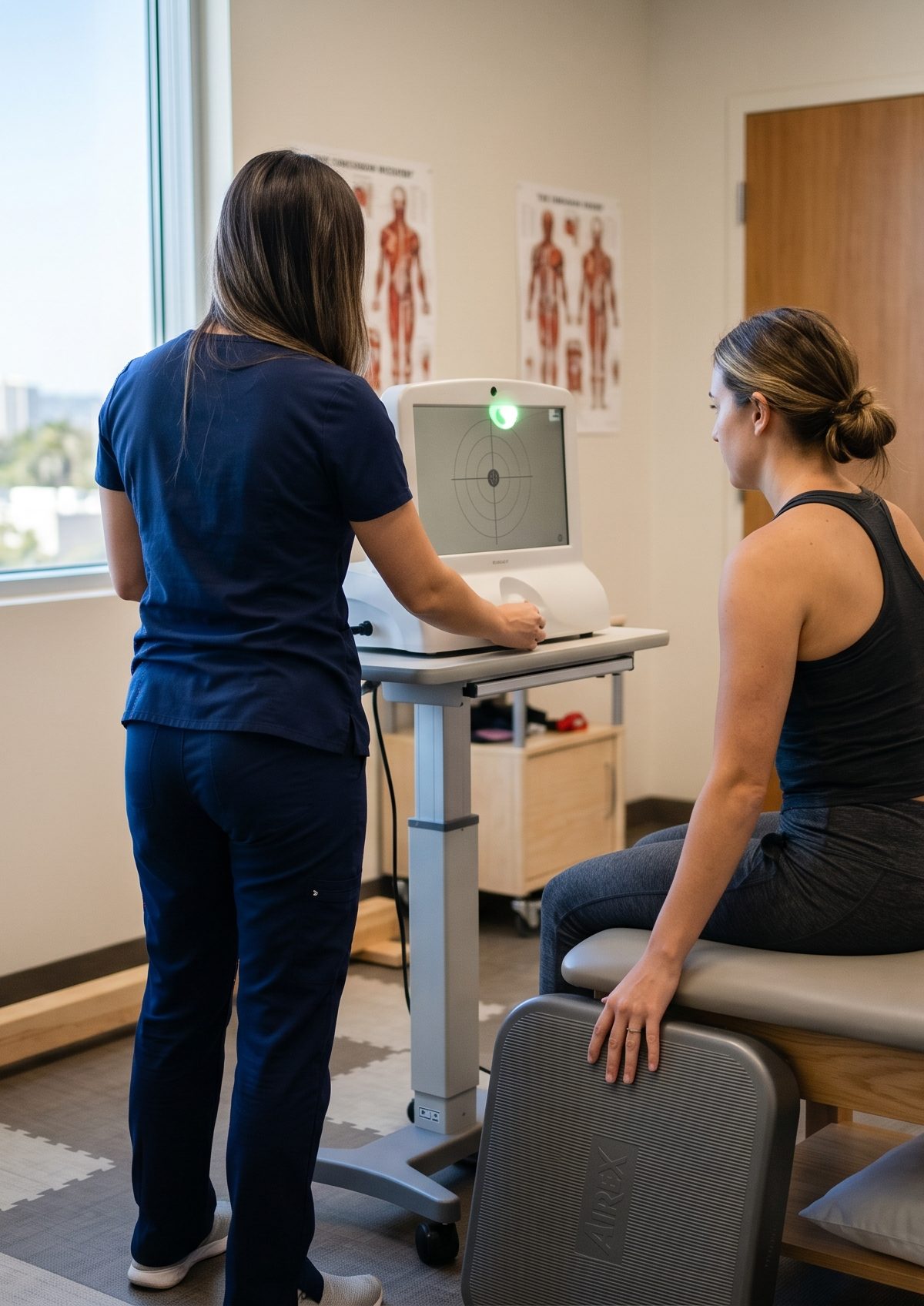
A meaningful evaluation for persistent symptoms should do more than confirm that a concussion happened in the past. It should look for the systems that are still underperforming now. That may include:
- Symptom triggers and daily pattern review
- Eye movement and visual tracking assessment
- Balance and vestibular screening
- Cervical motion and symptom provocation review
- Activity tolerance and exertional response
- Headache pattern classification
- Autonomic symptom screening
- Sleep and recovery behavior review
This type of functional review helps separate persistent symptoms into treatable contributors. It can also reduce the frustration patients feel when they have been told that imaging is normal, yet daily function is still limited. Normal imaging does not rule out ongoing functional problems in vestibular, visual, autonomic, or cervicogenic systems.
Why Prolonged Rest Alone Is Usually Not the Full Answer
Older advice often emphasized extended rest until every symptom was gone. More current guidance supports a more active, symptom-informed recovery process for many patients. That does not mean pushing through severe symptoms. It means matching rehabilitation to the systems involved and staying below clear aggravation thresholds.
Examples may include graded aerobic activity, vestibular exercises, visual rehabilitation strategies, and neck-focused care when appropriate. The exact plan should depend on findings rather than a one-size-fits-all protocol.
What Patients in San Diego Often Want to Know
Many local patients are trying to return to work, school, sports, driving, and family responsibilities while symptoms remain unpredictable. In San Diego, that often means concern about commuting, screen-heavy jobs, fitness routines, and busy environments that trigger dizziness or headache. A care plan has to account for real daily demands, not just symptom scores in a quiet room.
Common Persistent Symptom Patterns
Not every patient experiences persistent symptoms in the same way. Some notice that headaches are the main problem. Others feel mostly dizzy, mentally slowed down, or unusually tired after basic tasks. Looking at the pattern can help clarify which systems deserve more attention.
For example, a patient whose symptoms worsen in grocery stores, scrolling environments, or busy intersections may have a stronger vestibular and visual component. A patient whose headaches intensify with neck movement or prolonged sitting may have a more significant cervical contribution. Someone who feels wiped out after mild exercise or standing may need additional autonomic screening. These patterns are not final diagnoses, but they are clinically useful clues.
Another reason pattern recognition matters is that persistent symptoms often create secondary effects. If a person avoids movement because symptoms flare, conditioning may decline. If sleep quality gets worse, headache threshold and focus may also worsen. If work tasks become harder, stress can increase and make daily symptoms feel even more disruptive. A complete plan has to account for the whole picture.
What Recovery Planning May Include
Once the symptom drivers are better defined, rehabilitation can become more specific. That may include graded aerobic activity below a clear symptom threshold, balance and gaze stabilization work, visual tracking exercises, neck-focused care, environmental pacing, and stepwise return-to-work or return-to-school strategies. The purpose is not to do more at any cost. The purpose is to do the right amount of the right activity at the right time.
Patients are often relieved when recovery planning becomes specific. Instead of hearing vague advice to simply rest more, they can understand what tends to trigger symptoms, what can be progressed safely, and what should be monitored over time. This can also make it easier to communicate with family, employers, teachers, and coaches about realistic expectations.
For some people, symptom improvement is gradual rather than dramatic. Even so, gradual progress in reading tolerance, walking tolerance, balance confidence, screen time, and headache frequency can represent meaningful recovery. A structured plan gives those changes a framework.
Can Symptoms Still Improve After Months?
Yes, improvement is often still possible when the drivers of symptoms are identified and addressed appropriately. Persistent symptoms do not automatically mean permanent symptoms. They do mean the recovery process may need to shift from generic advice to targeted evaluation and rehabilitation.
That is especially true when symptoms relate to vestibular dysfunction, visual tracking problems, migraine patterns, neck involvement, or autonomic intolerance. These issues can respond better when they are recognized specifically instead of being grouped into a vague “post concussion” label.
When to Seek an Evaluation
Consider a formal evaluation if symptoms are lasting beyond the expected recovery period, are interfering with daily function, or keep returning with normal activity. The goal is not just to label the condition. The goal is to identify what is still limiting recovery and what can be done about it.
When symptoms have persisted well past the expected window, structured post-concussion care is usually the next step, and our FAQs cover what an initial visit involves.
FAQ
How long can post concussion syndrome symptoms last?
They can last weeks or months in some cases. When symptoms continue, the next step is understanding what systems are still contributing to headaches, dizziness, brain fog, or fatigue.
What symptoms months after a concussion should not be ignored?
Persistent headaches, dizziness, visual strain, exercise intolerance, neck pain, balance problems, and cognitive symptoms that interfere with daily life all warrant closer review.
Why do dizziness and brain fog continue after a concussion?
These symptoms can persist when vestibular function, visual processing, autonomic regulation, migraine pathways, or cervical input remain disrupted after the injury.
Can post concussion syndrome improve without surgery or medication?
Many patients are managed with non-invasive evaluation and rehabilitation strategies based on the systems involved. The right plan depends on individual findings.
When should someone seek care in San Diego?
If symptoms are lasting longer than expected, limiting work or school, or repeatedly flaring with normal activity, a structured evaluation is reasonable.
Call (619) 344-0111 or book a free consultation to discuss whether a structured evaluation for persistent concussion symptoms may be appropriate.
Medical disclaimer: This article is for educational purposes only and is not medical advice, diagnosis, or treatment. Individual symptoms and recovery timelines vary. Seek emergency care for severe or worsening symptoms, and consult a qualified healthcare professional for personal medical guidance.
References
- Patricios JS, Schneider KJ, Dvorak J, et al. Consensus statement on concussion in sport: the 6th International Conference on Concussion in Sport—Amsterdam, October 2022. Br J Sports Med. 2023;57(11):695-711.
- Postconcussive Syndrome. StatPearls. National Center for Biotechnology Information. Accessed 2026.
- Centers for Disease Control and Prevention. Traumatic Brain Injury and Concussion resources. Accessed 2026.
- Leddy JJ, Haider MN, Ellis MJ, Willer BS. Exercise is medicine for concussion. Review literature on subsymptom threshold aerobic exercise in concussion recovery.
Not sure what is driving your symptoms?
Talk with our Functional Neurology Trained team on a free phone consultation. We will tell you honestly whether we can help.