Orthostatic Intolerance Treatment San Diego: What Evaluation and Support May Include
Free phone consultation with our San Diego functional neurology team. No obligation.
Feeling lightheaded, shaky, nauseated, or unusually fatigued when standing is frustrating. For some people, those symptoms pass quickly. For others, they disrupt work, exercise, errands, driving, and even basic daily routines. When that pattern happens repeatedly, orthostatic intolerance may be part of the picture.
People searching for orthostatic intolerance treatment San Diego are often not just looking for a label. They want to know why standing feels so hard, whether symptoms overlap with POTS or another autonomic issue, and what kind of help may be reasonable beyond being told to “drink more water” and hope for the best.
At San Diego Chiropractic Neurology, the clinical focus is not on claiming to cure a disease. Instead, the team looks at how neurologic, vestibular, visual, cervical, and autonomic factors may be affecting upright tolerance and day-to-day function. That can matter because orthostatic symptoms do not always come from one source alone.
What is orthostatic intolerance?
Orthostatic intolerance is a symptom pattern in which being upright triggers problems such as dizziness, lightheadedness, weakness, rapid heartbeat, nausea, “brain fog,” blurred vision, or near-fainting, and those symptoms improve when sitting or lying down. Consensus guidance describes chronic orthostatic intolerance as a broader category that can include POTS and related autonomic disorders.
In plain language, the body has a harder time adapting to gravity. When a person stands, blood flow, heart rate, blood vessel tone, breathing, and nervous system responses all need to coordinate quickly. If that response is inefficient, symptoms may follow.
That does not automatically mean every person with orthostatic symptoms has the same diagnosis. Some patients ultimately fit a POTS pattern. Others may have orthostatic hypotension, post-viral dysautonomia, deconditioning, medication-related effects, vestibular overlap, migraine overlap, or a mixed presentation that needs a broader workup.
Is orthostatic intolerance the same as POTS?
No. POTS is one specific clinical syndrome within the larger world of orthostatic intolerance. A person can have orthostatic symptoms without meeting formal POTS criteria, and that distinction matters when planning next steps.
Conventional medical evaluation may include vital-sign changes with position, symptom history, medication review, hydration status, blood pressure patterns, heart rate response, and screening for contributing conditions. Depending on the case, a patient may also need input from primary care, cardiology, neurology, or an autonomic specialist.
The clinic’s rehabilitation role is different. Once serious medical issues have been considered, the focus may shift toward why upright tolerance is poor, what symptom triggers are present, whether visual-vestibular stress is amplifying symptoms, and how to build better tolerance step by step.
Common symptoms that bring people in for evaluation
- Dizziness when standing up
- Rapid heart rate or pounding heartbeat upright
- Fatigue that worsens with standing or walking
- Brain fog, poor concentration, or visual strain
- Shortness of breath or feeling “wired but weak”
- Exercise intolerance
- Heat intolerance
- Near-fainting episodes
- Symptoms after viral illness or concussion
Some San Diego patients also notice their symptoms flare in hot weather, in long lines, during showers, after skipping meals, or during visually busy activities like grocery shopping. Those details help guide evaluation because they can point toward overlapping autonomic, vestibular, or sensory-processing stressors.
What conventional treatment usually includes
For orthostatic intolerance or POTS-type presentations, conventional care often begins with education and symptom-management basics. Expert guidance commonly includes fluid intake, salt strategies when medically appropriate, compression garments, trigger reduction, and carefully graded reconditioning.
Some patients also need medication review or prescription management through their medical providers. That decision belongs on the conventional medical side, not in a rehab blog post. It is important to keep that boundary clear.
In other words, the medical layer often asks:
- Is there an autonomic disorder, blood-pressure issue, cardiac issue, medication effect, or other medical contributor?
- Are further tests needed?
- Would fluids, salt, compression, medication, or specialist referral make sense?
That medical framework is still the foundation. It should not be replaced by broad alternative claims.
Where clinic-based rehabilitation may fit
The clinic’s role is to support function and tolerance, not to promise a cure for dysautonomia. When orthostatic symptoms persist, the next useful question is often: what is making upright function harder than it should be?
That can include:
- poor tolerance for head or eye movement
- visual motion sensitivity
- vestibular mismatch
- breathing pattern inefficiency
- deconditioning
- cervical input problems after neck strain or concussion
- difficulty pacing activity without flare-ups
For example, some people who search for an autonomic or POTS evaluation also describe dizziness in stores, trouble scrolling screens, balance problems, or symptoms after a concussion. Those patterns may justify looking beyond a simple heart-rate explanation. Research on chronic dizziness conditions also supports the idea that visual and vestibular contributors can meaningfully affect symptom persistence.
In that setting, rehabilitation may focus on autonomic pacing, exertional tolerance, visual-vestibular integration, movement progression, and symptom-pattern tracking. The goal is to help the nervous system tolerate upright activity better, not to make disease-cure claims or suggest that off-label modalities directly treat the diagnosis itself.
Why exercise advice needs to be individualized
Many patients with orthostatic symptoms have already been told to exercise more. The problem is that “just work out” is usually too vague. Exercise-based reconditioning can help, but the starting point and progression matter.
If symptoms spike with standing, a patient may initially tolerate recumbent or seated formats better than upright cardio. Progression may need to account for fatigue, heart-rate response, recovery time, visual triggers, and vestibular tolerance. When people are pushed too hard too early, they often conclude exercise “doesn’t work,” when the real issue may be dosage and sequencing.
That is one reason conservative rehab can be useful. It can help bridge the gap between a medical diagnosis and a practical plan for rebuilding tolerance.
Orthostatic symptoms after viral illness or COVID
Post-viral symptom patterns have received much more attention in recent years. Literature on long COVID has highlighted autonomic dysfunction and orthostatic symptoms as a real part of the recovery picture for some patients.
That does not mean every case follows the same path. It does mean that persistent fatigue, dizziness, rapid heart rate, and exercise intolerance after illness deserve a structured evaluation rather than dismissal.
For some patients, care may involve medical testing first and rehabilitation second. For others, both tracks may run in parallel. The key is using a multidisciplinary lens instead of assuming there is only one explanation.
When dizziness on standing may not be “just autonomic”
Orthostatic symptoms can overlap with several other conditions. A few common examples include:
- Vestibular dysfunction: dizziness with head movement, busy environments, or position changes may also point toward balance-system involvement. See vestibular therapy.
- Concussion history: lingering visual, balance, or autonomic symptoms after head injury can complicate upright tolerance. See concussion evaluation.
- Migraine overlap: some patients have migraine-related dizziness that worsens with sensory load.
- Visual motion sensitivity: screens, stores, and traffic can amplify symptoms even when standing is only part of the trigger pattern.
That overlap is one reason a narrow, one-system view may miss part of the picture. A useful evaluation should ask what symptoms occur, when they occur, what triggers them, and what body systems seem to be involved.
What an evaluation in San Diego may include
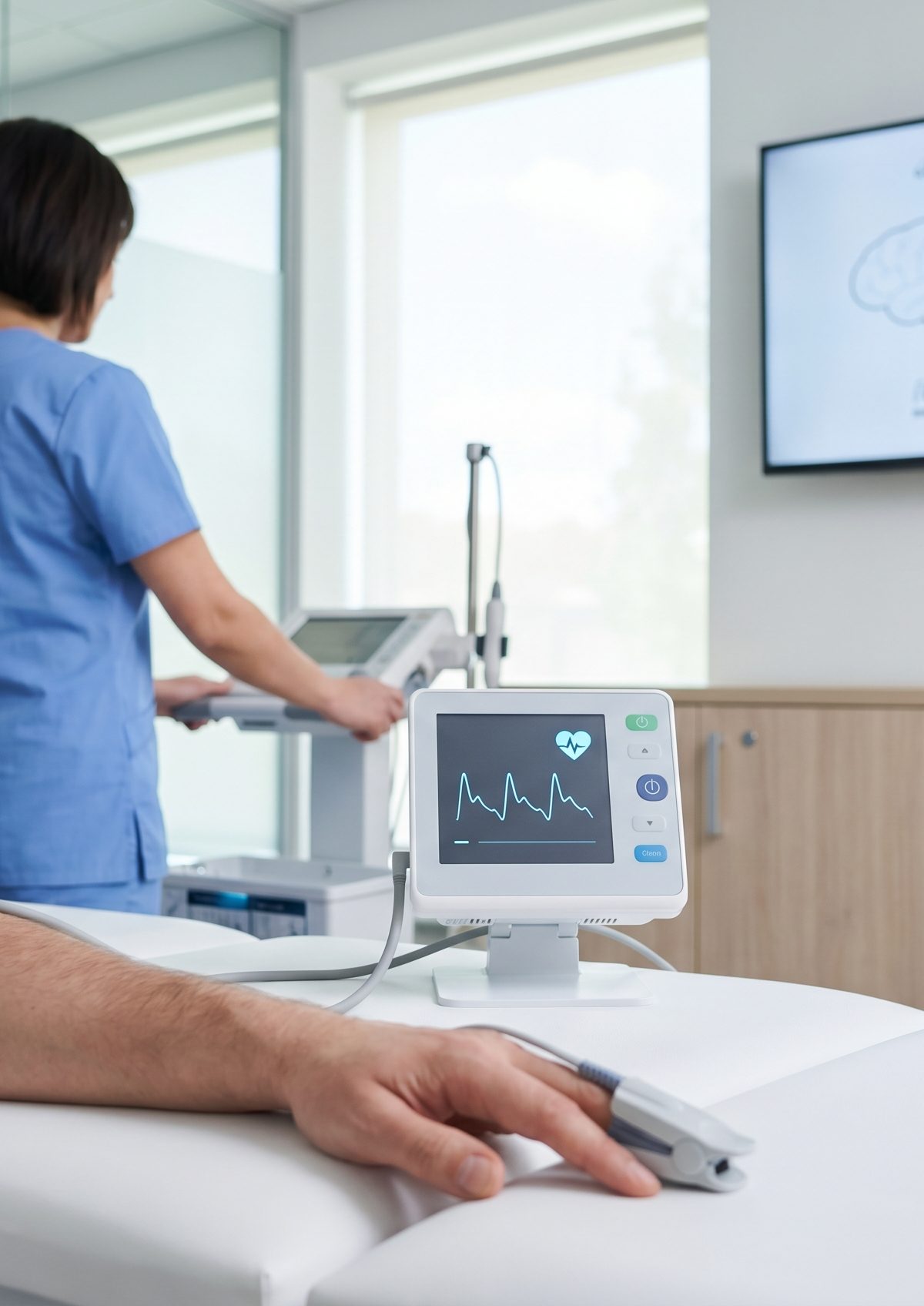
A conservative orthostatic symptom evaluation may include a detailed history, symptom trigger review, upright tolerance discussion, and screening for visual, vestibular, cervical, and autonomic stress patterns. Depending on the case, this may also include coordination testing, eye-movement observations, balance screening, and activity-tolerance discussion.
That is not a substitute for emergency or specialist medical care. If a patient has chest pain, fainting, major shortness of breath, severe neurologic symptoms, or a rapidly worsening condition, urgent medical evaluation comes first.
For more routine but persistent symptoms, the next step is usually deciding whether the problem appears primarily medical, primarily rehabilitative, or mixed.
Why symptoms are often missed
Orthostatic symptoms are easy to underestimate because many people appear normal while seated. A short office visit may miss what happens after standing for several minutes, walking through a store, climbing stairs, or trying to exercise. Patients are sometimes told that normal basic testing means nothing is wrong, even though their day-to-day function says otherwise.
A better approach is to match evaluation to the real-life symptom pattern. That means asking what happens in the morning, after meals, in heat, during stress, after illness, and during visually demanding tasks. It also means asking what improves symptoms, how quickly recovery happens, and whether symptoms cluster with headache, neck tension, imbalance, or fatigue. Those details often matter more than one isolated symptom label.
Why local, practical guidance matters
For patients in San Diego, climate and daily routines can influence symptom load. Warm weather, long walks, standing in line, driving between appointments, beach outings, and missed hydration during busy workdays can all magnify upright intolerance. A useful care plan should be practical enough to fit real life, not just ideal conditions.
That is another reason simple reassurance is often not enough. Patients usually need a plan that helps them understand triggers, pace activity, build tolerance safely, and know when medical reassessment is necessary.
What treatment goals are realistic?
Reasonable goals may include:
- improving tolerance for standing and walking
- reducing symptom flare frequency
- improving visual and vestibular tolerance
- building exercise capacity gradually
- helping patients pace activity with fewer crashes
- supporting day-to-day function at work, school, or home
Those goals are different from promising to eliminate a diagnosis. They are more practical and more honest. In many chronic orthostatic symptom cases, functional improvement comes from steady progress across hydration, pacing, conditioning, trigger control, and targeted rehabilitation rather than one dramatic intervention.
When should someone seek care?
Persistent dizziness, racing heart, near-fainting, fatigue, or brain fog with standing deserves attention when symptoms are frequent, disruptive, or worsening. It is especially worth evaluating when symptoms started after illness, concussion, or another major health change.
It is also worth getting evaluated if a person has already tried the obvious basics and still cannot tolerate normal daily activity. Delays are common because many patients look fine at rest, but rest is not when their problem shows up.
A practical next step
If upright symptoms are affecting daily life, a more structured evaluation may help clarify whether the pattern looks primarily autonomic, vestibular, post-concussion, migraine-related, deconditioning-related, or mixed. That distinction often guides better decisions than chasing one label in isolation.
Call (619) 344-0111 or book a free consultation.
Frequently asked questions
What is orthostatic intolerance?
Orthostatic intolerance is a group of symptoms that worsen when a person is upright and improve when they sit or lie down. Common symptoms include dizziness, rapid heartbeat, fatigue, nausea, and brain fog.
Is orthostatic intolerance the same as POTS?
No. POTS is one type of orthostatic intolerance, but not every person with orthostatic symptoms meets POTS criteria. A proper evaluation helps separate those patterns.
What kind of treatment helps orthostatic intolerance?
Conventional care often includes fluids, salt when appropriate, compression, trigger management, and gradual exercise progression. Rehabilitation may also help support tolerance, pacing, balance, and visual-vestibular function depending on the case.
When should dizziness on standing be evaluated?
Symptoms should be evaluated when they are recurring, worsening, limiting daily activity, or happening alongside rapid heart rate, near-fainting, post-viral fatigue, or neurologic symptoms.
Can rehabilitation help if medical tests are normal?
Sometimes, yes. If symptoms persist despite a reassuring medical workup, rehabilitation may still help identify tolerance barriers involving exertion, balance, vision, neck input, or symptom pacing.
References
- Raj SR, Guzman JC, Harvey P, et al. Canadian Cardiovascular Society Position Statement on Postural Orthostatic Tachycardia Syndrome and Related Disorders of Chronic Orthostatic Intolerance. Can J Cardiol. 2020. https://pubmed.ncbi.nlm.nih.gov/33281045/
- Vernino S, Bourne KM, Stiles LE, et al. Postural Orthostatic Tachycardia Syndrome (POTS): State of the Science and Clinical Care From a 2021 National Institutes of Health Expert Consensus Meeting. Part 2: Management and Future Directions. Auton Neurosci. 2021. https://pubmed.ncbi.nlm.nih.gov/34247165/
- Fu Q, Levine BD. Exercise in the Postural Orthostatic Tachycardia Syndrome. Auton Neurosci. 2015. https://pubmed.ncbi.nlm.nih.gov/25681858/
- Dani M, Dirksen A, Taraborrelli P, et al. Autonomic dysfunction in long COVID: rationale, physiology and management strategies. Clin Med (Lond). 2021. https://pubmed.ncbi.nlm.nih.gov/33727435/
- Popkirov S, Staab JP, Stone J. Persistent postural-perceptual dizziness (PPPD): a common, characteristic and treatable cause of chronic dizziness. Pract Neurol. 2018. https://pubmed.ncbi.nlm.nih.gov/30420470/
- Wells R, Sheldon RS, Kline-Rogers E, et al. Canadian Cardiovascular Society Clinical Practice Update on Postural Orthostatic Tachycardia Syndrome, Orthostatic Hypotension, and Vasovagal Syncope: Diagnosis and Management. Can J Cardiol. 2022. https://pubmed.ncbi.nlm.nih.gov/35952938/
Medical disclaimer: This article is for educational purposes only and is not medical advice. It does not diagnose or treat any individual condition. Patients should seek appropriate evaluation from qualified medical professionals for diagnosis, emergency symptoms, medication decisions, and condition-specific medical care.
Not sure what is driving your symptoms?
Talk with our Functional Neurology Trained team on a free phone consultation. We will tell you honestly whether we can help.