Non Surgical Spinal Decompression San Diego: Who It May Help and When to Consider It
Free phone consultation with our San Diego functional neurology team. No obligation.
If you are searching for non surgical spinal decompression San Diego patients use for disc-related back pain or sciatica, start with one question: do your symptoms match the type of problem this treatment may help? That matters more than the marketing.
I am the team at San Diego Chiropractic Neurology. At San Diego Chiropractic Neurology, we evaluate back pain through a neurologic and functional lens. Low back pain is common, but it does not always come from the same source. The World Health Organization reports that low back pain is a leading cause of disability worldwide. It also notes that about 90% of low back pain is non-specific, which means it cannot be linked with confidence to one exact structure.
That is why non surgical spinal decompression San Diego clinics advertise should not be presented as a cure-all. In the right case, spinal decompression therapy San Diego patients receive may be one part of conservative care. In the wrong case, it may be the wrong tool or delay the right referral.
In this guide, I will explain what non-surgical spinal decompression is, who may be a reasonable candidate, when it may help with a herniated disc or sciatica, when urgent medical evaluation matters more than conservative care, and how we approach San Diego spinal decompression as part of a broader plan.
What Is Non-Surgical Spinal Decompression?
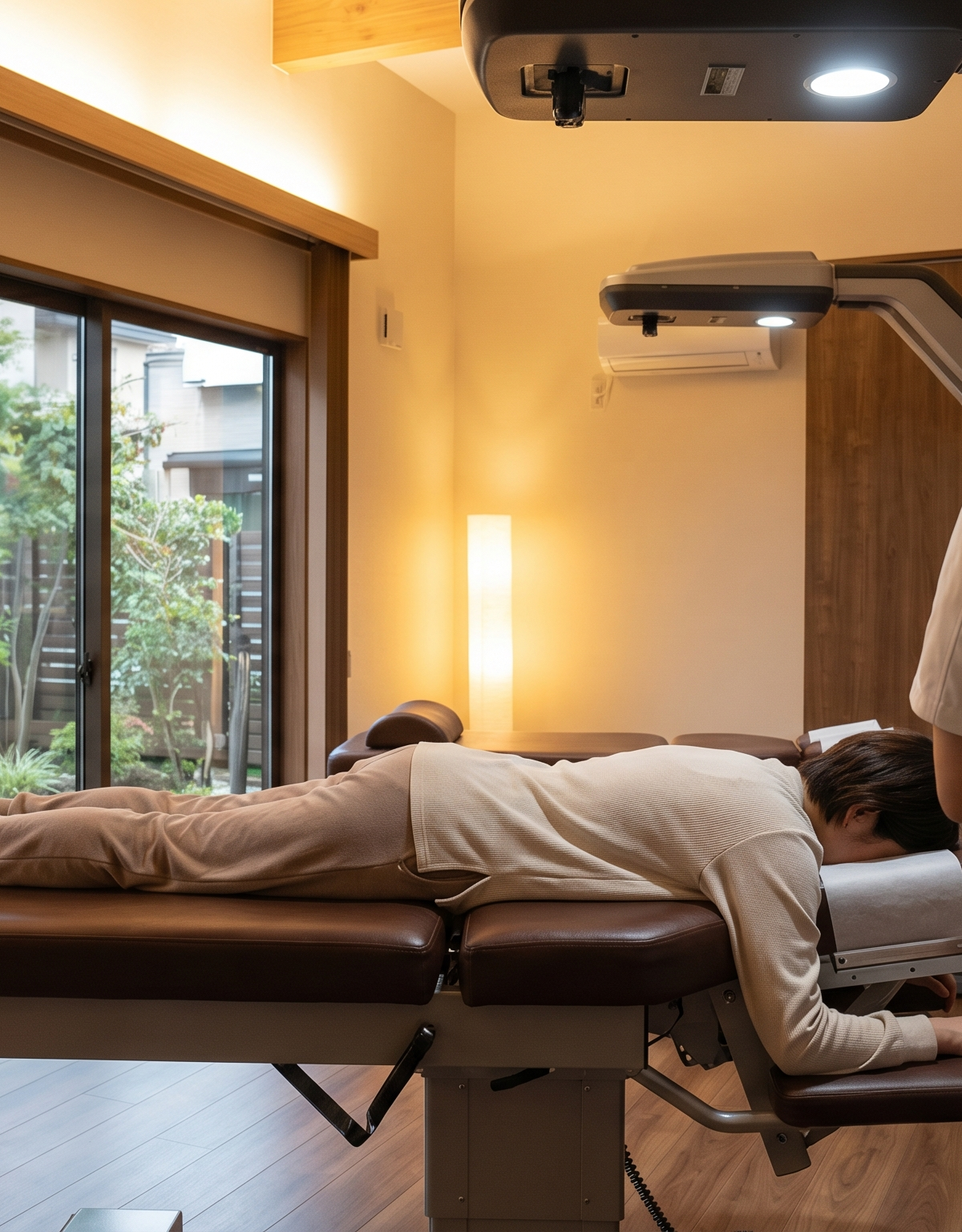
Non-surgical spinal decompression is a form of motorized traction. In simple terms, it uses controlled pulling forces on the spine. The goal is to reduce stress on irritated spinal structures in selected patients. It is used most often for low back problems when symptoms suggest disc involvement or nerve root irritation.
When people search for non surgical spinal decompression San Diego, they are often trying to avoid injections or surgery. They want another option for lower back pain, leg pain, or sciatica. That makes sense. Still, decompression is a treatment, not a diagnosis. Whether it belongs in your plan depends on why you hurt.
At San Diego Chiropractic Neurology, I explain decompression in three practical points:
- It is designed to create gentle, targeted distraction forces through the spine.
- It may help some patients with disc-related pain or nerve irritation as part of conservative care.
- It tends to make the most sense when it is matched to the right diagnosis and combined with exercise, movement work, and follow-up care.
If you want a broader overview of the service, review our non-surgical spinal decompression service page.
Why Diagnosis Matters More Than Marketing
One of the biggest problems in spine care marketing is the assumption that every disc bulge on MRI explains pain. That is not accurate. StatPearls notes that disc herniation can appear on MRI in people who do not have back pain. In some data sets, about 27% of asymptomatic people show disc herniation. In other words, an MRI finding alone does not prove the cause of symptoms.
This is one reason I do not recommend choosing a non surgical spinal decompression San Diego clinic based on ad copy alone. If a provider jumps from “your MRI shows a disc issue” to “you need decompression,” that is not enough. Your symptoms, neurologic exam, orthopedic testing, movement pattern, and imaging should make sense together.
At San Diego Chiropractic Neurology, I look for questions such as:
- Does the pain stay in the low back, or does it travel into the buttock, thigh, calf, or foot?
- Do you have numbness, tingling, weakness, reflex changes, or altered sensation?
- Do sitting, bending, coughing, or walking make symptoms worse?
- Does the pattern fit a disc problem, spinal stenosis, facet irritation, or peripheral nerve entrapment?
- Are there red flags that call for urgent medical workup instead of routine decompression?
This screening matters for people looking for the best non surgical spinal decompression San Diego for herniated disc concerns. The best option is not the one with the strongest sales message. It is the one that fits the clinical picture.
Who May Benefit From Non Surgical Spinal Decompression San Diego Care?
The strongest case for non surgical spinal decompression San Diego patients seek is usually not general back pain. It is more often disc-related pain, radicular pain, or selected cases of degenerative disc changes when symptoms fit that pattern.
1. Disc Herniation With Radiating Pain
Non surgical spinal decompression for herniated disc symptoms may be considered when low back pain travels into the leg and the exam suggests nerve root irritation. Radicular pain and sciatica can include leg pain, numbness, tingling, or weakness when a spinal nerve root is irritated or compressed. If that pattern matches the history and exam, decompression may be one part of conservative care.
If your symptoms fit this presentation, it may help to review our pages on sciatica and herniated disc.
2. Sciatica or Lumbar Radiculopathy
StatPearls reports that lumbosacral radiculopathy symptoms affect about 3% to 5% of adults during their lifetime. That is less common than general low back pain, but we still see it often. Patients may describe burning pain, sharp pain, tingling, numbness, or weakness that runs down one leg. Some notice symptoms that worsen with sitting or certain movements.
For this group, spinal decompression therapy San Diego for sciatica may be worth considering if the pattern is consistent with lumbar nerve root irritation and no urgent neurologic red flags are present.
3. Some Cases of Degenerative Disc Disease
Patients often ask, does spinal decompression help degenerative disc disease? The honest answer is that it may help some selected patients, but not everyone. Degenerative disc disease is a broad label. It can describe age-related disc changes with or without symptoms. If symptoms appear disc-related and mechanical, decompression may be considered as part of a larger rehab plan. If pain is mostly non-specific or driven by other factors, benefit is less clear.
4. Patients Trying to Avoid More Invasive Care
Many San Diego patients come in after weeks or months of symptoms that interfere with work, commuting, exercise, surfing, golf, or military-related physical demands. When the case is appropriate, non surgical spinal decompression San Diego lower back pain patients choose may offer a conservative step before more invasive care. It should not replace a proper evaluation.
Who May Not Be a Good Candidate?
Spinal decompression should not be presented as the answer for every type of back pain. Because most low back pain is non-specific, many people need exercise-based care, load management, mobility work, or a different diagnosis rather than decompression.
Benefit may be less clear when:
- Pain is broad, chronic, and non-specific without clear radicular features.
- The main driver appears more consistent with facet joint irritation than disc or nerve root irritation.
- The pattern suggests hip pathology, sacroiliac pain, or peripheral nerve entrapment rather than spinal nerve root pain.
- Severe spinal stenosis, structural instability, or another medical issue is the larger concern.
Patients with walking intolerance, leg heaviness, or symptoms that improve when leaning forward may need evaluation for spinal stenosis and degenerative disc changes rather than assuming decompression is the answer.
When Back Pain or Leg Pain Needs Urgent Medical Evaluation
Some symptoms should not be handled as a routine decompression case. Standard radiculopathy references note that urgent medical evaluation is important when there is progressive neurologic loss or signs of a serious underlying condition.
Red flags include:
- Progressive leg weakness
- New bowel or bladder dysfunction
- Saddle anesthesia
- Suspected fracture after trauma
- Fever, unexplained weight loss, or concern for infection or tumor
- Severe or rapidly worsening neurologic deficits
If these are present, the priority is not San Diego spinal decompression. The priority is prompt medical evaluation and referral as needed.
How a Functional Neurology Trained chiropractor Evaluates Candidacy
Some patients specifically look for a spinal decompression chiropractor neurologist San Diego clinic because they want a more detailed exam before starting care. A Functional Neurology Trained chiropractor does more than match symptoms to a machine. We work to connect structure, nerve function, and movement.
At San Diego Chiropractic Neurology, the process usually includes:
1. History and Symptom Mapping
I ask where the pain starts, where it travels, how it behaves with sitting, standing, walking, bending, lifting, sleeping, and exercise, and whether numbness or weakness is present.
2. Neurologic Examination
I test strength, sensation, reflexes, balance, gait, and functional movement. Disc-related pain is not only a structural issue. It may also show up as nerve root irritation with sensory change, motor weakness, altered reflexes, or guarded movement.
3. Orthopedic and Mechanical Testing
I look at whether flexion, extension, repeated movement, or position changes centralize or peripheralize symptoms. This helps separate disc patterns from other causes of pain.
4. Imaging Review When Appropriate
Imaging can be useful when it matches the exam and symptom pattern. It is not enough on its own. A disc bulge on a report is only one part of the picture.
5. Individualized Treatment Planning
If decompression is a fit, it is rarely the whole plan. We may combine it with chiropractic care, exercise progression, mobility work, posture changes, and in some cases supportive modalities such as Erchonia low-level laser therapy. The goal is to improve function and support recovery, not just chase short-term pain relief.
What the Evidence Actually Says
Patients deserve a balanced explanation here. Conservative care is often the first step for many cases of lumbar radiculopathy and disc-related pain. That is reasonable. At the same time, the evidence for traction-based treatments, including decompression-style approaches, is mixed overall. That means some patients may improve, especially when the clinical picture is a good fit, but the treatment should not be oversold as universally effective.
A clinic can honestly say that spinal decompression may help selected patients with disc-related back pain or sciatica. A clinic should not say that it fixes all low back pain or reverses every disc problem. This is another reason careful screening matters so much.
If you are dealing with ongoing low back symptoms, it may also help to understand the broader context of back pain and the many reasons it can persist.
What Treatment Often Looks Like in Real Life
For a patient who is a reasonable candidate, treatment often works best as part of a structured plan rather than a stand-alone passive therapy.
A practical treatment sequence may include:
- A detailed history and neurologic examination
- Confirmation that symptoms fit disc-related or nerve root irritation patterns
- Discussion of red flags and whether medical referral is needed
- A trial of non-surgical spinal decompression when clinically appropriate
- Mobility and stabilization exercises to reinforce progress
- Load management for work, commuting, lifting, sleep, and activity
- Reassessment to see whether the plan is improving function, not just pain scores
That approach is relevant in San Diego, where many patients want to get back to long drives, desk work, gym training, golf, surfing, or other active routines without rushing toward invasive care.
How Spinal Decompression Differs From Regular Traction or Chiropractic Adjustment
Patients often ask whether decompression is just another word for traction. They are related, but not identical in how they are delivered in practice. Non-surgical spinal decompression usually uses a motorized table with programmed force changes and positioning. Traditional traction may be simpler and less targeted in some settings. A chiropractic adjustment is a different manual treatment intended to improve joint motion and mechanics.
Sometimes these tools can be used in the same broader plan. Sometimes one makes more sense than another. The right choice depends on the diagnosis, symptom irritability, tolerance, and treatment goals.
What to Ask Before You Book
If you are considering non surgical spinal decompression San Diego care, ask these questions before starting:
- What diagnosis are you treating?
- What exam findings suggest decompression is a good fit?
- What symptoms would make you stop treatment and refer out?
- How will progress be measured beyond temporary pain relief?
- What other therapies are paired with decompression to support recovery?
These questions help separate a thoughtful clinical plan from a generic sales pitch.
When to Consider an Evaluation
If you have persistent low back pain, sciatica, disc-related symptoms, or leg numbness and want to know whether non surgical spinal decompression San Diego treatment is appropriate, the next step is a proper exam. The goal is to determine whether your symptoms fit a pattern that may respond to conservative care and whether decompression belongs in that plan.
At San Diego Chiropractic Neurology, we focus on matching treatment to diagnosis. That means identifying whether the issue is more likely disc-related, stenotic, neurologic, mechanical, or something that needs referral instead of routine care.
Frequently Asked Questions
What is non-surgical spinal decompression and how does it work?
Non-surgical spinal decompression is a form of motorized traction that applies controlled pulling forces to the spine. In selected cases, it may help reduce irritation around disc-related or nerve-related low back problems as part of a broader treatment plan.
Can spinal decompression help a herniated disc or sciatica?
It may help some patients with herniated disc symptoms or sciatica when the exam supports lumbar nerve root irritation or disc-related pain. It is not a cure-all, and it works best when the diagnosis is clear and the treatment is part of a broader rehab plan.
Who is a good candidate for spinal decompression therapy in San Diego?
A good candidate often has disc-related low back pain, radiating leg pain, or symptoms consistent with sciatica or lumbar radiculopathy. A proper history, neurologic exam, and imaging review when needed are important before starting care.
When should back pain or leg pain be evaluated urgently instead of treated conservatively?
Urgent evaluation is important if you have progressive leg weakness, new bowel or bladder dysfunction, saddle anesthesia, significant trauma, fever, unexplained weight loss, or other signs of infection, fracture, tumor, or rapid neurologic decline.
How is spinal decompression different from regular traction or chiropractic adjustment?
Spinal decompression usually uses a motorized system with controlled force changes. Traditional traction may be less targeted, and chiropractic adjustment is a different manual treatment intended to improve joint motion. Each has a different role depending on the diagnosis.
Call (619) 344-0111 or book a free consultation at sdchironeuro.com.
Medical disclaimer: This article is for educational purposes only and does not diagnose or treat any medical condition. If you have severe pain, progressive weakness, bowel or bladder changes, saddle anesthesia, trauma, fever, or other concerning symptoms, seek prompt medical evaluation. Always consult with a qualified healthcare provider to determine what type of care is appropriate for your condition.
Not sure what is driving your symptoms?
Talk with our Functional Neurology Trained team on a free phone consultation. We will tell you honestly whether we can help.