Long COVID POTS Treatment San Diego
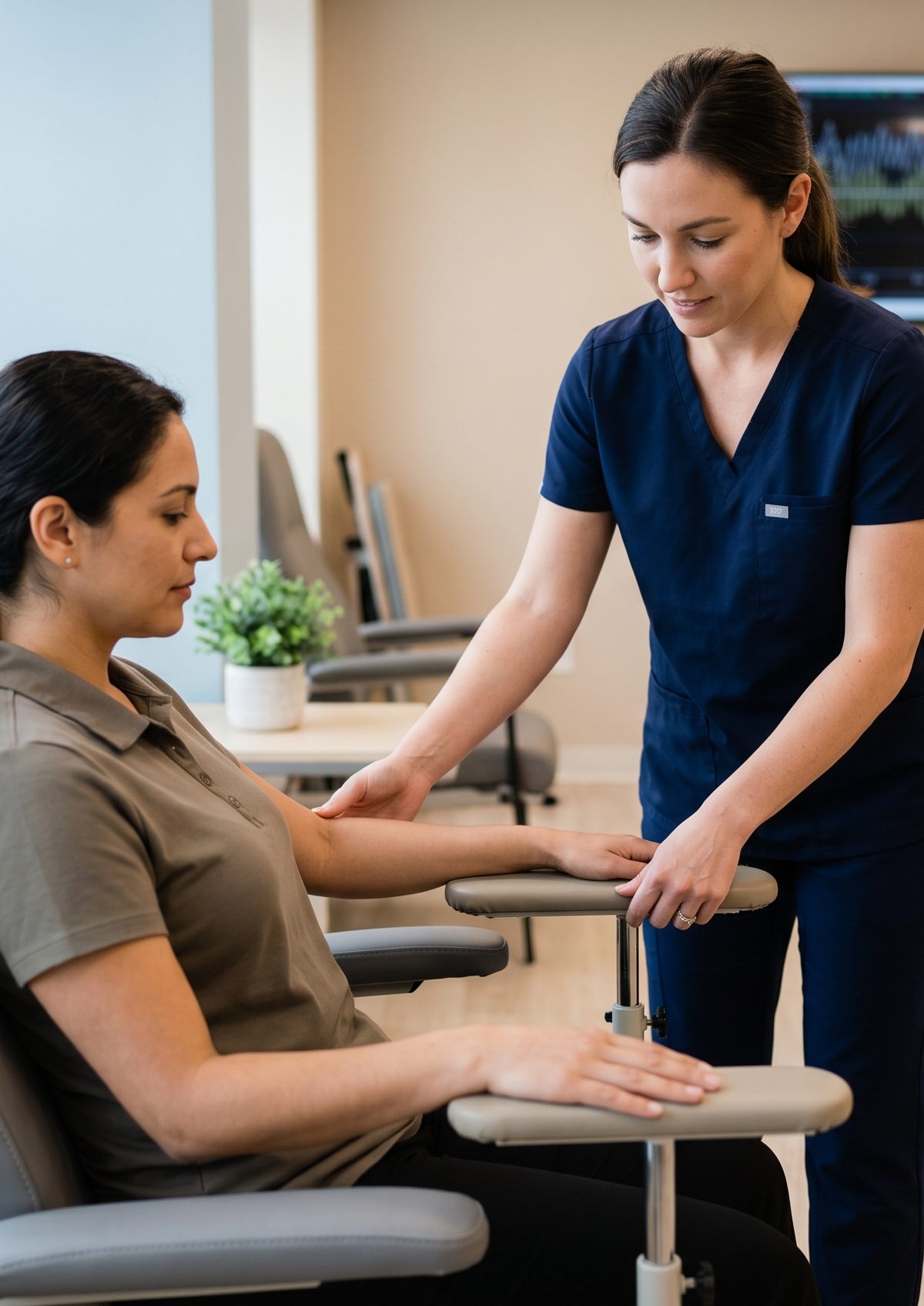
Free phone consultation with our San Diego functional neurology team. No obligation.
Persistent symptoms after COVID-19 can look very different from one person to the next. For some people in San Diego, recovery is complicated by dizziness, rapid heart rate on standing, fatigue, exercise intolerance, brain fog, headaches, and a sense that their body no longer tolerates normal daily activity the way it used to. In some cases, this pattern overlaps with postural orthostatic tachycardia syndrome, or POTS, and other forms of dysautonomia.
At San Diego Chiropractic Neurology, care is framed around a structured, non-invasive evaluation of neurologic, vestibular, autonomic, and sensorimotor factors that may be affecting function. The goal is not to claim a cure for long COVID or POTS. The goal is to identify patterns, understand symptom triggers, and build a symptom-aware rehabilitation plan that may help improve tolerance for daily life while coordinating with a patient’s broader medical team when appropriate.
How Long COVID and POTS Can Overlap
Long COVID is associated with a wide range of ongoing symptoms, including cognitive changes, dizziness, headache, fatigue, and autonomic complaints. Researchers and clinicians have also recognized that some patients develop orthostatic intolerance or a POTS-like presentation after SARS-CoV-2 infection.
POTS is generally defined by chronic orthostatic symptoms together with an excessive increase in heart rate on standing, without the blood pressure drop that would explain symptoms as classic orthostatic hypotension. That matters because patients may describe symptoms in ways that sound vague at first, such as "I feel shaky when I stand," "my heart races when I’m upright," or "I crash after simple activity." A careful workup helps determine whether those complaints may reflect autonomic dysfunction, vestibular issues, visual motion sensitivity, deconditioning, migraine overlap, or a combination of contributors.
Symptoms That May Suggest Long COVID Dysautonomia
People looking for long COVID POTS treatment in San Diego often report a cluster of symptoms rather than one isolated complaint. These may include:
- Dizziness or lightheadedness when standing
- Rapid heart rate or palpitations with upright posture
- Fatigue that worsens with exertion
- Brain fog or difficulty concentrating
- Headaches or migraine flare-ups
- Exercise intolerance
- Visual motion sensitivity or balance problems
- Short periods of feeling faint, shaky, or unsteady
Not every patient with these symptoms has POTS. Not every patient with long COVID has the same mechanism driving symptoms. That is why a symptom label alone is usually not enough to guide a useful care plan.
It is also common for symptoms to fluctuate across the day. Some people feel relatively steady in the morning but worsen after errands, heat exposure, long periods upright, or mentally demanding work. Others notice that the hardest part is not a constant rapid heart rate, but the combination of lightheadedness, visual overload, shakiness, and delayed fatigue after activity. A useful article on long COVID POTS treatment in San Diego should make clear that these patterns can still fit an autonomic picture even when symptoms are inconsistent from hour to hour.
That variability matters during evaluation. If symptoms spike with upright posture, stairs, quick position changes, busy environments, or repeated exertion, the clinic needs to document those triggers instead of looking only at a single symptom in isolation. The broader pattern often guides whether the next step should emphasize autonomic support, vestibular rehabilitation, visual work, pacing strategies, or further medical follow-up.
What a Functional Neurology Evaluation May Look At
A clinic offering supportive long COVID dysautonomia treatment in San Diego may look beyond a single system. The evaluation may consider how autonomic symptoms interact with balance, eye movements, gait, exertional tolerance, neck function, headache history, and sensory processing. In a patient with persistent post-viral symptoms, this broader view can be useful because dizziness, fatigue, and intolerance to activity may have overlapping contributors.
A non-invasive evaluation may include:
- Review of symptom triggers, onset pattern, and daily functional limitations
- Orthostatic vital sign screening and positional symptom tracking
- Balance and gait assessment
- Oculomotor and visual tracking evaluation
- Screening for vestibular involvement
- Assessment of exertional tolerance and post-activity symptom response
- Review of migraine, concussion, or prior neurologic history
This type of assessment does not replace cardiology, primary care, or other medical workup when needed. It is intended to clarify functional patterns and support rehabilitation decisions within an interdisciplinary framework. Patients with overlapping dizziness symptoms may also benefit from reading about vertigo evaluation and how the clinic approaches vagus nerve therapy and stimulation as part of a broader conservative care plan when appropriate.
Non-Medication Approaches That May Be Part of Care
Consensus guidance for POTS commonly includes nonpharmacologic management such as hydration strategies, salt optimization when medically appropriate, compression garments, and carefully structured physical reconditioning. In long COVID populations, however, exercise and rehabilitation should not be treated as one-size-fits-all. Some patients experience post-exertional symptom exacerbation, which means pushing too hard or progressing too quickly may worsen symptoms instead of improving them.
Because of that, supportive rehabilitation is usually most effective when it is individualized. Depending on the patient, a plan may include:
- Symptom-aware pacing and activity modification
- Gradual tolerance-building based on response, not a rigid schedule
- Balance or vestibular rehabilitation when dizziness is prominent
- Eye movement and visual stabilization work when visually triggered symptoms are present
- Education on positional triggers and daily routine adjustments
- Coordination with existing medical recommendations from cardiology or primary care
The purpose of this approach is to improve function as tolerated, not to force recovery through overexertion. For many patients, a graded and closely monitored process is more appropriate than generic advice to simply exercise more.
In practice, that may mean starting with very small and repeatable exposures rather than dramatic changes. A patient who becomes symptomatic after standing for ten minutes may need a plan built around shorter upright intervals, seated recovery, hydration timing, and careful monitoring of how symptoms respond later the same day. Another patient may tolerate more physical activity but struggle most with screen use, grocery stores, or head movement. A conservative care plan should be flexible enough to reflect those differences.
It is equally important to set expectations clearly. Supportive rehabilitation is not a shortcut, and progress may be uneven. Some weeks are spent identifying tolerable thresholds rather than pushing for rapid advancement. That slower approach can be frustrating, but it is often safer and more useful than applying a generic exercise model to a patient whose symptoms worsen after overexertion. When patients understand why pacing and gradual progression matter, they are more likely to follow a plan that fits the physiology of post-viral intolerance.
When to Seek Evaluation in San Diego
If symptoms such as dizziness, palpitations, fatigue, or exercise intolerance continue after COVID-19 and interfere with work, school, driving, errands, or basic daily routines, a more detailed evaluation may be warranted. This is especially true when symptoms are clearly worse with standing, upright activity, busy visual environments, or exertion.
Patients across San Diego often need clarity on whether their symptoms fit a post-viral dysautonomia pattern, a vestibular pattern, a migraine-related pattern, or several at once. That distinction can matter when building a realistic plan for supportive care.
Seeking evaluation can also help patients avoid two common mistakes: assuming every lingering symptom is purely anxiety-related, or assuming that every symptom must be pushed through with more activity. Neither extreme is usually helpful. When a clinician documents positional intolerance, symptom triggers, balance findings, and exertional response in a structured way, patients can make more informed decisions about work, exercise, commuting, and daily routines while additional medical questions are being addressed.
For local patients, this type of clarity is often the main reason to look for long COVID POTS treatment in San Diego rather than relying only on general internet advice. Educational content can explain the condition, but a real evaluation is what helps determine whether symptoms are primarily orthostatic, vestibular, visual, migraine-related, or mixed. That distinction shapes whether the best next step is pacing, vestibular work, autonomic support strategies, referral, or a combination of these approaches.
Working Alongside Your Medical Team
Long COVID and POTS symptoms often require multidisciplinary management. Depending on the case, patients may already be working with a primary care physician, cardiologist, neurologist, or other specialists. A functional neurology clinic can work alongside that medical care by focusing on non-invasive evaluation and supportive rehabilitation strategies that support day-to-day function.
This collaborative approach is important because persistent symptoms after COVID-19 can involve more than one system, and no single intervention is appropriate for everyone. Patients benefit most when care remains evidence-aware, individualized, and transparent about what is known, what is uncertain, and what needs medical follow-up.
For example, a patient with marked palpitations, chest discomfort, or syncope concerns may need prompt medical review even if vestibular symptoms are also present. Another patient may already have a cardiology workup but still need help with dizziness, motion sensitivity, or difficulty returning to normal daily tasks. A collaborative model allows supportive rehabilitation to proceed while preserving appropriate medical oversight for issues that fall outside the scope of non-invasive neurologic and vestibular care.
This kind of coordination is also practical from the patient’s perspective. Long COVID often affects work tolerance, family routines, transportation, and sleep. When recommendations from different providers do not align, patients can feel stuck. A clinic that explains its role clearly, stays within evidence-backed boundaries, and communicates in function-focused terms can make the overall care process more manageable.
Long COVID POTS Treatment San Diego: A Structured, Conservative Approach
For patients searching for a POTS specialist in San Diego or looking into post-viral POTS functional neurology in San Diego, the key question is often not whether symptoms are real. The key question is how to evaluate them carefully and how to move forward without making the problem worse. When long COVID symptoms overlap with orthostatic intolerance, tachycardia, dizziness, and brain fog, a conservative and structured approach may help identify practical next steps.
San Diego Chiropractic Neurology provides non-invasive evaluation and supportive rehabilitation for patients dealing with persistent neurologic, vestibular, and autonomic symptom patterns. For those navigating long COVID dysautonomia treatment in San Diego, the clinic’s process is centered on individualized assessment, function-focused care, and coordination when outside medical input is needed.
That means the focus stays on practical questions. Which triggers are most disruptive? What positions or environments reliably worsen symptoms? Is there a balance or visual component that has been overlooked? How much activity can the patient tolerate before symptoms build later in the day? Those details often matter more than broad labels when designing a plan that a patient can realistically follow.
Patients searching for long COVID POTS treatment San Diego are usually trying to solve a day-to-day problem, not just collect another diagnosis term. They want to stand longer, think more clearly, drive with less dizziness, tolerate errands, and return to more normal activity without provoking a major setback. A conservative, structured, and individualized process is the most defensible way to talk about that goal while staying aligned with the available evidence.
If you are dealing with persistent dizziness, racing heart symptoms on standing, or post-viral exercise intolerance in San Diego, scheduling an evaluation may help clarify whether autonomic, vestibular, or neurologic factors are contributing to the picture. Related resources on the site include the clinic’s POTS condition overview and vestibular therapy page for patients whose symptoms also include motion sensitivity or balance disruption.
References
- Larsen NW, Stiles LE, Miglis MG. Preparing for the long-haul: autonomic complications of COVID-19. Autonomic Neuroscience. 2021;235:102841.
- Raj SR, Arnold AC, Barboi A, et al. Long-COVID postural tachycardia syndrome: an American Autonomic Society statement. Clinical Autonomic Research. 2021;31(3):365-368.
- Vernino S, Bourne KM, Stiles LE, et al. Postural orthostatic tachycardia syndrome (POTS): state of the science and clinical care from a 2024 national institutes of health expert consensus meeting - part 1. Autonomic Neuroscience. 2024;250:103233.
- Vernino S, Bourne KM, Stiles LE, et al. Postural orthostatic tachycardia syndrome (POTS): state of the science and clinical care from a 2024 national institutes of health expert consensus meeting - part 2. Autonomic Neuroscience. 2024;250:103234.
- Bested AC, Marshall LM. Review of myalgic encephalomyelitis/chronic fatigue syndrome and long COVID with recommendations for rehabilitation. PM&R. 2023;15(6):757-770.
- National Institutes of Health. Long-Term Effects of COVID-19. NHLBI.
- Blitshteyn S, Whitelaw S. Postural orthostatic tachycardia syndrome (POTS) and other autonomic disorders after COVID-19 infection: a case series of 20 patients. Immunologic Research. 2021;69(2):205-211.
Not sure what is driving your symptoms?
Talk with our Functional Neurology Trained team on a free phone consultation. We will tell you honestly whether we can help.