Herniated Disc Treatment San Diego | Non-Surgical Care
Free phone consultation with our San Diego functional neurology team. No obligation.
People searching for herniated disc treatment San Diego are usually trying to answer a few urgent questions. Is the pain really coming from a disc? Do they need an MRI right away? Is surgery inevitable, or can non-surgical care help first? Those questions matter because a disc finding on imaging is not the same thing as a complete diagnosis. Many adults without back pain still show disc changes on MRI, which means the clinical exam still has to come first.
At San Diego Chiropractic Neurology, the clinical team evaluates disc-related pain by looking at the full pattern: where the pain starts, whether it travels down the leg, whether numbness or weakness is present, which movements aggravate symptoms, and whether the patient fits a routine conservative case or needs urgent referral. For many patients, a structured non-surgical plan is reasonable. For others, red-flag symptoms change the conversation quickly.
If you are researching herniated disc care in San Diego, the most useful starting point is understanding what a lumbar disc herniation is, how it differs from generic back pain, and when conservative care makes sense.
What a herniated disc actually is
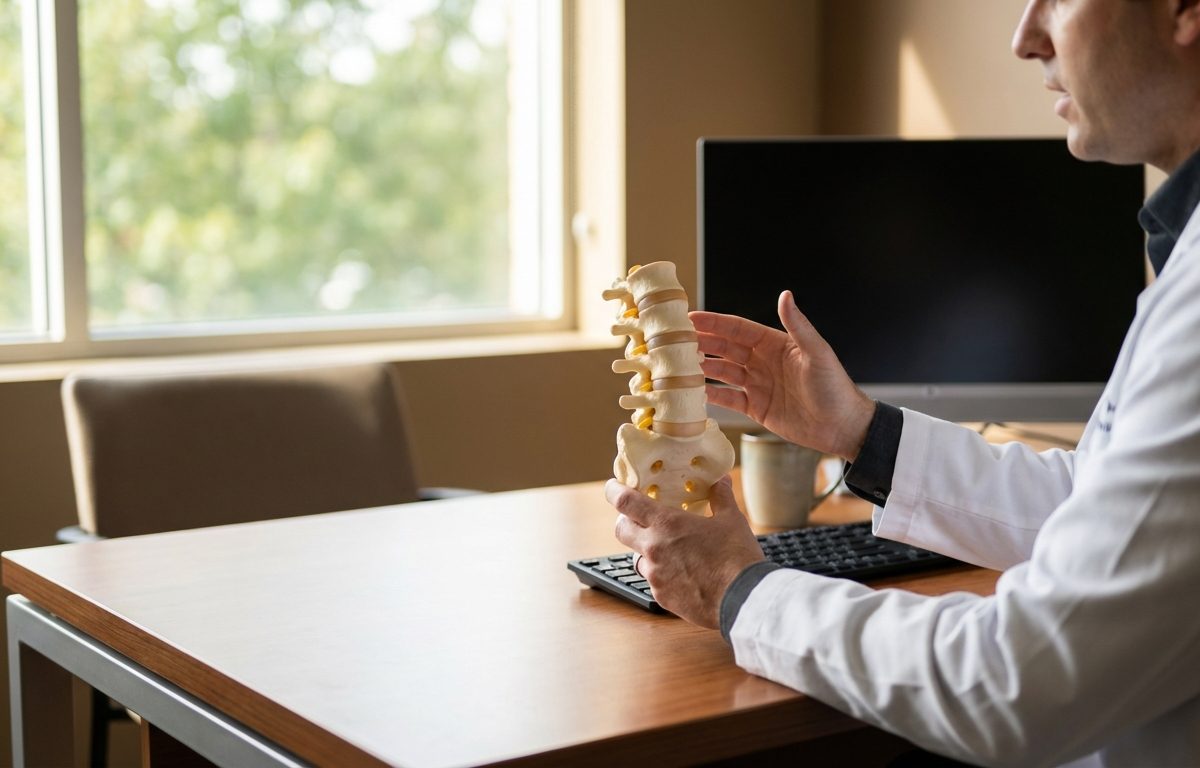
A lumbar disc sits between the vertebrae and helps absorb load and allow movement. A disc herniation happens when disc material pushes beyond its normal boundary. That change can irritate or compress a nearby nerve root, especially in the lower back, and lead to sciatica-like symptoms such as radiating leg pain, tingling, numbness, or weakness. Not every disc herniation causes symptoms, and not every patient with back pain has a herniated disc.
This is where many patients get misled. They hear that an MRI showed a bulging or herniated disc and assume that finding explains everything. Sometimes it does. Sometimes it does not. The question is whether the imaging, symptoms, and neurologic exam actually line up.
Common symptoms of a lumbar herniated disc
Patients with a symptomatic lumbar disc herniation often report:
- Low back pain with pain traveling into the buttock or leg
- Burning, tingling, or numbness below the knee
- Pain that worsens with sitting, bending, lifting, coughing, or driving
- Leg weakness, foot heaviness, or difficulty pushing off while walking
- Symptoms that feel more severe in the leg than in the low back
That symptom pattern overlaps with sciatica, which is why those terms often get used together. A herniated disc is one possible structural cause. Sciatica describes the symptom pattern that can result.
Why diagnosis matters more than the MRI report
One of the most important facts in spine care is that MRI findings are common even in people who feel fine. A widely cited systematic review found that many asymptomatic adults have disc degeneration, disc bulges, or other spinal imaging changes. That means a report alone cannot tell you whether the disc is truly generating the pain.
For that reason, useful herniated disc treatment in San Diego starts with symptom mapping and examination, not just image review. The team needs to know whether the pain pattern fits nerve-root irritation, whether there is loss of strength or reflexes, and whether symptoms behave like a disc problem or something else entirely. Some cases that look like disc pain are actually driven more by spinal stenosis, hip pathology, peripheral nerve irritation, or nonspecific low back pain.
How the team evaluates a suspected herniated disc
The exam is built to answer three practical questions. First, does the history fit disc-related radiculopathy? Second, is the patient safe for conservative care? Third, what level of escalation is appropriate if symptoms are severe or not improving?
History and symptom behavior
The first step is a clear history. When did symptoms start? Was there lifting, twisting, travel, repetitive strain, or no obvious trigger? Does sitting make the pain worse? Does standing or walking help or aggravate it? Is there numbness, tingling, or weakness? Pain that radiates below the knee, especially with neurologic symptoms, raises suspicion for nerve-root involvement.
Neurologic examination
A focused neurologic exam can assess strength, reflexes, sensation, gait, and side-to-side differences. No single test makes the diagnosis in isolation, but the neurologic exam helps determine whether the case behaves like lumbar radiculopathy and whether deficits are stable, improving, or progressing.
Mechanical and movement assessment
The exam also looks at how symptoms respond to sitting, standing, bending, extension, walking, and repeated motion. That helps separate patients who are highly irritable and need symptom calming first from those who may benefit from progressive exercise-based rehab.
When MRI is actually needed
Many patients assume MRI should happen immediately. In straightforward early cases without red flags, that is often not necessary. Current imaging guidance generally recommends reserving MRI for cases with severe or progressive neurologic deficits, concerning red flags, or symptoms that remain significant enough that imaging would change management.
An MRI is more likely to be appropriate when:
- Leg pain or numbness is severe and not improving
- Progressive weakness is present
- Injection or surgical referral is being considered
- Symptoms have persisted despite a reasonable conservative trial
- There are warning signs for infection, fracture, tumor, or cauda equina syndrome
That approach avoids over-imaging while still recognizing that some patients clearly need faster escalation.
Can a herniated disc improve without surgery?
Yes, many patients improve without surgery. Major spine guidelines note that a large share of lumbar disc herniation cases can be managed conservatively in the absence of progressive neurologic loss or cauda equina symptoms. That does not mean every patient heals on the same timeline, and it does not mean symptoms should be ignored. It means surgery is not automatically the first step simply because a disc herniation exists.
Some patients improve over a matter of weeks. Others take longer, especially if symptoms are intense, sleep is poor, or nerve irritation has been present for some time. A reasonable plan depends on the severity of pain, the level of functional loss, and whether the neurologic picture is stable.
Evidence-based non-surgical herniated disc treatment in San Diego
Non-surgical care should be selected based on the patient’s symptom pattern, irritability level, and neurologic status. Overpromising is a mistake. Conservative care helps many patients, but not every approach is right for every case.
Education and activity modification
The first step is often helping the patient understand what positions and activities keep the nerve irritated. That may mean changing prolonged sitting, improving lifting mechanics, adjusting workouts, or pacing daily tasks more intelligently. Bed rest is usually not the goal.
Exercise-based rehabilitation
Guideline-based care commonly includes exercise and movement progression, but the program has to match the phase of symptoms. A patient who flares sharply with sitting and bending may need a different starting point from a patient who is already improving and needs strengthening and conditioning.
Manual and chiropractic care when appropriate
Manual care may be appropriate in selected cases, especially when screening suggests the patient is stable and a good candidate for conservative treatment. The key point is restraint. A disc-related case should not be treated like generic low back stiffness. Treatment choice should reflect the neurologic picture and the patient’s response over time.
Patients who want to understand how that fits into broader spine care can review the clinic’s chiropractic service and back pain resource.
Non-surgical spinal decompression in selected patients
Some San Diego patients ask specifically about decompression. That option may be considered in selected disc-related cases, especially when the symptom pattern supports it, but it should not be presented as the universal answer for every herniated disc. Patients exploring that option can review non-surgical spinal decompression as part of a broader conservative decision process.
When injections or surgery enter the discussion
Conservative care is often appropriate first, but it is not always enough. Some patients have leg pain that stays severe despite reasonable treatment. Others have meaningful motor deficit, recurrent disabling episodes, or pain severe enough that injection or surgical consultation becomes appropriate. Evidence from SPORT and related studies suggests surgery can produce faster symptom relief for selected patients, though long-term differences compared with non-surgical care are often smaller than the early advantage suggests.
A responsible clinic should be willing to say when the patient is no longer a good fit for routine conservative care. Good non-surgical management includes knowing when to escalate.
Red flags that need urgent medical evaluation
Some symptoms should not wait for a routine office visit. Urgent evaluation is appropriate if disc-related symptoms are accompanied by:
- Loss of bowel or bladder control
- Saddle anesthesia or numbness in the groin region
- Rapidly worsening leg weakness
- Severe trauma
- Fever, chills, or suspicion of infection
- Known cancer history with new severe back pain
These findings raise concern for serious neurologic compromise, including cauda equina syndrome in some cases, and should be treated urgently.
What San Diego patients should do next
If low back and leg pain are interfering with commuting, desk work, exercise, lifting, or sleep, the next step is not guessing from the MRI report alone. It is a focused exam that clarifies whether the pattern fits a lumbar disc herniation, whether conservative care is appropriate, and whether imaging or referral is needed now.
The team at San Diego Chiropractic Neurology evaluates suspected disc injuries with attention to nerve-related symptoms, movement intolerance, and escalation when necessary. Patients can also review the clinic FAQ page for additional guidance.
Call (619) 344-0111 or book a free consultation to discuss whether a non-surgical herniated disc treatment plan is appropriate for your case.
Frequently Asked Questions
How do I know if my pain is from a herniated disc or another cause of sciatica?
A herniated disc is one common cause of sciatica, but not the only one. The answer depends on whether the symptoms, neurologic exam, and imaging findings match a nerve-root irritation pattern. That is why a focused evaluation matters more than the MRI report by itself.
When should a herniated disc in San Diego be evaluated with MRI?
MRI is often used when symptoms are severe, not improving, associated with progressive weakness, or serious enough that injection or surgical decisions are being considered. It is also appropriate when red flags suggest infection, tumor, fracture, or cauda equina syndrome.
Can a herniated disc improve without surgery?
Yes. Many patients improve with conservative care, especially when there is no progressive neurologic deficit or emergency warning sign. The right timeline and treatment plan still depend on the severity of symptoms and how the patient is functioning.
What symptoms mean a herniated disc needs urgent medical care?
Loss of bowel or bladder control, saddle anesthesia, rapidly worsening weakness, major trauma, fever, or other signs of serious illness should be treated urgently. Those symptoms are not routine disc-pain complaints.
Is non-surgical spinal decompression helpful for a herniated disc?
It can be reasonable in selected cases, but it is not the right answer for every patient with a disc herniation. The decision should depend on the symptom pattern, neurologic status, and whether the patient is responding to broader conservative care.
Medical disclaimer: This article is for educational purposes only and does not provide a medical diagnosis or personalized treatment recommendation. Back pain, sciatica, numbness, and weakness can have different causes and levels of urgency. Patients with progressive weakness, bowel or bladder changes, saddle anesthesia, fever, trauma, or other concerning symptoms should seek prompt medical evaluation. For individual advice, consult a licensed healthcare professional.
References
- Brinjikji W, et al. Systematic literature review of imaging features of spinal degeneration in asymptomatic populations. AJNR Am J Neuroradiol. 2015.
- North American Spine Society. Clinical guidelines for lumbar disc herniation with radiculopathy. 2020.
- Patel ND, et al. ACR Appropriateness Criteria Low Back Pain. J Am Coll Radiol. 2016.
- Lurie JD, et al. Surgical versus nonoperative treatment for lumbar disc herniation. Spine. 2014.
- Todd NV. Cauda equina syndrome: the timing of surgery probably does influence outcome. Br J Neurosurg. 2015.
Not sure what is driving your symptoms?
Talk with our Functional Neurology Trained team on a free phone consultation. We will tell you honestly whether we can help.