Functional Neurology San Diego: What to Expect
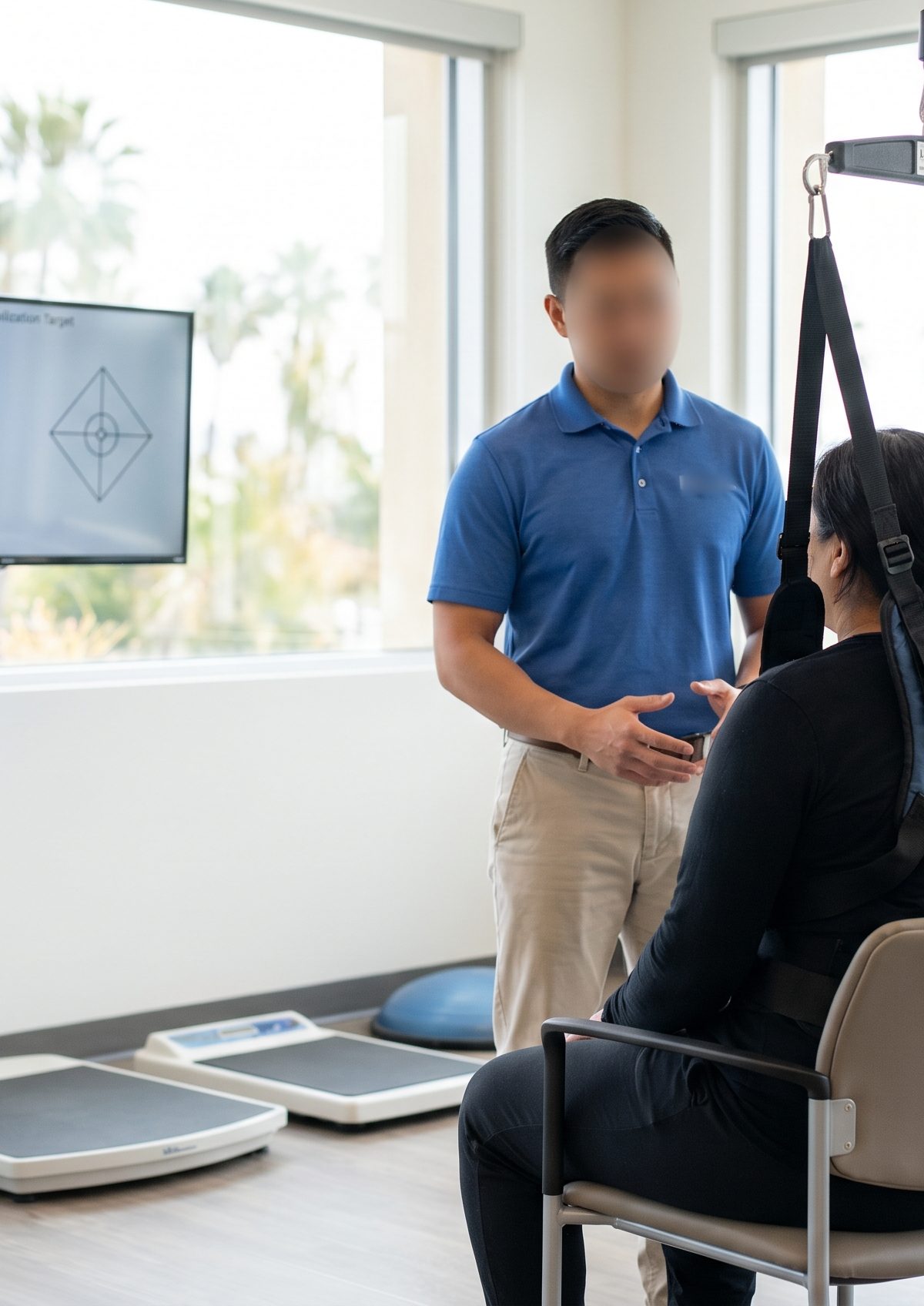
Free phone consultation with our San Diego functional neurology team. No obligation.
When people search for functional neurology San Diego, they are usually trying to solve a practical problem. They may have ongoing dizziness, post-concussion symptoms, brain fog, balance issues, migraine-related motion sensitivity, or orthostatic symptoms that interfere with work, exercise, driving, or daily routines. Many are not only looking for a diagnosis. They also want to know whether there is a structured, non-invasive rehabilitation approach that evaluates how the brain and body are coordinating in real time.
At San Diego Chiropractic Neurology, care is framed as a symptom-based, examination-focused model. The goal is to understand which systems may be contributing to the problem, such as vestibular function, eye movements, balance, gait, autonomic regulation, neck-related sensorimotor input, and tolerance for movement or visual stimulation. From there, the clinic may build a rehabilitation plan intended to improve function, symptom tolerance, and day-to-day activity.
This article explains what functional neurology means in plain language, which symptoms often lead patients to seek this kind of care in San Diego, what a first evaluation may include, and where this approach may fit alongside conventional medical care.
What Functional Neurology Means in a Clinical Setting
Functional neurology is best understood as a non-invasive neurologic rehabilitation approach. Rather than focusing only on imaging findings or symptom labels, it examines how neurologic systems are performing and interacting. A person may have symptoms that involve multiple overlapping systems at once. For example, dizziness may involve vestibular input, visual tracking, neck proprioception, postural control, and movement sensitivity. Post-concussion symptoms may include a mix of balance problems, eye movement strain, exercise intolerance, headache triggers, and cognitive fatigue.
In a functional neurology clinic San Diego, patients often seek care because symptoms are persistent, complex, or hard to sort out. The clinic's role is to assess which exam findings appear clinically relevant and whether a rehabilitation program may be appropriate. This is different from promising a cure or claiming that one method addresses every neurologic condition. The strongest support in the research brief centers on vestibular rehabilitation and selected post-concussion rehabilitation strategies, while other areas require more cautious language and individualized clinical judgment.
Symptoms That Commonly Bring Patients to a San Diego Functional Neurology Clinic
Local patients often seek San Diego neurological rehabilitation when symptoms continue to affect daily life despite rest, basic home strategies, or fragmented care.
Dizziness, Vertigo, and Balance Problems
Some patients feel spinning. Others feel rocking, swaying, unsteadiness, or visual motion sensitivity in grocery stores, on freeways, or while scrolling on a phone. These complaints may stem from several sources, and a careful exam helps determine whether vestibular, visual, cervical, or postural factors may be involved. For related background, patients often review the clinic's information on vertigo and vestibular therapy.
Persistent Post-Concussion Symptoms
After a concussion, some people improve steadily while others continue dealing with headaches, dizziness, balance issues, light sensitivity, concentration problems, or exercise intolerance. Functional rehabilitation for concussion in San Diego is generally framed as care for persistent impairments identified on exam, not as a universal solution. A systematic review and guideline published in JAMA Network Open reported that targeted non-pharmacologic care, including graded physical activity, vestibular rehabilitation, and interdisciplinary management, may be appropriate for selected patients with persistent symptoms, while evidence quality remains low to moderate and treatment should be individualized. Patients exploring this route often also compare it with the clinic's resources on concussion.
Migraine-Related Dizziness and Sensory Overload
Migraine is not always just head pain. Some patients experience dizziness, motion sensitivity, visual strain, imbalance, or symptom flare-ups in busy sensory environments. Vestibular migraine is a recognized cause of recurrent vertigo, but the evidence for non-pharmacologic prevention remains limited, so expectations should stay realistic. Patients with this pattern often look at the clinic's page on migraine.
POTS-Like Orthostatic Symptoms and Autonomic Complaints
Some patients report lightheadedness, rapid heart rate on standing, fatigue, exercise intolerance, or feeling unwell after prolonged upright activity. POTS is a chronic autonomic disorder characterized by orthostatic intolerance and excessive heart rate increase on standing in appropriate clinical contexts. Functional rehabilitation in this setting should be discussed as part of a broader care plan that may consider pacing, exercise tolerance, movement response, breathing patterns, and autonomic symptom behavior. It is not a replacement for medical evaluation when autonomic symptoms require diagnosis, medication review, or specialist management. Patients may also review the clinic's page on POTS.
How a Functional Neurology Evaluation Works
A functional neurology visit is built around examination, not assumptions. The exact process varies by patient presentation, but a comprehensive evaluation may include the following:
1. Detailed History and Symptom Pattern Review
The team typically starts by looking at onset, triggers, symptom timing, prior injuries, headache history, visual tolerance, exercise response, sleep disruption, medication context, prior testing, and how symptoms affect work, school, driving, athletics, or home life.
2. Neurologic and Sensorimotor Examination
The exam may assess coordination, gait, balance, postural control, eye movements, gaze holding, convergence, tracking, head movement tolerance, positional triggers, and sensory integration. This matters because dizziness and imbalance often reflect interaction among vestibular, visual, and proprioceptive systems rather than a single isolated finding.
3. Vestibular and Oculomotor Testing
For patients with dizziness, motion sensitivity, or post-concussion symptoms, the clinic may look closely at gaze stability, head-eye coordination, visual motion tolerance, and balance responses. Evidence strongly supports vestibular rehabilitation for reducing symptoms and improving function in adults with unilateral and bilateral vestibular hypofunction. After concussion, vestibular rehabilitation also appears useful for reducing dizziness-related disability, although study quality and protocols vary.
4. Autonomic and Exercise-Tolerance Considerations
When orthostatic or exertional symptoms are part of the presentation, the clinic may consider how standing tolerance, graded movement, breathing strategy, and symptom recovery behave over time. This can help shape a conservative rehabilitation plan, especially in patients who have become deconditioned or are avoiding activity because symptoms flare quickly.
5. Individualized Rehabilitation Planning
If the evaluation suggests that rehabilitation is appropriate, the next step is a plan tied to the patient's exam findings and tolerance. That may include vestibular exercises, graded balance work, oculomotor rehabilitation, gait progression, movement exposure, symptom-limited conditioning, or selected supportive therapies.
What Treatment May Include
The phrase drug-free neurologic rehab San Diego appeals to many patients because they want conservative options. It is important to define that phrase carefully. Non-invasive care does not mean minimal care. It means structured rehabilitation without surgery and without promising that every condition can be solved through one program.
Vestibular Rehabilitation
This may include gaze stabilization, positional tolerance work, walking progression, habituation to carefully selected motion triggers, and balance tasks that are matched to the patient's level. The clinic's vestibular therapy page gives patients another entry point for this topic.
Oculomotor and Neuro-Visual Rehabilitation
Some patients have difficulty with tracking, convergence, visual motion sensitivity, or head-eye coordination, especially after concussion or alongside dizziness. In those cases, neuro-visual rehabilitation or oculomotor rehabilitation may be considered when clinically appropriate. Patients can also review the clinic's page on neuro-visual rehabilitation.
Concussion Rehabilitation
For patients with persistent post-concussion symptoms, treatment may combine graded movement exposure, vestibular work, tolerance-building, and symptom-guided progression. This should remain individualized, because not all patients present with the same limiting factors.
Autonomic Support Strategies
For orthostatic intolerance and POTS-like complaints, rehabilitation may involve gradual conditioning, symptom pacing, positional strategies, and coordination with the patient's broader medical plan. Some patients also ask about vagus nerve therapy and stimulation. If adjunctive modalities are considered, they should be discussed as individualized and not established as standard first-line treatment for every patient.
Who May Be a Good Fit for Functional Neurology in San Diego
- Patients with dizziness, imbalance, motion sensitivity, or visual motion intolerance affecting normal activity
- Patients with persistent post-concussion symptoms after the initial rest period
- Patients whose symptoms show up during busy visual environments, head movement, walking, exercise, or positional changes
- Patients who want a more detailed exam of vestibular, oculomotor, balance, and sensorimotor function
- Patients who prefer a conservative rehabilitation model that can work alongside medical care rather than replacing it
Patients may be a poorer fit when they need urgent emergency evaluation, acute stroke workup, active seizure management, rapidly progressive neurologic disease assessment, or other time-sensitive medical care that belongs in a hospital or specialist setting. Functional neurology should be viewed as part of a care continuum, not as a substitute for appropriate medical referral.
How This Approach Differs From General Chiropractic or Standard Neurology
General chiropractic care often focuses primarily on musculoskeletal pain and spine-related complaints. Standard neurology is essential for diagnosis, medication management, disease monitoring, and medical evaluation of neurologic disorders. Functional neurology, as practiced in a rehabilitation-focused setting, emphasizes exam findings that guide non-invasive therapy for balance, eye movement, vestibular, autonomic, and sensorimotor complaints.
Many patients do best when their care is coordinated. Someone with persistent dizziness after concussion may need medical clearance, diagnostic input, and a targeted rehabilitation plan. Someone with orthostatic symptoms may need formal evaluation for autonomic dysfunction while also working on graded conditioning and symptom-limited rehabilitation. Patients should consult their provider to understand which parts of care belong in a medical setting and which may fit within a rehabilitation plan.
What Patients in San Diego Should Expect From the First Visit
The first appointment generally includes enough history and examination to determine whether a functional rehabilitation plan is reasonable and what should be prioritized first. Patients should expect questions about symptom triggers, daily limitations, prior testing, medications, injury history, headache history, neck symptoms, exercise response, and prior therapies. They should also expect physical and neurologic testing tailored to the complaint.
For local patients, the appeal of this model is often practical. They want a place where dizziness, concussion symptoms, migraine-related balance issues, and autonomic complaints can be assessed through one coordinated lens rather than through disconnected symptom categories.
Why Evidence and Expectations Matter
Any page about functional neurology needs to stay grounded in evidence and scope. Vestibular rehabilitation has a strong evidence base in appropriately selected vestibular disorders. Vestibular rehabilitation after concussion appears promising but should be described more cautiously because studies differ in design and patient selection. Rehabilitation for persistent post-concussion symptoms may include several non-pharmacologic strategies, but care still needs to be individualized. For vestibular migraine and autonomic symptoms, the literature supports careful assessment and reasonable rehabilitation framing without overstatement.
Frequently Asked Questions
What is functional neurology, and how is it different from standard neurology or general chiropractic care?
Functional neurology is a non-invasive rehabilitation approach that examines how systems such as balance, eye movements, vestibular function, gait, and sensorimotor control are working together. Standard neurology focuses heavily on medical diagnosis and management, while general chiropractic often centers more on musculoskeletal complaints. Functional neurology fits most naturally when patients need an exam-guided rehabilitation plan for complex neurologic symptoms.
What symptoms commonly lead patients in San Diego to seek functional neurology?
Common reasons include dizziness, vertigo, imbalance, motion sensitivity, persistent post-concussion symptoms, migraine-related sensory overload, brain fog, and orthostatic complaints such as lightheadedness or exercise intolerance. Many patients seek care when symptoms continue to interfere with work, commuting, exercise, sports, or daily activity.
Can functional neurology help with dizziness, vertigo, or balance problems?
It may help when the evaluation identifies vestibular, oculomotor, postural, or sensorimotor impairments that are appropriate for rehabilitation. Vestibular rehabilitation has strong support in the literature for certain vestibular disorders, and some patients with concussion-related dizziness may also benefit from targeted rehab.
Is functional neurology used for concussion recovery or persistent post-concussion symptoms?
Yes, in selected patients it may be used as part of a broader rehabilitation strategy. That can include graded activity, vestibular rehabilitation, symptom-guided progression, and individualized care based on exam findings. It should not be presented as a universal answer for every concussion presentation.
What should I expect during a functional neurology evaluation in San Diego?
Patients can expect a detailed history, neurologic and sensorimotor examination, and focused testing of balance, eye movements, vestibular function, gait, and symptom triggers as appropriate. If the findings support rehabilitation, the clinic may recommend a personalized plan with clear goals and progression.
Next Steps for Patients Looking for Functional Neurology in San Diego
If ongoing dizziness, post-concussion symptoms, migraine-related balance issues, or orthostatic complaints are limiting daily life, a detailed rehabilitation-focused evaluation may help clarify which systems need attention and whether non-invasive care is a good fit. Patients who want to learn more can review additional education in the clinic's FAQs or speak with the team directly.
To discuss whether a functional neurology evaluation may be appropriate, call (619) 344-0111 to schedule a consultation.
References
- Rytter HM, et al. Nonpharmacological Treatment of Persistent Postconcussion Symptoms in Adults: A Systematic Review and Guideline Recommendation. JAMA Network Open. 2021. Available at: https://pubmed.ncbi.nlm.nih.gov/34751759/
- Hall CD, et al. Vestibular Rehabilitation for Peripheral Vestibular Hypofunction: An Updated Clinical Practice Guideline. Journal of Neurologic Physical Therapy. 2022. Available at: https://pubmed.ncbi.nlm.nih.gov/34864777/
- Galeno E, et al. Effectiveness of Vestibular Rehabilitation after Concussion: A Systematic Review of Randomised Controlled Trials. Healthcare (Basel). 2022. Available at: https://pubmed.ncbi.nlm.nih.gov/36611549/
- Webster KE, et al. Pharmacological and Non-Pharmacological Interventions for Vestibular Migraine. Cochrane Database of Systematic Reviews. 2023. Available at: https://pubmed.ncbi.nlm.nih.gov/37042522/
- Vernino S, et al. Postural Orthostatic Tachycardia Syndrome (POTS): State of the Science and Clinical Care from a 2021 National Institutes of Health Expert Consensus Meeting. Autonomic Neuroscience. 2021. Available at: https://pubmed.ncbi.nlm.nih.gov/34144933/
- Bryarly M, et al. Postural Orthostatic Tachycardia Syndrome: JACC Focus Seminar. Journal of the American College of Cardiology. 2019. Available at: https://pubmed.ncbi.nlm.nih.gov/30871704/
Medical disclaimer: This article is for educational purposes only and does not provide medical advice, diagnosis, or treatment. Individual symptoms such as dizziness, concussion-related complaints, migraine symptoms, balance problems, and orthostatic intolerance require appropriate clinical evaluation. Recommendations should be based on the findings of a qualified licensed provider and coordinated with other medical care when indicated. Patients should consult their provider for diagnosis and treatment recommendations.
Not sure what is driving your symptoms?
Talk with our Functional Neurology Trained team on a free phone consultation. We will tell you honestly whether we can help.