Dizziness Specialist in San Diego: Which Type of Doctor Should You See?
Free phone consultation with our San Diego functional neurology team. No obligation.
Finding the right dizziness specialist in San Diego can be confusing because dizziness is not one diagnosis. It is a symptom that may feel like spinning, rocking, lightheadedness, motion sensitivity, visual overwhelm, imbalance, or a sense of being pulled off center. Some cases relate to the inner ear. Others involve migraine, concussion, autonomic dysfunction, medication effects, neck dysfunction, or more urgent neurologic causes.
For patients in San Diego, La Jolla, Carmel Valley, Torrey Pines, and the 92121 area, the practical question is often not just “How do I stop feeling dizzy?” It is “Who should I see first, and what kind of evaluation makes sense for my symptoms?” The functional neurology trained team at San Diego Chiropractic Neurology approaches that question by looking at how vestibular, eye movement, balance, cervical, concussion, and autonomic systems interact instead of treating all dizziness as the same problem.
This guide explains which specialist may fit different dizziness patterns, when emergency care is more appropriate than an office visit, and how a rehabilitation-based workup may help people with ongoing dizziness, vertigo, or imbalance.
Why dizziness needs a specific diagnosis
Dizziness is often used as a catch-all term, but the pattern matters. A person with brief spinning when rolling in bed may need a different workup than someone who feels faint on standing. Both are different from someone who becomes disoriented in grocery stores or after a concussion. The right provider depends on the symptom type, timing, triggers, and associated findings.
Common dizziness presentations include:
- Vertigo: a spinning or movement sensation, often linked to vestibular disorders.
- Disequilibrium: a sense of unsteadiness or poor balance when walking.
- Lightheadedness: a faint or woozy feeling that may relate to blood pressure, hydration, heart issues, or autonomic dysfunction.
- Visual-motion sensitivity: dizziness triggered by screens, traffic, stores, or busy environments.
- Cervical patterns: dizziness associated with neck pain, stiffness, or head position.
- Post-concussion dizziness: imbalance, fogginess, motion sensitivity, or eye movement intolerance after head injury.
This distinction matters because evidence-based rehabilitation works best when treatment matches the diagnosis rather than relying on generic exercises alone .
What kind of specialist should you see for dizziness in San Diego?
There is no single answer for every patient. The right next step depends on your symptoms and how urgent they are.
Emergency care or the ER
Some dizziness symptoms should be treated as emergencies, especially when they appear suddenly and are combined with neurologic or cardiovascular warning signs. Immediate emergency evaluation is appropriate for:
- new facial droop, arm weakness, numbness, or trouble speaking
- sudden severe headache unlike your usual headaches
- new double vision or trouble coordinating eye movements
- inability to walk or severe balance loss
- fainting, chest pain, or symptoms that may suggest a cardiac event
- acute continuous vertigo with stroke-like features
Central causes of acute vestibular syndrome can include stroke. Bedside exams such as HINTS or HINTS Plus may help trained clinicians distinguish central from peripheral causes in the right setting, though the evidence is not perfect and acute stroke must be taken seriously . If symptoms suggest a possible stroke or another emergency, an office-based dizziness evaluation is not the right first step.
ENT or neurotology
An ENT or neurotology specialist may be appropriate when symptoms strongly suggest an inner ear disorder. This may include hearing changes, tinnitus, repeated vertigo episodes, pressure in one ear, or suspected problems such as benign paroxysmal positional vertigo, vestibular neuritis, Meniere-type presentations, or other peripheral vestibular disorders.
ENT-focused care may be useful when auditory or vestibular testing is needed, or when medical or procedural management is being considered.
Neurology
Neurology may be the right referral when dizziness occurs with migraine, unusual neurologic symptoms, movement abnormalities, sensory changes, or concern for central nervous system involvement.
Cardiology, primary care, or autonomic evaluation
If dizziness feels more like faintness, racing heart, blood pressure instability, fatigue on standing, or exercise intolerance, primary care or cardiology evaluation may be appropriate. Some patients have orthostatic intolerance or dysautonomia patterns rather than a classic vestibular disorder. San Diego Chiropractic Neurology also evaluates dizziness patterns that overlap with autonomic complaints, particularly when standing tolerance and exertion are major triggers. Patients who suspect this pattern may also review the clinic’s information on POTS and orthostatic symptoms.
A functional neurology trained rehabilitation team
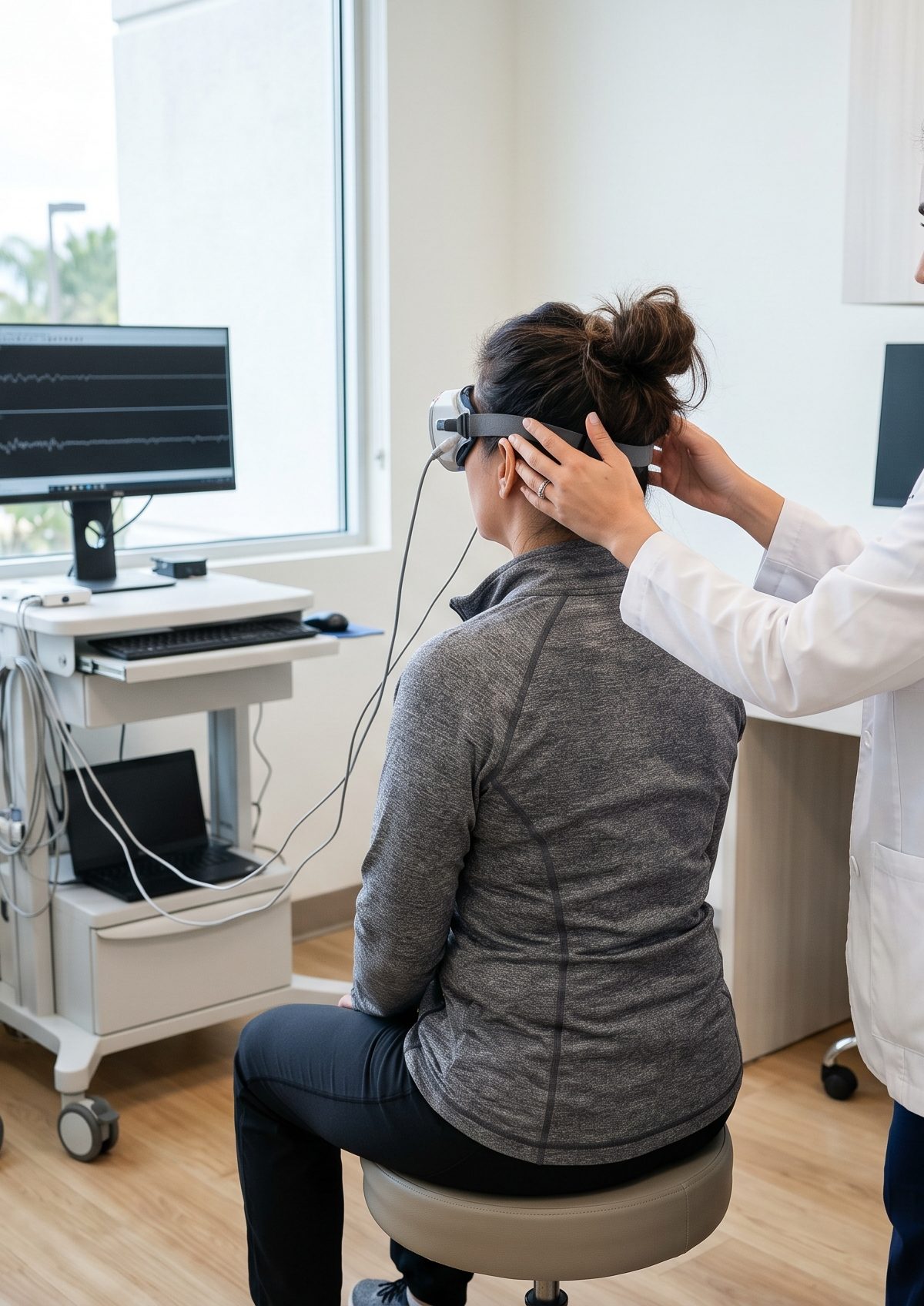
When dizziness is chronic, repeated, or hard to classify, a rehabilitation-focused evaluation can help. The functional neurology trained team at San Diego Chiropractic Neurology looks at whether symptoms are being driven by one system or a combination of systems, including:
- vestibular dysfunction
- oculomotor control and gaze stability problems
- post-concussion changes
- migraine-related dizziness
- cervical proprioceptive dysfunction
- balance and gait impairment
- orthostatic or autonomic contributors
That type of integrated workup is often useful for patients who have already had imaging, medication trials, or basic screenings but still do not feel stable or functional.
When a rehabilitation-based dizziness specialist may help
Many patients do not need another generic recommendation to rest and wait. They need a structured exam that asks why the dizziness happens, what triggers it, and which neurologic or sensorimotor systems are involved. A rehabilitation-based dizziness workup may be appropriate when:
- symptoms have lasted weeks or months
- dizziness returns with head movement, screens, driving, or crowds
- there is lingering imbalance after vestibular neuritis, concussion, or migraine flares
- the person feels off-balance even though scans or basic tests were reported as normal
- there is a mix of vertigo, neck tension, eye strain, fatigue, and motion intolerance
Clinical practice guidelines support vestibular rehabilitation for peripheral vestibular hypofunction, with improvements reported in symptoms, gaze stability, balance, and function when programs are diagnosis-specific and appropriately supervised . A newer systematic review also found support for vestibular rehabilitation in vestibular neuritis and suggested that rehabilitation combined with steroids may outperform steroids alone for some outcomes .
That does not mean every dizziness patient needs the same exercise sheet. For some people, the priority is canal repositioning. For others, it is gaze stabilization, graded balance loading, neuro-visual rehabilitation, cervical sensorimotor work, or a plan that also addresses migraine or orthostatic triggers.
How the clinic evaluates chronic dizziness and imbalance
A good dizziness evaluation should sort symptoms into patterns instead of collapsing everything into one label. At San Diego Chiropractic Neurology, the clinical focus is on identifying the main drivers of the problem and building a non-invasive rehabilitation plan around those findings.
1. Symptom pattern and trigger mapping
The first step is understanding what the patient actually means by dizziness. Is it spinning, rocking, tilting, lightheadedness, visual disorientation, or poor balance? Does it happen with rolling in bed, standing up, turning the head, walking in large stores, using screens, driving on the freeway, or physical exertion? These details often point toward different systems.
2. Eye movement and gaze stability testing
Dizziness often worsens when eye movement control is inefficient. Tracking, saccades, convergence, gaze stabilization, and visual-motion tolerance may all be relevant, especially in post-concussion or visually triggered dizziness patterns.
3. Vestibular and balance assessment
Balance testing, head-movement tolerance, vestibulo-ocular reflex performance, positional provocation, and gait observation can help identify whether vestibular hypofunction or balance integration problems are contributing to symptoms. Patients looking for related care can also review the clinic’s page on vestibular therapy.
4. Cervical contribution screening
Some patients have dizziness linked to neck stiffness, poor cervical proprioception, head position changes, or a mismatch between cervical input and vestibular-visual input. This does not mean every dizzy patient has a cervical driver, but it is worth screening for when the history supports it.
5. Concussion and migraine overlap
Dizziness after concussion often persists because the problem is not only one thing. Vestibular symptoms, eye movement intolerance, headache, motion sensitivity, neck involvement, and autonomic dysregulation can overlap. The same is true for vestibular migraine patterns. Patients with these histories may benefit from learning more about concussion-related symptoms and migraine-related dizziness patterns.
6. Orthostatic and autonomic contributors
If symptoms are worse when standing, walking in heat, or after prolonged upright activity, orthostatic intolerance may need to be considered. Not every dizzy patient has a vestibular disorder. Some feel more lightheaded than vertiginous, and their treatment direction may need to include hydration strategies, medical evaluation, rehabilitation principles, and coordination with other providers.
Why chronic dizziness should not be minimized
Chronic dizziness affects more than comfort. It can change confidence, mobility, driving, work tolerance, and fall risk. A 2024 systematic review found that dizziness was an independent predictor of future falls and recurrent falls in older adults . That matters because many patients normalize dizziness for months or years, especially when symptoms are intermittent or hard to explain.
In a place like San Diego, that functional impact shows up quickly. People want to commute, work on screens, move through busy shopping centers, hike, surf, train, travel, and stay active with family. If the nervous system is misprocessing head motion, visual motion, posture, or vestibular input, routine activities can become exhausting. That is a strong reason to pursue a proper evaluation rather than relying only on symptom suppression.
Signs you may be seeing the wrong type of provider
Patients often arrive after going in circles between urgent care, imaging, medication trials, and brief referrals that did not fully explain the problem. It may be time for a different type of dizziness specialist if:
- you have been told everything is normal, but you still cannot tolerate motion or busy environments
- you were given medication only, without a movement-based or rehabilitation-based plan
- your dizziness is triggered by head motion, screens, walking, driving, or visual complexity
- your symptoms began after concussion, neck injury, vestibular illness, or migraine changes
- no one has assessed vestibular, balance, eye movement, and orthostatic factors together
That does not mean prior care was unnecessary. It means some dizziness cases need a broader systems-based assessment once emergency causes and obvious medical issues have been addressed.
What treatment may look like for dizziness in San Diego
Treatment depends on the diagnosis and may include referral, co-management, or in-clinic rehabilitation. A non-invasive dizziness treatment plan may include:
- canal repositioning when positional vertigo is identified
- gaze stabilization exercises for vestibular hypofunction
- graded balance and gait training
- neuro-visual rehabilitation for visual-motion sensitivity or oculomotor deficits
- cervical sensorimotor rehabilitation when neck-related factors are present
- graduated activity exposure for motion intolerance
- education around migraine, orthostatic, and environmental triggers
Guideline-backed vestibular rehabilitation is not a one-size-fits-all program. It works best when exercises fit the specific impairment profile . That is one reason patients searching for dizziness treatment San Diego often benefit from finding a clinic that can distinguish between peripheral vestibular, migraine-related, visual-motion, concussion-related, cervical, and autonomic contributors.
When to seek a dizziness specialist locally
You may want to schedule an evaluation if dizziness has lasted more than a few days, keeps returning, interferes with walking or driving, or limits your ability to work, exercise, or tolerate normal environments. This is especially relevant if you have already tried medication, rest, or general advice without clear progress.
For patients searching for a vertigo specialist San Diego or balance disorder specialist San Diego, the key is not just finding a provider with the right label. It is finding a clinician or team that can identify whether the problem is vestibular, neurologic, cervical, migraine-related, post-concussion, autonomic, or urgent enough to require emergency escalation.
San Diego Chiropractic Neurology provides non-invasive evaluation and rehabilitation for dizziness patterns involving vestibular, visual, balance, concussion, cervical, and autonomic contributors. Patients who are comparing options may also review the clinic’s pages on vertigo and the broader FAQ section.
Frequently asked questions
What kind of specialist should I see for dizziness in San Diego?
That depends on the pattern. Sudden dizziness with neurologic symptoms needs emergency evaluation. Hearing-related vertigo may fit ENT or neurotology. Migraine or central neurologic concerns may fit neurology. Chronic dizziness, imbalance, visually triggered symptoms, or post-concussion dizziness may benefit from a rehabilitation-focused evaluation that looks at vestibular, eye movement, balance, cervical, and autonomic contributors together.
When is dizziness an emergency instead of a routine specialist visit?
Dizziness is an emergency when it comes with stroke-like symptoms, new weakness, facial droop, severe sudden headache, inability to walk, new double vision, fainting, chest pain, or acute continuous vertigo with other concerning neurologic features. In those cases, emergency evaluation is more appropriate than booking a routine office appointment.
Can vestibular therapy help chronic dizziness or imbalance?
It may help when dizziness is related to vestibular hypofunction, motion sensitivity, balance impairment, or post-vestibular illness deficits. Research and clinical guidelines support vestibular rehabilitation for specific peripheral vestibular disorders, especially when care is matched to the patient’s diagnosis and impairments .
What is the difference between vertigo, lightheadedness, and balance problems?
Vertigo usually refers to a spinning or movement illusion. Lightheadedness is more of a faint or woozy sensation. Balance problems describe unsteadiness when standing or walking. These patterns can point toward different causes, so the language matters during evaluation.
Can migraine, concussion, or neck problems cause dizziness even if my scans are normal?
Yes. Some dizziness patterns come from functional disruption in vestibular, oculomotor, cervical, migraine, or autonomic systems rather than a structural lesion visible on routine imaging. Normal scans can be reassuring in some contexts, but they do not rule out treatable contributors to ongoing dizziness.
Next step for patients looking for a dizziness specialist in San Diego
If dizziness is affecting your work, balance, exercise tolerance, driving, or confidence, it is reasonable to get a more specific evaluation rather than waiting for the problem to sort itself out. The functional neurology trained team at San Diego Chiropractic Neurology provides non-invasive assessment and rehabilitation for chronic dizziness, vertigo, visual-motion sensitivity, post-concussion imbalance, and related balance complaints.
To discuss whether an evaluation is appropriate, call (619) 344-0111 or book a consultation with San Diego Chiropractic Neurology. Patients should consult their provider for urgent concerns or if they are unsure whether symptoms need emergency care.
References
- Hall CD, Herdman SJ, Whitney SL, et al. Vestibular Rehabilitation for Peripheral Vestibular Hypofunction: An Updated Clinical Practice Guideline. J Neurol Phys Ther. 2022.
- Huang HH, Lee HH, Hsieh RL, et al. Efficacy of Vestibular Rehabilitation in Vestibular Neuritis: A Systematic Review and Meta-analysis. Am J Phys Med Rehabil. 2024.
- Li Y, et al. Association between dizziness and future falls and fall-related injuries in older adults: a systematic review and meta-analysis. Age Ageing. 2024.
- Gottlieb M, Carlson JN, Peksa GD. Head impulse, nystagmus, and test of skew examination for diagnosing central causes of acute vestibular syndrome. Cochrane Database Syst Rev. 2023.
Medical disclaimer: This article is for educational purposes only and is not medical advice, diagnosis, or treatment. Dizziness can have urgent causes, including stroke and cardiac conditions. If symptoms are sudden, severe, or associated with neurologic deficits, chest pain, fainting, or other emergency warning signs, seek emergency medical care immediately.
Not sure what is driving your symptoms?
Talk with our Functional Neurology Trained team on a free phone consultation. We will tell you honestly whether we can help.