Dizziness Evaluation San Diego: What to Expect From a Thorough Assessment
Free phone consultation with our San Diego functional neurology team. No obligation.
Dizziness can mean very different things to different patients. For some, it feels like spinning. For others, it is a sense of rocking, lightheadedness, imbalance, motion sensitivity, or visual disorientation in busy places. Because dizziness is a symptom rather than a single diagnosis, a useful dizziness evaluation in San Diego should do more than label the problem. It should help identify the pattern behind the symptom and clarify what type of follow-up care makes sense.
At San Diego Chiropractic Neurology, dizziness evaluations are designed to look at how balance, eye movements, positional triggers, cervical input, autonomic function, and neurologic findings may relate to a patient’s symptoms. That matters because effective care depends on understanding what is actually driving the dizziness. A patient with BPPV may need a very different plan than someone dealing with vestibular migraine, post-concussion dizziness, or dizziness that appears when standing.
Why a Dizziness Evaluation Matters
Many patients spend weeks or months trying to describe dizziness without getting a clear explanation. That is partly because dizziness can overlap with several systems at once. Inner ear problems, migraine mechanisms, cervical issues, concussion-related changes, visual processing strain, and orthostatic symptoms can all create similar complaints.
A structured evaluation can help separate these patterns by asking more specific questions:
- Does the room spin, or is the problem more of a floating or lightheaded sensation?
- Are symptoms triggered by turning in bed, looking up, bending over, walking in stores, reading, screen use, standing up, or quick head motion?
- Is dizziness linked with headaches, neck pain, nausea, visual sensitivity, brain fog, fatigue, or imbalance?
- Did symptoms begin after a concussion, illness, viral infection, medication change, or neck injury?
These details often guide the next steps more effectively than the word “dizzy” alone.
Dizziness Is Not One Single Problem
One of the most important parts of an evaluation is clarifying what a patient means by dizziness. Several patterns are common:
#Vertigo
Vertigo usually describes a spinning or movement sensation. It may occur with changes in head position and can be associated with inner ear disorders such as BPPV.
#Lightheadedness or Faint Feeling
Some patients feel as if they may pass out, especially after standing. This can overlap with blood pressure regulation issues, dehydration, or autonomic dysfunction patterns, including symptoms seen in POTS-related presentations.
#Imbalance or Unsteadiness
Others do not feel spinning at all. Instead, they feel off-balance, unstable, or as if they are being pulled to one side. This pattern may relate to vestibular dysfunction, neurologic changes, sensory integration issues, or post-concussion changes.
#Visual Motion Sensitivity
Busy aisles, scrolling screens, traffic, or large open spaces can make some patients feel overwhelmed or disoriented. This pattern may appear in vestibular disorders, migraine-related dizziness, concussion recovery, or visual-vestibular mismatch states.
When the evaluation sorts symptoms into clearer categories, treatment recommendations become more targeted.
Common Issues a Dizziness Evaluation May Explore
A thorough dizziness assessment in San Diego may consider a range of causes and contributing factors.
#Benign Paroxysmal Positional Vertigo (BPPV)
BPPV often causes short episodes of spinning with head movement, such as rolling in bed or looking up. Positional testing can help determine whether this pattern is present and whether repositioning maneuvers may be appropriate.
#Vestibular Migraine
Some patients have dizziness related to migraine mechanisms even if headache is not their main complaint. Symptoms may include motion sensitivity, visual sensitivity, rocking sensations, and episodic imbalance. A history of migraine, headache, sound sensitivity, or sensory overload may help shape the evaluation.
#Cervicogenic Dizziness
Neck injury, chronic neck tension, or altered cervical input may contribute to dizziness in some cases. If symptoms increase with neck movement or coexist with stiffness and postural strain, the cervical contribution may deserve closer screening.
#Post-Concussion Dizziness
After a concussion, dizziness may come from vestibular dysfunction, visual strain, autonomic changes, balance problems, or a mix of several systems. These patients often benefit from a broader neurologic and functional assessment.
#Orthostatic and Autonomic Patterns
If symptoms worsen when standing, improve when lying down, or come with racing heart, fatigue, or heat intolerance, orthostatic screening may be relevant. This is one reason a dizziness workup sometimes needs to look beyond the inner ear alone.
#Persistent Balance and Visual Processing Problems
Some patients feel unsteady in stores, while driving, in crowds, or during complex visual tasks. In those cases, the evaluation may focus more on visual-vestibular integration and balance control.
What a Dizziness Evaluation in San Diego May Include
The exact process varies by patient, but a thorough visit commonly includes several parts.
#1. Detailed History
A strong evaluation usually starts with a careful history. Important questions include:
- When did symptoms begin?
- Are symptoms constant or episodic?
- What triggers them?
- Is the feeling spinning, lightheadedness, rocking, imbalance, or visual disorientation?
- Are there associated symptoms such as headache, nausea, neck pain, tinnitus, fatigue, brain fog, or palpitations?
- Was there a concussion, viral illness, neck injury, or other event before the onset?
This history often provides the first clues about whether the problem is positional, migraine-related, cervical, post-concussive, autonomic, or mixed.
#2. Eye Movement and Oculomotor Screening
Eye tracking, gaze stabilization, convergence, saccades, and visual motion response can help identify visual-vestibular strain or neurologic inefficiency. Patients with concussion histories or visual sensitivity often show symptoms during this part of the assessment.
#3. Positional Testing
If symptoms suggest positional vertigo, testing may assess whether head position changes provoke a consistent response. This can help identify cases that may fit a BPPV pattern.
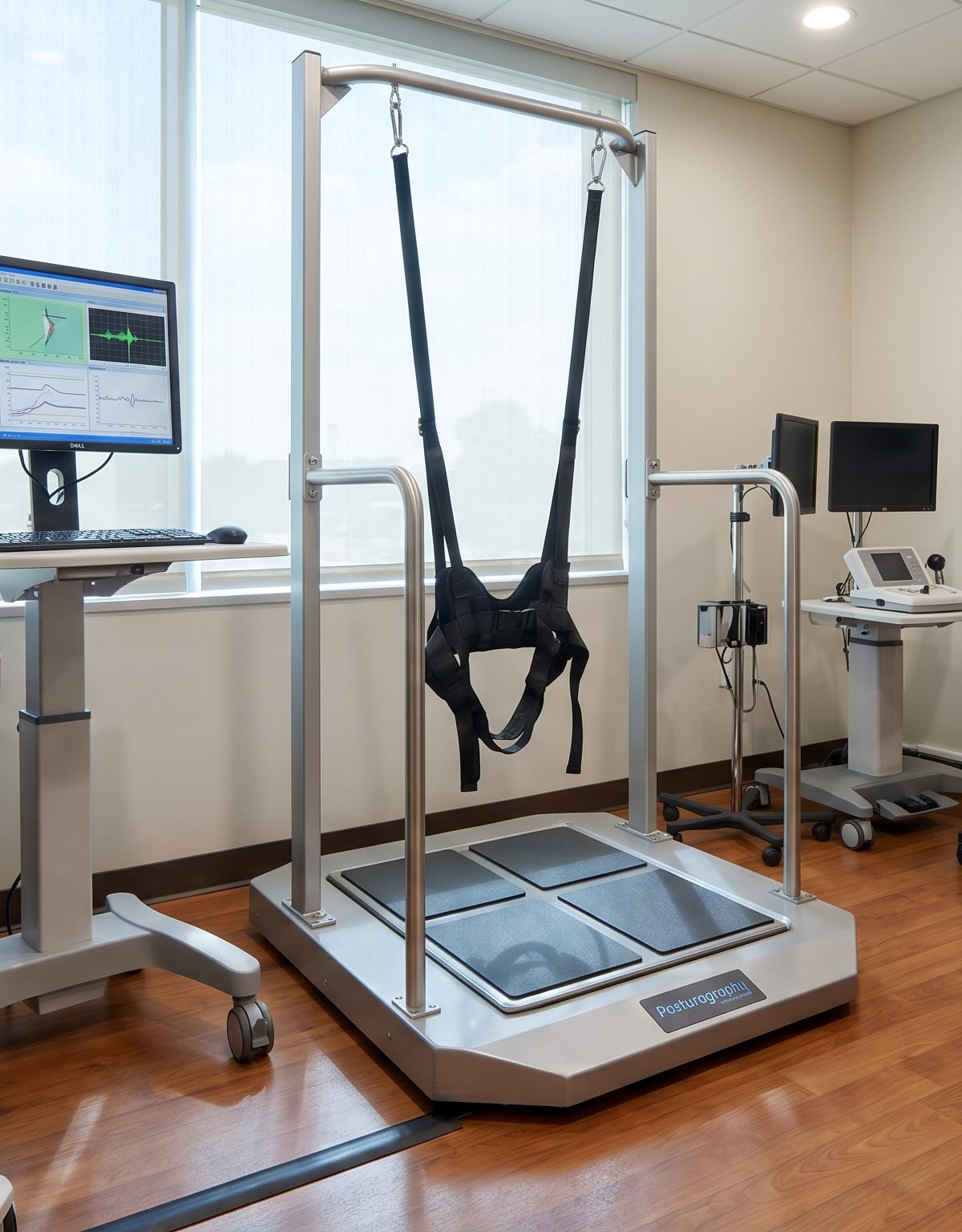
#4. Balance and Gait Assessment
Standing balance, walking mechanics, head movement tolerance, and sensory integration may be screened to understand how dizziness is affecting day-to-day stability. Some patients feel stable while sitting but become symptomatic when the balance system is challenged.
#5. Cervical Screening
Because neck dysfunction can influence dizziness in some patients, the exam may also consider neck mobility, posture, symptom reproduction, and how cervical movement interacts with visual and vestibular demands.
#6. Orthostatic or Standing Tolerance Screening
If symptoms occur when standing, a provider may assess heart rate and blood pressure response patterns or otherwise evaluate whether position-related physiologic stress seems relevant.
#7. Neurologic Examination
A neurologic screen may help determine whether the presentation appears straightforward or whether other referral considerations should be prioritized. This helps keep the evaluation clinically grounded rather than overly narrow.
When Should You Schedule a Dizziness Evaluation?
Patients often wait too long because dizziness comes and goes. In reality, evaluation may be helpful when:
- dizziness keeps returning
- symptoms interfere with work, exercise, driving, screens, or shopping
- you feel unsteady walking or turning
- symptoms started after a concussion or neck injury
- standing makes you feel worse
- prior care did not explain the cause
- you are avoiding normal activities because of symptom flares
The goal is not just to confirm that dizziness exists. It is to understand the pattern behind it and identify a practical next step.
What Happens After the Evaluation?
Follow-up recommendations depend on the findings. For some patients, the next step may involve targeted vestibular rehabilitation. Others may need positional treatment, visual-vestibular exercises, balance training, autonomic-focused support, cervical rehabilitation, or referral for additional medical workup.
That is why a quality evaluation matters. Dizziness care works best when recommendations match the underlying pattern rather than assuming every patient needs the same exercises or the same explanation.
Patients whose symptoms overlap with vertigo may also benefit from learning more about vertigo evaluation and treatment options. Those with concussion-related symptoms can review our information on concussion-related neurologic symptoms. For patients who notice symptoms specifically when upright, our page on POTS and orthostatic symptom patterns may also be helpful.
If treatment is recommended, services may include structured vestibular therapy or related rehabilitation based on the evaluation findings.
Why Patients Look for a Dizziness Evaluation in San Diego
Patients are often not just looking for symptom relief. They want a clearer explanation. They want to know whether the issue is coming from the inner ear, migraine patterns, concussion recovery, the neck, or something else. They also want to know whether the symptoms are likely to improve with targeted rehabilitation or whether broader medical referral is necessary.
A focused dizziness evaluation helps answer those questions by organizing symptoms into a clearer clinical picture and guiding the next step with more confidence. That is especially important when symptoms have lingered, changed over time, or never fit neatly into a single label.
How Dizziness Affects Daily Function
One reason patients seek evaluation is that dizziness rarely stays confined to one brief symptom window. It can affect confidence, concentration, pace of movement, work tolerance, exercise, errands, and even basic routines such as driving or walking through a parking lot. Some patients begin making quiet adjustments long before they schedule an appointment. They stop turning quickly, avoid crowded stores, hold railings, skip workouts, reduce screen time, or hesitate to travel.
These changes matter because they help show how the symptom behaves in the real world. A person who feels fine sitting still but becomes disoriented in aisles may not have the same problem as someone who gets brief spinning in bed. A patient who feels shaky and lightheaded after standing may not need the same strategy as someone whose symptoms flare with visual motion or neck rotation. Functional impact gives context to the symptom pattern.
That is also why a helpful evaluation should ask not only what dizziness feels like, but what it interrupts. When symptoms affect work focus, reading tolerance, gym activity, grocery shopping, driving, household tasks, or confidence leaving the house, those details can help shape a more practical plan.
Why Self-Diagnosis Often Misses the Real Pattern
Many patients arrive convinced they have “vertigo” because the word is familiar, even when their symptom pattern is not a classic spinning presentation. Others assume they are dehydrated, anxious, or simply tired because symptoms fluctuate from day to day. While those factors can overlap with dizziness, self-diagnosis often misses mixed presentations.
For example, one patient may have residual dizziness after BPPV even though the initial spinning episodes have improved. Another may have migraine-related dizziness without significant headache. Another may be dealing with post-concussion visual-vestibular strain that shows up mainly in stores, on screens, or in traffic. Someone else may notice symptoms mostly when upright and need orthostatic screening built into the workup.
A structured evaluation helps narrow the list by looking at triggers, timing, associated symptoms, positional patterns, and exam findings together. That usually produces a clearer next step than online guessing or trial-and-error symptom management.
Red Flags That Need Prompt Medical Attention
Not every dizziness complaint belongs in a routine rehabilitation-style workup. Some symptoms need urgent medical assessment. Patients should seek immediate medical attention for dizziness associated with sudden one-sided weakness, facial droop, new confusion, trouble speaking, chest pain, fainting, sudden severe headache, sudden hearing loss, or other abrupt neurologic change.
Those red flags do not describe most chronic dizziness cases seen in outpatient practice, but they do matter. A good dizziness evaluation includes enough screening to recognize when a patient may need referral or a higher level of care rather than conservative rehabilitation alone.
What Patients Often Want to Know Before the Visit
Patients commonly ask whether they should try to trigger symptoms before an evaluation, whether they need imaging first, and whether they should avoid activity until the problem is fully understood. In most cases, the visit itself is designed to gather the information needed to decide what should happen next. The goal is not to provoke symptoms unnecessarily, but to understand them in a controlled and clinically useful way.
Another common concern is whether a normal prior scan means the dizziness is “in their head” or impossible to evaluate. In reality, many functional dizziness patterns do not show up on standard imaging. That is one reason bedside assessment, symptom mapping, balance testing, and visual-vestibular screening remain so important.
Frequently Asked Questions
#What is included in a dizziness evaluation?
A dizziness evaluation may include a symptom history, eye movement screening, balance testing, positional testing when appropriate, cervical screening, orthostatic screening, and a neurologic exam. The exact components depend on the patient’s presentation.
#Can a dizziness evaluation tell whether I have vertigo?
It may help clarify whether symptoms fit a vertigo pattern, especially if spinning is triggered by head position changes. It can also help determine when symptoms may reflect something other than classic vertigo.
#Should I get evaluated if dizziness only happens sometimes?
Yes. Intermittent dizziness can still reflect a meaningful pattern, especially if it keeps returning, interferes with function, or is triggered reliably by standing, movement, visual environments, or head position changes.
#What if dizziness started after a concussion?
Post-concussion dizziness often involves more than one system. A broader evaluation may help identify vestibular, visual, autonomic, balance, or cervical factors that should guide rehabilitation.
#Is dizziness when standing always an inner ear problem?
No. Dizziness or lightheadedness when standing can relate to orthostatic or autonomic patterns as well as other factors. That is one reason a thorough evaluation should not focus only on the inner ear.
Next Step
Call (619) 344-0111 or book a free consultation.
Medical Disclaimer
This article is for educational purposes only and is not medical advice, diagnosis, or treatment. Individual symptoms and causes of dizziness vary. Seek prompt medical care for severe, sudden, or concerning symptoms, and consult a qualified healthcare professional for personal evaluation and recommendations.
Not sure what is driving your symptoms?
Talk with our Functional Neurology Trained team on a free phone consultation. We will tell you honestly whether we can help.