Concussion and Brain Fog Treatment: What a Structured Recovery Plan May Include
Free phone consultation with our San Diego functional neurology team. No obligation.
Concussion and brain fog treatment should start with a simple point: brain fog is a symptom pattern, not a complete diagnosis. After a concussion, some people describe slowed thinking, poor concentration, low mental stamina, trouble reading on screens, forgetfulness, or a sense that they are not fully clear-headed. Those complaints are real, but they do not always come from one source. In many cases, brain fog after concussion reflects a combination of vestibular stress, oculomotor strain, headache burden, sleep disruption, autonomic changes, cervical involvement, and trying to return to work, school, driving, or exercise too quickly.
For that reason, effective concussion recovery treatment is usually more specific than generic advice to rest and wait. At San Diego Chiropractic Neurology, the team uses a non-invasive, systems-based approach that looks at symptom triggers, activity limits, and which neurologic or physiologic domains need closer attention. For patients in San Diego, La Jolla, Torrey Pines, Carmel Valley, and the 92121 area, that can be especially relevant when recovery needs to account for screen-heavy work, commuting, sports, surfing, cycling, and active lifestyles.
Why Brain Fog Happens After a Concussion
Brain fog after concussion can feel purely cognitive, but the drivers are often broader than memory or attention alone. A mild traumatic brain injury may disrupt how the brain processes visual motion, eye movements, balance input, exertion, sleep regulation, and sensory load. When those systems are not working efficiently, mental clarity often drops with them.
Common contributors to post-concussion cognitive symptoms include:
- Vestibular dysfunction that makes busy environments, movement, and visual scanning harder to tolerate
- Oculomotor dysfunction that can increase strain with reading, screen use, focusing, and tracking
- Headache or migraine features that reduce attention and stamina
- Sleep disturbance that worsens fatigue, irritability, and concentration
- Autonomic dysregulation or exercise intolerance that makes upright activity and exertion harder to handle
- Cervical dysfunction that may contribute to headache, dizziness, and symptom persistence
- Mood stress and overload from returning to normal demands before the nervous system is ready
Modern concussion literature supports this multi-domain view. Reviews of mild traumatic brain injury describe the importance of assessing vestibular, ocular, cognitive, headache, fatigue, and mood-related symptom profiles rather than treating every concussion patient the same way. Research also suggests that vestibulo-ocular impairment is common after concussion and is associated with prolonged symptoms, making this an important area to screen when a patient reports ongoing mental haze, dizziness, nausea, motion sensitivity, or difficulty reading.
How Long Does Brain Fog Last After a Concussion?
Recovery timelines vary. Many adults improve within about two weeks, and many adolescents recover within about four weeks, but not everyone follows that pattern. A higher early symptom burden, migraine history, mental health stressors, poor sleep, and overlapping vestibular or visual complaints may all increase the likelihood of a more prolonged recovery.
That means there is no single answer to the question, "why do I have brain fog after concussion?" For some people, symptoms begin to ease once the first few days pass and activity is reintroduced gradually. For others, brain fog continues because a specific contributor was missed. If reading still provokes symptoms, if crowded stores are difficult, if laptop work causes mental shutdown, or if light exercise leads to delayed crashes, the next step should usually be a more targeted evaluation rather than indefinite rest.
Why Strict Rest Alone Is Usually Not Enough
Older concussion advice often centered on prolonged rest. Current guidance is more nuanced. A short rest period is still appropriate early on, but extended inactivity is no longer the default recommendation. Contemporary concussion care supports a gradual return to activity that does not significantly worsen symptoms. In practice, that means activity should be dosed and monitored rather than avoided entirely.
This matters for brain fog because too much rest can leave patients deconditioned, isolated from normal routines, and less tolerant of cognitive and physical load. On the other hand, pushing too hard too fast can intensify symptoms. A structured recovery plan aims for a middle ground: enough activity to support recovery, but not so much that symptoms spiral.
For many patients, the key question is not whether to be active, but which type of activity is appropriate right now. That may include graded walking, symptom-limited cardio, work modifications, scheduled screen breaks, targeted balance exercises, or neuro-visual rehabilitation when deficits are identified.
What a Targeted Concussion Evaluation Should Include
Concussion and brain fog treatment works best when the assessment is broad enough to identify the main drivers of symptoms. The clinic typically evaluates patterns such as:
Vestibular and Balance Function
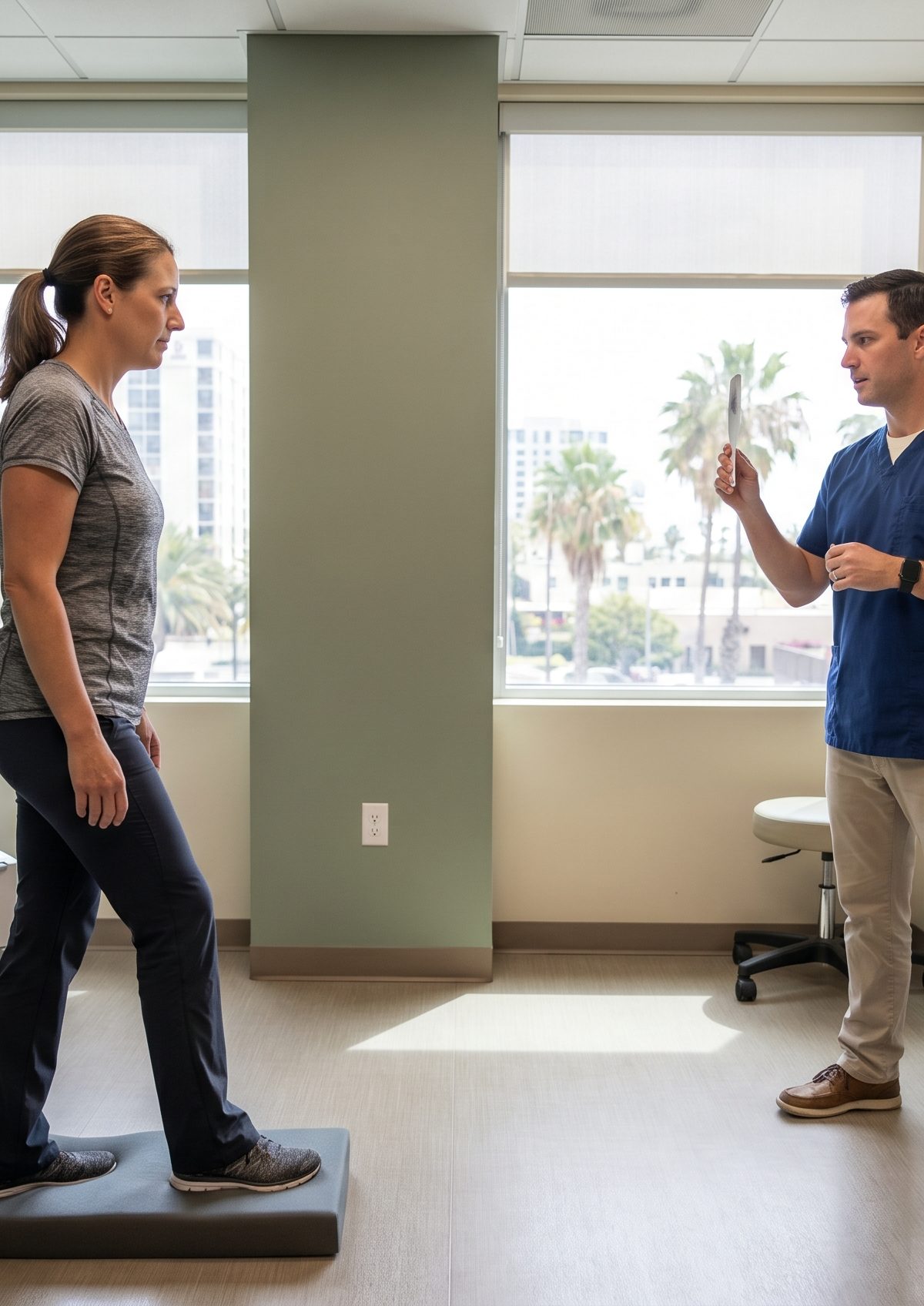
Persistent brain fog often overlaps with dizziness, motion sensitivity, visual overwhelm, disorientation in stores, and trouble turning quickly. These findings can point toward vestibular involvement. Screening tools that assess symptom provocation with eye and head movement tasks can help identify whether vestibulo-ocular dysfunction is part of the picture.
Eye Movements and Visual Load Tolerance
Some patients can think clearly in quiet settings but lose focus when reading, scrolling, or working on two monitors. That pattern may suggest oculomotor strain or poor visual motion tolerance. If those deficits are present, targeted neuro-visual rehabilitation or oculomotor rehabilitation may be appropriate as part of a larger plan.
Headache and Migraine Features
Headache burden is one of the most common reasons brain fog lingers. Even when headache is not the main complaint, low-grade pressure, light sensitivity, or migraine-like symptoms can reduce concentration and mental stamina. A complete plan has to account for this profile rather than treating cognitive symptoms in isolation.
Sleep and Fatigue
Poor sleep can amplify nearly every post-concussion complaint. Fatigue, slow processing, irritability, and reduced focus are often worse when sleep quality is disrupted. Reviews of traumatic brain injury-related sleep disturbance suggest that sleep-focused strategies matter, and melatonin has shown potential benefit for sleep quality and related fatigue in some patients with TBI-related sleep disturbance. Any supplement or medication decision should be individualized and discussed with the treating medical provider.
Autonomic Function and Exertional Tolerance
Some people with brain fog after concussion feel worse when upright, in warm environments, during exercise, or after a busy day. When symptoms include lightheadedness, racing heart, fatigue, or post-exertional symptom spikes, the clinic may consider autonomic stress and exercise intolerance as part of the workup. That is particularly relevant for patients trying to return to the gym, running, cycling, or surfing around San Diego.
Cervical Contribution
Neck pain, stiffness, tension headaches, and dizziness after a concussion may indicate that the cervical region is contributing to symptoms. When present, that factor needs to be addressed alongside vestibular and cognitive complaints rather than treated as a separate issue.
What Concussion Recovery Treatment May Include
Once key drivers are identified, treatment is typically matched to the patient’s symptom profile instead of using a generic one-size-fits-all protocol. Updated guidance for persistent post-concussion symptoms supports symptom-specific, multidisciplinary care that can address sleep, headache, mental health, vestibular dysfunction, vision-related dysfunction, fatigue, and return-to-work or return-to-school issues.
1. Graded Return to Physical and Cognitive Activity
A structured plan may include symptom-limited aerobic activity, pacing for screen time, scheduled recovery breaks, and progressive reintroduction of daily tasks. The goal is to improve tolerance without triggering significant setbacks. For patients asking how to treat brain fog after a concussion, this is often one of the most important foundations.
2. Vestibular Rehabilitation
When dizziness, motion sensitivity, disorientation, balance problems, or head-movement intolerance are present, vestibular rehabilitation may help address one of the major drivers of persistent symptoms. Patients can learn exercises that improve tolerance for movement, visual motion, and balance-related stress. More details about related dizziness patterns are outlined on the clinic’s vertigo page and vestibular therapy service page.
3. Neuro-Visual and Oculomotor Rehabilitation
When assessment shows that reading, focusing, convergence, tracking, or visual motion are part of the problem, targeted neuro-visual rehabilitation may be added. This is not generic screen avoidance. It is a structured progression based on the patient’s deficits, symptom thresholds, and goals. Patients often notice that visual strain and mental fog rise together, so treating that link can be clinically important. Patients can also review the clinic’s concussion page and FAQs for related background.
4. Headache-Informed Management
If headache or migraine features are active, they should be addressed as part of the larger rehabilitation plan. Ongoing head pressure, light sensitivity, and sensory overload can keep concentration low even after other systems begin to improve. Patients with overlap between concussion and migraine symptoms may also find the clinic’s migraine information helpful.
5. Sleep and Recovery Support
Sleep quality often determines whether a patient can tolerate work, school, exercise, and rehabilitation. A treatment plan may include sleep hygiene changes, schedule adjustments, environment modifications, and coordination with other providers when sleep disruption is significant. If fatigue is driving symptoms, this issue should be addressed directly rather than assuming it will resolve on its own.
6. Work, School, Driving, and Daily Activity Modifications
Patients do better when recovery plans match real life. Someone returning to a desk job may need a different progression than someone trying to resume school, coaching, commuting, or a physically demanding routine. In San Diego, many patients are balancing screens, meetings, freeway driving, exercise, and outdoor activity. A practical plan may include reduced visual load, shorter work intervals, symptom-based breaks, temporary driving limits, or a phased return to full activity.
What the Evidence Suggests About Persistent Symptoms
Persistent post-concussion symptoms are not always resolved by time alone. Research on multi-modal neurorehabilitation in patients with ongoing symptoms has reported improvements in subjective complaints and objective measures, including symptoms such as feeling in a fog, along with gains in processing speed, reaction time, and vestibular function. That does not mean every patient responds the same way or that one protocol fits all cases. It does suggest that targeted, multi-domain rehabilitation may be useful when symptoms have not cleared with basic guidance alone.
Brain fog itself is increasingly recognized in traumatic brain injury research as a meaningful symptom construct tied to real symptom and cognitive burden, even if patients describe it in everyday language rather than technical terms. In other words, brain fog is not too vague to matter. It is often a signal that deeper assessment is needed.
When to Seek Professional Evaluation for Brain Fog After Concussion
A professional evaluation is usually reasonable when:
- Brain fog is not improving within the expected early recovery window
- Reading, screens, driving, work, or school consistently provoke symptoms
- Dizziness, nausea, motion sensitivity, headache, or visual strain are present
- Exercise causes symptom spikes or recovery crashes
- Sleep is poor and fatigue is worsening concentration
- There is uncertainty about how to return to normal activity safely
Patients dealing with broader concussion concerns can also review the clinic’s concussion condition page and general FAQs for related guidance.
A Functional Neurology Team Approach in San Diego
At San Diego Chiropractic Neurology, concussion and brain fog treatment starts by asking which systems are still underperforming and how those deficits show up in daily life. Instead of assuming every patient needs the same rest timeline or exercise advice, the team looks at symptom triggers, vestibular and oculomotor findings, balance, exertional tolerance, headache patterns, sleep disruption, and return-to-activity demands.
This systems-based model is designed to help patients move from uncertainty to a more organized plan. For someone with persistent brain fog after mild traumatic brain injury, that may mean identifying the difference between a problem driven mostly by visual load and one driven more by dizziness, autonomic stress, sleep loss, or migraine features. Once that is clearer, rehabilitation can be more targeted.
FAQ
What causes brain fog after a concussion?
Brain fog after a concussion may be related to several overlapping factors, including vestibular dysfunction, oculomotor strain, headache burden, sleep disruption, autonomic stress, cervical issues, and difficulty returning to activity too quickly. It is usually more useful to identify the main drivers than to treat brain fog as one isolated symptom.
How long does brain fog usually last after a concussion?
Many adults improve within about two weeks, and many adolescents improve within about four weeks, but some patients have symptoms that last longer. If brain fog is continuing or daily tasks are still limited, a more detailed evaluation may help clarify why recovery has stalled.
Is rest enough, or do persistent concussion symptoms need active treatment?
Early rest still has a role, but prolonged strict rest is no longer the standard approach. Modern concussion care generally supports a short rest period followed by gradually increasing activity that does not significantly worsen symptoms. When symptoms persist, active and symptom-specific treatment is often more appropriate than rest alone.
Can vestibular therapy or neuro-visual rehabilitation help post-concussion brain fog?
They may help when assessment identifies vestibular or oculomotor deficits contributing to symptoms. Research supports targeted vestibular and oculomotor rehabilitation for appropriate post-concussion presentations rather than relying on generic advice alone.
When should I seek concussion care for ongoing brain fog in San Diego?
It is reasonable to seek care if brain fog is lingering, interfering with work or school, or occurring alongside dizziness, headache, visual strain, fatigue, or exercise intolerance. A targeted evaluation may help identify which systems need attention and what type of rehabilitation is appropriate. Patients should consult their provider if symptoms are persistent, worsening, or unclear.
Take the Next Step
If brain fog after a concussion is interfering with work, school, exercise, or daily life, a structured evaluation may help clarify what is driving the symptoms and what type of rehabilitation may be appropriate. To learn more about concussion recovery treatment at San Diego Chiropractic Neurology, call (619) 344-0111 or book a consultation.
Medical Disclaimer
This article is for educational purposes only and is not medical advice, diagnosis, or treatment. Concussion symptoms vary by individual, and recommendations should be based on a licensed clinician’s evaluation, medical history, symptom course, and clinical judgment. Consult your provider for care recommendations. If symptoms are severe, worsening, or associated with emergency warning signs, seek urgent medical care.
References
- Kaae C, et al. Vestibulo-ocular dysfunction in mTBI: Utility of the VOMS for evaluation and management - A review. NeuroRehabilitation. 2022. PMID: 35311725.
- Bytomski J. Sports Medicine: Concussion. FP Essent. 2022. PMID: 35830323.
- Marshall S, et al. Updated clinical practice guidelines for concussion/mild traumatic brain injury and persistent symptoms. Brain Inj. 2015. PMID: 25871303.
- Cassimatis M, et al. The Utility of Melatonin for the Treatment of Sleep Disturbance After Traumatic Brain Injury: A Scoping Review. Arch Phys Med Rehabil. 2023. PMID: 36243124.
- Ross EA, et al. Multi-Modal Neurorehabilitation for Persisting Post-Concussion Symptoms. Neurotrauma Rep. 2023. PMID: 37187507.
- Bell T, et al. Severity and correlates of brain fog in people with traumatic brain injury. Res Nurs Health. 2022. PMCID: PMC10851910.
Not sure what is driving your symptoms?
Talk with our Functional Neurology Trained team on a free phone consultation. We will tell you honestly whether we can help.