Balance Disorder Specialist San Diego: What to Know Before You Book
Free phone consultation with our San Diego functional neurology team. No obligation.
If you have been feeling dizzy, unsteady, off balance, or visually overwhelmed in busy environments, it can be hard to know what kind of specialist to see. Many people search for a balance disorder specialist San Diego because their symptoms do not fit neatly into one box. Some people feel spinning vertigo. Others feel rocking, swaying, lightheadedness, motion sensitivity, or a sense that they cannot trust their footing.
At San Diego Chiropractic Neurology, the clinical focus is not on guessing from symptoms alone. A balance problem can involve the inner ear, eye movement control, neck input, migraine physiology, concussion effects, sensory integration, or a combination of these systems. That is why a structured evaluation matters before deciding what kind of rehabilitation may help.
This guide explains what a balance disorder specialist does, what symptoms may point to a more focused workup, what testing may be used, and when dizziness should be treated as urgent rather than routine care.
What is a balance disorder?
A balance disorder is a problem with the body’s ability to stay oriented and stable during sitting, standing, walking, turning, or moving through space. Balance depends on the brain’s ability to combine information from the vestibular system in the inner ear, the visual system, and sensory input from muscles and joints. When one or more of those systems is not working well together, dizziness and imbalance can follow.
That is one reason balance symptoms vary so much from person to person. One patient may describe brief spinning when rolling over in bed. Another may feel pulled to one side while walking. Another may feel worse in grocery stores, traffic, or bright, visually complex spaces. The symptom matters, but the pattern matters even more.
Is a balance disorder the same thing as vertigo?
Not exactly. Vertigo usually describes the false sensation of spinning or movement. A balance disorder is broader. It can include vertigo, but it can also include rocking, floating, swaying, motion sensitivity, visual dependence, unsteady gait, or a persistent sense of disequilibrium.
That distinction matters because not every balance complaint is caused by the same mechanism. Benign paroxysmal positional vertigo, or BPPV, may cause short episodes of spinning with head position change and needs specific positional testing to confirm it. Vestibular migraine may cause dizziness with or without headache. Post-concussion symptoms can affect eye movements, motion tolerance, and spatial orientation. Neck dysfunction may also contribute to dizziness in some patients. A useful evaluation has to sort through these possibilities instead of assuming they are all the same.
When should you look for a balance disorder specialist in San Diego?
It may be reasonable to seek a focused evaluation when symptoms are persistent, recurrent, unexplained, or interfering with daily life. Common reasons people look for help include:
- Dizziness that keeps coming back
- Feeling unsteady when walking
- Symptoms triggered by turning the head or rolling in bed
- Feeling worse in stores, crowds, or scrolling screens
- Balance problems after a concussion or neck injury
- Dizziness linked with migraine history
- Fear of falling or reduced confidence on stairs or uneven ground
For many people in San Diego, the main question is not just “Why am I dizzy?” but “What kind of assessment will finally clarify this?” That is often the value of a specialist visit: narrowing the pattern, identifying likely drivers, and deciding whether targeted rehabilitation is appropriate.
What conditions can cause balance symptoms?
Balance complaints can come from several different categories. A good evaluation considers more than one at a time.
1. Inner ear and vestibular disorders
The vestibular system helps detect head movement and body position. Problems here may cause vertigo, motion sensitivity, blurred vision with movement, or unsteadiness. This category can include BPPV, vestibular neuritis, vestibular hypofunction, and other peripheral vestibular problems.
2. Vestibular migraine
Some patients with migraine do not mainly present with headache. Instead, they may have episodic dizziness, head-motion sensitivity, nausea, visual sensitivity, or imbalance. A careful history is often needed to recognize that pattern.
3. Post-concussion dizziness
After a concussion, patients may develop dizziness, visual motion sensitivity, poor tolerance for busy environments, headaches, and balance trouble. Persistent symptoms may reflect vestibular and oculomotor involvement that deserves targeted assessment rather than generic advice alone.
4. Visual and sensory integration problems
Some people become symptomatic not because of a single inner ear problem, but because the brain is not efficiently integrating vestibular, visual, and body-position signals. This can show up as discomfort in grocery stores, escalators, patterned floors, or crowded public spaces.
5. Cervicogenic contributors
The neck contributes position sense to the brain. In some cases, especially after whiplash or other neck injury, altered cervical input may be part of the dizziness picture. This possibility should be considered alongside vestibular and neurologic factors rather than in isolation.
6. Neurologic or medical causes
Not every balance problem belongs in an outpatient rehab setting. Some cases may involve neurologic disease, medication effects, cardiovascular issues, metabolic problems, or other medical concerns. That is why symptom timing, red flags, and triage matter.
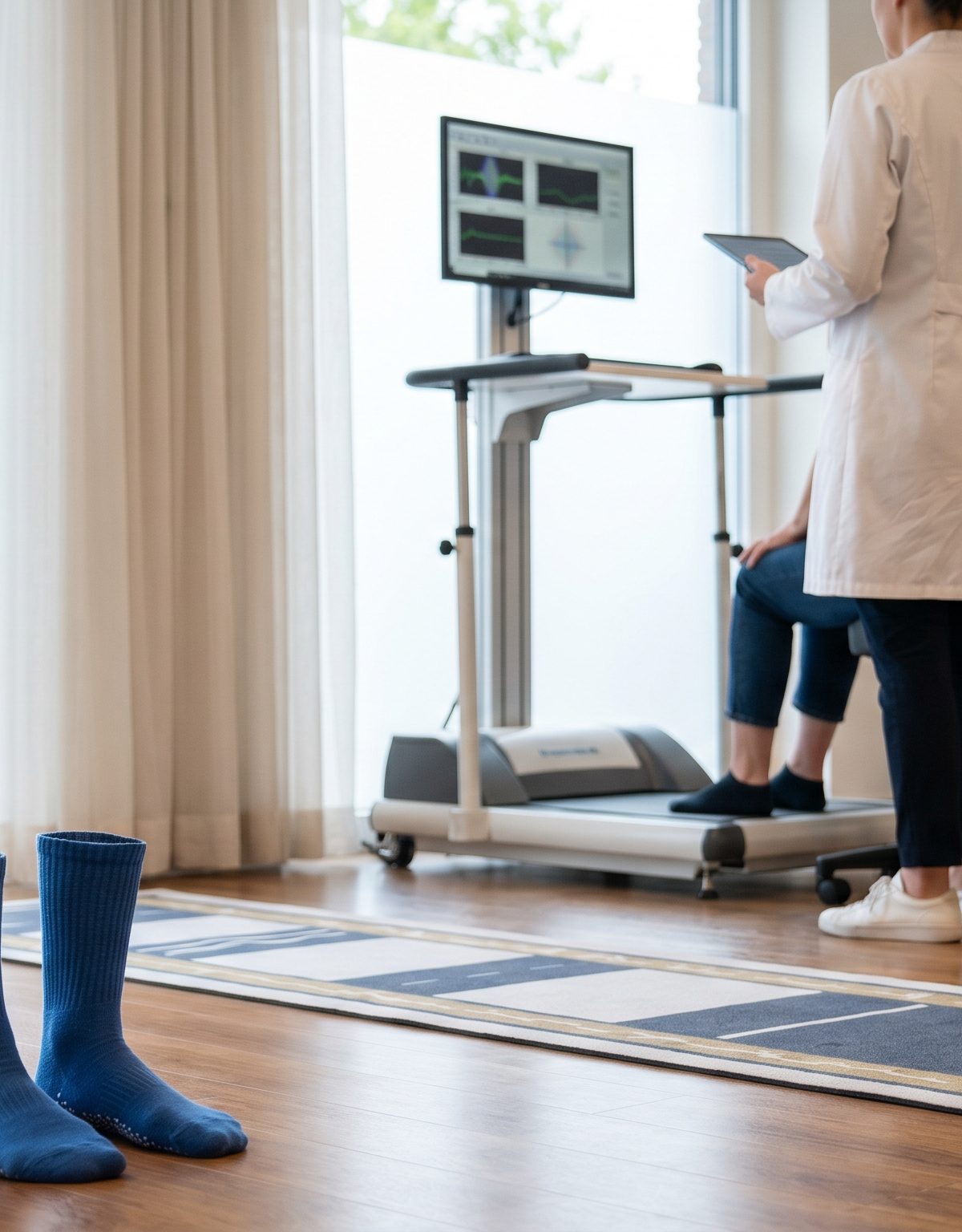
What does a balance disorder specialist actually evaluate?
A focused evaluation usually starts with pattern recognition. The goal is to understand when the symptoms started, what triggers them, what they feel like, how long they last, and what other symptoms travel with them.
A visit may include:
- Detailed symptom history
- Review of concussion, migraine, neck injury, or ear-related history
- Eye movement and gaze stability screening
- Positional testing when BPPV is suspected
- Balance and gait assessment
- Coordination testing
- Head movement tolerance testing
- Screening for visual motion sensitivity
- Functional assessment of how symptoms affect work, driving, exercise, and daily life
The point is not to run every test on every patient. It is to build a reasonable clinical picture of whether the pattern looks more vestibular, migraine-related, post-concussion, cervicogenic, visually driven, or mixed.
Why the diagnostic process matters
Many dizziness patients have already been told to wait it out, drink more water, or use a generic home exercise sheet. Sometimes that is enough. Often it is not. Dizziness has a broad differential diagnosis, and symptom labels alone can be misleading.
For example, a person with short-lived spinning when rolling in bed may need positional testing for BPPV. A person who feels worse in busy environments may need closer attention to visual-vestibular interaction. A patient who developed symptoms after a concussion may need vestibular and oculomotor rehabilitation planning. The better the front-end assessment, the more targeted the care plan can be.
What kinds of treatment or rehabilitation may follow?
Treatment depends on the findings. Some patients need education and reassurance. Some need a referral for conventional medical workup. Some are appropriate for targeted vestibular rehabilitation, balance training, visual-vestibular exercises, or graded movement exposure. Evidence supports vestibular rehabilitation for many peripheral vestibular disorders, especially when deficits are clearly identified.
In a functional neurology and rehabilitation setting, the clinic’s role is to assess neurologic performance related to balance and to guide non-invasive rehabilitation strategies that may improve tolerance, coordination, gaze stability, and movement confidence. That is different from claiming that every dizziness complaint has the same cause or the same solution.
For some patients, that plan may include balance retraining, head-eye coordination work, visual motion tolerance progression, gait tasks, and home exercises based on the symptom pattern. For others, the most important step is identifying that a different medical pathway is needed first.
How balance problems affect daily life
Balance symptoms are not minor when they persist. They can change how people shop, drive, work, exercise, and move through public places. In older adults, dizziness and imbalance are also associated with higher fall risk, which makes timely evaluation more important.
Even in younger adults, ongoing dizziness can lead to activity avoidance. People stop walking in crowded places, avoid turning quickly, stop exercising, or become overly focused on every sensation. A strong evaluation helps separate understandable caution from patterns that are becoming unnecessarily limiting.
When dizziness or imbalance is urgent
Not every balance problem should wait for an outpatient appointment. Urgent or emergency assessment may be needed if dizziness or imbalance appears with any of the following:
- Sudden weakness, numbness, facial droop, or trouble speaking
- New severe headache unlike usual symptoms
- Chest pain, fainting, or shortness of breath
- Sudden hearing loss
- Double vision, severe incoordination, or inability to walk safely
- Acute neurologic changes or stroke-like symptoms
Those red flags are outside the scope of routine blog guidance and should be addressed through urgent medical care.
What to expect from a clinic-centered balance evaluation
At a clinic such as San Diego Chiropractic Neurology, the emphasis is on understanding the functional pattern behind the symptoms. Instead of centering only on the label “dizzy,” the evaluation looks at what systems appear to be underperforming and what tasks trigger the problem most reliably.
That approach can be useful for people with persistent or confusing symptoms, especially when the pattern overlaps with vertigo, migraine-related dizziness, post-concussion issues, or complex motion sensitivity. It can also help determine whether a structured vestibular therapy plan makes sense, whether symptoms look more consistent with concussion-related dysfunction, or whether the history points toward a migraine-related process.
How to prepare for your appointment
If you are scheduling an evaluation, it helps to make notes ahead of time. Try to write down:
- When the symptoms started
- Whether they are constant or episodic
- What movements or environments trigger them
- Any history of migraine, concussion, ear issues, neck injury, or falls
- What makes symptoms better or worse
- Any prior imaging, vestibular testing, or therapy you have already completed
These details make the evaluation more efficient and reduce the chance that important clues are missed.
Choosing the right balance disorder specialist in San Diego
If you are comparing options, look for a provider or clinic that explains how they evaluate dizziness and imbalance, not just what they call the condition. You want a process that can distinguish positional vertigo from vestibular migraine, post-concussion dizziness, visual dependence, and other overlapping patterns. You also want clear communication about what belongs in rehabilitation and what should be referred elsewhere.
For many patients, the best next step is not chasing a label. It is getting a more complete picture of why balance has become unreliable and what kind of testing and rehabilitation plan best fits that pattern.
FAQ
What kind of doctor should I see for balance problems in San Diego?
That depends on the pattern and severity. Some patients need urgent medical assessment first, especially if symptoms are sudden or neurologic. Others benefit from a focused outpatient balance and dizziness evaluation that looks at vestibular, visual, cervical, migraine, and concussion-related contributors.
Is a balance disorder the same as vertigo?
No. Vertigo is one type of symptom, usually a spinning sensation. A balance disorder is broader and can include unsteadiness, rocking, swaying, motion sensitivity, and poor tolerance for visually busy environments.
What tests might a balance disorder specialist perform?
Depending on the case, testing may include history review, eye movement screening, balance and gait testing, positional testing for BPPV, head movement tolerance assessment, and evaluation of visual-vestibular interaction.
Can balance problems come from migraine, concussion, or the neck?
Yes. Balance symptoms are not limited to inner ear disorders. Vestibular migraine, concussion-related dysfunction, and cervical contributors can all be part of the picture, which is why broad pattern recognition matters.
When should dizziness be treated as urgent?
Dizziness should be treated as urgent if it comes with stroke-like symptoms, chest pain, fainting, sudden hearing loss, severe new neurologic changes, or inability to walk safely.
Call (619) 344-0111 or book a free consultation if you want a structured review of persistent dizziness, imbalance, or motion sensitivity in San Diego.
Medical disclaimer: This article is for educational purposes only and is not a diagnosis, treatment recommendation, or substitute for personalized medical care. New, severe, or rapidly changing neurologic symptoms require prompt medical evaluation.
References
- National Institute on Deafness and Other Communication Disorders. Balance Disorders. https://www.nidcd.nih.gov/health/balance-disorders
- Bhattacharyya N, et al. Clinical Practice Guideline: Benign Paroxysmal Positional Vertigo (Update). Otolaryngol Head Neck Surg. 2017. https://pubmed.ncbi.nlm.nih.gov/28248609/
- Hall CD, et al. Vestibular Rehabilitation for Peripheral Vestibular Hypofunction: Clinical Practice Guideline. J Neurol Phys Ther. 2022. https://pubmed.ncbi.nlm.nih.gov/34864777/
- von Brevern M, et al. Vestibular migraine: Diagnostic criteria update. J Vestib Res. 2022. https://pubmed.ncbi.nlm.nih.gov/34719447/
- Mucha A, et al. A Brief Vestibular/Ocular Motor Screening (VOMS) assessment to evaluate concussions. Am J Sports Med. 2014. https://pubmed.ncbi.nlm.nih.gov/25106780/
- Post RE, Dickerson LM. Dizziness: A Diagnostic Approach. Am Fam Physician. 2010. https://www.aafp.org/pubs/afp/issues/2010/0815/p361.html
- Agrawal Y, et al. Disorders of balance and vestibular function in US adults. Arch Intern Med. 2009. https://pubmed.ncbi.nlm.nih.gov/19139315/
Not sure what is driving your symptoms?
Talk with our Functional Neurology Trained team on a free phone consultation. We will tell you honestly whether we can help.