Vestibular Therapy After Concussion: When It May Help
Free phone consultation with our San Diego functional neurology team. No obligation.
Many people expect concussion symptoms to fade within a short period of time. But for some, dizziness, balance trouble, nausea, visual motion sensitivity, or a sense of being off can linger long after the initial injury. When that happens, vestibular therapy after concussion often becomes part of the conversation.
The key is understanding what vestibular therapy actually means. It is not a generic exercise sheet and it is not the right answer for every person with a concussion. Instead, it is a targeted rehabilitation approach used when symptoms suggest the balance system, gaze stability, motion tolerance, or vestibular-ocular integration may be contributing to the recovery problem. At San Diego Chiropractic Neurology, the goal is to evaluate which systems appear underperforming and whether a structured rehabilitation plan may help restore function safely.
For patients across San Diego, that matters in real life. Persistent post-concussion dizziness can interfere with work, screen use, driving, school, workouts, errands, and even simple head turns in busy environments. A thorough evaluation helps clarify whether the issue looks vestibular, visual-motion related, migraine related, cervical, or mixed.
What Symptoms After Concussion May Point to a Vestibular Problem?
Not every concussion causes the same symptom pattern. Some patients mainly struggle with headaches or fatigue. Others have symptoms that become much more noticeable when moving, walking, turning the head, scrolling on a screen, riding in a car, or being in visually busy places.
Symptoms that may suggest a vestibular component include:
- Dizziness or lightheadedness with head movement
- Feeling off balance while walking or turning
- Nausea with motion or visual stimulation
- Difficulty focusing when reading or using screens
- Visual motion sensitivity in grocery stores, traffic, or crowds
- Blurred vision or discomfort when shifting gaze
- A sense of rocking, swaying, or disorientation
- Symptoms that flare during exercise or quick positional changes
These features matter because vestibular and oculomotor impairment are recognized contributors to persistent symptoms and longer recovery after concussion. A symptom-specific assessment usually gives better direction than simply waiting longer or repeating general rest advice.
What Is Vestibular Therapy After Concussion?
Post concussion vestibular therapy is a rehabilitation approach designed to improve how the brain and balance system process movement, head position, visual input, and spatial orientation after injury. Depending on the pattern, therapy may focus on gaze stabilization, balance retraining, motion tolerance, positional testing, habituation, walking progressions, or visual-vestibular coordination.
That does not mean every patient gets the same drills. A person with positional dizziness may need a different plan than someone with visual motion sensitivity, persistent disequilibrium, or vestibular migraine overlap. This is one reason a proper evaluation comes first.
Current evidence supports a role for vestibular rehabilitation after mild traumatic brain injury. A 2024 systematic review and meta-analysis found significant improvement in perceived dizziness and reductions in Vestibular/Ocular Motor Screening and Post-Concussion Symptom Scale scores following vestibular rehabilitation therapy, while also noting that evidence certainty remains limited and more standardized trials are still needed.
Why Persistent Symptoms Should Not Be Managed with Rest Alone
Early rest may be appropriate immediately after a concussion, but persistent symptoms usually need a more active and specific strategy. Prolonged inactivity, avoidance of all movement, and vague reassurance often do not solve a lingering vestibular problem.
A systematic review on persistent symptoms following sport-related concussion emphasized a symptom-specific approach to investigation and management rather than a one-size-fits-all plan. In practical terms, that means the next step should match the dominant symptom driver. If dizziness, head-motion intolerance, or gaze instability is leading the picture, rehabilitation should address those findings directly.
This is also where patients benefit from clearer triage. Some symptoms point toward routine outpatient rehabilitation. Others suggest migraine overlap, cervical involvement, autonomic intolerance, or the need for a broader medical workup.
What a Vestibular Evaluation Should Clarify
When someone searches for dizziness after concussion treatment San Diego, the real need is not just treatment. It is an answer to what is causing the dizziness pattern now.
A useful vestibular evaluation after concussion may look at:
- How symptoms began and whether they are improving, plateaued, or worsening
- Whether dizziness is triggered by motion, position change, visual load, or exertion
- Eye tracking, gaze stability, and symptom provocation with visual tasks
- Balance and gait under different movement demands
- Positional testing when symptoms suggest a benign positional vertigo pattern
- The role of neck pain, migraine history, or sensory overload
- Whether symptoms fit a vestibular pattern, a non-vestibular pattern, or a mixed presentation
At San Diego Chiropractic Neurology, this type of exam helps determine whether rehabilitation should focus on vestibular-ocular function, balance confidence, graded exposure to motion, or coordination with other parts of the care plan. Patients who also want more general background can review the clinic's concussion and vestibular therapy pages.
What Vestibular Therapy May Include
A rehabilitation plan is built around the symptom pattern, not around one canned protocol. Depending on the findings, vestibular rehabilitation after mild traumatic brain injury may include several components.
1. Gaze Stabilization
These exercises are used when head movement and visual focus do not work together smoothly. The goal is to improve tolerance to keeping the eyes on a target while the head moves, which may help with reading, walking, and everyday head turns.
2. Balance Retraining
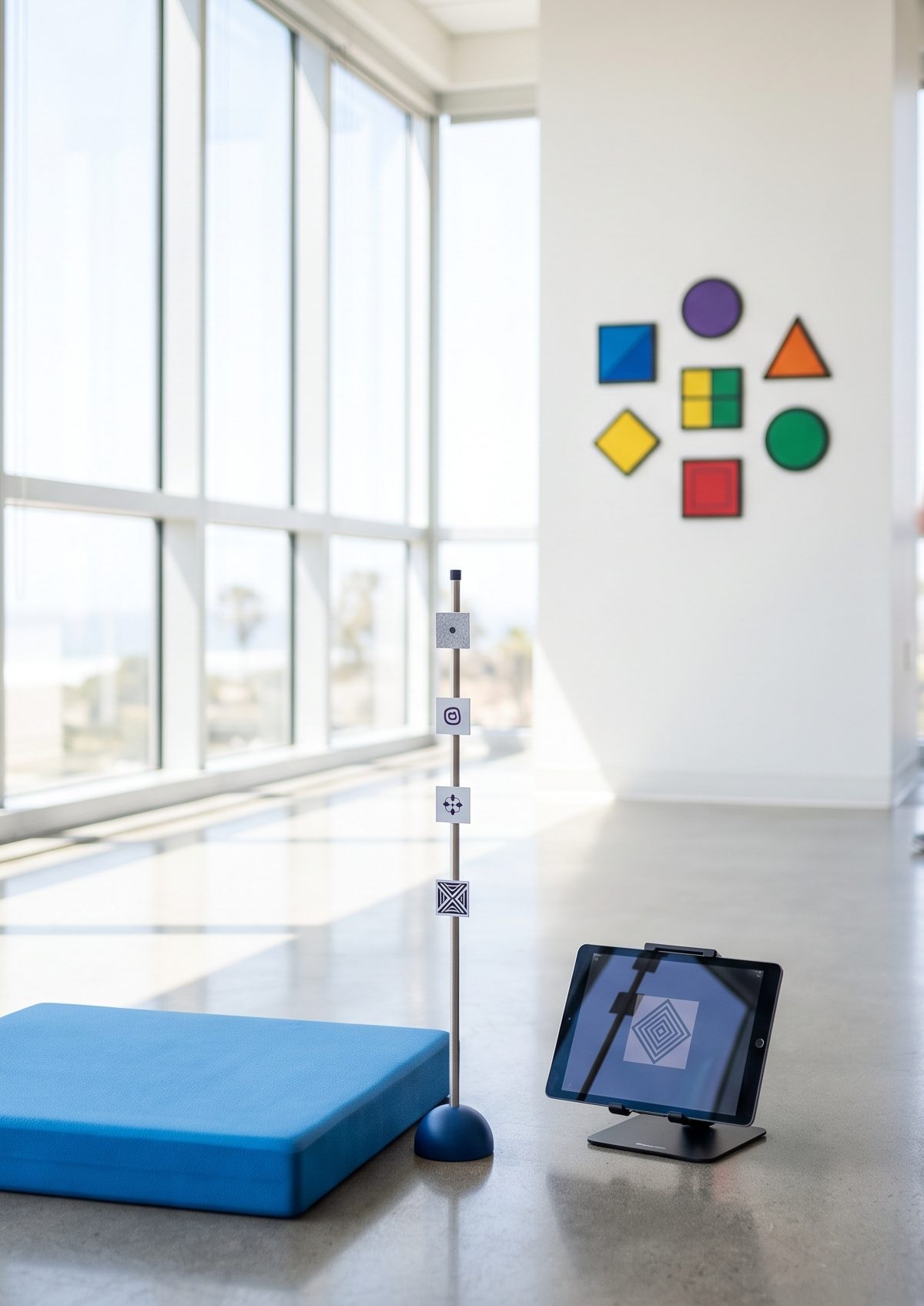
Some patients feel unsteady even when they are not spinning. Balance work may target stance control, walking confidence, turning, uneven surfaces, or dual-task situations. This can be especially important when patients feel less stable in dim light, crowds, or complex environments.
3. Motion Habituation
For patients whose symptoms spike with specific movements or visual environments, graded exposure may help improve tolerance over time. The aim is not to overwhelm the person but to reduce oversensitivity through controlled progression.
4. Positional Assessment and Maneuvers When Indicated
After a concussion, some patients develop positional vertigo that behaves more like BPPV. If the exam points in that direction, the plan may include positional testing and canalith repositioning rather than only general balance drills.
5. Integration with Broader Concussion Rehabilitation
Vestibular therapy is often one part of a larger recovery strategy. Some patients also need pacing guidance, exertion progression, visual support, cervical care, migraine-informed planning, or coordination around return to work and activity. This broader framework usually serves patients better than treating dizziness in isolation.
What the Evidence Says
Research on vestibular rehabilitation after concussion is encouraging, but it should be described honestly. A 2022 systematic review of randomized controlled trials found that vestibular rehabilitation appears useful for reducing symptoms in patients with concussion, including favorable change in Dizziness Handicap Inventory scores, while also noting substantial heterogeneity across studies and the need for larger samples.
The 2024 meta-analysis reached a similar conclusion. Vestibular rehabilitation therapy was associated with improvement in perceived dizziness and some symptom measures, but the certainty of evidence remained low and not every outcome improved equally. In other words, the evidence supports using vestibular therapy thoughtfully, not overselling it as a guaranteed fix.
For pediatric cases, a 2025 systematic review found that vestibular rehabilitation shows promise as part of a multimodal intervention plan, with reported improvements in dizziness, gait, balance, and confidence measures in children after concussion. That reinforces the broader point that symptom-specific rehab can matter when vestibular issues are part of the presentation.
When Should Vestibular Therapy Start After a Concussion?
There is no single timeline that fits every patient. Some people improve quickly and never need formal vestibular therapy. Others benefit when therapy begins once persistent dizziness, balance trouble, or visual motion symptoms become clear and continue beyond the expected early recovery window.
The timing decision should be based on symptoms, irritability, and exam findings. If a patient becomes dizzy with simple head turns, cannot tolerate screens, or remains unstable with walking and motion, it is often more useful to evaluate sooner rather than just wait. Early identification of vestibular issues may help patients avoid unnecessary delays in recovery, especially when symptoms are keeping them from returning to normal daily tasks.
When Symptoms Need Medical Referral Instead of Routine Rehab
Vestibular therapy is not the right first step for every case. Some concussion symptoms need medical review, imaging decisions, or other specialist input before routine outpatient rehabilitation moves forward.
Prompt medical evaluation is important if symptoms include:
- Worsening neurologic symptoms
- Repeated vomiting or rapidly escalating headache
- New weakness, severe confusion, or speech change
- Fainting or concerning autonomic symptoms
- Hearing loss, severe ear symptoms, or unusual neurologic findings
- A recovery course that is changing in a way that does not fit routine outpatient progression
Other patients may need co-management when the picture suggests migraine, positional vertigo, visual dysfunction, or non-vestibular dizziness. Good rehabilitation depends on recognizing those boundaries instead of forcing every case into one category.
How the Clinic Frames Its Role
At San Diego Chiropractic Neurology, the role of care after concussion is rehabilitation-focused. The clinic evaluates neurologic, vestibular, and balance-system performance and uses non-invasive strategies to support motion tolerance, gaze stability, and function. It does not replace emergency care, hospital-based evaluation, or other medical specialties when those are needed.
That distinction matters for patients who want practical help without inflated claims. The aim is to determine whether vestibular therapy fits the symptom picture and, if it does, how to progress it in a way that supports work, driving, exercise, reading, screen use, and daily life in San Diego.
What Patients Can Expect from a Practical Rehab Plan
A strong plan usually includes clear goals, measurable symptom tracking, and progression based on response. Patients should understand what movements are being challenged, why they matter, and what signs suggest improvement or the need to adjust. The process is typically gradual. The goal is not to provoke symptoms as much as possible, but to build tolerance and function without repeatedly pushing the system into a major flare.
Patients dealing with lingering dizziness may also benefit from reviewing the clinic's resources on vertigo and the general FAQs page for related questions.
FAQ
What symptoms after a concussion suggest vestibular therapy may help?
Dizziness, imbalance, nausea with motion, visual motion sensitivity, trouble focusing, head-movement intolerance, and persistent disequilibrium are some of the most common signs that vestibular rehabilitation may be worth evaluating.
When should vestibular therapy start after a concussion?
It depends on the symptom pattern and recovery course. If dizziness, balance trouble, or visual-motion symptoms persist instead of steadily improving, a targeted vestibular evaluation may help determine whether rehab should begin.
What happens during vestibular therapy for post-concussion dizziness?
Therapy may include gaze stabilization, balance retraining, graded motion exposure, positional testing when indicated, and coordination with broader concussion rehabilitation. The exact plan depends on the findings of the evaluation.
Can vestibular therapy help visual motion sensitivity and balance problems after concussion?
It may help when those symptoms are tied to vestibular-ocular or balance-system dysfunction. Research suggests vestibular rehabilitation can improve perceived dizziness and some post-concussion symptom measures, although results vary by patient and study design.
When do concussion symptoms need medical referral instead of routine rehab?
Symptoms such as worsening neurologic signs, repeated vomiting, severe headache escalation, new weakness, speech changes, fainting, or an atypical recovery pattern should prompt medical evaluation rather than simple routine therapy progression.
Next Steps
If dizziness, balance trouble, or visual-motion symptoms are still interfering with daily life after a concussion, the next step is a focused evaluation to determine whether the vestibular system is part of the problem and what kind of rehabilitation is appropriate. San Diego Chiropractic Neurology uses a non-invasive, function-centered approach to help patients understand what is driving symptoms and whether vestibular therapy fits the case.
Call (619) 344-0111 or book a free consultation to discuss whether a post-concussion vestibular evaluation may be appropriate.
References
- Mucha A, Collins MW, Elbin RJ, et al. A brief vestibular/ocular motor screening assessment to evaluate concussions: preliminary findings. Am J Sports Med. 2014. PMID: 25106780.
- Aljabri A, et al. The Efficacy of Vestibular Rehabilitation Therapy for Mild Traumatic Brain Injury: A Systematic Review and Meta-analysis. J Head Trauma Rehabil. 2024. PMID: 37335202.
- Makdissi M, Schneider KJ, Feddermann-Demont N, et al. Approach to investigation and treatment of persistent symptoms following sport-related concussion: a systematic review. Br J Sports Med. 2017. PMID: 28566346.
- Galeno E, et al. Effectiveness of Vestibular Rehabilitation after Concussion: A Systematic Review of Randomised Controlled Trial. Healthcare (Basel). 2022. PMID: 36611549.
- Tiwari D, et al. Effectiveness of Vestibular Rehabilitation in Children Post-Concussion: A Systematic Review. Int J Sports Phys Ther. 2025. PMID: 39906055.
Medical disclaimer: This article is for educational purposes only and does not provide medical advice, diagnosis, or treatment. Concussion symptoms vary, and persistent or worsening symptoms may require medical evaluation. Anyone with severe headache escalation, repeated vomiting, new neurologic symptoms, fainting, or other urgent concerns should seek prompt medical care.
Not sure what is driving your symptoms?
Talk with our Functional Neurology Trained team on a free phone consultation. We will tell you honestly whether we can help.