Spinal Decompression for Neck Pain San Diego: What a Complete Evaluation May Include
Free phone consultation with our San Diego functional neurology team. No obligation.
TL;DR: Spinal decompression for neck pain San Diego may help selected people whose symptoms point to a cervical disc or nerve irritation pattern. The key is not guessing from pain alone. A complete evaluation looks at how the neck, nerves, posture, and daily movement all interact before any decompression plan is chosen.
Neck pain is common, but the cause is not always simple. Some people have muscle strain or joint irritation. Others have a disc problem, nerve sensitivity, or symptoms that spread into the shoulder, arm, or hand. In a San Diego setting, spinal decompression for neck pain San Diego should be considered only after a careful evaluation separates those patterns and checks whether conservative care is appropriate.
The team at San Diego Chiropractic Neurology uses a functional neurology and rehabilitation lens to look for loading patterns, movement tolerance, nerve irritation, and other clues that can shape the plan. That matters because decompression is not a universal answer. It is one tool that may fit some cervical cases, especially when disc-related findings line up with the symptoms and exam.
Neck pain can also be driven by posture strain, sleep position, computer work, driving, or a past injury that leaves the area more reactive. That is why a local spinal decompression for neck pain San Diego plan should begin with sorting out the pattern before choosing a conservative path.
What does spinal decompression for neck pain actually mean?
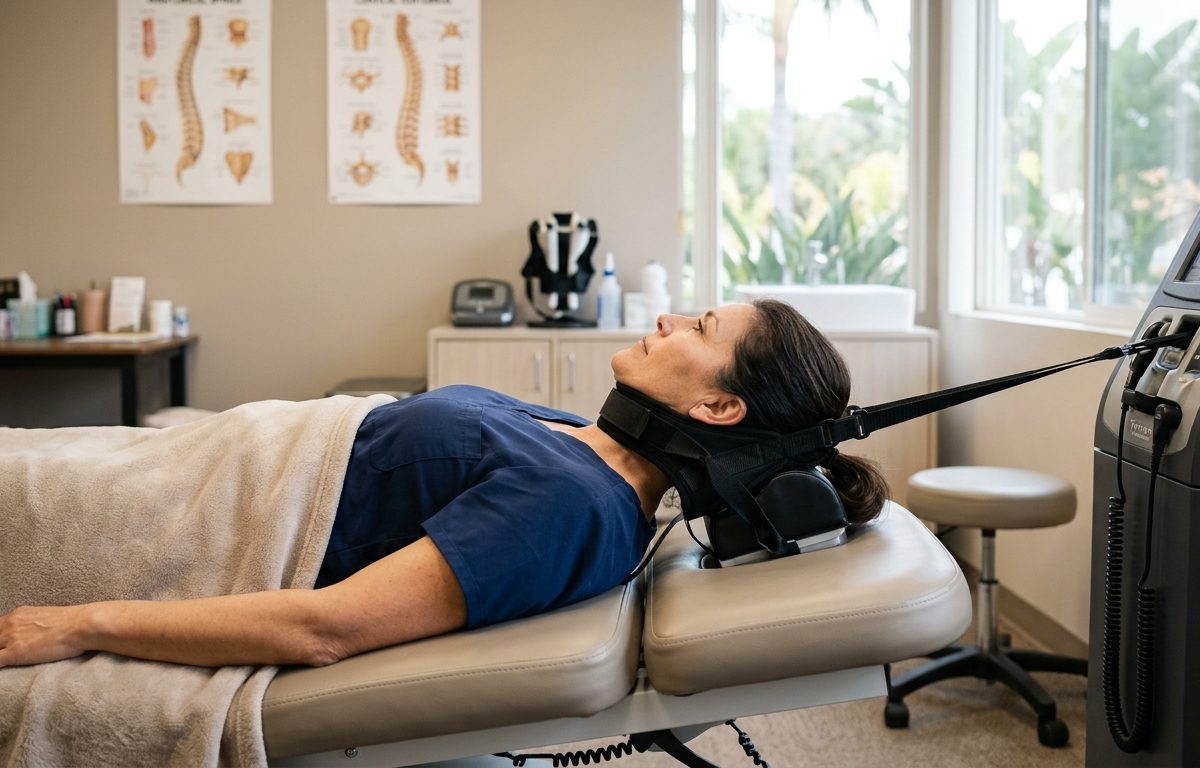
Spinal decompression is a non-surgical approach that uses gentle traction-like force to reduce load on spinal structures. For the neck, the goal is not to force a joint into place. The goal is to reduce pressure on irritated tissue and see whether symptoms calm down when the neck is unloaded.
That is why spinal decompression for neck pain San Diego should be tied to diagnosis, not marketing. If the problem is mostly muscle tension or a posture issue, decompression may not address the main driver. If symptoms point to a cervical disc or nerve root, it may be more relevant. Cervical radiculopathy often includes neck pain plus arm symptoms such as numbness, tingling, or weakness, which is why symptom pattern matters so much.
Why the evaluation matters first
A focused exam can help determine whether the neck is generating pain locally or whether the problem is referring into the arm. It can also help screen for red flags, such as progressive weakness, severe neurological changes, or symptoms that need medical referral. Conservative care is usually considered first when red flags are absent, but the plan should still be matched to the exact presentation.
How do you know if neck pain is coming from a disc?
No single symptom proves a disc problem. The pattern is what matters. Pain that travels into the shoulder blade, arm, or fingers, especially if it changes with neck movement, may suggest disc or nerve involvement. Pain that stays local and feels more tied to muscle tension or stiffness may point somewhere else.
That is one reason spinal decompression for neck pain San Diego works best as part of a broader evaluation. A complete workup may look at motion, reflexes, strength, sensory changes, symptom behavior during posture changes, and whether daily activities worsen the complaint. Mechanical traction and related nonoperative care may help selected cervical radicular pain patients, but patient selection matters.
Common clues that deserve a closer look
Some clues include arm numbness, tingling, shoulder blade pain, weakness, symptoms that worsen with looking up or turning the head, or pain that lingers after work, driving, or sleeping in a poor position. Those patterns do not prove a disc issue, but they do justify a more complete evaluation before treatment starts.
When might spinal decompression be a good fit?
It may be a reasonable option when the exam suggests a cervical disc or nerve loading pattern and the person is otherwise a good conservative-care candidate. That can include people with neck pain plus radiating symptoms, as long as the presentation is stable and there are no red flags.
In practice, spinal decompression for neck pain San Diego is usually only one part of the plan. The clinic may pair it with movement assessment, rehabilitation drills, posture changes, and other care that helps the neck tolerate load better over time. The exact plan depends on what the evaluation shows, not on the keyword alone.
What conservative care often includes
Conservative care may include decompression, manual therapy, targeted exercise, and guidance on activity modification. The point is to reduce irritation while restoring better neck mechanics. This is more useful than treating pain as if every neck problem is the same. Neck pain can also come from facet irritation, muscle overload, or persistent movement sensitivity.
What does standard neck pain care miss?
Standard care often stops at a symptom label. That can miss the difference between local neck pain, disc-related pain, and neurologic compensation. It can also miss how sleep position, computer posture, driving, stress, and prior injury all affect the neck.
The gap is important because spinal decompression for neck pain San Diego should not be chosen in isolation. A complete evaluation looks at the whole picture so the plan fits the driver, not just the symptom. In a functional neurology and rehabilitation setting, that means testing movement tolerance, symptom reproduction, and how the nervous system is adapting to the load.
What should a complete evaluation check before treatment starts?
A complete evaluation should check symptom location, symptom spread, neurological signs, posture, cervical motion, and the activities that make things worse or better. It should also screen for non-mechanical causes when the story does not fit a simple neck strain.
That approach makes spinal decompression for neck pain San Diego more precise. It can help the team decide whether the neck needs unloading, stabilization, rehab, or a different referral altogether. The goal is to match the plan to the actual driver of symptoms instead of trying one approach for every neck complaint.
Why supervision matters
Some online content gives step-by-step self-treatment instructions for neck problems. That is risky because neck symptoms can come from very different causes. A supervised plan is safer because it can be adjusted for the person, the exam findings, and the response over time.
When should neck pain be checked urgently?
Neck pain should be checked promptly if it comes with progressive arm weakness, severe numbness, balance problems, trouble with coordination, fever, unexplained weight loss, or pain after major trauma. Those are not situations for guessing at home.
If the symptoms seem stable and conservative care is appropriate, spinal decompression for neck pain San Diego may be part of the discussion. If the symptoms do not fit that pattern, the clinic should identify that early and direct the person to the right next step.
FAQ
Can spinal decompression help neck pain?
It can help selected people, especially when the neck pain appears linked to disc loading or nerve irritation. It is not the right fit for every neck pain pattern.
Is neck pain from a disc or a muscle strain?
It can be either, and sometimes both. The evaluation looks at symptom spread, movement response, and neurological signs to sort that out.
Does spinal decompression work for arm numbness too?
It may help when arm numbness is tied to cervical nerve irritation, but it should be used only after a proper assessment.
What should I expect during a cervical decompression evaluation?
You can expect a history review, movement testing, neurological screening, and a discussion of whether the symptoms fit a conservative plan.
When is neck pain not a good fit for decompression?
It is not a good fit when red flags are present, the symptoms are not mechanical, or another cause better explains the problem.
Related care
For more on cervical disc care, see spinal decompression for cervical disc san diego. For related disc symptoms, see neck herniated disc treatment without surgery san diego. For broader spine care, see chiropractic.
Call (619) 344-0111 or book a free consultation
Medical disclaimer: This article is for educational purposes only and does not replace an evaluation by a qualified healthcare professional. If symptoms are severe, worsening, or unusual, seek medical care promptly.
Not sure what is driving your symptoms?
Talk with our Functional Neurology Trained team on a free phone consultation. We will tell you honestly whether we can help.