Radiating Leg Pain Specialist San Diego: What Symptoms May Mean
Free phone consultation with our San Diego functional neurology team. No obligation.
Radiating leg pain often points to nerve irritation, but it does not automatically mean the same diagnosis for every patient. A focused exam can help clarify whether the pattern fits sciatica, disc irritation, spinal stenosis, or another source before choosing the next step.
If you are searching for a radiating leg pain specialist san diego resource, the first priority is understanding why the pain travels. Pain that starts in the low back, buttock, or hip and moves into the thigh, calf, or foot can reflect nerve root irritation, disc-related inflammation, spinal stenosis, or a nearby structure that is irritating the nerve pathway. In San Diego, many people are told they simply have sciatica, but the real question is what is driving the sciatica pattern and whether the symptoms also include numbness, weakness, or walking intolerance.
A thorough workup usually looks at when the pain started, how far it travels, whether coughing or sitting aggravates it, whether standing or walking makes it worse, and whether the symptoms change with posture. That is important because similar symptoms can come from different problems, and different problems do not always respond to the same care plan.
Why does pain travel from my back or buttock into my leg?
Radiating pain usually means an irritated nerve pathway. The most common source is the lumbar spine, where a disc bulge, disc herniation, or narrowing around the nerve can create inflammation or pressure. When that happens, the brain reads the irritation not only in the back but also down the path of the nerve, which can create burning, tingling, aching, or electric pain into the leg.
Not every patient feels the same pattern. Some feel pain into the buttock and back of the thigh. Others feel symptoms below the knee, into the calf, or into the foot. Some notice more numbness than pain. Some feel weakness while climbing stairs or lifting the front of the foot. That distribution matters because it helps narrow which nerve level may be involved and whether the presentation fits classic lumbar radicular pain.
It also matters that imaging by itself does not settle the question. Many people have disc bulges and degenerative findings on MRI without pain at all. That is why the symptom story and physical exam still carry real weight.
Is this always sciatica, or could it be something else?
Sciatica is a symptom pattern, not a final explanation. It usually describes pain that travels along the sciatic nerve distribution, but several conditions can create that pattern. A lumbar disc problem is one common cause. Spinal stenosis is another, especially when symptoms worsen with standing or walking and improve with sitting or bending forward. In some cases, irritation around the piriformis region or nearby soft tissue can contribute to a similar complaint.
That is one reason many patients benefit from a careful differential diagnosis instead of jumping straight from symptom to treatment. A person with disc-related irritation may flare with sitting, coughing, or bending. A person with stenosis may describe heavy, tired, or burning legs with walking tolerance that drops over time. A person with mixed hip and nerve findings may need a different rehab emphasis. The label sounds similar, but the plan may not be.
At that point, a radiating leg pain specialist san diego evaluation should be asking more than whether the pain shoots down the leg. It should clarify how the symptom behaves, what triggers it, and what neurologic signs travel with it. Patients looking for a radiating leg pain specialist san diego workup often need that symptom map before choosing the next step.
When is radiating leg pain a sign that I need a more complete evaluation?
Radiating leg pain deserves closer attention when it keeps returning, when it travels farther down the leg, or when pain is joined by numbness, pins and needles, weakness, balance changes, or reduced walking tolerance. It also deserves a more complete look when prior care focused only on pain relief but never clearly explained the pain pattern.
Some signs suggest the situation may need faster medical attention, including major or progressive weakness, loss of bowel or bladder control, saddle-area numbness, or severe symptoms after trauma. Those red flags call for urgent medical evaluation.
Outside of red flags, many patients still need a fuller workup because the symptom is interfering with work, sleep, exercise, or basic daily movement. When the same flare keeps coming back, the unanswered question is often not whether the pain is real. It is whether the actual driver has been mapped well enough to build the right conservative plan.
What should a non-surgical workup look like before choosing treatment?
A useful non-surgical exam starts with history. Where did the pain begin? Does it travel below the knee? Is there numbness in the shin or foot? Does walking worsen it? Does sitting worsen it? Was there a lifting event, a gradual buildup, or no clear trigger at all?
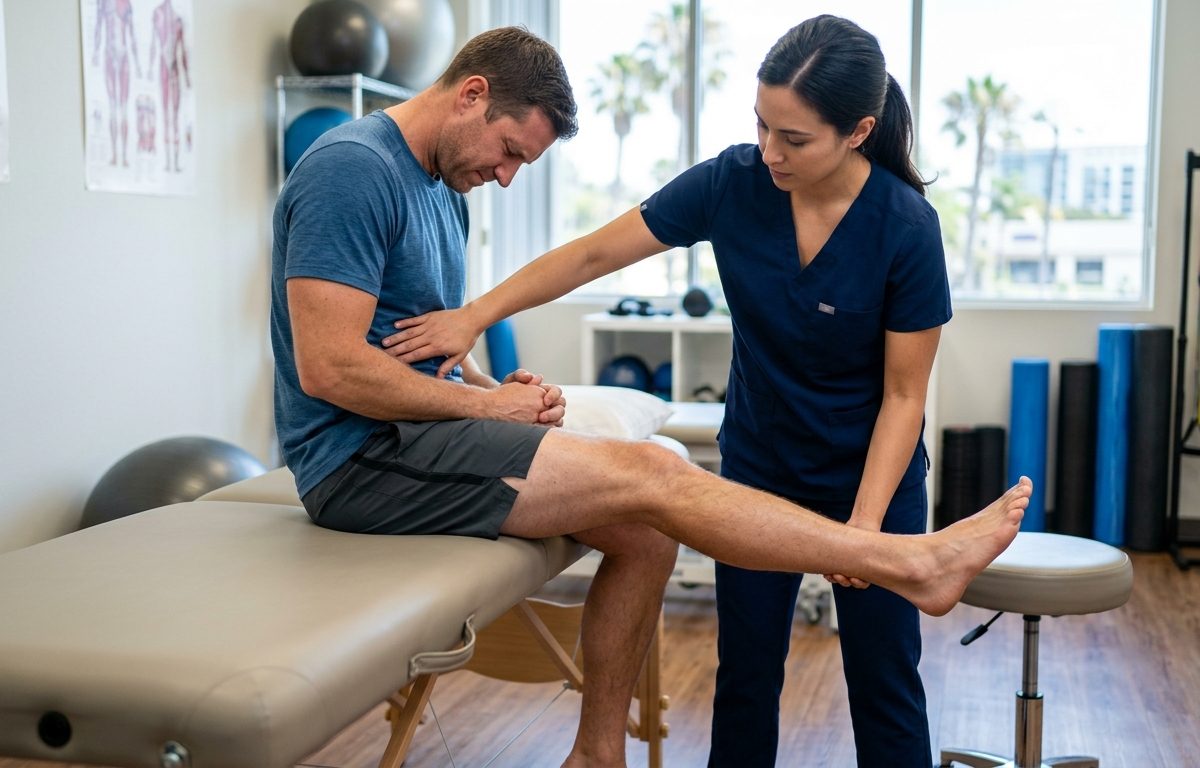
Then the physical exam should look at lumbar motion, nerve tension signs, sensory change, strength, reflexes, gait, and how the symptoms respond to repeated movements or positional change. If symptoms fit sciatica, the exam should still sort out whether the likely pattern is disc-related, stenotic, or mixed. It can also be reasonable to compare the presentation with features often seen in a herniated disc pattern.
Some patients also want to know whether options like non-surgical spinal decompression belong in the plan. That depends on the presentation, the irritability of the symptoms, prior response to care, and whether the clinical pattern actually supports that direction. The important part is that the treatment choice should follow the exam, not lead it.
What can standard care miss when the symptoms keep coming back?
Standard care sometimes moves quickly from symptom label to generic advice, especially when the complaint sounds like routine sciatica. That can leave a gap. The gap is not always a missed diagnosis in the dramatic sense. More often, it is a missed layer of pattern recognition.
For example, a patient may be told the issue is simply low back pain with sciatica, while the more useful questions remain unanswered: does the pain worsen with lumbar flexion or extension, is walking tolerance collapsing in a way that suggests narrowing, are reflexes changing, is there a sensory map that points to a specific nerve root, or is there overlapping hip and buttock involvement changing the picture? Those details matter because they help determine whether the next step should emphasize unloading, nerve mobility within tolerance, gait modification, conditioning, imaging review, or referral back to a spine specialist.
This is where a more complete conservative evaluation can add value. It helps connect the symptom pattern to the likely mechanical and neurologic driver instead of treating every radiating pain pattern as though it were identical.
How is radiating leg pain usually managed without surgery?
When red flags are absent, conservative care is often the first step. That can include activity modification, movement-based rehab, pain-limited loading strategies, and condition-specific progression based on the exam findings. The goal is not to hand every patient the same routine. For many people, a radiating leg pain specialist san diego visit is most useful when it turns a vague label into a specific working pattern. The goal is to match the plan to the presentation and watch how the symptoms respond over time.
Some people ask about stretches or online maneuvers they found on their own. That is understandable, but a generic self-treatment sequence can backfire when the source of the pain has not been clarified. A movement that helps one patient with a disc-related pattern may irritate another patient with stenosis or a different pain generator. That is why it is safer to identify the pattern first rather than follow a full step-by-step protocol from the internet.
When symptoms are persistent or recurrent, the bigger win is often diagnostic clarity. A patient does not always need immediate surgery to need a better explanation. Sometimes the most helpful step is a more precise map of what is driving the leg pain and what type of rehabilitation direction makes sense.
Frequently asked questions about radiating leg pain
When should I worry about pain shooting down my leg?
You should take it more seriously when the pain is paired with numbness, weakness, worsening walking tolerance, or major functional decline. Urgent medical evaluation is important for loss of bowel or bladder control, saddle numbness, or rapidly progressive weakness.
Is radiating leg pain always caused by a herniated disc?
No. A herniated disc is one common cause, but spinal stenosis, degenerative narrowing, and other nearby sources can create a similar pattern. The exam helps sort out which explanation fits best.
Can spinal stenosis cause leg pain without much back pain?
Yes. Some patients with lumbar stenosis notice more leg heaviness, burning, or fatigue with walking than back pain. Symptom change with standing, walking, and forward bending can be an important clue.
What kind of exam helps before deciding on injections or surgery?
A good exam looks at pain distribution, sensory change, strength, reflexes, gait, posture, and symptom response to movement. That information helps determine whether the presentation fits disc-related radicular pain, stenosis, or another source.
Can numbness and weakness mean something more serious?
They can. Mild sensory symptoms can occur with nerve irritation, but clear weakness or worsening neurologic change deserves closer medical attention because it may signal a more significant nerve problem.
Call (619) 344-0111 or book a free consultation.
Medical disclaimer: This article is for educational purposes only and is not medical advice, diagnosis, or a substitute for individualized care. New, severe, or progressive neurologic symptoms should be evaluated promptly by an appropriate licensed medical professional.
References
- Kreiner DS, et al. Diagnosis and treatment of lumbar disc herniation with radiculopathy. Spine J. 2014.
- Brinjikji W, et al. Systematic literature review of imaging features of spinal degeneration in asymptomatic populations. AJNR. 2015.
- Genevay S, Atlas SJ. Lumbar spinal stenosis. Best Pract Res Clin Rheumatol. 2010.
- Oliveira CB, et al. Clinical practice guidelines for low back pain and lumbosacral radicular pain. Eur Spine J. 2018.
Not sure what is driving your symptoms?
Talk with our Functional Neurology Trained team on a free phone consultation. We will tell you honestly whether we can help.