Non Surgical Treatment for Herniated Disc San Diego: What a Complete Evaluation May Include
Free phone consultation with our San Diego functional neurology team. No obligation.
Non Surgical Treatment for Herniated Disc San Diego: What a Complete Evaluation May Include
A herniated disc diagnosis can feel alarming — but for most people, surgery is not the first or only path. Research consistently shows that the majority of lumbar disc herniations improve with structured non-surgical care, and many resolve measurably without any operative procedure. What matters most is understanding what is actually driving the pain and choosing a care approach that addresses both the structural and neurologic components involved.
For those exploring non surgical treatment for herniated disc in San Diego, this article outlines what a thorough conservative evaluation may look like, which approaches are supported by current evidence, and when surgery genuinely becomes necessary.
What a Herniated Disc Actually Does
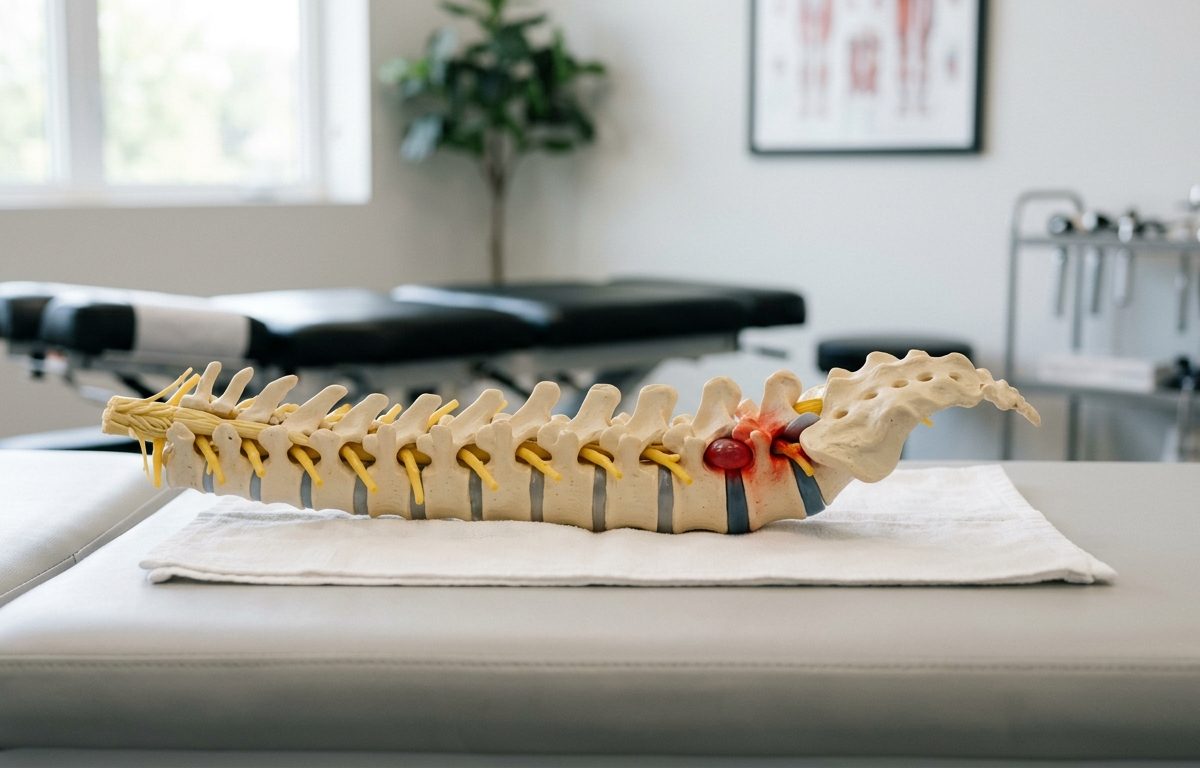
A herniated disc occurs when the soft inner core of an intervertebral disc (the nucleus pulposus) pushes through a tear in the tougher outer ring (the annulus fibrosus). When this material contacts or compresses a nearby nerve root, it can trigger a cascade of symptoms including localized back pain, radiating leg pain (sciatica), numbness, tingling, or muscle weakness along the affected nerve's distribution.
The pain, however, is not always proportional to the size of the herniation. Some individuals with large herniations visible on MRI have minimal symptoms, while others with smaller findings experience significant functional limitation. This is because a herniated disc is both a structural and a neurologic problem — the nerve itself becomes sensitized, and the brain's processing of pain signals can amplify symptoms independently of the disc's physical state.
Understanding this distinction matters for treatment: approaches that address only the structural component while ignoring the neurologic one often produce incomplete or temporary results.
What the Research Says About Non-Surgical Outcomes
Evidence strongly supports conservative management as first-line care for most herniated discs. A landmark study by Weinstein et al. (SPORT trial, 2006) demonstrated that patients treated conservatively for lumbar disc herniation showed substantial improvement over time, and outcomes for the non-surgical group were comparable to the surgical group at four-year follow-up for many functional measures .
Perhaps most reassuring, a systematic review published in Pain Physician (Chiu et al., 2015) found that lumbar disc herniations show measurable radiologic regression — meaning the disc material actually shrinks — in the majority of cases over a six to eighteen month observation period without surgery . The larger the initial extrusion, the more likely it is to regress spontaneously.
This does not mean the condition resolves on its own in all cases. It means the right structured care plan can work with the body's natural healing mechanisms rather than against them.
Core Components of Non-Surgical Herniated Disc Care
Comprehensive Initial Evaluation
Effective non-surgical care begins with understanding what is actually happening — not just ordering an MRI and extrapolating from the images. A thorough evaluation typically includes orthopedic testing, neurologic assessment of reflexes, sensation, and motor function, postural and movement pattern analysis, and a review of symptom history and aggravating factors. This baseline establishes whether the presentation is predominantly discogenic, nerve-mediated, or involves central sensitization — a state in which the nervous system amplifies pain signals beyond what the tissue damage alone would predict.
Non-Surgical Spinal Decompression
One of the most targeted conservative options for herniated disc is non-surgical spinal decompression — a motorized traction-based approach that gently elongates the spine in a controlled, cyclic pattern. The mechanism involves creating a temporary negative intradiscal pressure, which may allow the herniated material to retract toward the disc center and reduce nerve root pressure. This differs from manual traction or generic stretching in its precise targeting and the controlled delivery of tensile forces.
A prospective study by Macario et al. published in Pain Physician (2006) examined outcomes for patients with lumbar disc herniation treated with spinal decompression and found meaningful improvements in pain and function . The approach tends to be most useful for contained herniations where the disc material has not fully separated from the disc.
Functional Neurology Rehabilitation
A herniated disc can alter how the nervous system processes movement and pain. When nerve root compression disrupts signaling, the brain begins to compensate — redistributing muscle activation, changing gait mechanics, and modifying sensory thresholds in ways that can perpetuate symptoms long after the disc has structurally improved. Functional neurology rehabilitation addresses this by targeting the neurologic component directly: retraining motor patterns, restoring proprioceptive input, and addressing central sensitization through graded sensorimotor exercises.
Research by Nijs et al. (2011) highlighted how central sensitization perpetuates pain in spinal conditions independent of structural findings, and noted that rehabilitation targeting neurologic pathways — rather than just tissue loading — is essential for lasting recovery .
Structured Exercise and Movement Rehabilitation
Progressive exercise rehabilitation is a cornerstone of herniated disc recovery. The goal is not passive rest but guided, structured movement that restores disc nutrition (which occurs through cyclic loading and unloading), reduces nerve root sensitivity, and rebuilds the muscular support system around the lumbar spine. Exercise also significantly reduces the risk of recurrence: a study by Stanton et al. in Spine (2008) demonstrated that exercise-based rehabilitation following disc injury reduces long-term recurrence risk compared to passive care alone .
Programs are typically progressed from low-load, pain-neutral movements through to functional strengthening. They are tailored to the individual's neurologic presentation — not applied generically.
Pain Modulation and Anti-Inflammatory Support
Acute disc herniation often involves significant local inflammation around the nerve root. Non-pharmacologic approaches that support the reduction of this inflammatory environment include ice/heat protocols, specific soft tissue techniques, and movement-based strategies that promote circulation without compressive loading. For some individuals, short-term over-the-counter anti-inflammatory medication (under medical supervision) may be part of the acute-phase plan.
What a Non-Surgical Evaluation in San Diego May Look Like
For patients seeking non surgical treatment for herniated disc in San Diego, the evaluation at a functional chiropractic neurology clinic typically spans multiple dimensions:
- Orthopedic and neurologic testing: Straight leg raise, slump test, sensory dermatomal mapping, deep tendon reflexes, and strength testing in relevant myotomes.
- Functional movement assessment: Identifying compensatory patterns, hip-lumbar coordination deficits, and core activation timing irregularities that follow disc injury.
- Imaging review: Correlating MRI or X-ray findings with clinical presentation to determine how well the imaging explains the symptoms — and what it may not be capturing.
- Neurologic rehabilitation planning: Designing a staged care plan that addresses decompression, neurologic retraining, and functional movement restoration in sequence.
This approach differs from simply treating the disc in isolation. The goal is to restore full neurologic and functional integrity — not just to reduce short-term pain.
Related Conditions That Often Accompany Herniated Disc
Herniated discs do not always occur in isolation. Many patients also present with related structural or neurologic conditions that benefit from concurrent evaluation:
- Sciatica: Leg pain, numbness, and tingling following the path of the sciatic nerve — often the primary complaint driving a herniated disc workup. See the sciatica condition page for more detail.
- Disc degeneration and spinal stenosis: Disc herniations that occur in a setting of broader disc degeneration may involve narrowing of the spinal canal. Spinal stenosis and degenerative disc disease can require a modified rehabilitation approach.
When Surgery Becomes Necessary
Non-surgical care is appropriate for most herniated disc presentations. Surgery is generally considered when:
- Progressive neurologic deficits are worsening — particularly significant muscle weakness or loss of bladder/bowel control (cauda equina syndrome, which requires emergency care).
- Symptoms have failed to respond to six or more weeks of structured conservative management.
- Imaging shows a large fragment that is clearly mechanically compressing the nerve in a way that cannot be addressed conservatively.
- Quality of life is severely and persistently compromised despite adequate conservative effort.
Outside of these scenarios, continuing with structured non-surgical care is typically the appropriate next step — not because surgery does not work, but because the natural history of disc herniation favors recovery with conservative care in most cases.
How Long Does Non-Surgical Treatment Take?
Recovery timelines vary depending on the severity of the herniation, the degree of nerve involvement, how long symptoms have been present, and the individual's neurologic and physical baseline. General expectations:
- Acute phase (0–6 weeks): Primary goals are pain reduction, nerve decompression, and protecting against further injury. Many patients see meaningful pain improvement during this window.
- Rehabilitation phase (6–16 weeks): Progressive movement rehabilitation, functional neurology retraining, and restoration of normal mechanics.
- Maintenance phase: Ongoing exercise and lifestyle practices that reduce recurrence risk.
Radiologic regression of the disc material typically occurs over six to eighteen months, though functional improvement often precedes that timeline significantly.
Taking the Next Step
If you are dealing with a herniated disc and want to explore what non-surgical options may apply to your specific presentation, the right starting point is a thorough evaluation — not a generic protocol.
Call (619) 344-0111 or book a free consultation to speak with the team at San Diego Chiropractic Neurology about what a structured, non-surgical evaluation process may include for your situation.
Frequently Asked Questions
Can a herniated disc heal on its own without surgery?
Research shows that many lumbar disc herniations undergo measurable radiologic regression over six to eighteen months without surgery. Conservative care supports and accelerates this process by reducing nerve pressure, managing pain, and restoring healthy movement mechanics. Recovery is not passive — it requires a structured approach.
How long does non-surgical herniated disc treatment take?
Most patients see meaningful improvement within six to twelve weeks of structured care. Full functional recovery and radiologic regression typically occur over three to eighteen months depending on severity. The goal is restoration of neurologic and functional integrity, not just symptom suppression.
What is the difference between spinal decompression and regular physical therapy for a herniated disc?
Non-surgical spinal decompression specifically targets intradiscal pressure through precisely controlled motorized traction, creating a negative pressure environment intended to reduce the herniation. Standard physical therapy focuses on strengthening, flexibility, and movement retraining. Both may be components of a complete plan, but they address different mechanisms — structural decompression versus functional rehabilitation.
When does a herniated disc actually require surgery?
Surgery is generally indicated for progressive neurologic deficits (worsening weakness, bowel or bladder dysfunction), cauda equina syndrome (emergency), failure of six or more weeks of structured conservative management, or severe ongoing functional limitation. Most cases do not reach these thresholds and respond well to non-surgical care.
What should I expect during a non-surgical herniated disc evaluation in San Diego?
A thorough evaluation includes orthopedic testing (straight leg raise, slump test), neurologic assessment of reflexes, strength, and sensation, a functional movement screen, imaging correlation, and a discussion of care options. The goal is to understand whether the presentation is primarily structural, neurologic, or involves central sensitization — and to match the plan accordingly.
This article is for informational purposes only and does not constitute medical advice, diagnosis, or a treatment plan. If you are experiencing back pain, leg pain, or neurologic symptoms, please consult a qualified healthcare provider for a thorough evaluation of your individual situation.
Not sure what is driving your symptoms?
Talk with our Functional Neurology Trained team on a free phone consultation. We will tell you honestly whether we can help.