Non Surgical Treatment for Bulging Disc San Diego
Free phone consultation with our San Diego functional neurology team. No obligation.
What a Bulging Disc Diagnosis Actually Means
A bulging disc occurs when the gel-like nucleus inside a spinal disc pushes outward, causing the outer ring to expand beyond its normal boundary. Unlike a herniated disc—where the outer layer tears and the inner material escapes—a bulging disc remains contained but can still press against nearby nerve roots, ligaments, or the spinal cord itself.
Most bulging discs develop gradually from repetitive stress, poor posture, or age-related degeneration. While imaging can confirm the structural change, the real question is whether the bulge is causing symptoms and how much it's interfering with your daily function. The presentation often overlaps with herniated disc conditions and sciatica, making a thorough evaluation essential before selecting any approach.
Many people have bulging discs that show up on MRI but cause no pain at all.1 The key is understanding which cases need aggressive intervention and which respond well to conservative care.
Why Non-Surgical Treatment Is Often the First Step
Most clinical guidelines recommend trying conservative care for at least six to twelve weeks before considering surgery.2 That's because research shows the majority of bulging disc cases improve significantly with non-surgical approaches, particularly when care addresses both mechanical pressure and neurologic function.
Surgery may be necessary in cases involving severe nerve compression, progressive weakness, or loss of bowel and bladder control. But for most patients dealing with localized back pain, radiating leg discomfort, or mild numbness, a structured non-surgical approach offers meaningful relief without the risks and recovery time associated with spinal surgery.
At San Diego Chiropractic Neurology, the team evaluates not just the disc itself but the entire neurologic and musculoskeletal system that supports it. That means looking at spinal alignment, nerve root irritation, muscle imbalances, and movement patterns that may be contributing to the problem.
Non-Surgical Treatment Options Available in San Diego
Non-Surgical Spinal Decompression
Spinal decompression therapy uses controlled traction to gently stretch the spine and reduce pressure inside the disc. Studies show this approach can lower intradiscal pressure and may promote re-hydration of degenerated discs.3 The goal is to create space for the bulging material to recede and relieve pressure on surrounding nerves. Learn more about non-surgical spinal decompression at the clinic.
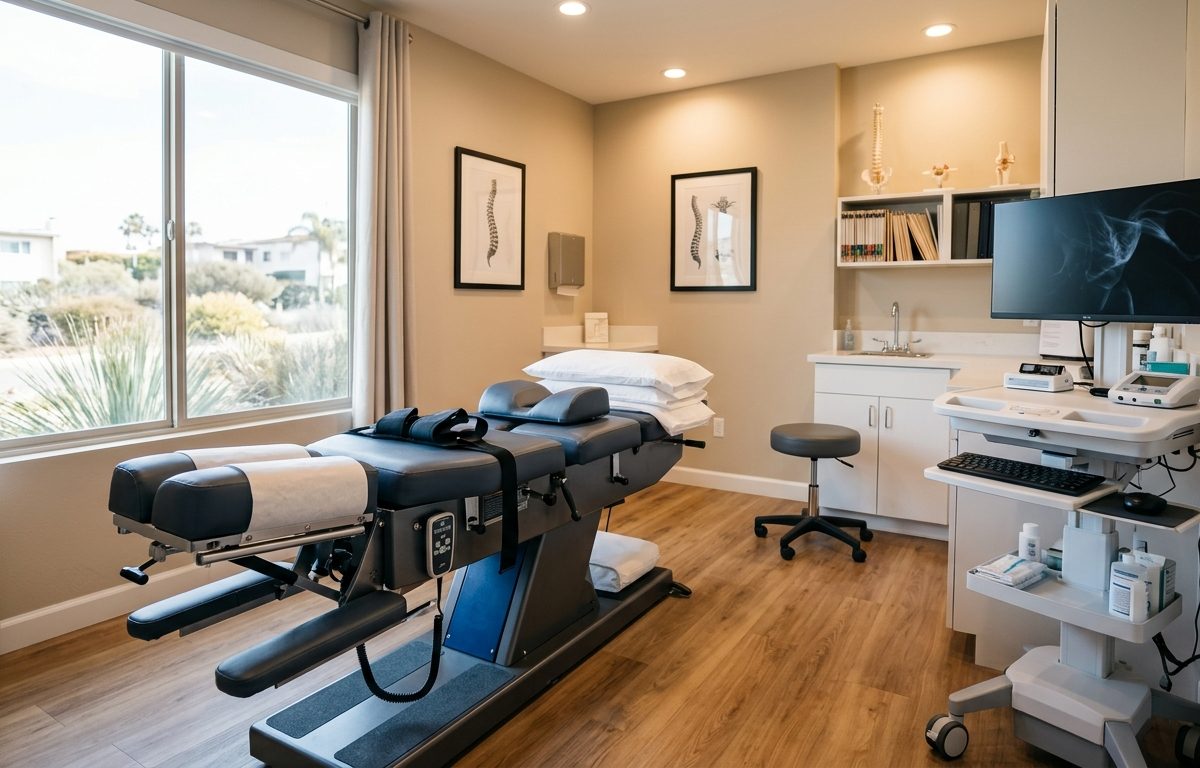
Sessions typically involve lying on a motorized table that applies intermittent stretching forces. Each session lasts 20 to 30 minutes and is usually scheduled several times per week over four to six weeks.
Decompression is not appropriate for everyone. The team at San Diego Chiropractic Neurology screens for contraindications like fractures, tumors, or severe osteoporosis before recommending this therapy.
Low-Level Laser Therapy
Low-level laser therapy—also called photobiomodulation—uses specific wavelengths of light to reduce inflammation and promote tissue healing. Research has shown it can reduce pain and improve function in patients with disc-related radiculopathy.4 The clinic uses Erchonia low-level laser therapy as part of its non-surgical disc care protocols.
The sessions are non-invasive and typically delivered in short appointments. Laser therapy is often used alongside other modalities to address both the structural and inflammatory components of a bulging disc.
Functional Neurologic Rehabilitation
Because a bulging disc can irritate nerve roots and disrupt normal movement patterns, addressing the neurologic side of recovery is just as important as addressing the mechanical side. Functional neurology focuses on restoring coordination, balance, and motor control through targeted exercises and sensory input.
This approach helps retrain the nervous system to support better posture, movement efficiency, and long-term spinal health. It's particularly useful when patients have lingering weakness, altered gait, or compensatory movement patterns that developed during the acute phase of injury.
Chiropractic Adjustments
Chiropractic care for bulging discs focuses on restoring normal spinal alignment and reducing mechanical stress on the affected segment. Adjustments are tailored to each patient's presentation and tolerance, with modifications made for acute pain or nerve irritation.
The goal is not to "push the disc back in" but to improve joint mechanics, reduce compensatory tension, and support the body's natural healing process.
Rehabilitative Exercise and Postural Training
Exercise interventions that address neuromuscular control and core stability have been shown to outperform passive approaches alone.5 A structured rehab program helps patients rebuild strength, improve flexibility, and prevent recurrence.
At San Diego Chiropractic Neurology, exercise protocols are individualized based on the patient's symptoms, movement limitations, and functional goals. The team avoids one-size-fits-all programs in favor of targeted progressions that match each patient's tolerance and recovery stage.
How Long Does Recovery Take?
Recovery timelines vary widely depending on the severity of the bulge, how long symptoms have been present, and how well the patient responds to care. Some patients experience significant relief within a few weeks, while others need two to three months of consistent care to see meaningful improvement.
The key is following through with the full plan rather than stopping as soon as symptoms improve. Disc tissue heals slowly, and premature return to aggravating activities can lead to setbacks.
Patients who combine in-office care with home exercises, postural modifications, and activity adjustments tend to recover faster and maintain their gains longer.
When Surgery Becomes Necessary
Surgery is typically reserved for cases where conservative care has not provided adequate relief after an appropriate trial, or when there are signs of serious neurologic compromise. Red flags that may warrant surgical consultation include:
- Progressive leg weakness that worsens despite care
- Loss of bowel or bladder control (cauda equina syndrome)
- Severe, unrelenting pain that does not respond to any conservative measure
- Significant functional decline that prevents basic daily activities
Even in these cases, a second opinion and thorough discussion of risks and benefits is always appropriate. Surgery can be highly effective when indicated, but it's not a decision to rush into without exploring all other options first.
Why a Comprehensive Evaluation Matters
Not all bulging discs present the same way, and not all patients respond to the same approach. A comprehensive evaluation looks at:
- The location and severity of the bulge
- Whether nerve roots are being compressed
- Spinal alignment and movement patterns
- Muscle imbalances and compensatory mechanics
- Neurologic function, including reflexes, sensation, and motor control
- Lifestyle factors that may be contributing to the problem
This level of detail helps the team at San Diego Chiropractic Neurology design a care plan that addresses the root causes rather than just masking symptoms.
What to Expect During Your First Visit
The initial evaluation includes a detailed history, orthopedic and neurologic testing, and a review of any imaging studies you've already completed. The team will explain what they find in plain language and outline a realistic plan with measurable goals.
You'll also receive education about what activities to avoid, how to modify daily tasks, and what signs to watch for that might indicate a need to adjust the approach.
Transparency and shared decision-making are built into every step of the process. You're encouraged to ask questions, voice concerns, and participate actively in your recovery.
Frequently Asked Questions
What is a bulging disc and how is it different from a herniated disc?
A bulging disc means the outer layer of the disc has expanded outward but remains intact. A herniated disc means the outer layer has torn and the inner gel-like material has leaked out. Both can cause nerve irritation, but herniated discs are generally considered more severe.
Can a bulging disc get better without surgery?
Yes. Most bulging discs improve with conservative care, especially when care is started early and includes a combination of mechanical decompression, inflammation control, and functional rehabilitation.
What non-surgical treatments are available for a bulging disc in San Diego?
Options include non-surgical spinal decompression, low-level laser therapy, chiropractic adjustments, functional neurologic rehabilitation, and targeted exercise therapy. The best approach depends on your specific presentation and goals.
How long does it take to recover from a bulging disc with conservative care?
Most patients see significant improvement within four to twelve weeks. Full recovery may take longer, especially if symptoms have been present for months or if there are complicating factors like poor posture or chronic muscle tension.
When would surgery actually be necessary for a bulging disc?
Surgery is typically considered when conservative care has not provided adequate relief after an appropriate trial, or when there are serious neurologic findings like progressive weakness, loss of bowel or bladder control, or unrelenting pain that prevents basic function.
Next Steps
If you've been diagnosed with a bulging disc and want to explore non-surgical options before committing to surgery, San Diego Chiropractic Neurology offers comprehensive evaluation and individualized care plans that address both the mechanical and neurologic components of disc-related pain.
Call (619) 344-0111 or book a free consultation to discuss your case and learn what options may be right for you.
Medical Disclaimer: This article is for informational purposes only and does not constitute medical advice. It is not intended to diagnose, treat, cure, or prevent any disease or health condition. Always consult with a qualified healthcare provider before starting any new treatment or making decisions about your health.
References
- Brinjikji W et al. "Systematic literature review of imaging features of spinal degeneration in asymptomatic populations." AJNR Am J Neuroradiol. 2015;36(4):811-816. DOI:10.3174/ajnr.A4173.
- Chou R et al. "Diagnosis and Treatment of Low Back Pain: A Joint Clinical Practice Guideline." Ann Intern Med. 2007;147(7):478-491. DOI:10.7326/0003-4819-147-7-200710020-00006.
- Ramos G, Martin W. "Effects of vertebral axial decompression on intradiscal pressure." J Neurosurg. 1994;81(3):350-353. DOI:10.3171/jns.1994.81.3.0350.
- Alayat MS et al. "Long-term effect of high-intensity laser therapy in the treatment of patients with chronic low back pain." Lasers Med Sci. 2014;29(3):1065-1073. DOI:10.1007/s10103-013-1472-5.
- Searle A et al. "Exercise interventions for the treatment of chronic low back pain." Clin Rehabil. 2015;29(12):1155-1167. DOI:10.1177/0269215515570379.
Not sure what is driving your symptoms?
Talk with our Functional Neurology Trained team on a free phone consultation. We will tell you honestly whether we can help.