Migraine Specialist San Diego: When a More Complete Evaluation May Help
Free phone consultation with our San Diego functional neurology team. No obligation.
Many people start searching for a migraine specialist San Diego after headaches begin interfering with work, exercise, driving, sleep, or family life. For some, the problem is not only pain. Migraine can also involve dizziness, light sensitivity, visual motion intolerance, nausea, neck tension, brain fog, and trouble tolerating busy environments. That wider symptom pattern is one reason a more complete evaluation may help.
Migraine is a common neurologic condition and a major cause of disability worldwide.1 In some cases, a patient needs standard medical care focused on diagnosis, imaging, or medication decisions. In other cases, the picture is more layered. Symptoms may overlap with vestibular problems, visual tracking issues, balance dysfunction, or persistent symptoms after a concussion. When that happens, a specialist-style workup can help clarify what is driving the day-to-day burden.
At San Diego Chiropractic Neurology, the clinical focus is non-invasive neurologic, vestibular, and rehabilitation-oriented assessment. That does not replace urgent medical care or routine medical management. Instead, it adds a broader look at how the nervous system is functioning and whether dizziness, motion sensitivity, visual strain, balance deficits, or neck-related triggers may be increasing migraine load. For patients in San Diego trying to understand why symptoms keep repeating, that broader frame can be useful.
Why people look for a migraine specialist
A basic headache visit may be enough for some people. Others feel stuck because the pattern is more complex than occasional migraine pain. A more complete evaluation may be worth considering when symptoms are frequent, unusually disruptive, or tied to other neurologic complaints.
Common reasons people seek a headache specialist San Diego or migraine-focused evaluation include:
- Headaches that keep returning despite rest, hydration, or over-the-counter medication
- Dizziness, vertigo, or unsteadiness during or between migraine episodes
- Light sensitivity, screen intolerance, or visual motion sensitivity
- Headache patterns that worsened after a concussion or whiplash-type event
- Neck tension or movement sensitivity that seems to trigger symptoms
- Episodes that interfere with work, school, commuting, or exercise tolerance
- Uncertainty about whether symptoms are migraine, vestibular, visual, cervical, or a mix of several factors
That last point matters. Patients often describe a frustrating cycle: they know the symptoms are real, but the label does not fully explain what they are experiencing. A more detailed assessment can help separate migraine mechanisms from overlapping problems that may be adding to the load.
Not every migraine story looks the same
Migraine is often described as a headache disorder, but it is more accurate to think of it as a neurologic condition that can present with many symptom combinations. Some people have classic one-sided throbbing pain. Others have neck pressure, fogginess, nausea, sound sensitivity, or visual aura. Some have very little head pain at all but significant dizziness or motion sensitivity. Consensus guidance on vestibular migraine reflects this wider picture and recognizes that vertigo or vestibular symptoms can be part of migraine presentations.2
This is one reason a broader exam matters. A patient with repeated headaches and dizziness may assume the dizziness is separate from the migraine issue. Another patient may think the whole problem is “just stress.” In reality, the clinical picture can involve several overlapping systems at once, including vestibular processing, balance control, visual tracking, cervical input, sleep disruption, and autonomic stress response. The goal of a deeper evaluation is not to make the condition sound more complicated than it is. The goal is to identify patterns that may be clinically relevant and actionable.
What a more complete migraine evaluation may include
When patients search for chronic headache treatment San Diego, they often want to know what a specialist actually does differently. The answer depends on the setting. In a conventional medical environment, the focus may include neurologic diagnosis, medication planning, imaging decisions, and screening for red flags. In a functional neurology and rehabilitation setting, the evaluation may expand to include performance and tolerance across several neurologic systems.
A more complete visit may include:
- History and pattern review: onset, frequency, triggers, recovery time, menstrual factors, sleep, stress load, prior injury history, and what the symptoms feel like between attacks
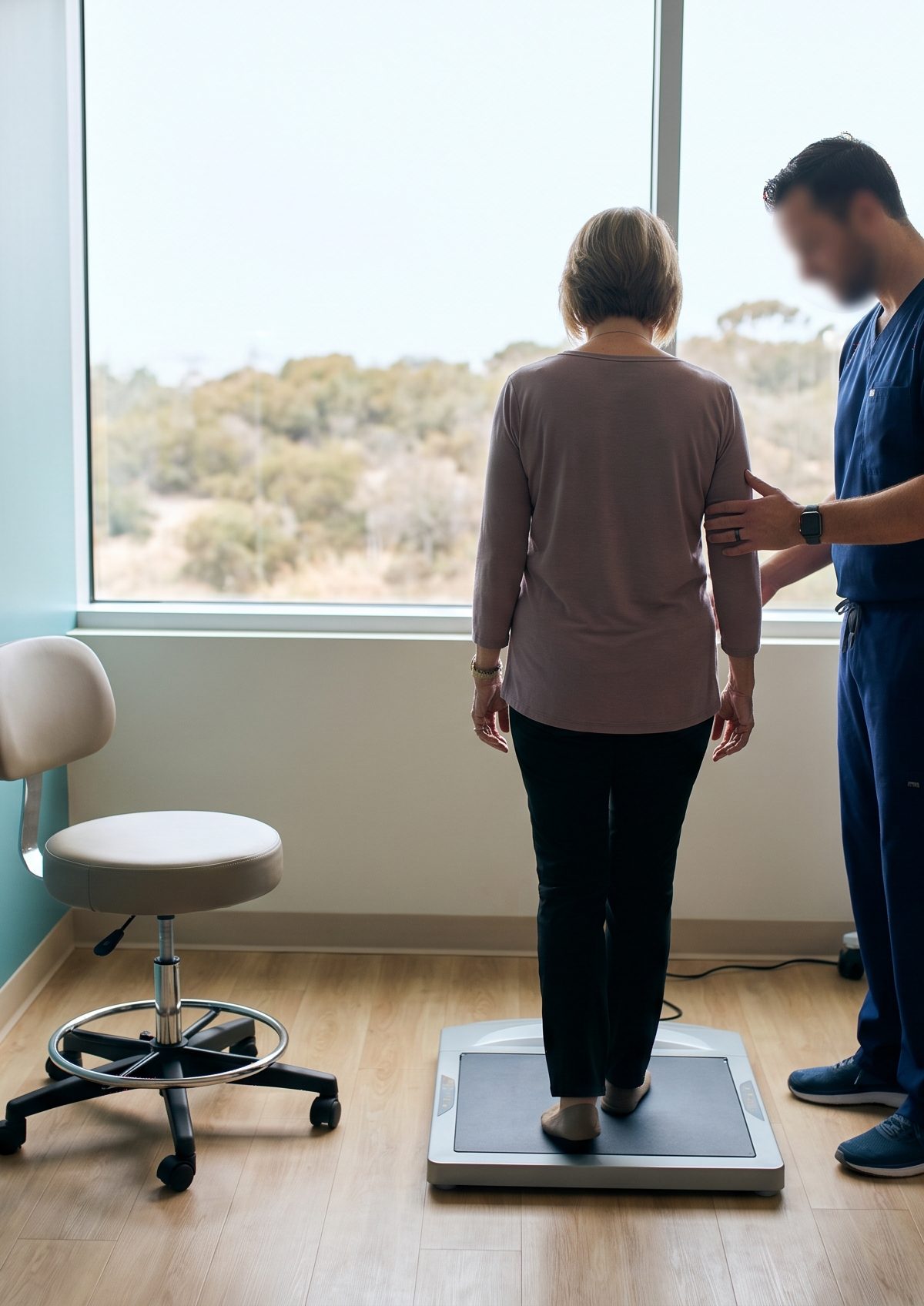
- Vestibular screening: dizziness triggers, head-movement intolerance, balance complaints, and symptom behavior in visually busy environments
- Ocular-motor testing: smooth pursuit, saccades, gaze stability, convergence, and screen-related strain patterns
- Balance and coordination assessment: static balance, dynamic balance, gait, and sensory integration
- Cervical contribution review: neck stiffness, cervicogenic provocation, posture, and movement-related symptom triggers
- Autonomic and tolerance clues: symptom flares with heat, exertion, dehydration, position changes, or sensory overload
- Functional impact: work tolerance, exercise tolerance, reading, driving, shopping, and participation in daily routines
That kind of evaluation is often especially helpful for patients whose migraine symptoms overlap with vertigo, balance issues, or a concussion history. It can also help clarify whether a patient may benefit from a rehabilitation-focused plan rather than relying only on reactive symptom management.
When dizziness and migraine overlap
Patients are often surprised to learn how commonly dizziness shows up in migraine-related cases. The overlap can take many forms: spinning sensations, rocking, visual motion discomfort, imbalance in grocery stores, a floating sensation, or symptoms triggered by turning the head too quickly. For some patients, dizziness appears during headache episodes. For others, it can happen between attacks and become the main reason they seek help.
This overlap is one reason the phrase vestibular migraine specialist san diego appears in local searches. Patients want to know whether their dizziness is an ear problem, a migraine problem, or something else. The answer is not always obvious from symptoms alone. A careful evaluation can help identify whether vestibular migraine is a reasonable framework, whether balance or gaze-stabilization deficits are contributing, or whether the patient should be directed back into conventional medical workup first.
Rehabilitation literature also supports the idea that vestibular-focused approaches can matter for the right patient profile, particularly when dizziness, movement intolerance, and visual sensitivity are part of the clinical picture.4 That does not mean every migraine patient needs vestibular therapy. It means the evaluation should be specific enough to decide when that layer is relevant.
When concussion history changes the conversation
Some San Diego patients begin searching for a migraine specialist after a concussion, car accident, sports injury, or another event that changed their baseline. In these cases, the headache pattern may overlap with dizziness, eye strain, cognitive fatigue, sleep disruption, and neck tension. Symptoms may still fit within a migraine framework, but post-concussion factors can increase the total burden and change what support is needed.
That is why it can be useful to connect migraine evaluation with broader neurologic rehabilitation thinking. A patient who had no major headache history before a concussion may now struggle with screen time, busy stores, travel, exercise, or rapid head movement. Another patient may have had migraine susceptibility already and notice that a concussion amplified the problem. In either case, a more complete exam can help determine whether ocular-motor, vestibular, balance, or cervical findings deserve attention alongside the headache complaint. Patients who want to understand this overlap can also explore the clinic’s concussion resources.
Conventional medical care still matters
It is important to keep the medical pathway clear. A more complete migraine evaluation is not a substitute for urgent care when red flags are present. Sudden severe headache, new neurologic deficit, fainting, fever, confusion, or a dramatic change from a person’s normal pattern should be treated as a prompt for immediate conventional medical evaluation.5 Patients may also need medical review when headaches are rapidly worsening, newly starting later in life, or associated with systemic illness.
Standard medical care also remains central for diagnosis confirmation, imaging decisions, medication management, and treatment planning when prescription therapies are appropriate. Current guidance supports individualized migraine care that may include trigger management, lifestyle work, acute treatment strategies, and preventive therapies based on disability and attack frequency.3 A functional neurology and rehabilitation setting does not replace those layers. It helps clarify additional contributors that may influence symptom tolerance and daily function.
What patients in San Diego often want to know before booking
Local patients are not only asking, “Do I have migraine?” They are often asking more practical questions:
- Why do screens, fluorescent lights, or busy stores make me feel worse?
- Why do I get dizzy when the headache is not even that severe?
- Why did my symptoms change after a concussion or neck injury?
- Why do exercise, poor sleep, dehydration, or travel make recovery harder?
- What kind of testing can help distinguish vestibular, visual, and cervical contributors?
Those are reasonable questions, especially in a large metro area like San Diego where patients may have several local options and still feel unsure where to start. The value of a migraine-focused evaluation is not just the label. It is the ability to understand the pattern in a way that can guide next steps more clearly.
What makes the clinic approach different
San Diego Chiropractic Neurology uses a clinic-centered approach built around non-invasive neurologic assessment and rehabilitation. In practical terms, that means looking at how the brain and body are handling movement, visual input, balance demands, and sensory stressors that may be amplifying symptoms. The clinic may consider whether patients would benefit from targeted support strategies related to vestibular function, visual tracking, coordination, graded tolerance, or related rehabilitation goals.
That approach is especially relevant when patients describe migraine symptoms together with dizziness, disequilibrium, visual motion sensitivity, or difficulty returning to normal daily activities. It can also be useful when symptoms do not seem fully explained by a basic headache conversation alone. Patients interested in this broader framework may also want to review related service pages such as vestibular therapy and neuro-visual rehabilitation.
The key point is that the clinic’s role is supportive and evaluative. It is about identifying neurologic and functional contributors, then building a reasonable rehabilitation path when appropriate. It is not about making cure claims or pretending every migraine patient needs the same type of care.
When it may be time to seek a specialist-style evaluation
A more complete evaluation may be reasonable when any of the following apply:
- You have repeated headaches that are limiting your routine, work, or exercise
- You also experience dizziness, balance issues, or visual motion sensitivity
- Your symptoms became harder to manage after a concussion or neck injury
- You feel your current explanation is incomplete or does not match what you are experiencing
- You want a clearer picture of possible vestibular, visual, cervical, or neurologic contributors
For many patients, the biggest benefit of a specialist-style visit is clarity. They leave with a better sense of which symptoms fit migraine, which suggest overlap with other systems, and what kind of next step makes the most sense.
What to expect from the next step
If you are considering a migraine specialist San Diego evaluation, it helps to bring a simple symptom timeline: when the problem started, how often it happens, what makes it worse, what helps, and whether dizziness, balance trouble, or visual strain are part of the picture. That information often reveals patterns that are easy to miss during a brief appointment.
It is also helpful to think in terms of function, not just pain. Can you tolerate screens? Drive comfortably? Shop without overload? Exercise without paying for it later? Read for long periods? Work through a full day? Migraine care is not only about how strong the headache feels. It is about how the nervous system is functioning in real life.
If you need a broader, non-invasive look at recurring migraine symptoms, dizziness, or overlap with concussion-related complaints, San Diego Chiropractic Neurology may be able to help clarify the picture. Call (619) 344-0111 or book a free consultation.
Frequently asked questions
When should someone in San Diego see a migraine specialist?
It may be time when headaches are frequent, disruptive, or paired with dizziness, visual sensitivity, balance problems, or post-concussion symptoms. A more complete evaluation may also help when the current explanation feels incomplete.
Can migraine cause dizziness or vertigo?
Yes. Vestibular migraine and other migraine presentations can involve dizziness, vertigo, motion sensitivity, and imbalance. A careful evaluation helps determine whether migraine is the likely framework or whether other vestibular issues need attention.
What does a more complete migraine evaluation include?
It may include history review, vestibular screening, ocular-motor testing, balance assessment, cervical contribution review, and discussion of how symptoms affect work, exercise, screens, and daily life.
Is a migraine specialist visit different from a standard headache visit?
Often yes. A specialist-style evaluation may look more closely at pattern complexity, red flags, dizziness overlap, rehabilitation needs, and contributing neurologic systems rather than focusing only on short-term symptom control.
What migraine symptoms count as urgent red flags?
Sudden severe headache, new weakness or numbness, fainting, confusion, fever, or a major change from your usual pattern should prompt urgent conventional medical evaluation right away.
References
- GBD 2021 Diseases and Injuries Collaborators. Global burden data on neurologic conditions and disability. The Lancet. 2024. https://pubmed.ncbi.nlm.nih.gov/38627170/
- Lempert T, et al. Vestibular migraine consensus update and review. 2022. https://pubmed.ncbi.nlm.nih.gov/35155656/
- American Headache Society consensus update on migraine prevention. 2024. https://pubmed.ncbi.nlm.nih.gov/38958706/
- Vestibular rehabilitation literature summary. https://pubmed.ncbi.nlm.nih.gov/36640484/
- American Migraine Foundation. Headache red flags. https://americanmigrainefoundation.org/resource-library/headache-red-flags/
Medical disclaimer: This article is for educational purposes only and is not medical advice. It does not diagnose or replace care from a physician or emergency services. If you have severe, sudden, or unusual symptoms, seek prompt medical evaluation.
Not sure what is driving your symptoms?
Talk with our Functional Neurology Trained team on a free phone consultation. We will tell you honestly whether we can help.