Migraine Specialist for Dizziness: What a Thorough Evaluation Should Include
Free phone consultation with our San Diego functional neurology team. No obligation.
Dizziness can be hard to describe. Some people mean spinning. Others mean rocking, floating, motion sensitivity, visual overwhelm, or a strange sense of imbalance that comes and goes. When those symptoms show up with headaches, light sensitivity, nausea, neck tension, or a migraine history, the bigger question is often not just what is causing the dizziness, but what kind of specialist should be looking at the whole pattern.
For many people in San Diego, that question comes up after several frustrating turns. An urgent care visit may rule out an emergency. An ear exam may come back normal. A brain scan may not explain the day-to-day symptoms. Yet grocery stores still feel overwhelming, scrolling on a phone still feels uncomfortable, and head movement or busy environments still seem to trigger dizziness. In that situation, a more complete evaluation can matter because migraine-related dizziness often overlaps with vestibular, visual, neck, and neurologic factors rather than fitting into a single simple box.
This article explains what a migraine specialist for dizziness should be evaluating, how vestibular migraine differs from other common dizziness patterns, and what a rehabilitation-focused plan may include when symptoms keep lingering.
Why migraine and dizziness are so often linked
Migraine is not only a headache condition. It is a neurologic disorder that can affect sensory processing, balance, motion tolerance, visual comfort, and the way the brain interprets incoming signals. That is why some people with migraine feel dizzy before, during, after, or even instead of a significant headache episode.
In some cases, the pattern fits vestibular migraine. Current diagnostic criteria focus on recurrent vestibular symptoms such as vertigo, motion sensitivity, head-motion intolerance, or spatial disorientation together with migraine features and no better explanation for the symptoms. In plain language, that means dizziness may be part of the migraine pattern even when a person is not describing classic spinning every time.
Common symptoms in this overlap pattern can include:
- episodes of vertigo or rocking sensations
- feeling worse in grocery stores, crowds, traffic, or patterned spaces
- light and sound sensitivity
- headache, pressure, or head heaviness
- nausea or visual motion sensitivity
- imbalance when turning quickly or moving through busy environments
- neck tightness that seems to flare with dizziness
Because those symptoms can look similar to inner-ear disorders, concussion-related dizziness, or visually triggered balance problems, the most useful specialist is usually the one who can evaluate the full symptom network instead of focusing on only one body system.
What kind of specialist helps dizziness with migraine symptoms?
The best answer depends on the pattern, but the key is usually depth of evaluation rather than job title alone. A strong dizziness-and-migraine evaluation should look at several layers:
- migraine history and trigger patterns
- vestibular symptoms and balance function
- visual motion sensitivity and eye movement control
- neck involvement and movement-provoked symptoms
- concussion history when relevant
- sleep, stress load, exertion tolerance, and symptom timing
That is one reason many people benefit from a clinic that can look at migraine-related dizziness through both a neurologic and vestibular lens. If the history strongly suggests vestibular migraine, the next step is not simply naming it. The next step is understanding what is keeping the symptoms active in daily life.
For example, one person may have a clear migraine pattern with strong visual triggers. Another may have dizziness after a prior concussion with migraine features layered on top. Another may have recurring vertigo that sounds positional at first glance but turns out to involve broader motion sensitivity and sensory overload. Those cases do not always need the exact same plan.
How vestibular migraine is different from other common dizziness problems
This is where evaluation quality matters most. Several dizziness conditions can overlap or be confused with migraine-related dizziness:
BPPV
BPPV usually causes short bursts of spinning with specific position changes, such as rolling in bed or looking up. It is often linked to inner-ear crystal displacement and can respond well to repositioning maneuvers. If dizziness is more persistent, visually triggered, or associated with migraine features, that may point beyond simple BPPV. Related reading: vertigo and dizziness evaluation.
Persistent post-concussion dizziness
After a concussion, the vestibular system, eye movements, neck input, and migraine pathways can all become more sensitive. A person may then describe headache, fogginess, dizziness, and motion intolerance together. In that setting, migraine features may be part of the picture without being the only issue. Related reading: concussion symptoms and evaluation.
Cervicogenic dizziness
Some people notice dizziness that increases with neck tension, posture, or head movement. Neck-related sensory mismatch can aggravate dizziness, especially in people who also have migraine sensitivity. That does not mean the neck is always the only cause, but it may be one layer of the problem.
PPPD and visually triggered dizziness
Some patients develop chronic non-spinning dizziness, visual dependence, and discomfort in motion-rich environments after an earlier vestibular or migraine event. Busy stores, scrolling, and crowds may become unusually hard to tolerate. That pattern often requires careful rehabilitation rather than a quick one-time fix.
What a thorough migraine-dizziness evaluation should include
A useful evaluation should answer more than “is this migraine?” It should clarify which systems are involved and what is driving symptoms in everyday settings.
1. A detailed symptom history
The timeline matters. A clinician should ask when the dizziness started, whether it comes in episodes or stays in the background, what triggers it, whether headaches are present, and whether light, sound, screens, sleep loss, stress, hormones, travel, or neck strain make symptoms worse.
2. Vestibular and balance testing
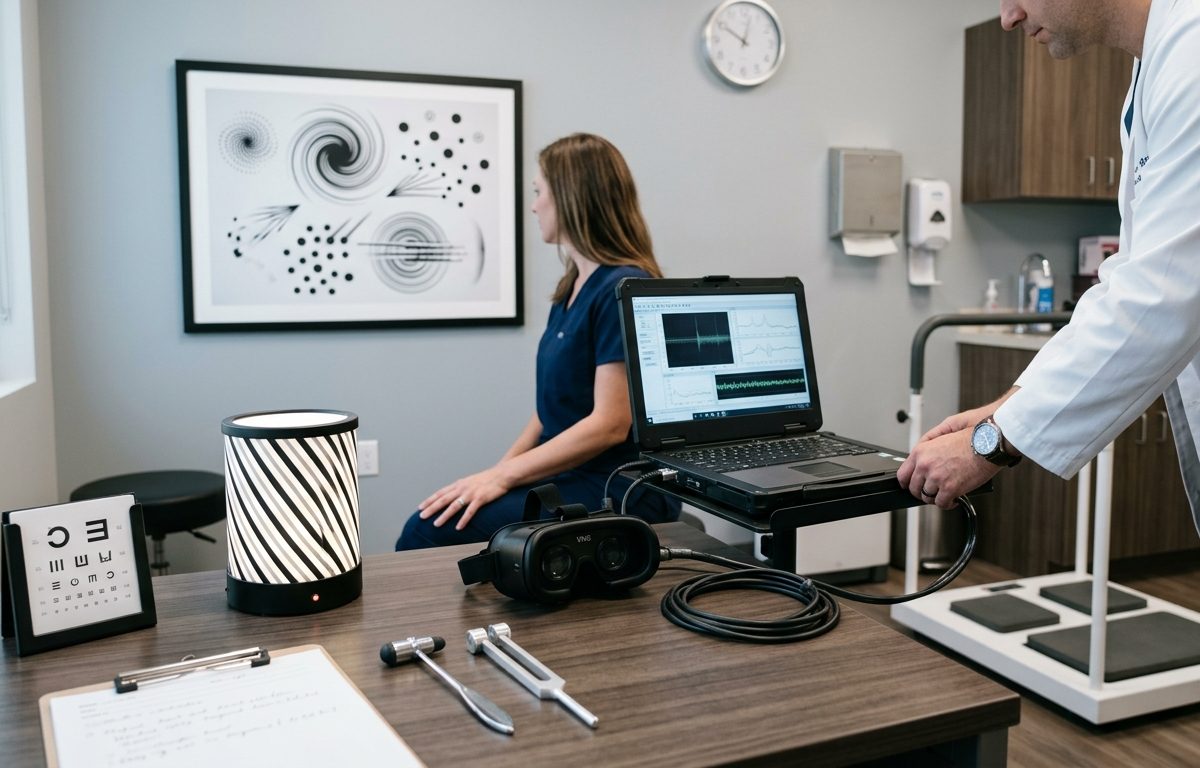
This may include positional testing, head-movement challenges, gait and balance screens, and observation of how the vestibular system responds when symptoms are provoked in a controlled way. The goal is not just to reproduce symptoms. It is to understand the pattern.
3. Eye movement and visual-motion assessment
Many people with migraine-related dizziness struggle with tracking, convergence, visual fixation, or busy visual input. A strong exam should look at how the visual and vestibular systems work together, especially if screens, reading, driving, or crowded spaces are difficult.
4. Neck and movement contribution
If neck stiffness, whiplash history, or posture seems tied to symptoms, that piece should be checked as part of the larger picture rather than treated as a separate mystery.
5. Differential diagnosis review
A careful specialist should also look for signs that point more strongly toward another dizziness diagnosis, or toward a mixed presentation. Vestibular migraine is common, but it should not be assumed without a proper differential process.
What treatment planning may include
Conventional medical care for migraine-related dizziness often includes diagnostic review, medication discussion when appropriate, and referral decisions based on red flags, severity, or complexity. That layer is important, especially if symptoms are new, escalating, or paired with concerning neurologic changes.
A clinic using a functional neurology and rehabilitation-centered approach plays a different role. The focus is usually on identifying what movements, visual inputs, sensory conflicts, or tolerance problems are keeping the system reactive, then building a plan to improve regulation and day-to-day function. That can include:
- vestibular rehabilitation strategies for motion tolerance and balance
- graded visual exposure when busy environments or screens are strong triggers
- eye movement exercises when tracking or convergence deficits are present
- balance and gait retraining
- targeted activity progression based on symptom response
- education around pacing, triggers, sleep regularity, and environmental load
The point is not to promise a single universal solution. It is to match the rehabilitation plan to the specific symptom profile revealed on the exam.
Signs you may need a more complete evaluation
It may be time to look deeper if:
- you have dizziness plus migraine symptoms that keep recurring
- grocery stores, driving, scrolling, or busy environments trigger symptoms
- you have already been told “everything looks normal” but you still feel off
- episodes are interfering with work, exercise, reading, or travel
- you have a concussion history layered into the picture
- position changes are not the only trigger
For people in San Diego, this often means finding a clinic that can sort through overlapping vestibular, visual, neurologic, and movement-related contributors instead of treating dizziness as one generic complaint.
Why some patients feel stuck before they find the right evaluation
One of the hardest parts of migraine-related dizziness is that the symptoms can be very real while standard quick checks look unrevealing. A basic ear exam may be normal. Imaging may not explain functional triggers. Lab work may not capture why a person feels worse in fluorescent lighting, crowded stores, or after turning quickly. That gap often leaves patients feeling like they have to choose between “it is just migraine” and “it must be an inner-ear problem,” when the lived experience is often more layered.
A more complete workup helps because it looks at symptom behavior, not just yes-or-no findings. Does the person feel worse with visual complexity? Does head motion trigger delayed symptoms? Does neck tension amplify the dizziness? Does exertion bring on head pressure, nausea, or disorientation? These details help shape a better plan and reduce the odds of using the wrong treatment emphasis.
Questions a clinic should be able to answer clearly
Before starting care, a patient should come away with practical answers to a few key questions:
- Does the symptom pattern fit vestibular migraine, another vestibular issue, or a mixed presentation?
- Which triggers seem most important right now: motion, visual load, exertion, neck input, or general migraine reactivity?
- What activities should be modified temporarily, and what activities should be rebuilt gradually?
- What progress markers will show that the plan is working?
When those answers are missing, people often bounce between reassurance and frustration. When they are clear, the next steps usually feel much more manageable.
What to expect from a San Diego clinic visit
At San Diego Chiropractic Neurology, the evaluation process is designed to look at how migraine-related dizziness shows up in real life. That includes how symptoms respond to motion, visual load, head movement, posture, and neurologic stressors. The goal is to identify whether the presentation fits a migraine-driven vestibular pattern, a mixed picture, or another dizziness category that needs a different plan.
If rehabilitation is appropriate, the next step is usually a phased plan that targets the systems most clearly involved instead of using a generic handout approach. That may involve vestibular, visual, and balance-based exercises together with symptom pacing and progression. Many patients find that this approach is especially helpful when their symptoms do not fit neatly into a single ear-only or headache-only explanation.
When urgent medical care matters
Not all dizziness is migraine-related. Sudden severe headache, new weakness, trouble speaking, fainting, chest pain, new one-sided numbness, or other acute neurologic symptoms need urgent medical evaluation right away. A non-emergency rehab-focused assessment is most appropriate after serious causes have been ruled out or when the presentation is stable but persistent.
Next steps if you are looking for a migraine specialist for dizziness
If you are searching for a migraine specialist for dizziness, the main thing to look for is not a marketing label. It is a clinic that can explain why your dizziness happens, what systems appear involved, and what a structured plan may include. That is especially important when symptoms are affecting work, driving, exercise, reading, or confidence in daily movement.
Call (619) 344-0111 or book a free consultation to discuss whether a more complete dizziness and migraine evaluation may be the right next step.
Frequently asked questions
Can migraine cause dizziness without a bad headache?
Yes. Some people with vestibular migraine have dizziness, rocking, motion sensitivity, or vertigo with only mild headache or no major headache during some episodes.
What kind of specialist should evaluate dizziness with migraine symptoms?
The most helpful specialist is usually one who can assess migraine history, vestibular function, visual motion sensitivity, balance, and related neurologic factors together rather than focusing on only one system.
How is vestibular migraine different from BPPV?
BPPV usually causes brief position-triggered spinning, while vestibular migraine can involve broader motion sensitivity, visual triggers, imbalance, and migraine features. Some people can have overlap, which is why testing matters.
Can rehab help migraine-related dizziness?
In the right patient, vestibular and visual rehabilitation strategies may help improve motion tolerance, balance confidence, and symptom control, especially when dizziness is triggered by movement or visually busy environments.
Medical disclaimer
This article is for educational purposes only and is not medical advice, diagnosis, or emergency guidance. Individual symptoms can have many causes. If symptoms are severe, sudden, or changing, seek appropriate medical care promptly.
References
- Lempert T, von Brevern M. Vestibular migraine. Neurol Clin. 2019;37(4):695-706. https://pubmed.ncbi.nlm.nih.gov/31375133/
- Lempert T, von Brevern M. Vestibular migraine diagnostic criteria update. J Vestib Res. 2022. https://pubmed.ncbi.nlm.nih.gov/35144795/
- Whitney SL, Alghwiri A, Alghadir A. Vestibular rehabilitation and factors that can affect outcome. Otolaryngol Clin North Am. 2011;44(2):323-334. https://pubmed.ncbi.nlm.nih.gov/21600594/
- Ashina M, et al. Migraine. Nat Rev Dis Primers. 2021;7(1):47. https://pubmed.ncbi.nlm.nih.gov/34645963/
Not sure what is driving your symptoms?
Talk with our Functional Neurology Trained team on a free phone consultation. We will tell you honestly whether we can help.