Herniated Disc vs Sciatica: What Is the Difference?
Free phone consultation with our San Diego functional neurology team. No obligation.
Searching for herniated disc vs sciatica in San Diego usually means you are trying to understand why back or leg symptoms have appeared. The terms in herniated disc vs sciatica are related, but they do not mean the same thing. A herniated disc describes a structural problem. Sciatica describes a pattern of symptoms that can occur when a nerve pathway is irritated or compressed.
That distinction matters because an MRI image does not tell the whole story. Some people have a disc bulge without pain, while others have significant radiating leg symptoms with only modest imaging findings. The useful question is not simply what appears on a scan. It is how the finding matches your symptoms, neurologic exam, and movement pattern.
What is the difference between a herniated disc and sciatica?
A herniated disc is a structural finding
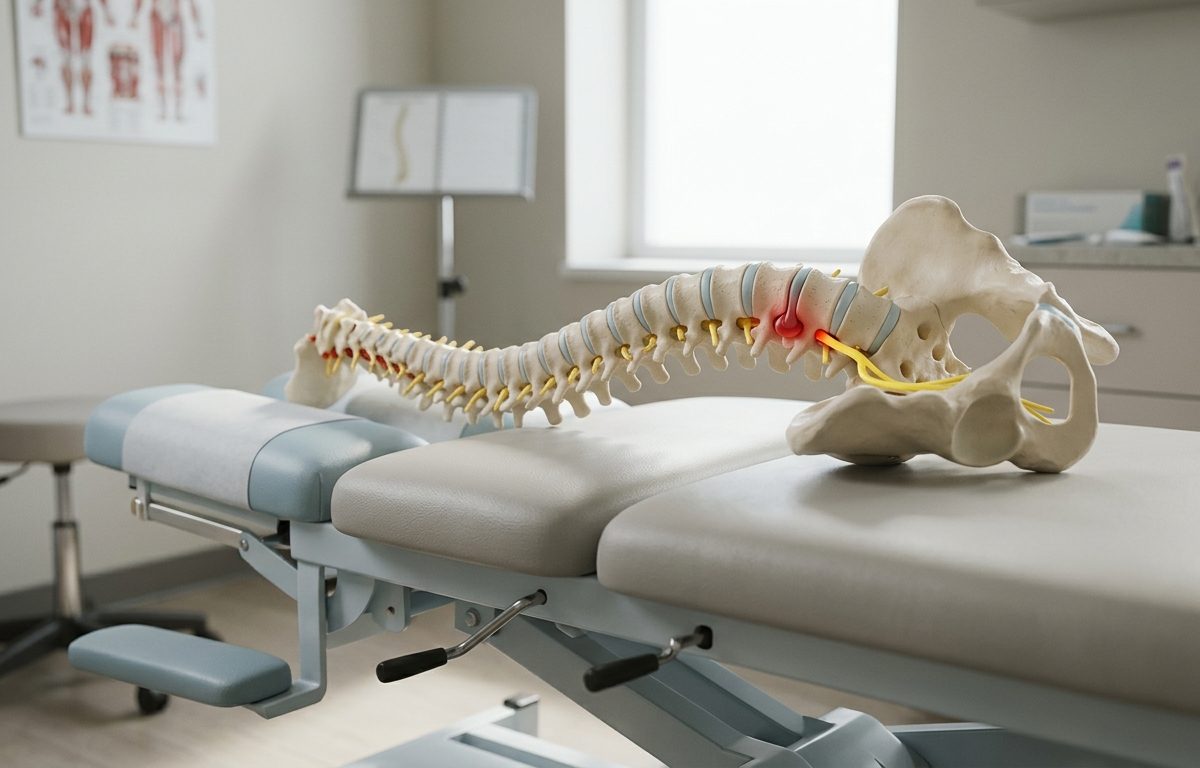
Between the bones of the spine are discs that help distribute load and permit movement. A herniation occurs when disc material extends beyond its usual outer boundary. Depending on its location, the material may irritate a nearby nerve root.
A disc herniation can cause local back pain, but it may also cause no symptoms at all. The word on an imaging report is therefore not automatically an explanation for every ache, numb area, or movement limitation.
Sciatica is a symptom pattern
Sciatica generally refers to pain or other nerve-related symptoms that travel from the low back or buttock into the leg. Symptoms may include burning pain, pins and needles, numbness, or weakness. The pattern often follows part of the sciatic nerve pathway, although the exact distribution varies.
A herniated disc is a common cause, but spinal stenosis, inflammation, or irritation in another part of the nerve pathway can create similar symptoms. This is why an evaluation should consider more than one possible source.
Can a herniated disc cause sciatica even if my back pain is mild?
Yes. A disc problem can irritate a nerve root while causing only mild back discomfort. In that situation, the main complaint may be pain down one leg, altered sensation, or weakness. The location of the disc, the amount of nerve irritation, and individual sensitivity all influence the experience.
Some people notice symptoms when sitting, bending, coughing, walking, or changing position. Others describe symptoms that are less predictable. A careful history helps identify the pattern, while strength, reflex, sensation, gait, and movement testing help determine whether the nerve is being affected.
How can I tell if my leg pain is sciatica or something else?
Radiating pain from the low back or buttock into the leg is more suggestive of sciatica than pain that stays only in the back. Numbness, tingling, or weakness also raises the possibility of nerve involvement. However, similar complaints can come from the hip, sacroiliac region, peripheral nerves, or other spinal conditions.
Location alone is not enough to identify the cause. A clinician may compare both sides, assess walking and balance, check reflexes and sensation, and observe how the spine and hip move. The goal is to determine whether the symptoms follow a consistent neurologic pattern and whether the suspected structure matches that pattern.
In San Diego, a non-surgical evaluation may include a review of prior imaging alongside functional testing. This can help avoid treating an image in isolation or overlooking movement and nerve-function findings that affect daily activity.
Why do some people have a disc bulge on MRI but no symptoms?
Disc changes become more common with age and may be present in people who feel well. An image shows anatomy, but it does not measure pain sensitivity, inflammation, strength, reflexes, or how the nervous system responds during movement.
For that reason, imaging is most useful when it answers a clinical question. It may be recommended when symptoms persist, when a significant neurologic deficit is suspected, or when the result would change the care plan. Imaging should be interpreted with the examination, not used as a stand-alone diagnosis.
What does standard care sometimes miss when symptoms keep coming back?
Standard care can appropriately focus on pain control, medication when suitable, imaging, physical therapy, or referral when urgent findings are present. Those steps are important. Persistent symptoms, however, may also involve protective muscle guarding, altered reflexes, reduced movement confidence, nerve sensitivity, and compensation through the hips, pelvis, gait, or balance system.
A rehabilitation-focused evaluation looks at how the body and nervous system are coordinating, not only at the disc image. This does not replace medical assessment or surgical consultation when indicated. It adds information about movement tolerance, motor control, sensation, and functional goals so care can be matched to the whole presentation.
At San Diego Chiropractic Neurology, the clinic team uses non-invasive evaluation and rehabilitation strategies when appropriate. The plan depends on the examination, symptom behavior, medical history, and communication with other healthcare professionals when a referral is needed.
When should a suspected herniated disc or sciatica be evaluated right away?
Seek urgent medical evaluation for new or worsening leg weakness, numbness in the saddle area, or loss of bladder or bowel control. Severe symptoms after major trauma, fever with back pain, unexplained weight loss, or a history that raises concern for infection or cancer also deserve prompt attention.
Urgent symptoms can indicate serious nerve compression or another condition that needs medical management. Do not delay emergency assessment while trying exercises or waiting for a routine appointment.
What treatment makes sense if a herniated disc is irritating a nerve?
Care depends on severity, duration, neurologic findings, and the underlying cause. When there is no emergency finding or progressive major weakness, conservative care may include activity guidance, medication discussion with a qualified medical professional, physical rehabilitation, and follow-up assessment. Some patients may also be considered for non-surgical spinal decompression or other supportive services after an appropriate evaluation.
Procedures and surgery may be appropriate for selected cases, especially when symptoms remain severe, a major deficit progresses, or urgent compression is present. A responsible herniated disc vs sciatica care plan does not promise a fixed number of visits or a guaranteed timeline. It monitors the response and changes direction when the findings call for it.
For more information, review our herniated disc care in San Diego and our sciatica treatment resources. A qualified clinician can help determine which evaluation and referral pathway fits your situation.
Frequently asked questions
Is sciatica always caused by a herniated disc?
No. A herniated disc is a common cause, but narrowing around a nerve, inflammation, or irritation elsewhere along the nerve pathway can create similar symptoms.
Can you have a herniated disc without sciatica?
Yes. A disc finding may not contact or irritate a nerve. Some people have no symptoms, while others have local back discomfort without radiating leg symptoms.
Does sciatica mean I need an MRI?
Not always. Imaging decisions depend on the examination, symptom duration, red flags, and whether the result would change management.
What symptoms mean leg pain could be more serious?
Progressive weakness, saddle numbness, or new bladder or bowel changes require urgent medical evaluation.
How long should I wait before getting persistent sciatica checked?
There is no single waiting period for everyone. Symptoms that are severe, worsening, recurring, or limiting normal activity deserve an evaluation sooner rather than later.
Can non-surgical care help if a herniated disc is irritating a nerve?
Many cases are initially managed without surgery when urgent findings are absent. The appropriate plan depends on the examination and should be monitored over time.
Call (619) 344-0111 or book a free consultation
Medical disclaimer: This article is for general education and is not a diagnosis or a substitute for medical advice. Seek urgent care for emergency symptoms. Individual evaluation is necessary before choosing care.
References
- Arts MP, et al. Surgical techniques for sciatica due to herniated disc. European Spine Journal. 2012. https://pmc.ncbi.nlm.nih.gov/articles/PMC3481105/
- WFNS Spine Committee. Recommendations on lumbar disc herniation. 2024. https://pmc.ncbi.nlm.nih.gov/articles/PMC10882128/
- Management of Lumbar Disc Herniation: A Systematic Review. 2023. https://pmc.ncbi.nlm.nih.gov/articles/PMC10683841/
Not sure what is driving your symptoms?
Talk with our Functional Neurology Trained team on a free phone consultation. We will tell you honestly whether we can help.