Herniated Disc Specialist San Diego | SDCN
Free phone consultation with our San Diego functional neurology team. No obligation.
Herniated Disc Specialist in San Diego: A Functional Neurology Approach
A herniated disc is one of the most common — and most misunderstood — causes of debilitating back and leg pain in San Diego. Many patients receive an MRI report, hear the words "herniated disc," and assume surgery is inevitable. The research tells a different story. At San Diego Chiropractic Neurology, the clinical team approaches herniated disc injury not just as a mechanical spine problem, but as a neurological event that deserves a thorough neurological evaluation and a structured, non-surgical rehabilitation plan.
This article explains what a herniated disc is, how it affects the nervous system, what the evidence says about non-surgical care, and how the clinic's functional neurology framework differs from conventional chiropractic or pain management approaches available elsewhere in San Diego.
What Is a Herniated Disc?
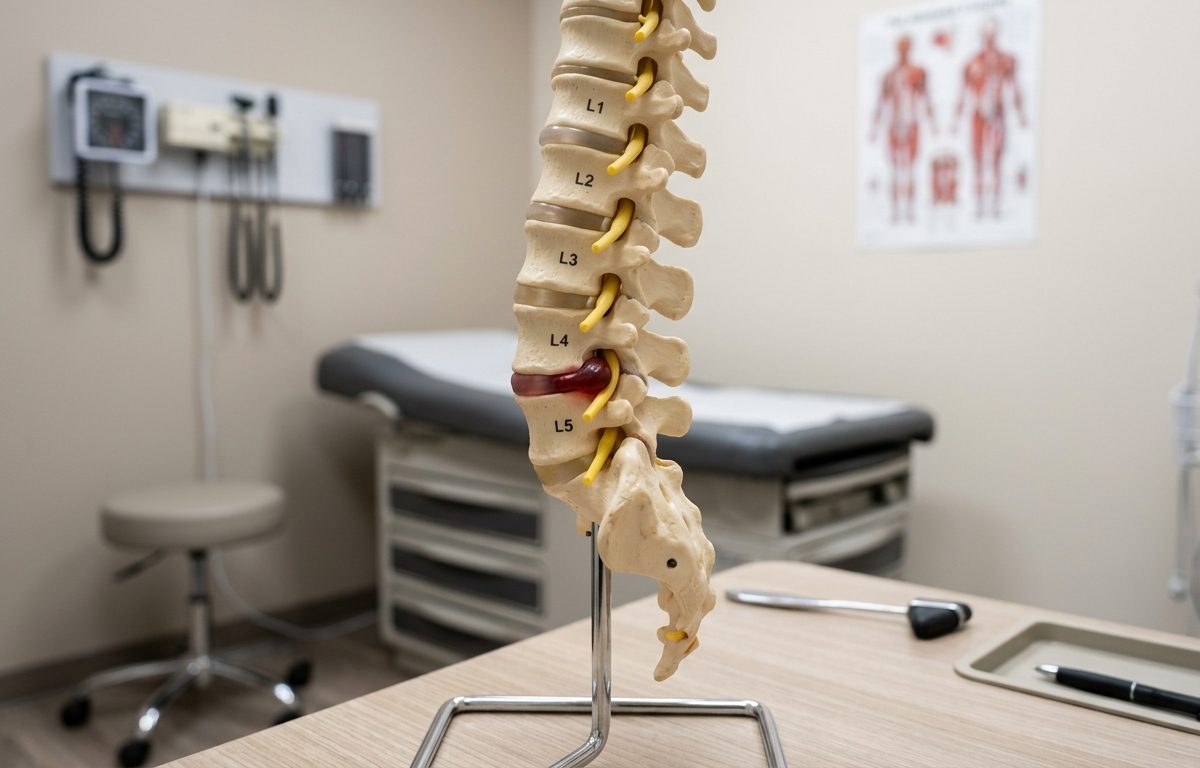
The spine is made up of vertebrae separated by intervertebral discs — rubbery cushions that absorb shock and allow movement. Each disc has a tough outer layer (the annulus fibrosus) and a soft, gel-like center (the nucleus pulposus). A herniated disc occurs when a crack or tear in the annulus allows nucleus pulposus material to push outward, potentially compressing a nearby nerve root or, in severe cases, the spinal cord itself.
Herniations are most common in the lumbar spine (lower back), particularly at the L4–L5 and L5–S1 levels, though cervical disc herniations (in the neck, typically at C5–C6 or C6–C7) are also frequently seen and can cause arm pain, weakness, and numbness. Understanding which spinal level is involved — and which nerve root is being compressed — is essential to designing an appropriate care plan.
Importantly, disc herniation causes radiculopathy (nerve root pain and dysfunction) through two mechanisms, not one: direct mechanical compression of the nerve root, and release of inflammatory chemicals — including phospholipase A2 and pro-inflammatory cytokines — from the herniated nucleus pulposus material itself. This dual mechanism explains why some patients have significant pain even from smaller herniations, and why a care approach addressing only the structural component may be insufficient.
Common symptoms of a herniated disc include sharp or burning pain that travels down one leg (sciatica) or one arm, numbness or tingling along a predictable nerve pathway, muscle weakness in the affected limb, and, in some cases, loss of deep tendon reflexes at the knee or ankle. The specific pattern of symptoms — which leg, which muscle groups, which reflexes — points directly to the spinal level involved and the nerve root under compression.
The Neurological Impact of a Herniated Disc
One of the most significant clinical differentiators at San Diego Chiropractic Neurology is the depth of neurological examination performed when a patient presents with suspected disc herniation. Rather than simply confirming a structural finding on imaging, the clinical team evaluates the functional neurological consequences of that herniation — the aspects that determine how much the nervous system is affected and how well it is adapting.
A comprehensive neurological examination for disc herniation typically includes:
- Dermatomal sensory testing: Mapping which skin regions have altered sensation (numbness, tingling, or hypersensitivity) to identify which nerve root is involved.
- Myotomal motor testing: Grading strength in specific muscle groups innervated by each spinal level to detect motor deficits that may not yet be clinically obvious.
- Deep tendon reflex grading: Reduced or absent reflexes (e.g., absent ankle reflex at S1, reduced knee reflex at L4) are objective markers of nerve root compromise.
- Nerve tension signs: The straight-leg raise (SLR) and its variants reproduce radicular pain when positive, confirming nerve root involvement in lumbar cases.
- Cervical foraminal compression testing: For neck herniations, orthopedic and neurological tests help localize the level without relying solely on imaging.
This level of neurological mapping matters because it guides care planning. A patient with an L5 herniation showing dermatomal sensory loss, weak ankle dorsiflexion, and a positive SLR has a different clinical picture — and requires a more carefully calibrated approach — than a patient with a similar MRI finding but intact neurological function. Imaging alone cannot make this distinction; clinical neurological examination can.
Learn more about how herniated disc conditions are evaluated and managed at San Diego Chiropractic Neurology, or read about sciatica from a herniated disc and how radiculopathy affects the leg.
Can a Herniated Disc Heal Without Surgery?
This is the most common question patients ask — and the evidence-based answer is: yes, in most cases.
Clinical guidelines from the North American Spine Society are clear: for patients with lumbar disc herniation and radiculopathy, conservative management is the appropriate first-line approach. Surgery is reserved for failure of conservative care, cauda equina syndrome, or progressive neurological deficit. The vast majority of patients do not fall into these surgical categories.
Even more reassuring is the documented phenomenon of spontaneous disc resorption. Multiple studies have shown that herniated disc material — particularly large extrusions — can be reabsorbed by the body over time. A 2017 systematic review found that spontaneous resorption occurred in a significant proportion of conservatively managed patients, with larger herniations showing the highest resorption rates. Conservative care, by reducing inflammation and supporting normal spinal mechanics, appears to facilitate this process.
For patients concerned about back pain and disc injury, the key question is not whether surgery is possible — it's whether conservative care has been given a proper trial. Many patients who arrive at San Diego Chiropractic Neurology have not had a thorough neurological evaluation or access to non-surgical spinal decompression therapy — an approach with a distinct mechanism that goes beyond standard chiropractic manipulation alone.
It is equally important to understand when surgery is appropriate. Cauda equina syndrome — characterized by bowel or bladder dysfunction, saddle area numbness, and bilateral leg weakness — is a surgical emergency and will be triaged immediately for urgent referral at San Diego Chiropractic Neurology. Progressive neurological deficit (worsening foot drop, rapidly increasing weakness) that fails to respond to conservative care is also a clear indication for spine surgeon evaluation. The clinic's approach is conservative-first, not conservative-only.
Non-Surgical Spinal Decompression for Herniated Discs
Non-surgical spinal decompression is a motorized traction-based therapy designed to gently unload compressed spinal segments and create negative intradiscal pressure. Research published in the Journal of Neurosurgery demonstrated that mechanical spinal decompression generates negative intradiscal pressure — a therapeutic negative pressure state that may encourage retraction of herniated disc material and improve nutrient and fluid exchange within the avascular disc.
Unlike traditional traction, modern computerized decompression tables use precise, oscillating tension patterns that are calibrated to the patient's weight, symptom pattern, and spinal level. The body's natural tendency to resist sustained traction (by tensing paraspinal muscles) is bypassed by the subtle variation in pull, allowing the targeted spinal segment to decompress more effectively.
At San Diego Chiropractic Neurology, spinal decompression is not offered in isolation. It is integrated into a broader care plan that may include:
- Chiropractic adjustments to support segmental mobility and reduce mechanical loading on adjacent levels
- Functional neurology rehabilitation to address compensatory movement patterns and nervous system dysregulation that can perpetuate pain
- Soft tissue and myofascial work targeting paraspinal muscle guarding
- Home exercise and postural correction programming specific to the patient's herniation level and neurological findings
Research supports chiropractic care for lumbar radiculopathy as producing clinical benefit comparable to other non-surgical approaches, with a favorable safety profile for appropriately selected patients.
Explore chiropractic care for spine conditions and how it integrates with functional neurology rehabilitation at SDCN. For patients with nerve-related symptoms, the clinic also offers vagus nerve therapy for nerve recovery as part of a broader neurological rehabilitation framework.
Cervical Herniated Discs: A Frequently Overlooked Presentation
While lumbar herniations dominate the conversation about disc injury, cervical herniations — affecting the neck and causing arm symptoms — are a significant source of disability that requires equally careful neurological evaluation.
Cervical disc herniation, most commonly at C5–C6 or C6–C7, can produce:
- Pain radiating from the neck down through the shoulder, arm, and into the hand
- Numbness or tingling in specific finger patterns (C6 = thumb and index finger; C7 = middle finger)
- Weakness in grip strength, triceps, or wrist extensors
- Reduced biceps (C5–C6) or triceps (C7) reflexes
In some cases, large central cervical herniations can cause myelopathy — compression of the spinal cord itself — producing balance problems, hand clumsiness, and lower extremity weakness. The clinical team screens for myelopathy signs at every cervical disc evaluation, as this presentation requires urgent specialist referral rather than conservative care.
For uncomplicated cervical radiculopathy, the functional neurology examination framework applies equally: identify the level, document the neurological deficit pattern, and build a care plan calibrated to that specific picture. Patients dealing with related issues such as degenerative disc disease and spinal stenosis alongside disc herniation may require a more layered evaluation to untangle overlapping generators of nerve root irritation.
What Makes San Diego Chiropractic Neurology Different?
San Diego Chiropractic Neurology has served patients across the greater San Diego region for over 30 years. The clinic's doctors are Functional Neurology Trained — postgraduate study in chiropractic neurology requiring 300+ hours of advanced training and successful completion of the American Chiropractic Neurology Board examination.
This credential matters in the context of disc herniation because it reflects a clinical framework that treats disc injury as a neurological problem, not just a mechanical one. The question is not only "where is the herniation?" but "what is the nervous system doing in response, and how can we support its recovery?"
Additional training in brain injury rehabilitation further informs the clinic's approach to nerve injury recovery — recognizing that prolonged nerve root compression shares neurological rehabilitation principles with other acquired nerve injuries, and that recovery requires more than structural decompression alone.
In practice, this means patients at SDCN receive:
- A comprehensive neurological intake that maps dermatomal, myotomal, and reflex findings to a specific nerve root level
- A transparent explanation of their imaging findings and what those findings do — and don't — mean for their prognosis
- A documented, phased care plan with clear milestones rather than an open-ended treatment schedule
- Integration of spinal decompression, chiropractic care, and functional neurology rehabilitation as a coordinated system
- Honest referral when surgical evaluation is warranted — cauda equina symptoms, myelopathy, or failure of adequate conservative care are not conditions the clinic manages with chiropractic care alone
For patients in San Diego exploring options for disc-related pain, or wondering whether their sciatica is disc-related, SDCN's combination of neurological depth and non-surgical technology fills a gap that neither standard chiropractic nor conventional pain management typically addresses. Over 30 years of San Diego practice means the clinic has navigated the full spectrum of disc presentations — from acute lumbar extrusions in young adults to multi-level cervical degenerative herniations in older patients — and built care frameworks calibrated to each.
Have questions? Browse the frequently asked questions about disc herniation at San Diego Chiropractic Neurology.
References
- Kreiner DS, et al. An evidence-based clinical guideline for the diagnosis and treatment of lumbar disc herniation with radiculopathy. Spine J. 2014;14(1):180–191. PubMed
- Ramos G, Martin W. Effects of vertebral axial decompression on intradiscal pressure. J Neurosurg. 1994;81(3):350–353. PubMed
- Olmarker K, Rydevik B. Selective inhibition of tumor necrosis factor-alpha prevents nucleus pulposus–induced thrombus formation, intraneural edema, and reduction of nerve conduction velocity. Spine. 2001;26(8):863–869. PubMed
- Zhong M, et al. Incidence of Spontaneous Resorption of Lumbar Disc Herniation. Pain Physician. 2017;20(3):E45–E52. PubMed
- Patel DV, et al. Non-surgical Management of Low Back Pain and Lumbar Disc Herniation. Int J Spine Surg. 2020;14(Suppl 2):S6–S16. PMC
Frequently Asked Questions About Herniated Discs in San Diego
What type of doctor is best for a herniated disc in San Diego?
For most patients, the best first step is a provider who can perform both a thorough neurological examination and offer non-surgical care options. A doctor trained in functional neurology — a chiropractor with advanced postgraduate study in neurology — is uniquely positioned to evaluate the neurological impact of a herniated disc (nerve root level, dermatomal and myotomal deficits, reflex changes) and coordinate non-surgical rehabilitation including spinal decompression therapy. If imaging or examination findings suggest myelopathy, cauda equina syndrome, or failure of conservative care, referral to a spine surgeon is appropriate. San Diego Chiropractic Neurology provides comprehensive disc evaluations and refers when surgical consultation is warranted.
Can a herniated disc heal without surgery?
Yes — in most cases. Clinical guidelines from the North American Spine Society identify conservative care as the appropriate first-line approach for lumbar disc herniation with radiculopathy. Surgery is reserved for cauda equina syndrome, progressive neurological deficit, or documented failure of conservative care. Research also documents spontaneous resorption of herniated disc material, particularly for larger extrusions, with conservative management supporting the process. Most patients who receive structured non-surgical care — including spinal decompression, chiropractic care, and rehabilitation — experience meaningful improvement without surgery.
How is a herniated disc diagnosed without an MRI?
A trained clinician can develop a strong working diagnosis of disc herniation and identify the likely nerve root involved through clinical examination alone — before any imaging is ordered. Dermatomal sensory testing, myotomal motor grading, deep tendon reflex testing, and nerve tension signs (such as the straight-leg raise) together create a neurological picture that maps closely to specific spinal levels. While MRI remains the gold standard for confirming disc herniation, the neurological examination is essential for understanding the functional significance of any finding on imaging. At San Diego Chiropractic Neurology, the neurological exam drives the care plan — imaging provides structural confirmation but does not replace clinical reasoning.
What is non-surgical spinal decompression and does it work for herniated discs?
Non-surgical spinal decompression is a computer-controlled traction therapy that applies carefully calibrated tension to the spine to gently unload compressed discs and create negative intradiscal pressure. Research published in the Journal of Neurosurgery demonstrated that this negative pressure can encourage retraction of herniated disc material and improve nutrient exchange within the disc. Modern decompression tables use oscillating tension patterns that bypass the muscle guarding reflex, allowing more effective unloading than traditional sustained traction. At SDCN, spinal decompression is integrated with chiropractic care and neurological rehabilitation for a coordinated, multi-modal approach to disc herniation.
How long does it take to recover from a herniated disc with chiropractic treatment?
Recovery timelines vary based on the severity of herniation, degree of neurological involvement, how long symptoms have been present, and how consistently the patient engages with the care plan. Many patients with acute lumbar radiculopathy from disc herniation experience significant improvement within 6–12 weeks of structured conservative care. Chronic or severe cases — particularly those with measurable neurological deficits — may require a longer rehabilitation period. At San Diego Chiropractic Neurology, care plans include defined milestones and regular re-evaluation so patients have a clear picture of their progress rather than an indefinite treatment course.
Ready to Get a Thorough Evaluation?
If you're living with back pain, leg pain, arm pain, or numbness that may be caused by a herniated disc, San Diego Chiropractic Neurology offers comprehensive neurological evaluation and non-surgical care options tailored to your specific nerve root findings.
Call (619) 344-0111 or book a free consultation online today.
Medical Disclaimer
The information provided in this article is for general educational purposes only and does not constitute medical advice. It is not intended to replace a consultation with a qualified healthcare provider. Individual results vary. If you are experiencing severe or worsening neurological symptoms — including loss of bowel or bladder control, rapidly progressing weakness, or signs of spinal cord compression — seek emergency medical care immediately. San Diego Chiropractic Neurology provides evaluation and rehabilitation services; patients requiring surgical evaluation will be referred to the appropriate provider.
Not sure what is driving your symptoms?
Talk with our Functional Neurology Trained team on a free phone consultation. We will tell you honestly whether we can help.