Heat Intolerance POTS Treatment San Diego: Why Hot Weather Can Hit So Hard
Free phone consultation with our San Diego functional neurology team. No obligation.
For many people with POTS, hot weather is not just uncomfortable. It can trigger a fast heart rate, dizziness, fatigue, nausea, brain fog, and a feeling that normal daily tasks suddenly take much more effort. In San Diego, where warm days, outdoor errands, and long car rides are common, heat intolerance can become a real quality-of-life problem.
Heat sensitivity in POTS is not imagined or exaggerated. It fits the way the autonomic nervous system regulates circulation, sweating, blood vessel tone, and activity tolerance. When the body has to manage both standing upright and staying cool at the same time, symptoms can climb fast.
At San Diego Chiropractic Neurology, the goal is not to replace conventional medical care. The first layer is making sure the right medical evaluation has happened and that other causes of heat-related symptoms have not been missed. The clinic's role is different: supporting neurologic and autonomic performance, improving regulation and tolerance, and helping patients build a more usable day-to-day plan for movement, recovery, and symptom management.
Patients dealing with overlapping dizziness may also benefit from related evaluation pathways for POTS and autonomic symptoms and for dizziness and vertigo symptoms, since heat-triggered episodes can sometimes blend orthostatic and vestibular complaints.
Why Heat Makes POTS Symptoms Worse
Heat causes blood vessels near the skin to widen so the body can release excess heat. That is a normal cooling response. But in POTS, that wider blood vessel response can make it harder to keep enough blood returning to the heart and brain while standing. The result may be more blood pooling in the legs and abdomen, less central blood volume, and a bigger rise in heart rate just to stay upright.
That is why a person may feel relatively manageable indoors but much worse outside, in a warm shower, after a walk through a parking lot, or while standing in a checkout line. The problem is not only temperature. It is the combined load of heat, upright posture, circulation demands, and autonomic regulation.
Many people also notice that humidity, dehydration, poor sleep, missed meals, and stress can stack on top of heat exposure. When those layers build up together, symptoms often escalate faster than expected.
Common Symptoms of Heat Intolerance in POTS
Heat-related POTS flares do not look exactly the same for everyone, but common symptoms include:
- Rapid heart rate with standing or walking
- Dizziness or lightheadedness
- Feeling faint or near-syncope
- Brain fog and difficulty concentrating
- Fatigue or sudden energy crashes
- Nausea
- Shortness of breath with upright activity
- Head pressure or headache
- Exercise intolerance in warm environments
- Feeling wiped out after showers, errands, or outdoor exposure
These symptoms often overlap with broader orthostatic intolerance patterns described in POTS literature, where fatigue, cognitive symptoms, tachycardia, and exercise intolerance are all common parts of the picture.
What a Conventional Medical Evaluation Should Cover
If heat seems to trigger rapid heart rate, dizziness, or near-fainting, the first step is not guessing. A conventional medical workup helps make sure the symptom pattern truly fits POTS or another autonomic issue and helps rule out other contributors such as anemia, endocrine problems, medication effects, dehydration, arrhythmia, or other cardiovascular concerns.
That medical layer may include history, vitals, orthostatic testing, cardiac review, medication review, and lab work depending on the case. In some situations, patients may also need cardiology, neurology, or primary care coordination. That part matters because "heat intolerance" is a broad symptom, not a diagnosis by itself.
Once serious or alternate causes have been reviewed, the next question becomes how to better support function. That is where rehabilitation-based care may help some patients who are still limited by dizziness, activity intolerance, symptom flares, or poor recovery after upright stress.
How the Clinic's Functional Neurology and Rehabilitation Role Differs
For dysautonomia and POTS topics, it is important to separate two layers of care clearly.
Conventional care layer: confirming the diagnosis, screening for related conditions, reviewing medications, and advising on standard management such as fluid intake, salt strategies when appropriate, compression, and activity guidance.
Clinic rehabilitation layer: assessing how the brain-body regulation systems, visual-vestibular function, neck input, breathing mechanics, tolerance to upright loading, and exercise pacing may be affecting day-to-day symptoms. The focus is on supporting autonomic performance and symptom tolerance, not claiming to directly cure the disease.
That distinction matters. A rehabilitation-focused clinic may help patients improve tolerance, pacing, recovery, and function, while their medical team continues to manage diagnosis and broader medical decisions.
What Supportive Strategies May Help With Heat Intolerance
Nonpharmacologic management is usually the starting point for POTS and related orthostatic symptoms. Research and consensus statements commonly describe fluid support, salt strategies when medically appropriate, compression, and graded reconditioning as core parts of care.
In day-to-day practice, people with heat sensitivity may benefit from:
- Planning outdoor activity earlier or later in the day
- Pre-hydrating before errands or exercise when medically appropriate
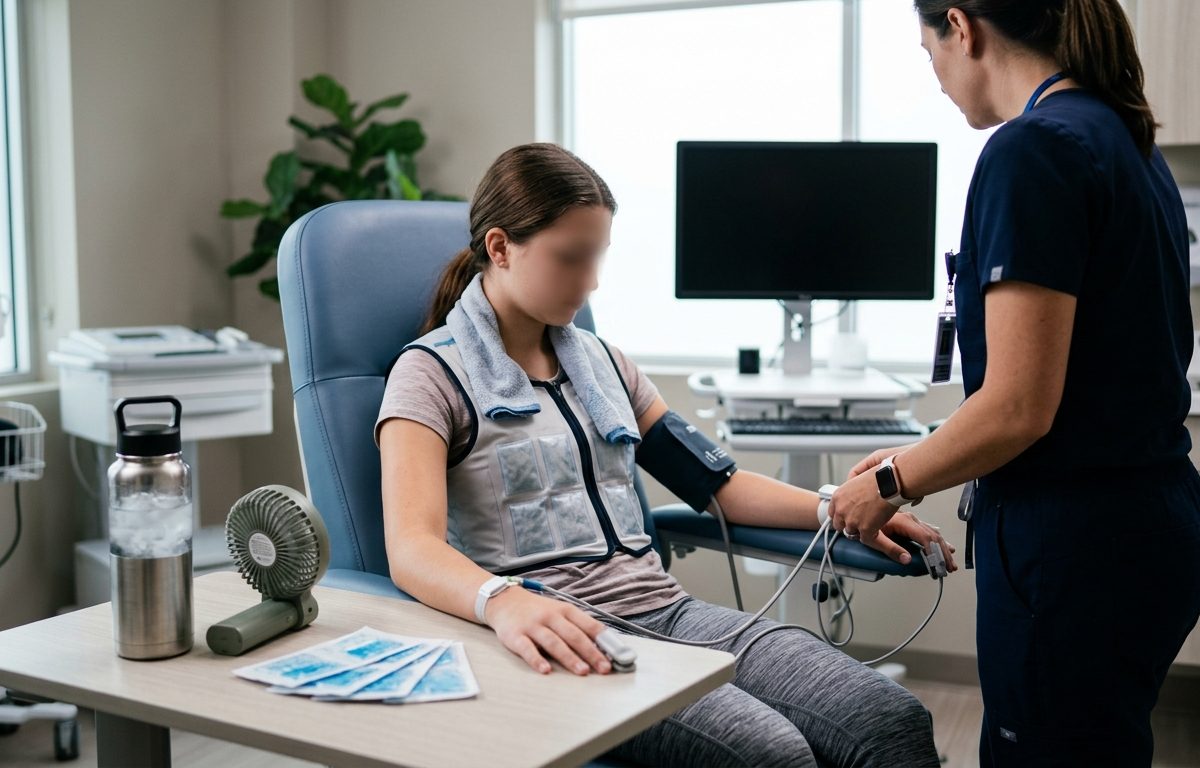
- Using cooling tools such as shade, fans, cooling towels, or cold packs
- Choosing shorter upright intervals with seated recovery breaks
- Wearing compression garments when appropriate and tolerated
- Adjusting shower temperature and duration
- Using a more structured pacing plan for summer travel, events, or exercise
These are not one-size-fits-all solutions. A person with prominent dizziness, neck tension, visual sensitivity, or post-concussion overlap may need a more tailored plan than hydration advice alone.
Why Exercise Intolerance Often Gets Worse in Warm Weather
Exercise is often part of long-term POTS management, but heat can make the process harder. Warm conditions increase circulatory demand before a workout even starts. That means the person may reach symptom threshold faster and need a different progression strategy than they would in a cool environment.
Published work on POTS management supports exercise and reconditioning as part of care, but the progression often needs to be deliberate and realistic. For some patients, that means starting with lower-load, seated, or recumbent exercise and focusing on consistency before intensity.
At the clinic level, the useful question is not, "Can this patient exercise perfectly right now?" It is, "What amount and type of loading can be tolerated while still helping regulation and recovery?" That mindset often leads to better adherence and fewer boom-and-bust crashes.
When Dizziness, Balance, or Visual Symptoms Are Also Part of the Story
Some people assume all lightheadedness in POTS is purely circulatory. Sometimes that is true. But some patients also have vestibular sensitivity, motion intolerance, visual dependence, cervicogenic contribution, or post-concussion history. Those added layers can make hot environments feel even worse because the brain has to process more sensory load while already dealing with autonomic stress.
That is one reason some cases benefit from looking beyond heart rate alone. When dizziness is triggered by head movement, busy environments, car rides, or visual stimulation, supportive rehab approaches such as vestibular therapy may be relevant. When regulation patterns are the bigger issue, broader autonomic support strategies and services such as autonomic regulation support may be part of the discussion.
The clinic's role is to organize those overlapping signals into a plan that matches the patient's real triggers and tolerance limits.
What an Evaluation in San Diego May Focus On
A focused clinic evaluation for heat-sensitive orthostatic symptoms may look at:
- Symptom triggers by environment, posture, and duration
- Tolerance for standing, walking, stairs, errands, and exercise
- Breathing pattern and exertional recovery
- Visual and vestibular symptom load
- Neck-related contributions to dizziness or autonomic stress
- Response to graded activity and recovery intervals
- Patterns around hydration, meals, sleep, and summer heat exposure
That kind of assessment helps turn broad complaints like "I crash in the heat" into a more useful picture of what specific systems are being overloaded.
When to Seek Evaluation
It is worth getting checked if hot weather consistently triggers dizziness, tachycardia, near-fainting, exercise crashes, or brain fog that disrupts work, school, driving, or basic daily life. It is also worth getting evaluated if symptoms seem to be getting worse over time or if they are now happening with mild heat exposure that used to be manageable.
For San Diego patients, this matters because symptoms may not stay limited to heat waves. Beach days, gym sessions, hot cars, warm showers, crowded events, and normal summer routines can all become symptom triggers when autonomic tolerance is low.
Practical Summer Planning for San Diego Patients
People with POTS often do better when heat exposure is planned instead of improvised. In San Diego, that may mean shifting errands to the morning, parking strategically, carrying cold fluids, avoiding long upright waits, and breaking outdoor tasks into shorter blocks. It may also mean choosing seated rest before symptoms spike instead of waiting until the body is already overwhelmed.
For active patients, beach outings, youth sports, hiking, and summer travel can all create a perfect storm of triggers: direct sun, prolonged standing, inadequate fluids, missed meals, visual motion, and delayed recovery. A structured plan can reduce that load. Examples include cooling before leaving the house, using compression when appropriate, bringing electrolyte support when medically appropriate, and setting earlier exit points before symptoms spiral.
This kind of planning is not avoidance. It is load management. Many people are able to do more when they stop treating every outing like an endurance test and start matching activity to their current autonomic tolerance.
How Progress Is Usually Measured
Improvement in heat intolerance is rarely just one number on a chart. In real life, progress often looks like being able to shower without crashing, finish a grocery trip with fewer symptoms, tolerate warm weather walks more consistently, recover faster after standing, or think more clearly during afternoon heat. Those functional markers matter because they reflect whether the nervous system is adapting in a way that improves daily life.
A rehabilitation plan may be adjusted based on symptom timing, upright tolerance, exertional recovery, dizziness triggers, and how much support a patient still needs to get through work, school, parenting, or exercise. That is especially important when symptoms fluctuate from day to day. The goal is not perfection. The goal is steadier regulation, fewer major setbacks, and more confidence in handling real environments.
Patients who have been stuck in a cycle of overdoing it on better days and crashing on hotter days often benefit from this kind of stepwise progression. It provides a clearer path than simply being told to drink more water and hope for the best.
Bottom Line
Heat intolerance in POTS is a meaningful autonomic problem, not a minor comfort issue. When hot weather makes standing, walking, thinking clearly, or getting through the day much harder, it usually reflects a real regulation and tolerance challenge.
The right plan starts with appropriate medical evaluation, then builds from there. For some patients, the next step is structured rehabilitation support aimed at autonomic performance, symptom tolerance, and better day-to-day function rather than vague trial and error.
Call (619) 344-0111 or book a free consultation to discuss whether a structured evaluation may help clarify heat-triggered orthostatic symptoms and what supportive rehabilitation options may fit.
Medical disclaimer: This article is for educational purposes only and is not medical advice, diagnosis, or a substitute for care from a licensed medical professional. Individual evaluation is important for symptoms such as fainting, chest pain, severe shortness of breath, or rapidly worsening neurologic or cardiovascular symptoms.
Frequently Asked Questions
Why does heat make POTS symptoms worse?
Heat widens blood vessels so the body can cool itself. In POTS, that can increase blood pooling and make it harder to maintain stable circulation while standing, which can worsen dizziness and rapid heart rate.
Can heat intolerance happen even when lab work looks normal?
Yes. Normal routine lab work does not rule out autonomic or orthostatic regulation problems. Heat intolerance can still fit a broader POTS or dysautonomia pattern, although other causes should be reviewed medically.
What helps with dizziness and rapid heart rate in hot weather?
Support may include hydration, cooling strategies, compression, pacing, and a structured activity plan when medically appropriate. Some patients also need broader vestibular or autonomic rehabilitation support.
When should someone in San Diego get evaluated for heat-triggered orthostatic symptoms?
If symptoms interfere with normal daily activities, outdoor tolerance, work, driving, or exercise, or if they seem to be getting worse, a more complete evaluation is reasonable.
References
- Benarroch EE. Postural tachycardia syndrome: a heterogeneous and multifactorial disorder. Mayo Clinic Proceedings. 2012. https://pubmed.ncbi.nlm.nih.gov/22677073/
- Raj SR, Guzman JC, Harvey P, et al. Canadian Cardiovascular Society position statement on postural orthostatic tachycardia syndrome and related disorders. Canadian Journal of Cardiology. 2020. https://pubmed.ncbi.nlm.nih.gov/31980276/
- Wells R, Spurrier AJ, Linz D, et al. Postural tachycardia syndrome: current perspectives. Vascular Health and Risk Management. 2018. https://pmc.ncbi.nlm.nih.gov/articles/PMC5778345/
- Fu Q, Levine BD. Exercise in the postural orthostatic tachycardia syndrome. Autonomic Neuroscience. 2015. https://pubmed.ncbi.nlm.nih.gov/25433901/
- Arnold AC, Ng J, Raj SR. Management of postural tachycardia syndrome, inappropriate sinus tachycardia and vasovagal syncope. Autonomic Neuroscience. 2018. https://pubmed.ncbi.nlm.nih.gov/30477878/
Not sure what is driving your symptoms?
Talk with our Functional Neurology Trained team on a free phone consultation. We will tell you honestly whether we can help.