Functional Neurology Specialist San Diego: What an Evaluation May Include
Free phone consultation with our San Diego functional neurology team. No obligation.
When symptoms such as dizziness, balance problems, visual motion sensitivity, headaches, brain fog, or lingering post-concussion issues do not fit neatly into one simple explanation, many patients start looking for a broader neurologic workup. That is often where interest in functional neurology begins.
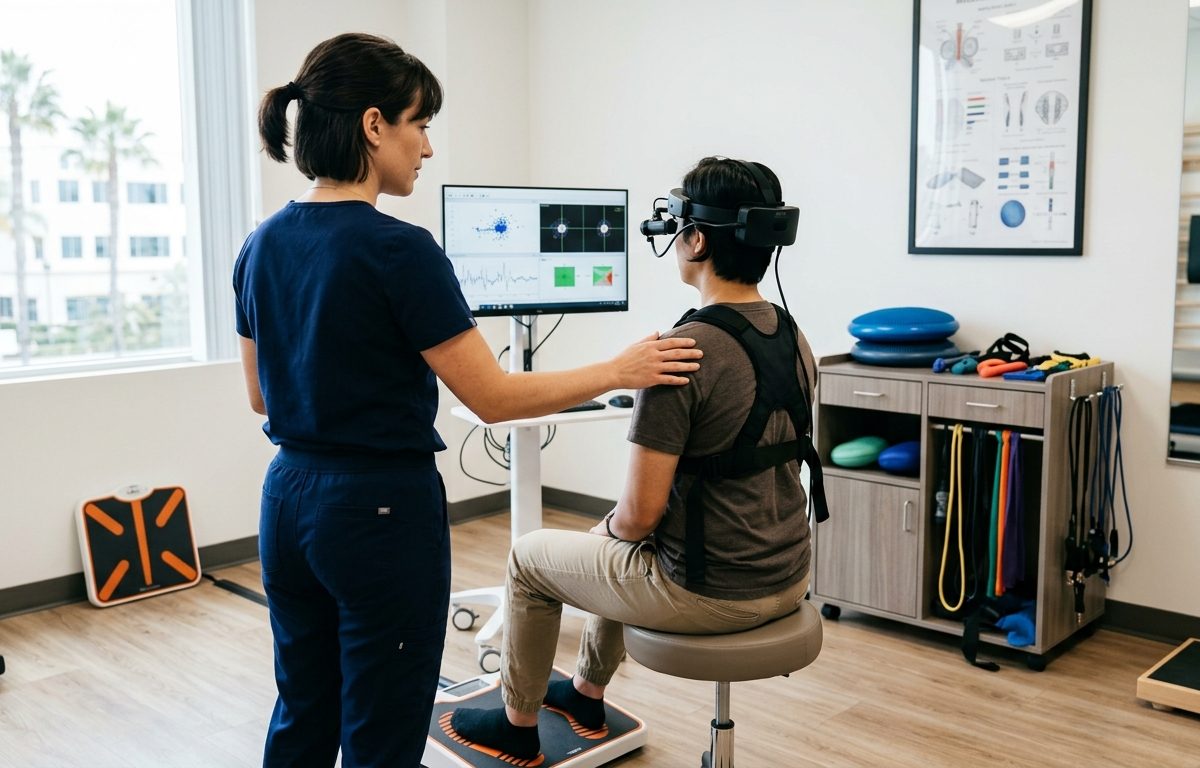
At San Diego Chiropractic Neurology, functional neurology is used as a conservative, rehabilitation-focused framework for understanding how the nervous system is performing. Instead of looking only at a diagnosis label, the evaluation looks at how systems such as balance, eye movements, coordination, gait, sensory processing, and symptom tolerance are functioning together. That information can help guide a non-invasive plan for neurologic rehabilitation when appropriate.
For some patients, the main concern is dizziness when turning, walking through busy spaces, or getting up quickly. For others, it is headaches, motion sensitivity, post-concussion symptoms, or a sense that the brain and body are not communicating efficiently. A detailed functional neurology assessment can help organize those symptoms into a more useful clinical picture while also identifying when a patient should be directed toward another level of care.
Research in vestibular and neurorehabilitation literature supports the idea that persistent symptoms often involve overlapping systems rather than a single isolated problem. Vestibular rehabilitation guidelines, for example, emphasize matching care to specific impairments in gaze stability, balance, motion sensitivity, and functional mobility rather than assuming every dizzy patient needs the same approach. Concussion rehabilitation literature also supports multi-domain assessment because symptoms may involve vestibular, oculomotor, cervical, autonomic, and exercise-tolerance components at the same time.
What Functional Neurology Means in Practice
Functional neurology is not just a buzzword for complicated cases. In practice, it refers to a structured way of examining how the nervous system is working and where performance breakdowns may be occurring. The focus is often on function rather than only on static imaging or broad symptom categories.
That means a patient may be assessed for eye tracking, gaze stabilization, balance strategy, head movement tolerance, gait changes, visual dependence, neck-related symptom triggers, coordination, reaction to sensory input, and overall activity tolerance. These findings can matter because people with dizziness, migraine-related symptoms, or post-concussion complaints often have impairment patterns that respond better when rehabilitation is tailored to the specific domain involved.
In a clinic setting, this model can be useful for patients who have already been told that routine scans are normal but still do not feel normal. A normal MRI does not automatically mean the nervous system is functioning efficiently during real-world movement, visual tasks, work demands, or exercise.
Who May Look for a Functional Neurology Evaluation
Patients searching for a functional neurology clinic in San Diego are often dealing with one or more of the following:
- Persistent dizziness or balance problems
- Motion sensitivity in stores, traffic, or crowded spaces
- Headaches with visual or vestibular triggers
- Brain fog or symptom flare-ups after concussion
- Poor tolerance for rapid head movement or screen time
- Visual discomfort, tracking difficulty, or coordination changes
- Symptoms that worsen with complex movement even after basic medical workup
These issues do not always point to the same cause. One patient may have a vestibular pattern. Another may show more oculomotor inefficiency. Another may have a strong cervical contribution, while someone else may have post-concussion exercise intolerance or sensory overload. The value of a good evaluation is that it helps separate these patterns instead of treating all symptoms as interchangeable.
What Happens During the Evaluation
A functional neurology evaluation usually starts with a detailed history. The clinician needs to know when symptoms started, what makes them worse, how they affect work or daily life, whether there was an injury, whether symptoms are episodic or constant, and what testing or care has already been done.
From there, the examination may include neurologic and rehabilitation-focused measures such as:
- Eye movement testing, including tracking, saccades, and gaze stability
- Balance and postural control assessment
- Gait observation and turning mechanics
- Head movement tolerance and motion sensitivity screening
- Coordination tasks and side-to-side asymmetry checks
- Cervical contribution screening when neck symptoms are relevant
- Activity or exertion tolerance assessment when symptom persistence suggests limited physiologic recovery
For patients with dizziness, this may overlap with the same domains emphasized in modern vestibular rehabilitation guidelines. For patients with concussion symptoms, the evaluation may also consider how vestibular, visual, cognitive, and exercise-tolerance findings fit together. The goal is not to force every patient into one diagnosis bucket. The goal is to understand which systems are most involved so the next step is more targeted.
How This Differs From Standard Neurology
Standard neurology and functional neurology are not the same thing, but they do not have to be framed as opposites. Standard neurology is essential for diagnosing and managing many neurologic diseases, ruling out urgent causes, interpreting imaging, and handling medication-based or hospital-based needs. Functional neurology in a rehabilitation clinic is usually narrower and more performance-focused.
In other words, one model asks, "What diagnosis explains this?" Another asks, "How is the nervous system functioning during movement, visual tasks, balance, and daily activity, and what can be rehabilitated conservatively?" Many patients need both layers at different points.
That distinction matters because it keeps expectations realistic. A functional neurology clinic is not a replacement for emergency care, stroke workup, seizure management, or complex medical neurology. It may, however, be a useful setting for patients whose symptoms require a detailed functional assessment and a structured rehabilitation plan.
Why Dizziness, Migraine, and Concussion Symptoms Often Overlap
One reason the functional neurology model resonates with patients is that their symptoms often cross categories. A person with migraine may also have dizziness. A person with whiplash may also have visual motion sensitivity. A person after concussion may have balance problems, headaches, neck pain, fatigue, and poor screen tolerance all at once.
That overlap is not unusual. Vestibular and concussion rehabilitation research shows that symptoms can come from multiple interacting systems, including vestibular pathways, oculomotor control, cervical input, autonomic regulation, and movement tolerance. When those systems are assessed together, the care plan can be better matched to the actual impairment pattern.
Patients who want more information about related care pathways can also review the clinic's resources on vestibular therapy, neuro-visual rehabilitation, and common conditions such as concussion and vertigo.
What a Care Plan May Look Like After the Exam
If the evaluation shows that rehabilitation is appropriate, the next step is usually a targeted plan based on the systems that tested poorly. That may include gaze stabilization work, balance progression, graded movement exposure, visual and vestibular integration drills, coordination work, cervical support strategies, or carefully progressed exertion when tolerance is low.
The key is that the plan should follow the exam findings. Good rehabilitation is not random. It should reflect what provokes symptoms, what compensations are present, what the patient can currently tolerate, and what functional goals matter most.
For example, a patient who gets dizzy in grocery stores may need visual motion desensitization and sensory integration work. A patient who struggles after concussion may need a more layered plan that addresses balance, eye movements, graded activity, and symptom pacing. A patient with chronic headaches and movement sensitivity may need the evaluation to determine whether vestibular, visual, cervical, or multi-domain factors are playing the biggest role.
Why Local Patients Ask About Functional Neurology in San Diego
In San Diego, many patients are active, commute regularly, work on screens for long hours, and want to get back to driving, exercise, work, and family routines without worsening symptoms. That makes function especially important. Patients are not only asking what the diagnosis is. They are asking why they still cannot tolerate normal life.
A clinic-based functional neurology evaluation can be useful when the goal is to connect symptoms to real-world tasks such as turning the head while walking, shopping in visually busy spaces, using a computer, tolerating motion, or building back exercise capacity in daily life. When rehabilitation is personalized to those limitations, care is often easier to understand and follow.
When to Seek a More Complete Evaluation
It may be reasonable to seek a more complete functional evaluation when symptoms have lingered, when prior care has not explained the pattern clearly, or when daily activities still trigger dizziness, instability, headaches, or neurologic discomfort. It can also be helpful when a patient wants a conservative second look before defaulting to a passive wait-and-see approach.
That said, red-flag symptoms still require the right medical pathway. Sudden severe neurologic change, stroke-like symptoms, fainting with injury, acute severe headache, chest pain, or rapidly worsening deficits need urgent medical attention. Functional rehabilitation belongs in the right clinical lane and after appropriate medical screening when necessary.
What Patients Should Ask Before Booking
Before scheduling a visit, patients should ask practical questions:
- Will the evaluation include balance, eye movement, and movement-tolerance testing?
- How will findings be explained in plain language?
- Will the care plan be tied directly to the exam results?
- How does the clinic handle dizziness, concussion, migraine, and overlapping symptom patterns?
- When does the clinic refer out for other medical evaluation?
These questions help separate a meaningful neurologic rehabilitation assessment from a generic visit that never really explains why symptoms are persisting.
Final Takeaway
Searching for a functional neurology specialist in San Diego usually means a patient wants more than a label. They want a clearer explanation for how their nervous system is functioning and what conservative next steps may help them move forward safely.
When done well, a functional neurology evaluation can organize complex symptoms into specific patterns involving balance, visual processing, vestibular function, coordination, motion tolerance, and neurologic rehabilitation needs. That structure can make persistent symptoms feel less vague and make treatment planning more precise.
Call (619) 344-0111 or book a free consultation.
Medical disclaimer: This article is for educational purposes only and does not replace medical advice, diagnosis, or emergency care. Individual symptoms require personalized evaluation by a qualified healthcare professional.
Frequently Asked Questions
What is a functional neurology specialist?
In a rehabilitation setting, this usually refers to a clinician who assesses how neurologic systems such as balance, eye movements, coordination, and movement tolerance are functioning, then uses those findings to guide conservative care planning.
What symptoms might lead someone to seek a functional neurology evaluation?
Common reasons include persistent dizziness, balance problems, headaches with motion sensitivity, post-concussion symptoms, visual discomfort, brain fog, and difficulty tolerating everyday movement or screen-based tasks.
Is functional neurology the same as standard neurology?
No. Standard neurology is focused on medical diagnosis and disease management. Functional neurology in a clinic setting is generally more focused on performance testing and rehabilitation planning for persistent symptoms.
What happens during a functional neurology exam?
The visit may include history review, balance testing, gait observation, eye movement screening, head-motion tolerance checks, coordination testing, and review of how symptoms respond to movement and sensory input.
How is a care plan built after the evaluation?
The plan should be based on the deficits and triggers found during the exam. It may involve vestibular, visual, coordination, movement-tolerance, or graded rehabilitation work depending on the pattern identified.
References
- Hall CD, Herdman SJ, Whitney SL, et al. Vestibular Rehabilitation for Peripheral Vestibular Hypofunction: An Updated Clinical Practice Guideline. J Neurol Phys Ther. 2022. https://pubmed.ncbi.nlm.nih.gov/34864777/
- Mucha A, Collins MW, Elbin RJ, et al. A brief vestibular/ocular motor screening assessment to evaluate concussions: preliminary findings. Am J Sports Med. 2014. https://pubmed.ncbi.nlm.nih.gov/24769665/
- Kleffelgaard I, Soberg HL, Tamber AL, Bruusgaard KA, Pripp AH, Sandhaug M. Vestibular rehabilitation after traumatic brain injury: case series and review-backed rationale for multi-domain rehabilitation. https://pubmed.ncbi.nlm.nih.gov/?term=vestibular+rehabilitation+traumatic+brain+injury+systematic+review
Not sure what is driving your symptoms?
Talk with our Functional Neurology Trained team on a free phone consultation. We will tell you honestly whether we can help.