Functional Neurology for Concussion San Diego
Free phone consultation with our San Diego functional neurology team. No obligation.
A concussion can leave someone with much more than a headache. Some people deal with dizziness in grocery stores, light sensitivity, brain fog, neck discomfort, reading fatigue, or a sense that normal activity suddenly feels harder than it should. When symptoms linger or become more noticeable during work, school, exercise, or driving, many patients start looking for a more complete explanation of what is going on.
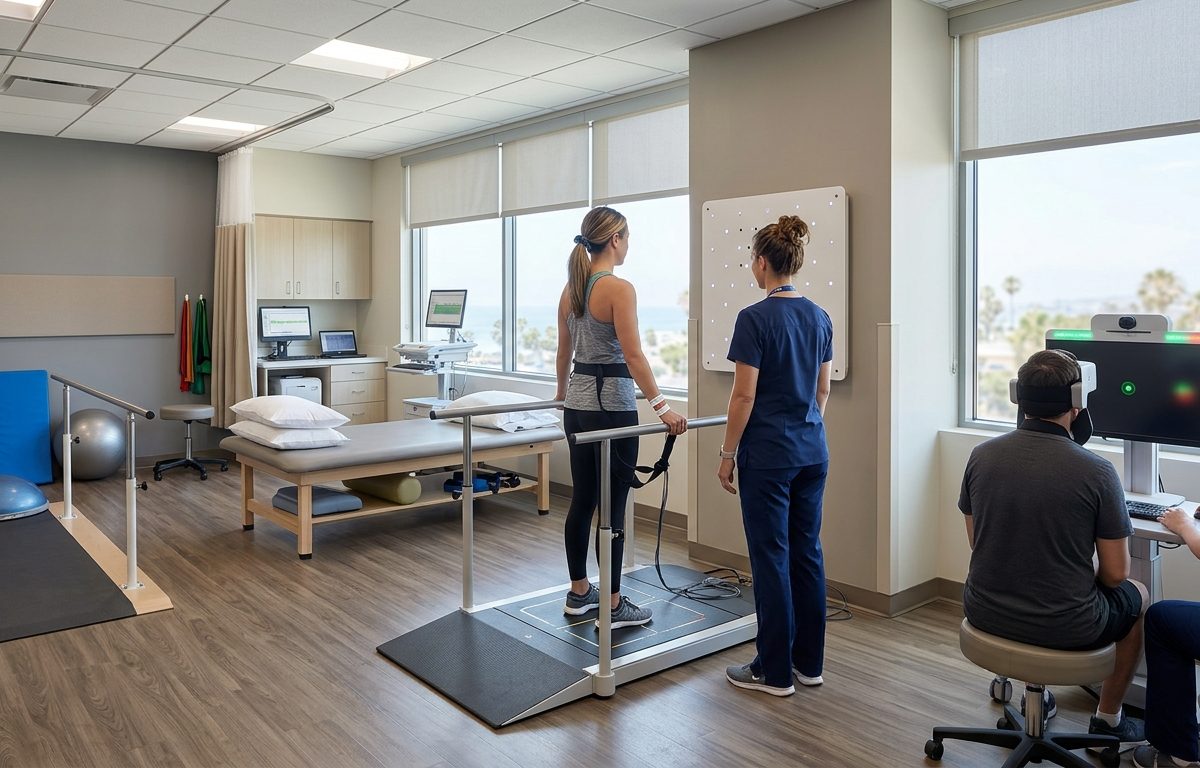
That is where functional neurology for concussion San Diego becomes relevant. In a rehabilitation setting, functional neurology is less about one label and more about how the nervous system is performing in real life. A clinic may look at balance, eye tracking, head movement tolerance, neck-related input, coordination, and symptom triggers to better understand why recovery feels stalled. This type of evaluation does not replace emergency care, imaging decisions, or conventional medical oversight. Instead, it can add a structured rehabilitation lens when symptoms continue to interfere with daily life.
At San Diego Chiropractic Neurology, the focus is on non-invasive evaluation and rehabilitation planning. For some patients, that means identifying vestibular issues. For others, it may mean visual motion sensitivity, autonomic stress responses, neck-related contributors, or reduced tolerance for graded activity. The goal is not to promise a quick fix. The goal is to understand what systems may be contributing to symptoms and what kind of measured next steps may make sense.
What functional neurology means in concussion care
Functional neurology in concussion care usually refers to a clinical framework that looks at how the brain and nervous system are functioning across multiple domains rather than focusing on only one symptom. After a concussion, two people can have very different recovery patterns. One may mainly struggle with headaches and reading. Another may feel fine at rest but become dizzy during exercise or overwhelmed in busy visual environments. That variability is one reason a symptom-driven evaluation matters.
The Centers for Disease Control and Prevention notes that concussion symptoms can affect thinking, balance, sleep, mood, and sensory processing, and those symptoms do not always appear all at once. A rehab-focused evaluation can help sort out which symptom clusters seem most important. In practice, that may include looking at ocular-motor control, postural stability, gait, cervical contribution, exertional response, and tolerance for visual complexity.
In other words, the question is not just, “Was there a concussion?” The question becomes, “What is still not regulating well, and what is the safest way to support recovery?” That is often the value patients are looking for when they search for concussion care in San Diego.
Why symptoms can persist after the initial injury
Many people improve within days to weeks, especially when early management is appropriate. But recovery is not always linear. Symptoms can linger because concussion is not just one mechanism. A patient may have overlapping vestibular dysfunction, visual strain, neck-related sensory mismatch, autonomic stress responses, poor activity pacing, sleep disruption, or headache-related sensitivity. If those layers are not identified, the person may keep trying the wrong strategy.
For example, complete inactivity for too long can leave some patients more deconditioned and more reactive to normal activity. The CDC now emphasizes a short period of relative rest followed by a gradual return to activity when medically appropriate, rather than prolonged strict rest. That matters because many patients arrive thinking they must either push through symptoms or avoid activity altogether. In reality, successful concussion rehabilitation often lives in the middle: not too much, not too little, and adjusted based on response.
Persistent symptoms can also be very context specific. Someone may feel normal sitting quietly but become symptomatic while scrolling, working under fluorescent lights, turning the head quickly, or walking through a crowded store. That pattern often suggests the need for more detailed testing rather than a generic home program.
What a functional-neurology-informed concussion evaluation may include
A thorough evaluation typically starts with the history: how the injury happened, what symptoms started right away, which ones showed up later, what makes them worse, and what has or has not helped. From there, the exam may look at several systems that commonly influence post-concussion recovery.
Eye movements and visual tolerance
Reading, scrolling, driving, and screen use all depend on stable visual processing. After concussion, some patients develop problems with tracking, convergence, fixation, or shifting gaze between targets. That can show up as blurred vision, eye strain, motion sensitivity, or headaches during concentration. Targeted visual assessment helps determine whether visual symptoms appear to be a meaningful part of the picture.
Vestibular and balance function
Dizziness after concussion is common, but it is not all the same. Some people feel rocking or unsteadiness. Others feel symptoms mainly with head turns, busy environments, or position changes. Vestibular testing may assess gaze stability, balance strategies, symptom response to head movement, and visual-vestibular interaction. Evidence reviews suggest vestibular rehabilitation can improve dizziness and balance outcomes in selected concussion patients, though the program should be individualized to the person rather than copied from a standard template.
Neck-related contribution
The neck can matter more than many patients realize. Cervical dysfunction may contribute to headache, dizziness, altered position sense, and difficulty tolerating movement. In some patients, the neck and vestibular systems create overlapping symptoms. That is one reason combined cervicovestibular rehabilitation has been studied in concussion recovery.
Activity and exertion tolerance
Some patients feel reasonably well until heart rate rises or sustained effort builds. A graded evaluation of exertion tolerance can help clarify whether symptom flares relate to pacing, autonomic regulation, conditioning, or task load. This is especially useful when someone says, “I’m okay until I try to work out,” or “My symptoms spike later in the day.”
Cognitive load and sensory triggers
Brain fog is often described as a mental slowdown, but it may be tied to sleep, visual effort, headache, overload, or inefficient pacing. Busy visual environments, multitasking, and prolonged concentration can all raise symptom load. A functional evaluation can help identify whether the trigger is primarily visual, vestibular, cognitive, or mixed.
How rehabilitation may be planned after the exam
Once the exam clarifies the main drivers, rehabilitation is usually built around progressive exposure and measured dosage. That may include balance drills, gaze stabilization, visual tracking work, neck-related treatment, graded aerobic activity, or task-specific strategies for work and daily life. The key is matching the exercise or exposure to the patient’s current tolerance.
This is where patient expectations matter. Rehabilitation is not usually about doing the hardest exercise possible. It is about doing the right amount consistently enough for the nervous system to adapt without repeated flare cycles. A patient whose symptoms worsen in stores may not start in a store. They may start with simpler visual challenges and build from there. Someone who cannot tolerate full workouts may begin with lower-level aerobic exposure and progress based on response.
For patients with ongoing dizziness, the clinic may also coordinate around services such as vestibular therapy, neuro-visual rehabilitation, and broader non-invasive rehabilitation services when those findings are relevant. That kind of multimodal planning often makes more sense than assuming one symptom equals one treatment.
How this fits alongside conventional medical care
Concussion rehabilitation should be framed correctly. Emergency evaluation is still essential when red flags are present, such as worsening neurologic status, repeated vomiting, severe confusion, or other danger signs. Imaging decisions, medication management, specialty referrals, and broader medical oversight still belong in the conventional care layer when indicated.
A functional-neurology-informed approach fits later in the pathway when the question is how to evaluate performance across systems and guide non-invasive rehabilitation. That distinction matters. The clinic’s role is to assess function, tolerance, and symptom-provoking patterns, then support recovery with rehabilitation strategies that are matched to the findings. It is not to replace acute medical decision-making or claim that every persistent symptom has one simple answer.
Who may benefit from a more detailed concussion rehabilitation evaluation
A deeper evaluation may make sense when symptoms have lasted longer than expected, when progress has stalled, or when the symptom pattern is unusually specific. Common examples include:
- dizziness with head movement or busy visual environments
- difficulty reading, screen intolerance, or eye strain
- balance problems despite a normal basic exam elsewhere
- headaches that worsen with cognitive load or movement
- fatigue or brain fog that increases during the day
- exercise intolerance or symptom spikes with activity
- neck discomfort that seems tied to dizziness or headache
These patterns do not automatically mean the same cause, but they do suggest that a simple rest-only approach may be incomplete. For many patients in San Diego, the question is less about whether symptoms are “real” and more about whether anyone has carefully mapped out the triggers and contributing systems.
What patients in San Diego often want to know
Patients often ask whether functional neurology means a completely different kind of concussion care. Usually, the better answer is that it is a more detailed rehabilitation perspective. It asks how the person functions in motion, in visual space, under cognitive demand, and during progressive activity. That can be valuable for students, professionals, athletes, or anyone trying to return to normal routines safely.
Patients also want to know whether recovery can still improve after weeks or months. In many cases, the answer is yes, especially if the main symptom drivers have not yet been clearly identified. That does not mean every symptom disappears on the same timeline. It means there may still be meaningful room to improve how the person tolerates reading, motion, screens, exercise, or daily activity.
San Diego patients searching for a rehabilitation-focused option are often looking for clarity: what is being measured, what seems to be provoking symptoms, and what the next phase of care should look like. A structured exam can help answer those questions in a way that is more actionable than simply saying to wait longer.
Why evidence quality and individualized care both matter
Concussion research supports the use of targeted rehabilitation, especially for vestibular and related symptom patterns, but it also shows that treatment should be individualized. A systematic review on vestibular rehabilitation after concussion found overall benefit while also noting variability in protocols and outcomes. That is important because it argues against one-size-fits-all care. Another commonly cited line of research suggests that visual and vestibular symptoms deserve specific assessment because they can meaningfully influence recovery and daily function.
For patients, the practical takeaway is simple: the best program is the one that matches the actual findings. If symptoms are mainly visual, the plan should reflect that. If they are mainly balance or motion related, the plan should reflect that. If the biggest issue is pacing and exertion tolerance, that should shape the program. Individualization is not a marketing phrase here. It is the reason the exam matters.
When to seek urgent medical attention
Some symptoms are not appropriate for routine outpatient rehabilitation alone. Emergency care is important for danger signs such as worsening confusion, inability to stay awake, seizures, repeated vomiting, slurred speech, weakness, or rapidly worsening neurologic symptoms. A rehab-focused clinic can be part of the recovery pathway, but red-flag symptoms belong in the emergency or urgent medical layer first.
What to expect from the next step
If persistent symptoms are interfering with work, school, exercise, driving, or normal daily routines, the next step is often a more structured evaluation rather than more guessing. A thorough rehab-focused assessment can help determine whether vestibular, visual, cervical, exertional, or sensory-load factors appear to be most relevant. From there, the plan can be tailored to the person’s current tolerance and goals.
For patients exploring functional neurology for concussion San Diego, the most useful expectation is not a miracle promise. It is a clearer map. When the right systems are identified, the path back to normal activity often becomes more practical and less frustrating.
Call (619) 344-0111 or book a free consultation.
Medical disclaimer: This article is for educational purposes only and is not medical advice, diagnosis, or treatment. Concussion symptoms and recovery timelines vary. Seek emergency care for severe or worsening neurologic symptoms, and consult a qualified healthcare professional for personal medical guidance.
Frequently Asked Questions
What is functional neurology for concussion?
It is a rehabilitation-focused way of evaluating how the nervous system is functioning after concussion. The exam may look at balance, eye movements, visual tolerance, neck contribution, and activity tolerance to help guide a more targeted care plan.
When should someone seek a concussion rehabilitation evaluation?
It may be helpful when symptoms persist longer than expected, when progress has stalled, or when dizziness, visual strain, headaches, or brain fog keep showing up during daily activity.
Can vestibular or vision rehabilitation help after concussion?
In selected patients, targeted vestibular or visual rehabilitation may help reduce dizziness, improve balance, and support better tolerance for reading, motion, or visually busy environments. The best plan depends on the findings of the evaluation.
How long does concussion rehabilitation take?
Recovery timelines vary widely. Some people improve quickly, while others need a more gradual plan over a longer period. Program length depends on symptom severity, the systems involved, and how consistently the patient tolerates progression.
References
- Centers for Disease Control and Prevention. Signs and Symptoms of Concussion. https://www.cdc.gov/heads-up/signs-symptoms/index.html
- Centers for Disease Control and Prevention. What to Do After a Mild TBI or Concussion. https://www.cdc.gov/heads-up/guidelines/recovery-from-concussion.html
- Lumba-Brown A, et al. Effectiveness of Vestibular Rehabilitation after Concussion: A Systematic Review of Randomised Controlled Trials. 2023. https://pubmed.ncbi.nlm.nih.gov/36611549/
- Schneider KJ, et al. Cervicovestibular rehabilitation in sport-related concussion: a randomised controlled trial. Br J Sports Med. 2014. https://pubmed.ncbi.nlm.nih.gov/24855132/
- Master CL, et al. Vision Diagnoses Are Common After Concussion in Adolescents. Clin Pediatr (Phila). 2016. https://pubmed.ncbi.nlm.nih.gov/27655831/
Not sure what is driving your symptoms?
Talk with our Functional Neurology Trained team on a free phone consultation. We will tell you honestly whether we can help.