Fainting When Standing Specialist San Diego: What Evaluation Should Include
Free phone consultation with our San Diego functional neurology team. No obligation.
Feeling faint when you stand up can be unsettling. For some people, it is a brief wave of lightheadedness. For others, it becomes near-fainting, sudden weakness, tunnel vision, or a full blackout. When these episodes keep happening, the biggest question is usually simple: who should evaluate this, and what should happen next?
For anyone searching for a fainting when standing specialist San Diego, the first step is not choosing a trendy label. It is making sure the symptom pattern is being sorted safely. Fainting after standing can happen for many reasons, including dehydration, low blood pressure, medication effects, heart rhythm concerns, anemia, post-viral deconditioning, autonomic dysfunction, or postural orthostatic tachycardia syndrome (POTS). That is why a careful evaluation matters more than guessing from symptoms alone.
At San Diego Chiropractic Neurology, the focus is on non-invasive neurologic and functional assessment for patients dealing with dizziness, poor upright tolerance, autonomic symptoms, concussion overlap, and persistent regulation problems. That role is different from emergency or cardiology care. Serious medical causes need to be ruled out first. When they have been ruled out, a rehabilitation-based approach may help some patients improve tolerance, function, and daily stability.
Why fainting when standing happens
Standing up changes how blood moves through the body. Gravity shifts blood away from the upper body and brain. Normally, the nervous system responds quickly by tightening blood vessels, adjusting heart rate, and helping maintain blood pressure. If that response is delayed, weak, or overwhelmed, symptoms can appear within seconds or minutes of standing.
Common symptoms include:
- Lightheadedness when rising
- Blurred vision or tunnel vision
- Heart pounding or racing
- Nausea
- Weakness or shakiness
- Shortness of breath
- Brain fog
- Near-fainting or full fainting
Those symptoms do not automatically mean POTS. They can also appear with orthostatic hypotension, reflex syncope, volume depletion, medication side effects, prolonged bed rest, illness recovery, vestibular problems, and other conditions. That is why the history, exam, and orthostatic measurements matter so much.
When fainting when standing is more urgent
Some episodes are more concerning than others. Urgent medical assessment is especially important if fainting happens with chest pain, shortness of breath, injury, new neurologic symptoms, palpitations with collapse, exertion, significant blood loss, or a strong family history of sudden cardiac problems. Recurrent blackouts that occur without warning also deserve prompt medical evaluation.
In those situations, the right starting point may be emergency care, primary care, or cardiology rather than a rehabilitation clinic. Safety comes first.
What kind of doctor helps with fainting when standing?
The right answer depends on the pattern. Some patients need primary care workup first. Some need cardiology to assess rhythm or blood pressure issues. Others need neurology, especially when fainting overlaps with concussion history, migraines, visual symptoms, dizziness, or nervous system regulation problems.
For patients in San Diego whose episodes seem tied to upright intolerance, autonomic symptoms, or lingering post-concussion or post-viral problems, a more complete neurologic and autonomic-focused assessment may help clarify what is driving the symptoms. That does not replace conventional care. It builds on it.
A useful way to think about it is in two layers:
- Conventional medical layer: rule out dangerous or unstable causes such as cardiac issues, severe orthostatic hypotension, metabolic problems, anemia, medication complications, or structural disease.
- Functional neurology and rehabilitation layer: once major danger is addressed, assess how the brain, autonomic nervous system, vision, balance, neck input, and graded upright tolerance are performing in daily life.
Is fainting when standing the same as POTS?
No. POTS is one possible explanation, but it is not the only one. POTS is generally defined by chronic orthostatic symptoms together with an excessive rise in heart rate on standing, without orthostatic hypotension. Some people with POTS feel faint, but many do not fully pass out. Some people who do faint when standing have a different condition entirely.
That distinction matters. If every case of standing-related faintness is casually called POTS, the real cause may be missed. Good evaluation separates:
- Orthostatic hypotension
- Reflex or vasovagal syncope
- POTS and orthostatic intolerance
- Medication-related symptoms
- Post-viral or deconditioning-related intolerance
- Vestibular and visual overlap symptoms
- Cardiac or other systemic contributors
What a thorough evaluation should include
If someone is looking for a fainting when standing specialist in San Diego, the evaluation should be more than a quick symptom checklist. A better workup usually includes the following:
1. Symptom timeline and trigger review
When do symptoms happen? Right after standing, after several minutes upright, after heat exposure, after meals, during stress, or after illness? Are symptoms worse in the morning? Do they improve with lying down, hydration, or compression? History often provides the first major clue.
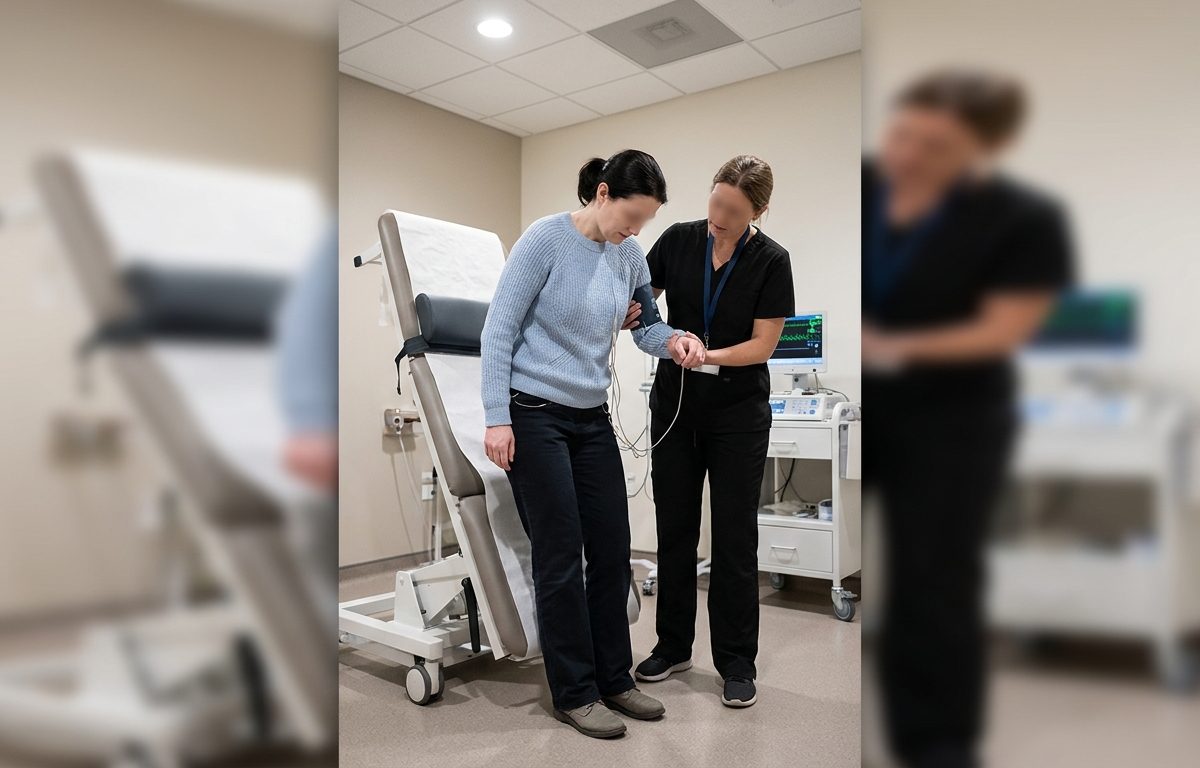
2. Orthostatic vital signs
Blood pressure and heart rate should be looked at in relation to posture. That can help identify excessive heart-rate rise, blood-pressure drop, or mixed patterns that fit orthostatic intolerance better than general dizziness.
3. Medication and health review
Diuretics, stimulants, blood pressure medications, under-fueling, poor sleep, anemia, viral illness, and hormonal factors can all affect upright tolerance. This step helps keep the workup grounded in the whole patient instead of a single label.
4. Cardiac screening when appropriate
Depending on the story, an ECG or cardiology referral may be appropriate. Patients with higher-risk features should not skip this layer.
5. Neurologic, visual, and vestibular assessment
Some patients with upright intolerance also have concussion history, motion sensitivity, visual overload, neck-related dizziness, or poor sensory integration. These factors can make standing feel worse even when the main issue is not purely vestibular. Looking at eye movements, balance, neck contribution, and motion tolerance can help identify overlapping drivers.
6. Functional tolerance assessment
For patients with persistent symptoms, it helps to see how the nervous system responds to position change, movement, visual challenge, and gradually increased activity. This is especially relevant when basic testing has not fully explained the day-to-day disability.
How autonomic symptoms are commonly managed in conventional care
For orthostatic intolerance or POTS-like symptoms, conventional management often starts with nonpharmacologic strategies. These can include fluid intake, salt guidance when medically appropriate, compression garments, pacing, trigger reduction, sleep support, and graded exercise or reconditioning. Medication decisions, when needed, belong with the appropriate prescribing clinician.
This is important because patients sometimes assume they need one single "specialist" to solve everything. In reality, good care is often layered. The safest path may involve medical rule-out, symptom-specific referral, and rehabilitation support working together.
Where functional neurology and rehabilitation may fit
Once unstable or dangerous causes have been addressed, some patients still struggle with poor upright tolerance, dizziness, brain fog, visual discomfort, or symptom flares in busy environments. In those cases, the clinic's role is not to make disease-outcome claims for POTS or any other condition. The role is to assess and support neurologic regulation, sensory integration, autonomic tolerance, and functional recovery.
That may include a closer look at:
- Visual dependence or motion sensitivity
- Vestibular contribution to symptom amplification
- Neck-related sensory mismatch
- Post-concussion autonomic regulation issues
- Exercise intolerance and pacing
- Graded tolerance to upright posture and activity
For some people, that rehabilitation layer is the missing step after major medical danger has already been ruled out. It may be particularly relevant for patients who also relate to topics like POTS symptoms, post-concussion problems, or chronic dizziness patterns connected to vertigo and balance disorders.
How this differs from ordinary dizziness
Not every dizzy patient is having orthostatic intolerance, and not every orthostatic patient describes true spinning vertigo. That is one reason symptom language gets confusing. Some patients say "dizzy" when they really mean faint, foggy, or weak. Others have a mix of vestibular and autonomic symptoms at the same time.
A better evaluation separates:
- Vertigo: spinning or motion illusion
- Lightheadedness: feeling as if you may pass out
- Presyncope: near-fainting symptoms
- Imbalance: unsteady walking or poor spatial control
That distinction helps guide whether the next step should be vestibular therapy, autonomic evaluation, medical referral, or a combination.
Who may benefit from a deeper workup
A more detailed fainting-when-standing workup may be useful for people who:
- Feel faint or weak every time they stand
- Have repeated near-blackout episodes with normal basic labs
- Notice symptoms after COVID, viral illness, concussion, or prolonged inactivity
- Also experience racing heart, fatigue, brain fog, or exercise intolerance
- Have persistent symptoms despite hydration and basic advice
- Need help understanding whether symptoms fit POTS, orthostatic intolerance, vestibular overlap, or something else
What patients in San Diego should expect
Local patients often want to know whether they should keep bouncing between providers or whether there is a more organized path. In San Diego, the best approach is usually coordinated rather than fragmented. Start with the safety layer. Rule out what must be ruled out. Then, if symptoms remain, look more closely at how the autonomic and neurologic systems are handling upright stress in real life.
That process is often more helpful than chasing a label too early. Some patients do eventually meet criteria for POTS. Some do not. Either way, the goal is to understand what is limiting function and what kind of support may improve tolerance.
When to seek help
If you are repeatedly feeling faint when you stand up, it is worth getting checked rather than guessing. Episodes that are recurrent, worsening, or interfering with work, driving, exercise, or daily life deserve attention. If symptoms are paired with chest pain, collapse during exertion, injury, or significant shortness of breath, seek urgent medical care right away.
If dangerous causes have already been ruled out and symptoms still keep you from functioning normally, a structured assessment of autonomic, vestibular, visual, and neurologic contributors may help clarify the next step.
FAQ
What kind of doctor should I see if I faint when I stand up?
That depends on the pattern and severity. Primary care, cardiology, neurology, and autonomic-focused evaluation can all be appropriate. Urgent red flags should be evaluated medically first.
Is fainting when standing always POTS?
No. POTS is only one possible cause. Orthostatic hypotension, reflex syncope, dehydration, medication effects, cardiac issues, and other causes may also be involved.
What testing is usually done for fainting or near-fainting when standing?
A good workup often includes history, orthostatic vitals, medication review, physical examination, and sometimes ECG, specialist referral, or further autonomic testing depending on the story.
When is fainting when standing an emergency?
It is more urgent when it happens with chest pain, exertion, injury, severe shortness of breath, new neurologic symptoms, or without warning.
Can rehabilitation help if my symptoms keep happening after basic testing is normal?
For some patients, yes. When major medical causes have been addressed, rehabilitation may help support tolerance, sensory integration, pacing, and daily function.
Call (619) 344-0111 or book a free consultation if you want a non-invasive evaluation to better understand dizziness, upright intolerance, autonomic symptoms, or post-concussion overlap.
Medical disclaimer: This article is for educational purposes only and is not medical advice. Fainting or near-fainting can have serious causes. Seek urgent medical care for severe, sudden, or worsening symptoms, and consult a licensed medical professional for diagnosis and treatment decisions.
References
- Shen WK, Sheldon RS, Benditt DG, et al. 2017 ACC/AHA/HRS Guideline for the Evaluation and Management of Patients With Syncope. J Am Coll Cardiol. 2017. https://pubmed.ncbi.nlm.nih.gov/28286222/
- Freeman R, Wieling W, Axelrod FB, et al. Consensus statement on the definition of orthostatic hypotension, neurally mediated syncope and the postural tachycardia syndrome. Clin Auton Res. 2011. https://pubmed.ncbi.nlm.nih.gov/21431947/
- Raj SR, Guzman JC, Harvey P, et al. Canadian Cardiovascular Society Position Statement on Postural Orthostatic Tachycardia Syndrome. Can J Cardiol. 2020. https://pubmed.ncbi.nlm.nih.gov/31923789/
- NICE. Transient loss of consciousness ('blackouts') in over 16s. https://www.nice.org.uk/guidance/cg109
- Wells R, Spurrier AJ, Linz D, et al. Postural tachycardia syndrome: current perspectives. Vasc Health Risk Manag. 2018. https://pubmed.ncbi.nlm.nih.gov/30464596/
Not sure what is driving your symptoms?
Talk with our Functional Neurology Trained team on a free phone consultation. We will tell you honestly whether we can help.