Decompression Therapy vs Surgery for a Herniated Disc: What San Diego Patients Should Know
Free phone consultation with our San Diego functional neurology team. No obligation.
When people search for decompression therapy vs surgery for a herniated disc in San Diego, they are usually trying to answer a practical question: can a structured, non-surgical plan reasonably fit their situation, or is a surgical consultation more appropriate? The answer depends less on the scan alone and more on the complete clinical picture.
A herniated disc can irritate or compress a nearby nerve, leading to back or neck pain, radiating leg or arm symptoms, numbness, tingling, or weakness. Imaging can show the location of a disc change, but it does not always explain every symptom. The right next step should account for examination findings, symptom progression, function, and personal goals.
Can decompression therapy help a herniated disc?
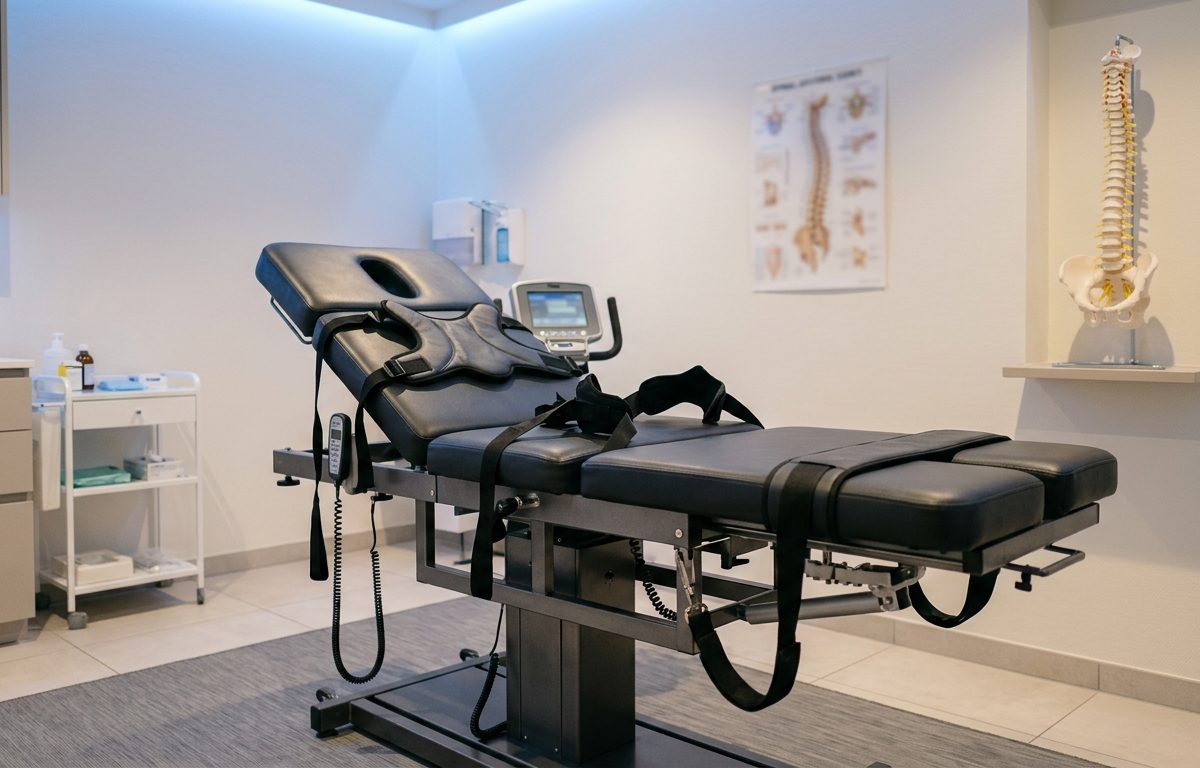
Decompression therapy is a supervised, non-surgical approach that uses controlled positioning and mechanical loading to reduce stress in selected spinal segments. It may be considered as one part of a broader rehabilitation plan when the examination supports conservative care and there are no urgent warning signs.
A plan may also include movement-based rehabilitation, neuromuscular re-education, ergonomic guidance, and gradual activity progression. The purpose is not to promise that a disc will be restored by one modality. The purpose is to evaluate how the spine and nervous system respond to carefully dosed input while monitoring function.
Research on lumbar disc-related leg pain supports beginning with appropriate non-operative care for many patients, while also recognizing that individual circumstances vary. A clinical guideline from the North American Spine Society emphasizes matching care to symptoms, neurologic findings, and the course of the condition. In San Diego, a qualified team can coordinate recommendations with a patient’s existing medical providers when needed.
When is surgery considered for a herniated disc?
Surgery may enter the discussion when symptoms remain disabling despite an appropriate conservative trial, when a structural problem clearly matches the clinical findings, or when neurologic function is worsening. Surgery is also urgent in certain situations involving bowel or bladder changes, saddle-area numbness, or rapidly progressing weakness.
These warning signs should not be managed by waiting for a decompression appointment. Seek prompt medical attention for new loss of bladder or bowel control, numbness in the area that would contact a saddle, severe or rapidly increasing weakness, or other sudden neurologic changes. A medical professional can determine whether emergency imaging or surgical assessment is needed.
For patients without urgent findings, the timing of surgery is individualized. Studies of sciatica have found that early surgery may provide faster relief for selected patients, while longer-term outcomes can become similar to non-operative care for some people. That does not mean surgery is unnecessary or that conservative care is always preferable. It means the decision should be based on informed comparison rather than fear or pressure.
How do I compare decompression therapy with surgery?
Start with the neurologic examination
Strength, sensation, reflexes, gait, coordination, and movement tolerance can reveal whether a nerve is being affected and whether the problem is stable or changing. The examination also helps identify findings that may require referral rather than continued conservative care.
Check whether imaging matches the symptoms
An MRI or other study can be useful when its findings match the side, level, and pattern of symptoms. Disc changes are common, including in people who have little or no pain. A scan should support clinical reasoning, not replace it.
Consider function and response over time
Can you walk, sleep, work, exercise, and change positions? Are symptoms stable, improving, or spreading? A supervised plan should use measurable functional markers and reassess when the response is not appropriate. A lack of progress may lead to a different recommendation or referral.
Understand the tradeoffs
Decompression therapy for a herniated disc is non-surgical and generally focuses on gradual rehabilitation, but it is not appropriate for everyone and does not eliminate the need for medical evaluation. Surgery can directly address certain forms of nerve compression, but it also involves procedural risks, recovery considerations, and the possibility that symptoms may have more than one contributing source. A balanced consultation should explain both paths.
What does standard care sometimes miss?
Standard care may correctly identify a disc finding and prescribe a broad plan, yet a patient can still need more detail about how the spine, nervous system, movement strategy, and daily load interact. A fuller evaluation can examine gait, balance, coordination, sensory processing, muscle activation, and tolerance to different positions.
This does not replace medical or surgical care. It adds information that can help determine whether a supervised rehabilitation approach is reasonable, whether the current plan needs adjustment, or whether referral is the safer next step. At San Diego Chiropractic Neurology, the team uses a functional neurology trained perspective alongside a spine-focused examination and keeps the care plan tied to observable function.
What should I expect from an evaluation in San Diego?
An initial visit should begin with a history of the injury or onset, symptom behavior, prior imaging, medical conditions, medications, and activities that are limited. The clinician may then assess posture, spinal movement, gait, reflexes, strength, sensation, balance, and coordination. These findings are reviewed with the available imaging rather than interpreted in isolation.
Patients can ask what the examination found, what goals are being measured, how the plan will be reassessed, and what findings would prompt a referral. The team can also explain whether non-surgical spinal decompression in San Diego fits the overall plan or whether another approach is more appropriate.
For background on symptoms and evaluation, see the clinic’s guide to herniated disc care in San Diego. A referral to a medical specialist may be recommended when the examination, symptom course, or imaging raises concern.
Frequently asked questions
Is decompression therapy safer than surgery for a herniated disc?
They have different risk profiles and are used in different situations. Decompression is non-surgical but still requires screening and supervision. Surgery may be the safer or more appropriate path when urgent neurologic findings or persistent, clearly matched compression are present.
How long should I try conservative care before discussing surgery?
There is no universal timeline. The answer depends on symptom severity, neurologic findings, functional limits, response to care, and the presence or absence of red flags. A worsening examination should prompt reassessment sooner.
Can a herniated disc improve without surgery?
Many people improve with non-operative care, activity modification, and rehabilitation, but outcomes vary. Improvement does not mean every disc finding disappears on imaging. The goal is safer function and symptom management guided by clinical progress.
What symptoms mean I should seek urgent medical attention?
New bowel or bladder control changes, saddle-area numbness, rapidly progressing weakness, or severe sudden neurologic changes require prompt medical evaluation. Do not rely on a routine rehabilitation appointment for these symptoms.
Is spinal decompression appropriate for every herniated disc?
No. A clinician should review the history, examination, imaging, medical context, and symptom behavior before recommending it. A plan may be changed or referral recommended when findings do not support conservative care.
Decompression therapy vs surgery for a herniated disc is a decision that deserves clear information and appropriate clinical oversight. Call (619) 344-0111 or book a free consultation to discuss an evaluation.
Medical disclaimer: This article is for educational purposes only and is not a substitute for medical advice, diagnosis, or emergency care. Individual recommendations require an in-person evaluation by an appropriately qualified healthcare professional.
Not sure what is driving your symptoms?
Talk with our Functional Neurology Trained team on a free phone consultation. We will tell you honestly whether we can help.