Spinal Decompression Machine Benefits in San Diego
Free phone consultation with our San Diego functional neurology team. No obligation.
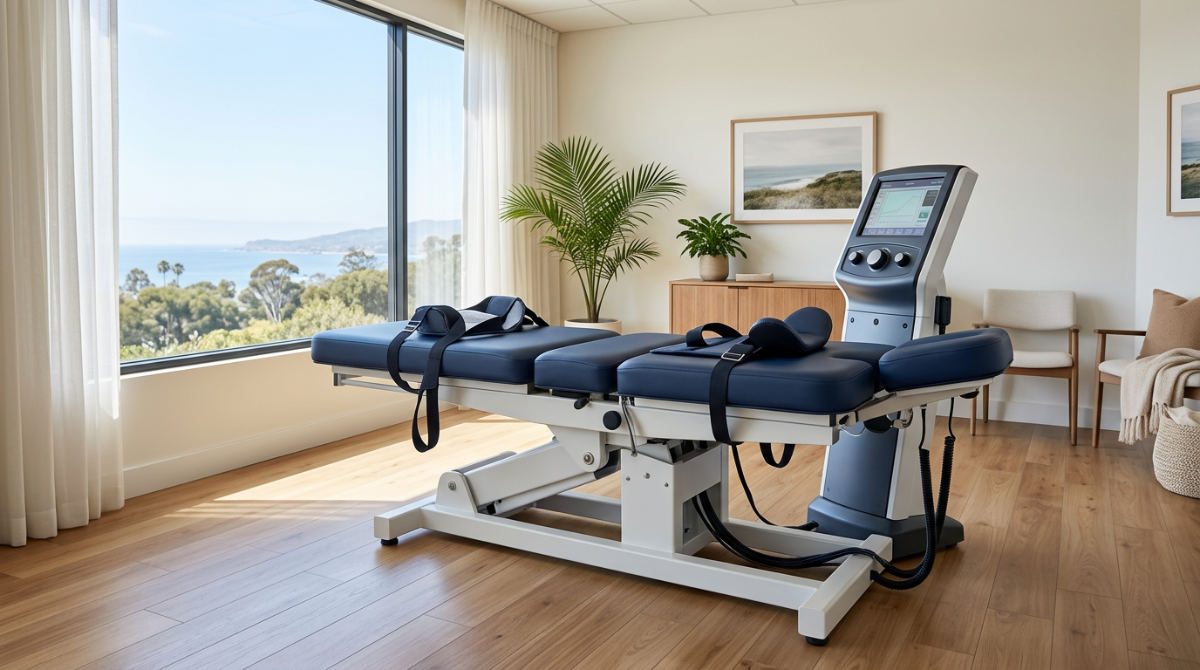
A decompression spinal machine is a computerized medical device designed to gently stretch the spine, creating negative pressure within the intervertebral discs. This vacuum effect promotes the restoration of disk height and retraction of herniated material, relieving pressure on spinal nerves and stimulating the influx of healing nutrients without surgery.
Table of contents
- Key takeaways
- Understanding the Role of the Spinal Decompression Machine
- How Computerized Technology Triggers Restoration of Disk Height
- The Difference Between Clinical Decompression and Home Traction
- Comparing Professional Decompression to Home Devices
- The Dual-Path Approach at SD Chiro Neuro
- Limitations and When Decompression is Not Recommended
- Accessing Non-Surgical Spinal Decompression in San Diego
- Frequently asked questions
Key takeaways
- Computerized biofeedback. Professional systems like the DRX9000 bypass the body's natural muscle guarding response for a deeper stretch.
- Vacuum effect. Non-Surgical Spinal Decompression (NSSD) creates negative pressure that pulls oxygen and nutrients back into damaged discs.
- Clinical superiority. Professional machines are significantly more effective than gravity-based home inversion tables for targeted disc repair.
- Integrated care. SD Chiro Neuro combines decompression with Vagus Nerve Stimulation to address the autonomic stress of chronic pain.
Understanding the Role of the Spinal Decompression Machine
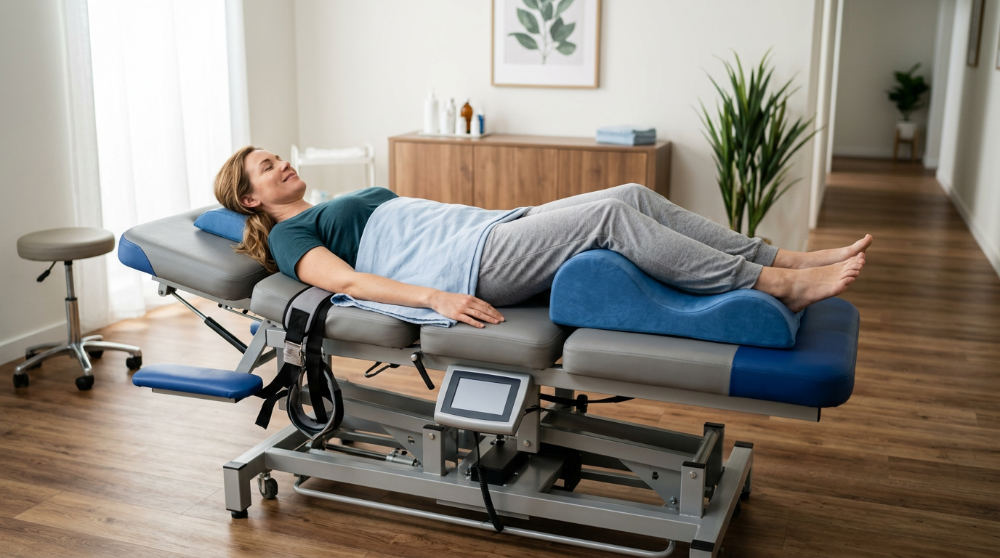
Modern spinal decompression equipment utilizes advanced technology to provide Non-Surgical Spinal Decompression (NSSD). We view this as a vital drug-free therapy. Computerized tables relieve pressure on spinal nerves and discs by targeting specific vertebral levels. Unlike traditional traction methods that apply a constant, dumb pull, these sophisticated machines use high-speed sensors. They monitor your body's reaction to every millimeter of stretch. If you have a herniated disc, your body reacts to physical force by tightening muscles. It wants to protect the spine.
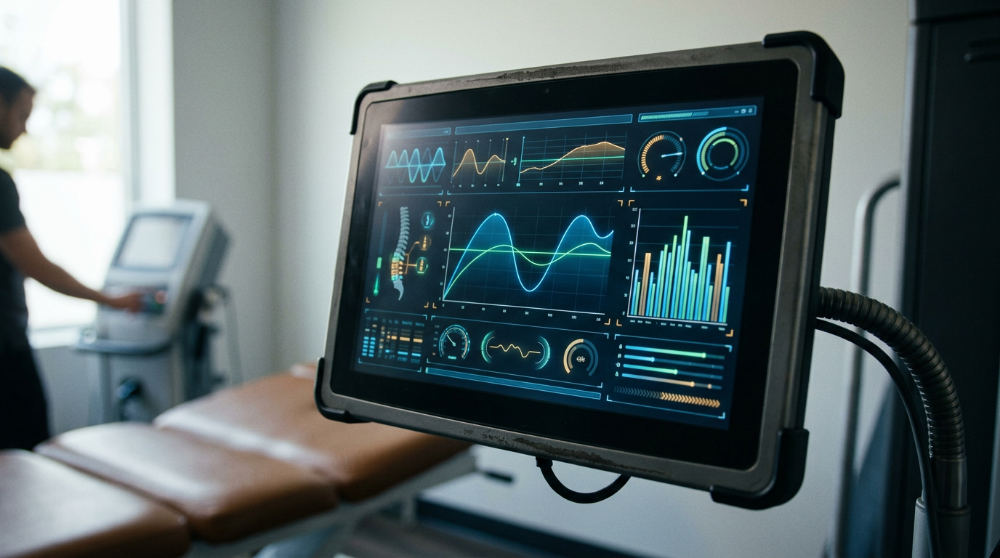
The Biofeedback Advantage: The DRX9000 machine monitors muscle resistance, adjusting its pull to ensure your body stays relaxed, which is impossible with manual traction.
Real-time adjustment is critical. It bypasses the proprioceptor trigger, which is the body's innate reflex to guard against external forces. By preventing these muscle spasms, the machine ensures force goes directly to the spinal disc. Muscles don't absorb it. At SD Chiro Neuro, we use this technology to isolate the specific level of injury. We target the L4-L5 or L5-S1 lumbar segments, which are common sites for nerve impingement in our San Diego patients. Targeted isolation allows for a deeper therapeutic effect. Standard chiropractic adjustments or manual stretching simply cannot match it. According to Hill DT Solutions, these computerized sensors are the defining feature that differentiates modern NSSD from older, less effective traction techniques.
How Computerized Technology Triggers Restoration of Disk Height
The primary goal of machine-led therapy is the restoration of disk height. We achieve this through a physiological process called imbibition. When a disc is compressed, it loses fluid. It gets thinner. This narrows the space where nerves exit the spinal column. The decompression spinal machine reverses this process. By creating negative intradiscal pressure, it acts like a physiological pump. It draws in water, oxygen, and nutrient-rich fluids. This rehydrates a flattened disc.
Clinical research on the DRX9000 system has demonstrated measurable increases in disc height. Results show significant pain reduction in patients with bulging or herniated discs. The DRX9000 Machine Specifications highlighted that this vacuum effect rehydrates the disc and encourages herniated material to move away from sensitive nerve roots. For many in San Diego, this means a reduction in the shooting leg pain often associated with sciatica. By physically expanding the disc space, we provide the environment necessary for long term cellular repair. This process is cumulative. Each session builds upon the last to gradually return the disc to a healthier, more cushioned state.
The Difference Between Clinical Decompression and Home Traction
Inversion tables use gravity to stretch the whole body. They lack the specificity required to treat a localized herniated disc. Many patients in the San Diego area try home devices first. They hope for a quick fix. However, these tools apply a generalized force to the ankles, knees, and hips as much as the spine. In contrast, our professional machines like the DRX9000 weigh over 1,200 lbs. They utilize a floating lower mattress to eliminate friction. This ensures force applies directly to the spine.
Home devices often trigger muscle guarding. This can actually worsen nerve compression. Because there is no computerized biofeedback, your muscles may fight the stretch. This leads to tension rather than relief. Hanging upside down can significantly increase blood pressure and ocular pressure, making it risky for those with certain underlying health conditions. If you are struggling with chronic pain, working with a herniated disc specialist ensures your treatment is monitored. We target the exact source of your dysfunction. Professional equipment allows you to remain in a neutral, relaxed position. Custom pillows help. It is far more conducive to healing than the stress of hanging by your ankles in a garage.
Comparing Professional Decompression to Home Devices
Professional equipment provides a level of precision and safety that home-based gravitational tools cannot replicate. Clinical machines target specific levels, such as L4-L5. Home tables apply generalized traction to the whole body. This target specificity is vital. You need isolated pressure relief for a single bulging disc. Professional machines use computerized technology to gradually increase and decrease tension. Home tables rely on static, linear gravitational force. This often feels jarring to the nervous system.
Safety is another major differentiator. Clinical settings include safety switches that the patient holds. We provide professional monitoring by trained staff. In a home environment, the risk of falling or being unable to return to an upright position is a real concern. The following table illustrates the core differences between these two approaches:
| Feature | Clinical Machine | Home Inversion Table |
|---|---|---|
| Target Specificity | High (Level Specific) | Low (Total Body) |
| Muscle Guarding Prevention | Computerized Biofeedback | None |
| Disc Rehydration Potential | Maximum (Negative Pressure) | Minimal |
| Safety Controls | Patient Cut-off Switch | Manual Balance |
| User Positioning | Relaxed, Supine/Neutral | Inverted (Upside Down) |
The Dual-Path Approach at SD Chiro Neuro
We recognize that back pain often has two components: a Spine Path (structural) and a Neuro Path (coordination and signaling). While the decompression spinal machine addresses the structural integrity of the disc, the nervous system must also be retrained. We integrate Functional Neurology into our protocols. This evidence-based approach to neurological rehab is used at SDCN to complement spinal care. This matters for patients who have suffered for years. Their brains have often learned to move in ways that compensate for injury. This leads to further instability.
Our specialized treatments in San Diego may include ARP Wave Therapy to identify where neurological source issues are preventing proper recovery. If your brain tells your muscles to stay in a state of constant contraction, the disc will continue to be compressed. We also utilize Vagus Nerve Stimulation alongside decompression to regulate the autonomic stress response. This helps patients who have lived in chronic fight or flight due to pain. By calming the nervous system, we allow the body to shift into a rest and repair state. This accelerates the benefits of the decompression sessions. This dual approach is why our patients see results even after failing traditional chiropractic care or physical therapy elsewhere.
Limitations and When Decompression is Not Recommended
A spinal decompression machine is not suitable for everyone. We do not recommend decompression for patients with certain spinal fractures, advanced osteoporosis, or metal implants. Expectations should be realistic. Significant disc restoration typically requires a series of sessions rather than a single visit. One session can provide temporary relief. It takes consistent, repeated applications of negative pressure to truly change the shape and hydration of the disc.
Decompression alone may fail if we don't address neurological muscle guarding. This is why we emphasize the Neuro Path track. We also carefully screen for contraindications. Patients with severe circulatory issues or certain active cancers may be excluded from this therapy for safety. If you have had a prior spinal fusion with hardware, the machine cannot stretch the fused segment. However, we may use it on levels above or below the fusion if they are showing signs of wear. Our team performs a thorough evaluation to ensure you are a safe candidate.
Accessing Non-Surgical Spinal Decompression in San Diego
San Diego Chiropractic Neurology serves patients throughout the San Diego region who are seeking alternatives to invasive spinal surgery. Our team draws upon extensive clinical experience to manage complex cases. We understand the local lifestyle. Whether you are a surfer in Del Mar or a hiker in Torrey Pines, our goal is to get you back to the activities you love. We want to avoid the long recovery times associated with surgery.
San Diego Local Care: We specialize in helping patients who have failed traditional surgery or chiropractic care by using our unique Dual-Path neurological approach.
Using tools like Cold Laser Therapy, we accelerate the cellular repair initiated by the decompression table. This combination of structural decompression and light therapy helps to reduce inflammation at the nerve root much faster. If you are struggling with a herniated disc or chronic sciatica, we invite you to see if you are a candidate. We can discuss your imaging and health history. To see if this technology is right for your specific condition, you can contact us.
Frequently asked questions
How does a spinal decompression machine work?
It uses computerized sensors to perform precise, gentle stretching of the spine. This creates a vacuum effect, known as negative pressure, that pulls herniated disc material back into place and draws in healing nutrients. By utilizing biofeedback, the machine bypasses the body's natural muscle guarding to ensure the disc receives the full therapeutic stretch necessary for recovery.
Is a spinal decompression machine safe for herniated discs?
Yes, it is FDA-cleared and specifically designed to treat herniated and bulging discs safely. The machine includes a patient safety switch that allows you to stop the treatment instantly at any time. Our clinicians use neutral positioning with custom pillows to ensure maximum comfort during the session, avoiding the strain often associated with traditional traction.
How many sessions are typically required to see results for sciatica in San Diego?
While some feel relief within a few visits, a full protocol typically involves multiple sessions scheduled over several weeks. Consistency is key to allowing the disc height to restore and for nerve inflammation to subside completely. Each session at SD Chiro Neuro is tailored to the patient's specific neurological and structural needs to ensure the best possible outcome.
Can I use a home inversion table instead of a professional machine?
Inversion tables provide generalized traction, whereas professional machines target the specific disc level causing the pain. Home tables lack the biofeedback technology necessary to prevent muscle spasms during the stretch, which can sometimes aggravate nerve issues. For complex conditions like herniated discs, clinical machines are significantly more effective and safer due to their computerized control systems.
Is spinal decompression covered by insurance for San Diego County residents?
Coverage varies by provider and specific plan, we recommend checking with your insurance regarding traction or decompression codes. Many patients utilize HSA or FSA funds to cover their therapy sessions. Our office provides detailed evaluations to help you understand the most cost-effective path to recovery and can provide the necessary documentation for your records.
Not sure what is driving your symptoms?
Talk with our Functional Neurology Trained team on a free phone consultation. We will tell you honestly whether we can help.