Concussion & TBI
Concussion Visual Symptoms Treatment San Diego: Why Screens, Reading, and Busy Places Feel Hard
July 22, 20268 min readDr. Alexis Jahangiri, DC
Last updated August 28, 2026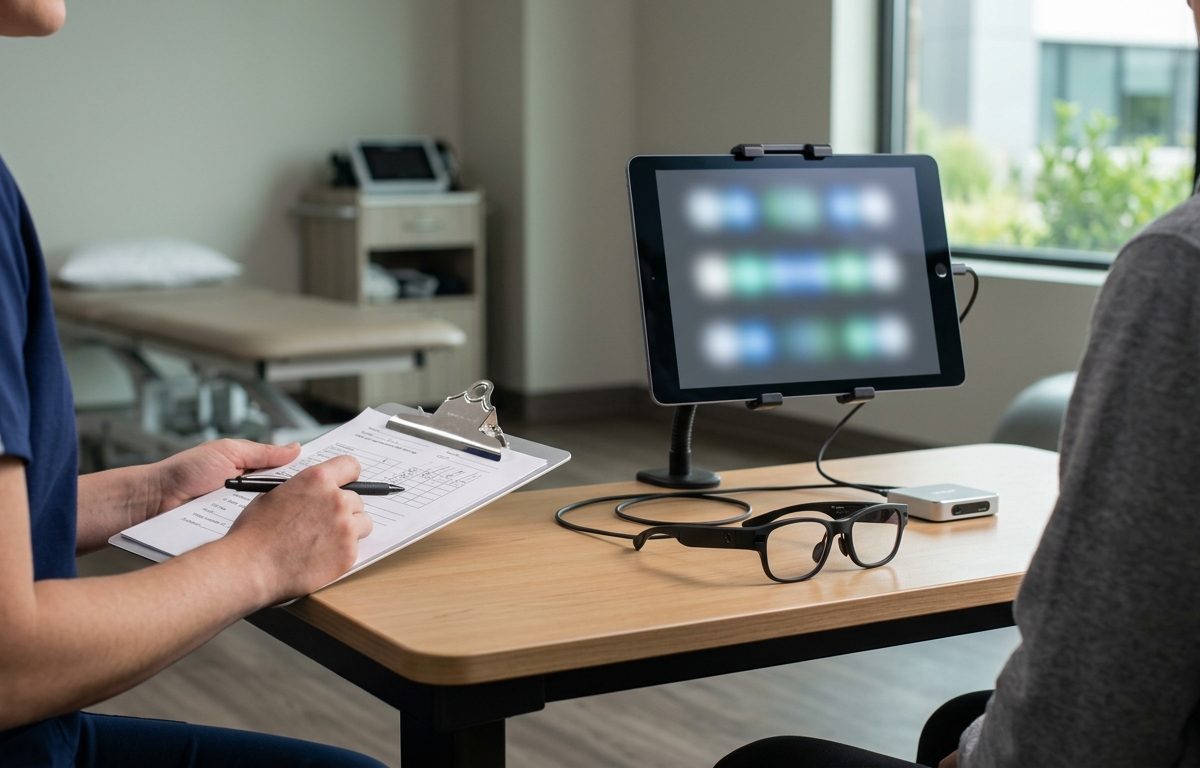
Free phone consultation with our San Diego functional neurology team. No obligation.
# Concussion Visual Symptoms Treatment San Diego: Why Screens, Reading, and Busy Places Feel Hard
Visual symptoms after a concussion can be confusing. Some people notice blurred vision when they read. Others feel eye strain on a computer, lose their place on the page, feel dizzy in grocery stores, or develop headaches when they try to focus. In many cases, these problems are not just about the eyes themselves. They can reflect how the brain is processing visual information, coordinating eye movements, and integrating visual input with balance and body position.
At San Diego Chiropractic Neurology, our team takes a structured look at post-concussion symptoms to understand why visual tasks feel harder and what kind of rehabilitation may fit. For many patients, the goal is not just to reduce discomfort for a day or two. It is to understand the pattern behind the symptoms and build a plan that supports more stable recovery.
## Why visual symptoms are common after concussion
A concussion can disrupt multiple systems at once. Vision depends on much more than being able to see clearly on an eye chart. The brain has to coordinate eye tracking, focusing, depth perception, attention, visual processing speed, and the relationship between what you see and how your body responds. When those systems are stressed, everyday activities can suddenly feel much more difficult.
That is why patients may report symptoms such as blurred vision, eye fatigue, difficulty reading, sensitivity to screens, trouble shifting focus from near to far, dizziness in visually busy spaces, motion sensitivity, headaches with concentration, and trouble tolerating driving or scrolling. Sometimes the symptoms are strongest when the eyes move quickly, when the environment is crowded, or when the patient is already mentally tired.
A person can have a normal basic eye exam and still struggle with post-concussion visual symptoms. That is because the issue may involve eye teaming, visual tracking, vestibular-visual integration, or neurologic processing rather than a simple refractive problem.
## Symptoms that may point to a post-concussion visual problem
Visual symptoms after concussion do not look the same for everyone. Some patients describe reading the same line over and over because they keep losing their place. Others say that fluorescent lights, scrolling on a phone, or walking through a warehouse store makes them feel off balance. Some develop headaches after ten or fifteen minutes on a laptop. Others feel their eyes working too hard even though standard vision testing did not explain the problem.
Common complaints include:
- blurred vision while reading or using a screen
- double vision or intermittent ghosting
- eye strain or pressure around the eyes
- difficulty focusing from near to far
- losing place while reading
- headaches triggered by visual concentration
- light sensitivity
- dizziness in grocery stores, crowds, or traffic
- motion sensitivity
- poor depth perception or feeling visually disoriented
These symptoms often overlap with neck pain, balance problems, fatigue, sound sensitivity, and cognitive overload. That overlap matters because it can change what a complete rehabilitation plan should include.
## Why screens, reading, and busy environments can feel worse
Many patients are surprised that a short reading task or a quick trip to the store can feel harder than light physical activity. Visual tasks place repeated demands on focusing, tracking, visual attention, posture, and vestibular integration. If those systems are not working efficiently after concussion, symptoms can build quickly.
Reading requires precise eye movements from line to line, stable focus at near distance, and enough visual attention to process information without drifting. A phone or computer adds brightness, contrast changes, scrolling movement, and prolonged near work. Grocery stores and other busy environments add fluorescent lighting, depth cues, head turns, patterned aisles, moving people, and sensory competition.
When symptoms show up most strongly in those settings, it can be a clue that the problem is not random. It may reflect a visual processing or visual-vestibular issue that deserves closer evaluation.
## What an evaluation may include
A useful evaluation looks beyond whether someone had a concussion. It asks what tasks trigger symptoms, how long symptoms last, what systems seem overloaded, and which patterns are slowing recovery. Depending on the patient, an evaluation may include review of symptom history, neurologic findings, eye movement performance, balance control, and activity tolerance.
That process may involve:
- discussion of when symptoms began and what triggers them
- review of headache, dizziness, neck, sleep, and cognitive symptoms
- screening of smooth pursuit, saccades, convergence, and gaze stability
- observation of reading tolerance and near-point strain
- balance and vestibular screening
- neurologic examination and functional testing
- review of school, work, sports, or screen demands
The goal is to identify whether symptoms are being driven more by oculomotor stress, vestibular mismatch, autonomic strain, cervical involvement, cognitive overload, or a combination of factors. That is what helps guide a more precise rehab plan. Patients with persistent concussion symptoms may also benefit from a broader concussion-focused evaluation, which is why we often recommend exploring our concussion care page for related context.
## How rehabilitation may be approached
Recovery plans are not one-size-fits-all. Some patients need gradual work on eye tracking and convergence. Others need more vestibular-visual integration, balance retraining, or pacing strategies for screen tolerance. Some need the neck addressed because cervical dysfunction is feeding headaches, dizziness, or visual discomfort.
A conservative rehabilitation plan may include structured visual exercises, graded exposure to symptom triggers, balance work, vestibular integration tasks, and activity progression based on tolerance rather than guesswork. When visual symptoms are prominent, targeted work related to neuro-visual rehabilitation may be part of the plan. When dizziness and motion sensitivity are also major issues, vestibular therapy may play an important role as well.
The key is progression. Doing too much too soon can flare symptoms. Doing too little for too long can leave patients stuck. The right plan aims for meaningful challenge without repeatedly pushing the system into setbacks.
## When visual symptoms should not be ignored
Some post-concussion symptoms improve steadily over time. But ongoing visual problems can interfere with school, work, driving, exercise, and daily confidence. If reading is still hard, if screen time reliably triggers headaches, or if busy environments make you feel disoriented, it is worth getting checked. Persistent symptoms do not automatically mean something dangerous is happening, but they do suggest the recovery process may need more structure.
It is also important to know when urgent evaluation may be appropriate. Sudden major vision loss, repeated vomiting, worsening severe headache, new weakness, fainting, slurred speech, or rapidly worsening neurologic symptoms should be treated as red flags and evaluated immediately.
## What patients often want to know about recovery
Many patients ask whether these problems are normal. The better question is whether they are common and whether they deserve attention when they linger. Yes, visual symptoms can be common after concussion. No, they should not simply be brushed aside if they are interfering with life weeks later.
Patients also want to know how long recovery takes. That depends on the symptom pattern, how quickly the right systems are identified, and whether the rehab plan matches the actual problem. Some patients improve steadily with activity modification and targeted exercises. Others need a more comprehensive program because symptoms involve vision, balance, neck input, and autonomic stress at the same time.
Another common concern is whether this is just an eye problem. Sometimes an eye care referral is part of the picture, but many post-concussion visual complaints sit at the intersection of neurologic function, vestibular control, and eye movement coordination. That is why a broader functional evaluation can be helpful.
## Why a team-based plan matters
Concussion recovery is rarely about one symptom in isolation. Visual strain can feed headaches. Headaches can reduce screen tolerance. Dizziness can make visual tasks feel harder. Neck dysfunction can amplify both headache and visual discomfort. Fatigue and poor pacing can magnify all of it.
A team-centered plan matters because it can account for those overlaps instead of treating each complaint like a separate mystery. The goal is to understand the whole pattern, prioritize what is most limiting, and build a stepwise plan that supports progress in the settings that matter most to the patient.
## FAQ
### Are visual symptoms common after a concussion?
Yes. Many patients notice blurred vision, eye strain, light sensitivity, difficulty reading, headaches with screens, or dizziness in busy places after a concussion.
### How long can visual symptoms last after a concussion?
It varies. Some symptoms improve in a short period, while others can persist when the underlying visual, vestibular, neck, or neurologic issues have not been fully addressed.
### Can screens make post-concussion symptoms worse?
Yes. Screens often combine brightness, motion, scrolling, near focus, and sustained attention, which can make symptoms easier to trigger.
### Is vision therapy the same as getting glasses?
No. Glasses may help a refractive issue, while vision-based rehabilitation focuses more on how the eyes and brain work together during tracking, focus, and processing tasks.
### When should I get checked for visual symptoms after a concussion?
If symptoms are interfering with reading, work, school, driving, exercise, or everyday function, or if they continue beyond the early recovery window, a more complete evaluation is reasonable.
## Next steps
If visual symptoms after concussion are making daily life harder, a structured evaluation can help clarify what is driving the problem and what kind of rehab plan may fit. Call (619) 344-0111 or book a free consultation.
*Medical disclaimer: This article is for educational purposes only and is not medical advice, diagnosis, or treatment. If you are experiencing severe, worsening, or urgent symptoms, seek immediate medical care.*
Not sure what is driving your symptoms?
Talk with our Functional Neurology Trained team on a free phone consultation. We will tell you honestly whether we can help.