Concussion Light Sensitivity Treatment
Free phone consultation with our San Diego functional neurology team. No obligation.
Light sensitivity after concussion can be one of the most frustrating symptoms in daily life. A person may feel fine in a dim room, then suddenly feel overwhelmed by sunlight, grocery store lighting, phone screens, or headlights at night. For some, the problem fades within days. For others, it lingers and starts affecting work, school, driving, exercise, and sleep.
When people search for concussion light sensitivity treatment, they are usually trying to answer a few urgent questions: why is this happening, how long will it last, and what can actually help? The short answer is that light sensitivity after concussion is real, common, and often connected to more than one system. Visual processing, vestibular function, post-traumatic headache patterns, neck dysfunction, and autonomic regulation can all play a role.
At San Diego Chiropractic Neurology, the clinical team looks at concussion symptoms as part of a broader neurologic and functional picture. That means evaluating how the brain and body are handling motion, visual input, exertion, balance, and sensory stimulation rather than assuming every symptom comes from one single source. For many patients in San Diego, that more complete view matters when symptoms have stopped improving on their own.
Why light sensitivity happens after concussion
Light sensitivity, also called photophobia, is not just an eye problem. After concussion, the brain may have a harder time processing sensory input efficiently. Normal brightness can start to feel intense or threatening. This can happen because concussion may disrupt visual motion processing, ocular motor control, migraine-related pathways, vestibular integration, and central sensory filtering.
That is why two people with “the same” symptom can feel very different. One person may mainly struggle with screen glare and reading. Another may feel worse in stores or busy public places. Another may notice that fluorescent lights trigger headache, nausea, eye strain, or dizziness. In some cases, neck tension and post-traumatic headache patterns add another layer and keep the nervous system more reactive than it should be.
Common examples include:
- Needing to dim screens far more than usual
- Feeling worse under fluorescent lights
- Headache or eye strain while reading
- Dizziness in grocery stores or crowded visual environments
- Discomfort with sunlight, glare, or night driving
- Fatigue after short periods of computer work
These patterns do not necessarily mean something is permanently wrong. They often mean the nervous system is still having trouble regulating input after injury.
Why symptoms can linger longer than expected
Many concussions improve with time and appropriate early management. But persistent symptoms are not unusual. Consensus guidance now supports symptom-specific evaluation when recovery is not progressing as expected rather than telling patients to simply wait longer.
Light sensitivity may last longer when it is tied to:
- Persistent visual tracking or focusing problems
- Vestibular dysfunction
- Post-traumatic headache or migraine overlap
- Cervical dysfunction after head and neck trauma
- Sleep disruption and autonomic dysregulation
- Too much strict avoidance or, in other cases, too much stimulation too soon
This is one reason a patient may be told their scans are normal but still feel miserable in daily life. Standard imaging is not designed to explain every post-concussion functional symptom pattern.
What a thorough evaluation should include
A useful concussion light sensitivity evaluation should not stop at “avoid bright lights.” It should look at the symptom in context. The goal is to understand what systems are being stressed and what situations reproduce the problem.
That evaluation may include:
- Symptom history, timing, and aggravating triggers
- Screen tolerance, reading tolerance, and work demands
- Eye movement and ocular motor testing
- Balance and vestibular screening
- Headache and migraine pattern review
- Neck movement and cervical contribution
- Activity, exertion, and sleep tolerance
- Autonomic response patterns such as symptom increase with standing or effort
For patients dealing with symptoms in San Diego, this matters because local care decisions often depend on what is limiting function most. A student may need a different recovery emphasis than an office worker, athlete, or parent who cannot tolerate driving in bright conditions.
Is light sensitivity after concussion related to migraine?
Often, yes. Light sensitivity is strongly associated with migraine physiology, and post-traumatic headache commonly overlaps with migraine-like features after concussion. That does not mean every person with photophobia now “has migraine,” but it does mean that headache pathways may be part of the picture.
This overlap is important because a person may describe symptoms as an eye issue when the real pattern is broader: headache, visual discomfort, dizziness, nausea, and sensory overload that all flare together. In those cases, management may need to address the full neurologic pattern rather than only reducing brightness.
Related resources can help patients understand the overlap between head injury symptoms and headache patterns, including the clinic’s concussion symptom evaluation and migraine page.
Can screens make concussion symptoms worse?
Yes. Screens combine brightness, contrast, visual motion, focusing demand, and cognitive load. For someone recovering from concussion, that combination can quickly provoke symptoms. Pediatrics guidance on vision and concussion notes that visual symptoms are common and can interfere with reading, schoolwork, and screen-based tasks.
Patients often notice:
- Burning or tired eyes after short reading sessions
- Headache with laptop use
- Motion discomfort when scrolling
- Feeling “foggy” after video calls
- More symptoms in the evening or after a full workday
The answer is usually not total screen avoidance forever. Instead, a better approach is often structured pacing, task modification, environmental changes, and a graded return to tolerance when clinically appropriate.
What concussion light sensitivity treatment may involve
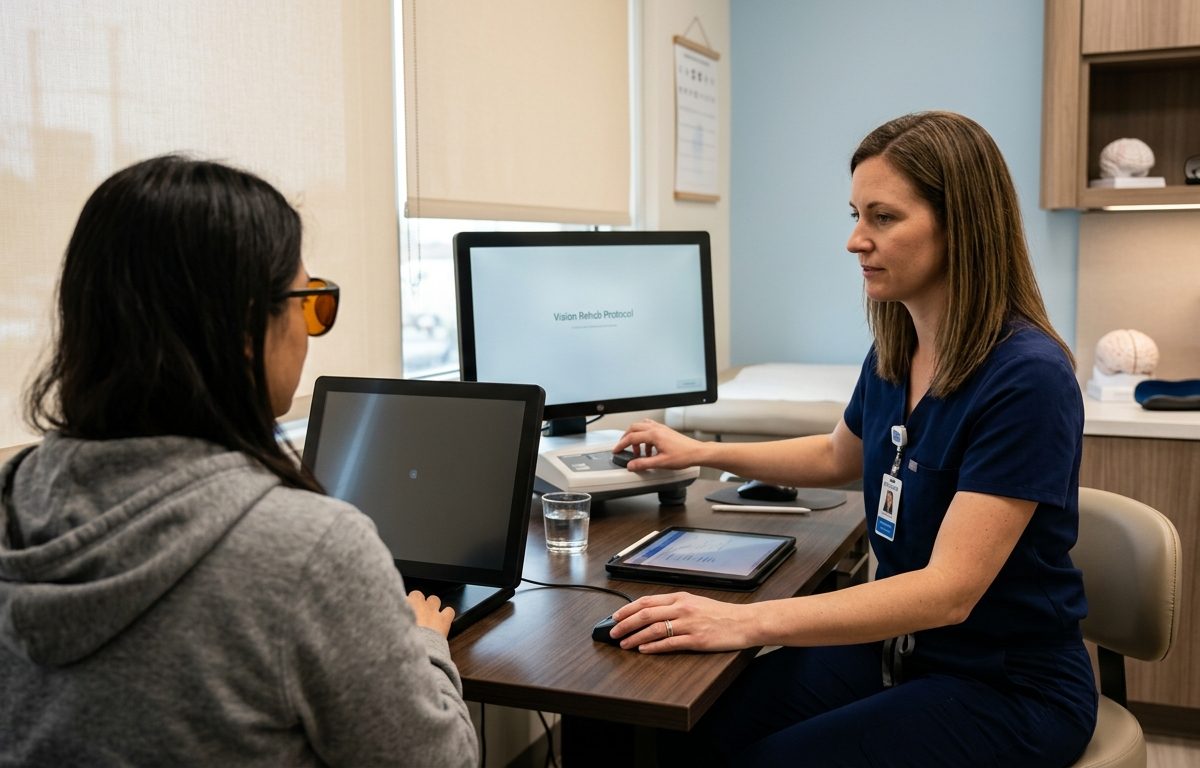
There is no single treatment that fits every case. Effective support usually depends on the drivers behind the symptom pattern. At a clinic using a functional neurology and rehabilitation framework, care may focus on helping the nervous system improve tolerance, regulation, and integration rather than just masking symptoms.
Depending on the findings, a plan may include:
- Activity pacing and graded exposure to light and screens
- Visual rehabilitation strategies for tracking, focus, and eye movement control
- neuro-visual rehabilitation when visual dysfunction is part of the symptom pattern
- Vestibular therapy when dizziness, motion sensitivity, or balance issues coexist
- Cervical rehabilitation when neck dysfunction is feeding headache or sensory sensitivity
- Subsymptom-threshold aerobic progression when exertion intolerance is part of recovery
- Environmental adjustments for school, work, and driving
Research increasingly supports active rehabilitation rather than prolonged strict rest for persistent symptoms. That does not mean pushing through severe symptoms. It means using a structured plan that respects the nervous system’s current tolerance while gradually rebuilding it.
Should someone wear sunglasses all the time indoors?
Sometimes short-term light reduction is useful, especially during severe flares. But constant indoor darkening can become counterproductive for some people if it further reduces tolerance to normal light exposure. The better question is not whether sunglasses are “good” or “bad,” but whether the person is using them strategically or depending on them in a way that slows recovery.
A careful plan may include temporary environmental modifications while also working toward graded reintroduction of tolerable light levels. This should be individualized. Someone with strong migraine overlap may need a different progression than someone whose main issue is visual motion sensitivity or screen intolerance.
When persistent photophobia may need broader concussion rehab
Light sensitivity rarely exists in isolation. Patients with ongoing symptoms often also report brain fog, dizziness, anxiety in busy places, nausea, reading trouble, motion sensitivity, or fatigue after basic tasks. When those symptoms cluster together, it is worth considering whether the issue is part of a wider post-concussion pattern.
That is where broader rehabilitation can help. Instead of treating light as the only trigger, the goal becomes improving the system’s ability to handle multiple forms of input. For some people, that means visual rehabilitation. For others, it means cervicovestibular work, exertion progressions, or autonomic support strategies. Evidence supports cervicovestibular rehabilitation for persistent dizziness, neck pain, and headache in appropriate concussion cases.
Patients can also review the clinic’s general concussion information and frequently asked questions through the FAQ page if they are trying to understand what a more complete workup may involve.
When to seek evaluation
A person should consider further concussion-focused evaluation if light sensitivity is:
- Not steadily improving
- Interfering with school, work, or driving
- Paired with dizziness, headache, nausea, or balance problems
- Triggered by screens, reading, or busy visual environments
- Still limiting normal routine after the early recovery window
For San Diego patients, the main question is often whether symptoms are simply lingering or whether they now reflect a set of treatable functional deficits. That distinction shapes the next step.
What daily symptom management may look like
While a deeper evaluation is being arranged, many people do better with a structured routine than with total avoidance or guesswork. The goal is to lower unnecessary symptom spikes while keeping the nervous system engaged enough that tolerance does not shrink even further.
- Reduce brightness without working in darkness all day
- Use shorter screen blocks with planned breaks
- Increase font size and reduce visual clutter when reading
- Limit fast scrolling, multitasking, and rapid head turns during symptom flares
- Track what triggers symptoms most clearly, such as glare, screens, stores, or driving
- Support sleep consistency, hydration, and pacing so the nervous system is not constantly overloaded
These steps do not replace care, but they can make the day more manageable. They also help reveal patterns that are useful during a concussion workup. For example, if symptoms are much worse with scrolling than with reading paper, that may point toward visual motion sensitivity. If symptoms spike more with fluorescent lights and headache than with motion, migraine overlap may deserve more attention.
A practical clinic-based approach in San Diego
At San Diego Chiropractic Neurology, concussion rehabilitation is approached as a problem of function, not just diagnosis labeling. The team evaluates how visual, vestibular, neurologic, and cervical systems respond under load and then builds a plan around the patient’s actual triggers. If screens are the problem, the plan should address screen tolerance. If glare while driving is the issue, care should account for that. If store aisles, scrolling, and head turns all provoke symptoms, the rehabilitation plan should reflect those real-world demands.
That kind of individualized approach is often more useful than general advice alone, especially when symptoms have lasted long enough to disrupt work, family life, or return to activity.
Conclusion
Concussion light sensitivity treatment is not about one magic fix. It starts with understanding why the symptom is happening and which systems are keeping it going. Light sensitivity after concussion may reflect visual dysfunction, vestibular stress, migraine overlap, neck involvement, or broader nervous system dysregulation. A thorough evaluation can help identify the main drivers and guide a more focused recovery plan.
If light, screens, glare, or busy environments still feel overwhelming after a concussion, it may be time for a more complete assessment instead of waiting and hoping it settles on its own.
Call (619) 344-0111 or book a free consultation.
Medical disclaimer: This article is for educational purposes only and is not medical advice, diagnosis, or a substitute for individualized care. Symptoms after concussion should be evaluated by a qualified healthcare professional, especially if they are worsening, prolonged, or affecting daily function.
Frequently Asked Questions
Why am I so sensitive to light after a concussion?
After concussion, the brain may have trouble processing sensory input efficiently. Light sensitivity can be connected to visual dysfunction, vestibular issues, migraine pathways, neck tension, or broader nervous system dysregulation.
How long does light sensitivity last after a concussion?
It varies. Some people improve within days or weeks, while others have symptoms that last longer. If it is not steadily improving or is interfering with daily life, a more detailed evaluation may help identify why.
Can screens make concussion symptoms worse?
Yes. Screens combine brightness, motion, focusing demand, and cognitive load. For many people recovering from concussion, that combination can trigger headache, eye strain, dizziness, or brain fog.
Is light sensitivity after concussion related to migraine?
Often it can be. Post-traumatic headache patterns frequently overlap with migraine features, and light sensitivity is a common part of that symptom profile.
What kind of treatment may help if light sensitivity is not improving?
Support may include visual rehabilitation, vestibular therapy, cervical rehabilitation, pacing strategies, graded exposure, and a symptom-guided return to activity based on what systems are driving the problem.
References
- Patricios JS, et al. Consensus statement on concussion in sport: the 6th International Conference on Concussion in Sport. Br J Sports Med. 2023. https://bjsm.bmj.com/content/57/11/695
- Master CL, et al. Vision and Concussion: Symptoms, Signs, Evaluation, and Treatment. Pediatrics. 2022. https://publications.aap.org/pediatrics/article/150/6/e2022059286/190087
- Leddy JJ, et al. Clinical management of concussion and persistent post-concussive symptoms. Br J Sports Med. 2021. https://bjsm.bmj.com/content/55/4/186
- Schneider KJ, et al. Cervicovestibular rehabilitation in sport-related concussion. Br J Sports Med. 2014. https://bjsm.bmj.com/content/48/17/1294
- Ashina H, et al. Post-traumatic headache: epidemiology and pathophysiological insights. Nat Rev Neurol. 2019. https://www.nature.com/articles/s41582-019-0243-8
Not sure what is driving your symptoms?
Talk with our Functional Neurology Trained team on a free phone consultation. We will tell you honestly whether we can help.