Concussion Dizziness Treatment San Diego: What a Thorough Evaluation May Include
Free phone consultation with our San Diego functional neurology team. No obligation.
Dizziness after a concussion can be unsettling, persistent, and harder to explain than many people expect. Some people feel spinning. Others feel off-balance, lightheaded, visually overwhelmed, or unsteady in busy places. In many cases, these symptoms continue even after headaches and other early concussion symptoms begin to improve. That is one reason concussion dizziness treatment San Diego searches are so common: people want to know why they still feel this way and what kind of care may actually help.
At San Diego Chiropractic Neurology, the clinical focus is on identifying what may be driving the dizziness rather than treating it like one single symptom. After a concussion, dizziness can come from vestibular dysfunction, visual-vestibular mismatch, neck-related problems, autonomic stress, or a combination of these factors. A more complete evaluation can help determine which systems may be involved and which non-invasive rehabilitation strategies may be most appropriate.
For patients in San Diego dealing with persistent dizziness after concussion, that distinction matters. The most effective next step is often not generic rest, but a structured assessment followed by targeted rehabilitation based on the findings.
Why dizziness after concussion is not all the same
People often use the word dizziness to describe very different sensations. That can make recovery confusing unless the symptom is broken down more carefully. After concussion, dizziness may include:
- Vertigo, or a sense of spinning or motion
- Lightheadedness, especially when standing or moving quickly
- Imbalance when walking, turning, or changing surfaces
- Motion sensitivity in cars, stores, crowds, or scrolling on screens
- Visual overload in bright, busy, or patterned environments
These experiences can overlap, but they do not always come from the same mechanism. One patient may have a vestibular issue affecting gaze stability. Another may have strong cervical involvement after a whiplash-type injury. A third may have visual tracking problems or autonomic intolerance that worsens symptoms during standing or exertion. Research has shown that vestibular and oculomotor problems are common after concussion and can be tied to prolonged symptoms and delayed return to normal activity.
That is why a rushed, symptom-only approach can miss the real problem. A useful plan begins with a differential assessment.
Common reasons dizziness can persist after a concussion
Vestibular dysfunction
The vestibular system helps the brain interpret motion, head position, and balance. After concussion, this system may become less efficient, leading to dizziness, unsteadiness, motion sensitivity, or difficulty stabilizing vision while moving. Patients may notice symptoms when rolling in bed, turning quickly, walking in a grocery store, or trying to exercise.
Oculomotor or visual-vestibular mismatch
Some patients are less dizzy when they stay still but feel much worse when reading, scrolling, following moving objects, or entering visually busy environments. In those cases, eye movement control, visual tracking, convergence, and visual-vestibular integration may need closer review. These problems can create a sense of disorientation even when standard imaging appears normal.
Cervical involvement
Concussions often occur with neck strain, even if the neck did not seem like the main issue at first. Limited neck mobility, joint irritation, muscle guarding, and altered neck position sense may contribute to dizziness, especially when symptoms are triggered by head turns or posture changes. The literature supports evaluating cervical factors in patients with persistent dizziness after head and neck trauma.
Postural and autonomic stress
Some patients describe dizziness that feels more like faintness, pressure, or internal instability than spinning. If symptoms worsen with standing, exertion, heat, or busy days, autonomic regulation may also be relevant. If that pattern is suspected, appropriate medical evaluation may still be important. At the clinic level, the rehabilitation goal is to identify whether tolerance, regulation, and recovery are being limited by orthostatic stress or poor physiologic pacing.
Balance-system overload
Many people with lingering concussion symptoms do not have one isolated abnormality. Instead, the vestibular, visual, cervical, and balance systems may all be slightly off at the same time. That combined load can make routine activities feel much harder than they should. A clinic that only examines one layer may miss the full pattern.
What a thorough concussion dizziness evaluation may include
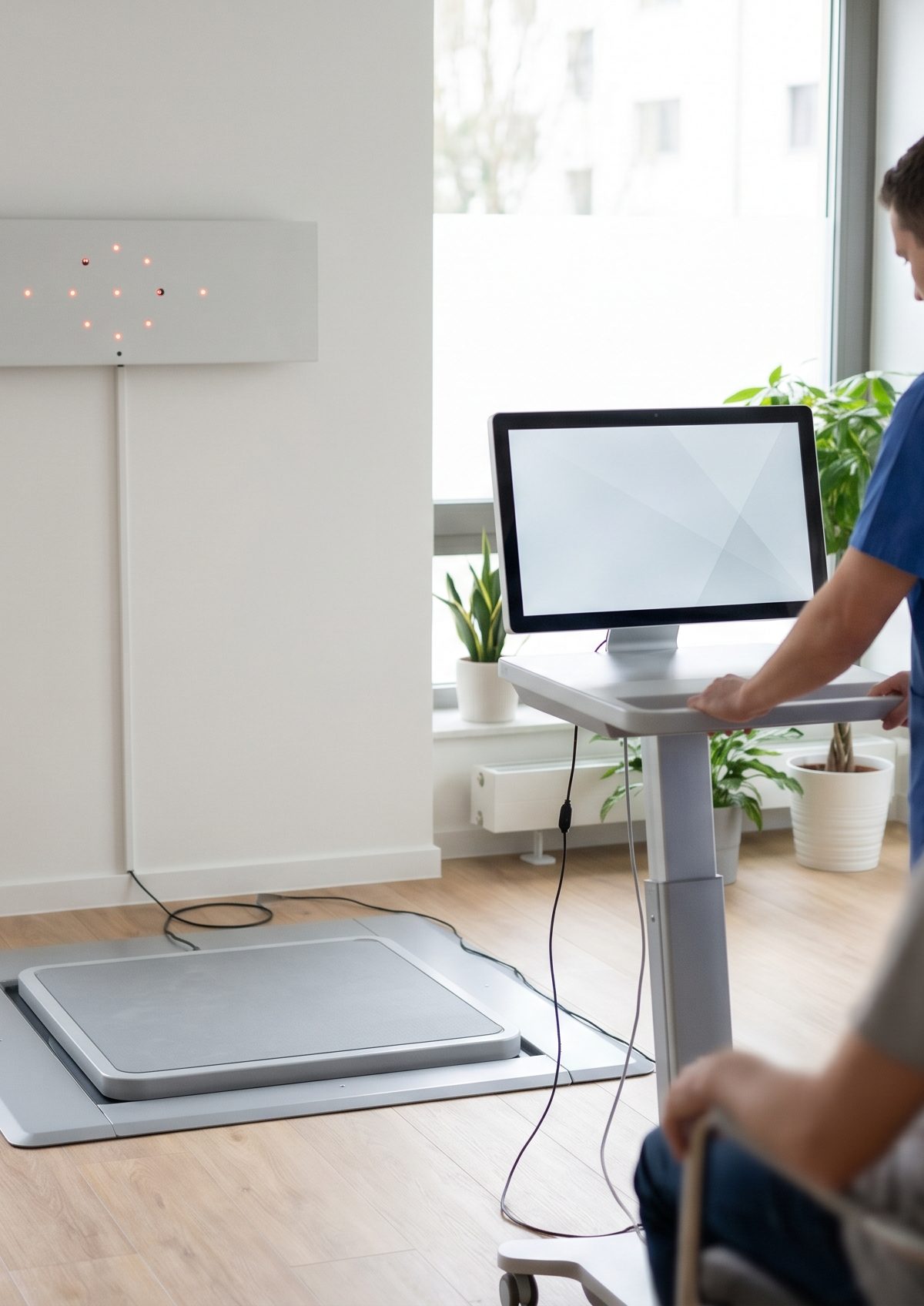
A meaningful dizziness after concussion assessment should look beyond the basic question of whether symptoms are present. It should examine what provokes them, what pattern they follow, and which systems appear to be contributing most.
Depending on the case, an evaluation may include:
- Detailed symptom history, including onset, triggers, severity, and recovery pattern
- Balance and gait testing
- Vestibular screening for head-motion tolerance and gaze stability
- Eye movement and visual tracking assessment
- Cervical mobility and neck-related symptom review
- Positional testing when vertigo is suspected
- Exercise or activity tolerance screening when symptoms worsen with exertion
- Review of daily activity limitations, including work, school, driving, and exercise
This type of process helps answer practical questions: Is the dizziness more positional, more visual, more cervical, more balance-related, or more tied to activity tolerance? Is it mainly triggered by head motion, visual complexity, posture, or exertion? Those distinctions help guide the next step more effectively than a one-size-fits-all handout.
How concussion dizziness treatment is typically approached
Conventional concussion care may include medical oversight, symptom monitoring, return-to-activity guidance, and referral for vestibular or other rehabilitation when symptoms persist. That conventional layer remains important, especially if symptoms are severe, changing, or associated with other concerning findings.
At the rehabilitation level, the clinic's role is to use evaluation findings to support neurologic performance, gaze stability, balance, movement tolerance, and functional recovery. In practical terms, that may involve a personalized program rather than general advice to simply wait it out.
Vestibular rehabilitation
Vestibular rehabilitation may be used when dizziness is linked to head motion sensitivity, poor gaze stability, imbalance, or visual-vestibular mismatch. Exercises are typically progressed based on tolerance and may focus on:
- Gaze stabilization
- Habituation to symptom triggers
- Balance retraining
- Walking and head-movement integration
- Gradual return to visually complex environments
Research suggests vestibular rehabilitation can improve dizziness and balance symptoms in appropriate post-concussion cases.
Visual and oculomotor rehabilitation strategies
If reading, screens, tracking, or busy visual settings are major triggers, treatment may include work aimed at eye movement control, visual attention, and visual-vestibular integration. The purpose is to improve tolerance and coordination rather than push through symptoms without a plan.
Patients who also struggle with blurred vision, motion sensitivity, or difficulty focusing may benefit from a more integrated plan that connects vestibular work with visual rehabilitation strategies.
Cervical rehabilitation and movement support
When neck findings are contributing, care may also address mobility, movement control, and cervical-related symptom triggers. This matters because a person can make progress in vestibular exercises only to remain dizzy if the cervical layer is still being overlooked. A more complete recovery plan often has to account for both.
Progressive activity tolerance
Some patients become trapped in a cycle of underactivity because exertion brings symptoms back. Current guidance for persisting concussion symptoms increasingly supports active, targeted rehabilitation rather than prolonged strict rest alone. That does not mean rushing. It means building tolerance gradually and intelligently based on response.
How daily life can shape symptoms
Persistent post-concussion dizziness does not only show up during exercise. It may appear when getting out of bed, walking through the grocery store, turning in the kitchen, driving on crowded roads, working at a computer, or trying to keep up with a normal family schedule. Many patients in San Diego notice that the symptom becomes worse in visually dense places, during long workdays, or after poor sleep.
That daily-life pattern can offer useful clues. If a person feels worse in motion-heavy environments, visual-vestibular mismatch may be a major factor. If symptoms ramp up after standing or exertion, regulation and activity tolerance may deserve more attention. If quick head turns consistently trigger symptoms, vestibular or cervical findings may be more important. The goal of a good evaluation is to connect those real-world triggers to a meaningful rehabilitation plan.
When post-concussion dizziness deserves more attention
Not every person needs the same level of care. Still, persistent symptoms usually deserve a more complete look when:
- Dizziness lasts more than a couple of weeks
- Walking, driving, work, or exercise feel noticeably limited
- Busy stores, screens, or head turns trigger symptoms strongly
- There is associated imbalance, nausea, visual discomfort, or neck pain
- Previous advice has mostly been to rest, but symptoms are not resolving
For many patients, the biggest relief comes from finally understanding why the symptom keeps showing up. That explanation can make treatment feel more specific and more manageable.
What patients in San Diego often want to know about recovery
One of the most common questions is how long recovery should take. The honest answer is that timelines vary. Some people improve quickly once the correct treatment focus is identified. Others recover more gradually, especially if symptoms have been present for a while or if multiple systems are involved.
What usually matters most is whether the plan matches the actual drivers of the symptom. If the main issue is vestibular, rehab should reflect that. If visual motion sensitivity is the bigger problem, the plan should reflect that. If neck-related dizziness is significant, that layer cannot be ignored. A targeted approach is usually more productive than repeating the same general advice.
Patients exploring next steps may also want to compare symptoms with related conditions such as vertigo or persistent concussion symptoms. These overlaps are common and can affect how recovery is approached.
A practical next step for concussion dizziness treatment San Diego patients
If dizziness after concussion is interfering with daily life, a structured assessment can help clarify the pattern and identify which systems may need support. For some patients, that may include vestibular rehab. For others, it may involve a broader neurologic and functional rehabilitation strategy that addresses balance, visual integration, and movement tolerance together.
Patients comparing options may also find it helpful to review related resources on concussion symptoms, vertigo and dizziness, and vestibular therapy. These topics often overlap in persistent post-concussion cases.
At San Diego Chiropractic Neurology, the goal is to identify what may be prolonging dizziness and build a non-invasive plan around those findings. That approach is designed to support function, tolerance, and recovery rather than rely on guesswork.
Frequently asked questions
Why am I still dizzy weeks after a concussion?
Dizziness can persist when vestibular, visual, cervical, or balance-system problems are still present after the initial injury. Some patients also have more than one contributing factor at the same time, which is why symptoms may last longer than expected.
What kind of treatment helps dizziness after concussion?
Treatment depends on the driver of the symptom. Common approaches include vestibular rehabilitation, visual-oculomotor rehabilitation strategies, cervical-focused care, and gradual activity progression based on tolerance.
Is post-concussion dizziness the same as vertigo?
No. Vertigo is one type of dizziness that often feels like spinning or motion. Post-concussion dizziness can also feel like imbalance, visual disorientation, lightheadedness, or motion sensitivity.
When should someone in San Diego seek a more complete evaluation?
If dizziness is lasting more than a couple of weeks, limiting work or activity, or getting triggered by movement, screens, stores, or driving, a more complete assessment is reasonable.
How long does recovery from concussion-related dizziness usually take?
Recovery timelines vary. Some people improve quickly once the main problem is identified, while others need a longer rehabilitation period, especially when symptoms have been persistent or involve multiple systems.
Call (619) 344-0111 or book a free consultation to learn whether a more complete concussion and dizziness evaluation may be appropriate.
Medical disclaimer: This article is for educational purposes only and is not a diagnosis or individualized medical advice. Anyone with severe, worsening, or urgent symptoms should seek appropriate medical care promptly.
References
- Kontos AP, Deitrick JM, Reynolds E. Mental health implications and consequences following sport-related concussion. Br J Sports Med. 2017;51(12):941-948. https://bjsm.bmj.com/content/51/12/941
- Mucha A, Collins MW, Elbin RJ, et al. A brief vestibular/ocular motor screening assessment to evaluate concussions. Am J Sports Med. 2014;42(10):2479-2486. https://pubmed.ncbi.nlm.nih.gov/25106780/
- Reneker JC, Cheruvu VK, Yang J, James MA, Cook CE. Physical examination of dizziness after a sports-related concussion: a descriptive study of long-term outcomes. J Orthop Sports Phys Ther. 2015;45(2):87-97. https://pubmed.ncbi.nlm.nih.gov/25511452/
- Alsalaheen BA, Mucha A, Morris LO, et al. Vestibular rehabilitation for dizziness and balance disorders after concussion. J Neurol Phys Ther. 2010;34(2):87-93. https://pubmed.ncbi.nlm.nih.gov/20588094/
- Leddy JJ, Haider MN, Ellis M, et al. Consensus statement on concussion in sport: the 6th International Conference on Concussion in Sport—Amsterdam, October 2022. Br J Sports Med. 2023;57(11):695-711. https://bjsm.bmj.com/content/57/11/695
Not sure what is driving your symptoms?
Talk with our Functional Neurology Trained team on a free phone consultation. We will tell you honestly whether we can help.