Concussion and Neck Pain Treatment: Why These Symptoms Often Show Up Together
Free phone consultation with our San Diego functional neurology team. No obligation.
Concussion and neck pain treatment often starts with one important reality: the brain and neck are usually affected by the same injury event. A fall, sports collision, sudden stop in traffic, or blow to the head can stress the brain while also straining the muscles, joints, and nerves of the cervical spine. When that happens, people may notice a mix of symptoms that can be hard to separate, including headache, dizziness, nausea, visual strain, trouble focusing, sensitivity to light, and neck stiffness.
At San Diego Chiropractic Neurology, the clinical focus is not on guessing which symptom matters most. The goal is to look carefully at how the neck, balance system, eye movement system, and post-concussion symptom pattern may be interacting. That matters because persistent symptoms are not always coming from one single source. In many cases, the cervical spine can amplify dizziness and headaches after concussion, while the concussion itself can make normal neck movement feel more aggravating or disorienting.
For people in San Diego trying to understand why recovery feels stuck, a more complete evaluation can help identify whether symptoms are being driven mainly by post-concussion changes, cervical dysfunction, vestibular issues, visual overload, or a combination of those factors.
Why neck pain is common after a concussion
A concussion is caused by force transmitted to the brain. That same force rarely stops at the skull. The neck often absorbs a sudden acceleration-deceleration load at the same time. This is one reason concussion and neck pain frequently appear together after sports injuries, slips, falls, and motor vehicle collisions.
The neck can contribute to symptoms in several ways:
- Muscle strain and guarding can make the head feel heavy and sore.
- Irritated cervical joints can refer pain into the head and upper shoulders.
- Changes in cervical proprioception can disrupt balance and spatial awareness.
- Reduced neck motion can worsen visual tracking discomfort and headaches.
Research on persistent concussion symptoms has pointed out that cervical involvement is often under-recognized. When neck pain, dizziness, and headache continue together, the cervical spine deserves direct attention during the evaluation process.
Common symptoms when concussion and neck pain overlap
Some people expect a concussion to look like memory problems alone. In real life, the symptom picture is often broader. When neck pain is part of the story, the following complaints are common:
- Headache that starts at the base of the skull or wraps around the head
- Neck stiffness after reading, screen time, or driving
- Dizziness when turning the head quickly
- Feeling off balance in busy environments
- Eye strain or trouble focusing after activity
- Nausea or pressure with visual motion
- Fatigue that gets worse as the day goes on
That overlap is one reason a simple “just rest” plan may not fully explain a slow recovery. Current concussion guidance supports a multidomain approach when symptoms persist, especially when dizziness, headache, neck pain, and exertional intolerance continue beyond the early phase.
Can neck problems make concussion symptoms worse?
Yes. Neck problems do not cause every post-concussion symptom, but they can make several symptoms worse. The cervical spine feeds position information to the brain about where the head is in space. If that input becomes irritated or inconsistent after injury, the result can be more dizziness, more headache, and a stronger sense of disequilibrium.
This helps explain why some people feel worse when they:
- look over one shoulder while driving,
- scroll on a phone with the head bent forward,
- move from sitting to standing too quickly, or
- walk through visually busy spaces like grocery stores or gyms.
When the visual, vestibular, and cervical systems are all mildly stressed, the combined effect can feel much larger than any one issue alone. That is also why patients with persistent dizziness may benefit from having both cervical and vestibular factors examined rather than focusing on one system in isolation.
Concussion or whiplash: how do you tell the difference?
This is one of the most common questions after an injury. The short answer is that the two can happen together. A person may have a concussion, a cervical strain, or both. Symptoms also overlap enough that guessing from one symptom alone is unreliable.
Symptoms that can occur with concussion include:
- headache,
- brain fog,
- light sensitivity,
- nausea,
- trouble concentrating, and
- dizziness.
Symptoms that can occur with cervical injury or whiplash include:
- neck pain and stiffness,
- pain with turning the head,
- upper shoulder tightness,
- base-of-skull headache, and
- dizziness linked to head or neck motion.
Because the lists overlap, the better question is not “which one is it?” but “which systems appear affected and how should they be evaluated?” A thorough exam can help separate neurologic, cervical, vestibular, and visual contributors rather than oversimplifying the injury.
What a thorough evaluation may include
A useful concussion and neck pain evaluation should not stop at a quick symptom checklist. It should look at how symptoms behave during movement, visual tasks, balance testing, and daily activity. Depending on the case, an exam may include:
- history of the injury mechanism and symptom timeline,
- screening for red flags that need urgent medical attention,
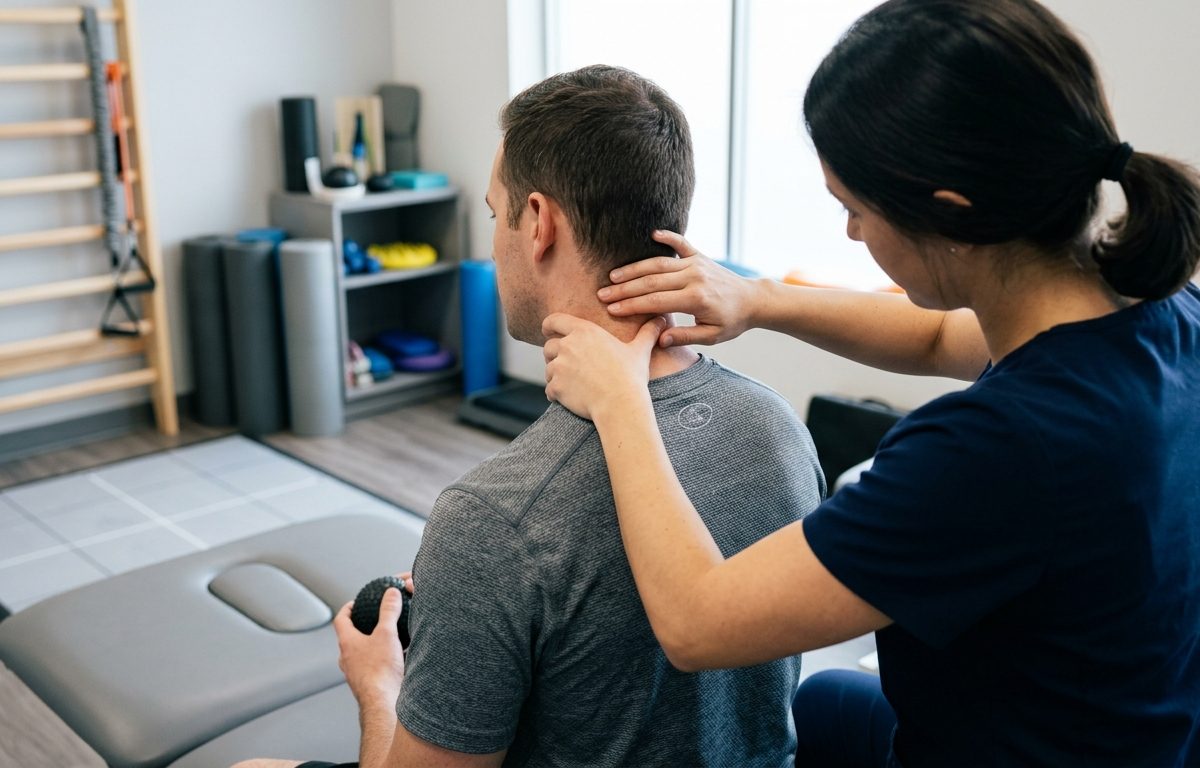
- cervical range of motion and tenderness patterns,
- eye movement and visual tracking checks,
- vestibular and balance screening,
- head movement tolerance,
- activity or exertion tolerance review, and
- review of prior imaging, referrals, or emergency care when relevant.
At a clinic using a functional neurology and rehabilitation lens, this type of workup is meant to clarify which symptom generators are most likely involved. It is not a promise that every symptom comes from one mechanism or that every patient follows the same recovery path. Instead, it helps build a more targeted rehabilitation plan around the person’s actual presentation.
When to seek prompt medical attention
Some post-injury symptoms should not wait for a routine outpatient visit. Seek urgent medical care right away if symptoms include worsening severe headache, repeated vomiting, unusual drowsiness, new weakness, confusion that is getting worse, seizure, slurred speech, loss of consciousness, or significant neurologic change.
Even without those red flags, it is reasonable to get checked when concussion and neck pain symptoms are not improving, interfere with work or school, or make routine activities like reading, driving, and exercise feel unusually hard.
How rehabilitation may be approached
Once serious red flags have been ruled out, rehabilitation often works best when it matches the actual symptom profile. Persistent symptoms after concussion are often managed with active, symptom-limited rehabilitation rather than prolonged inactivity alone.
Depending on findings, a rehabilitation plan may include:
- graded return-to-activity guidance,
- cervical mobility and stability work,
- balance and vestibular exercises,
- visual tracking or gaze stabilization work,
- modification of screen, reading, and driving loads, and
- education about pacing and symptom triggers.
This is where the neck can matter more than many people expect. If cervical dysfunction is aggravating dizziness and headache, addressing only one part of the problem may leave progress incomplete. That is one reason combined cervicovestibular strategies have received attention in persistent symptom care.
Why the timing of care matters
Many people hope symptoms will simply fade with time. Sometimes they do. But when the symptom cluster includes neck pain, visual strain, dizziness, and headache, waiting too long can make daily patterns harder to break. People often start avoiding movement, screens, exercise, or busy environments because symptoms spike. That avoidance may be understandable, but it can shrink activity tolerance over time.
Early, appropriate guidance does not mean pushing through symptoms aggressively. It means identifying triggers, pacing correctly, and using findings from the evaluation to decide what kind of progression makes sense. For some people that starts with cervical loading tolerance. For others it starts with visual motion, balance, or exertional thresholds.
How concussion and neck pain affect everyday life
One reason this topic matters is that the symptoms often hit normal routines in subtle ways before they become severe. A person may be able to work, but only with more headache by the afternoon. They may tolerate short drives but feel worse after checking blind spots. They may handle quiet rooms but struggle in bright stores, crowded offices, or busy family events.
These patterns are useful clues. They help show whether head motion, visual complexity, posture, concentration, or cumulative activity load is likely driving symptom flare-ups. At San Diego Chiropractic Neurology, those real-world patterns can help shape decisions about rehabilitation priorities and expectations.
Patients dealing with dizziness or visual motion sensitivity may also benefit from related resources on persistent concussion symptoms, vertigo and dizziness, and rehabilitation options such as vestibular therapy or neuro-visual rehabilitation.
What to expect from an evaluation in San Diego
For people searching locally for concussion and neck pain treatment, the biggest value in an evaluation is clarity. The visit should help answer practical questions:
- Does the symptom pattern look more cervical, vestibular, visual, exertional, or mixed?
- What activities are most likely to aggravate the system right now?
- What types of rehabilitation may make sense first?
- When is co-management or outside medical referral needed?
That kind of structured assessment can be more useful than generic reassurance alone, especially if symptoms have lingered beyond the first days or weeks after injury.
When symptoms have lasted longer than expected
If symptoms have persisted for weeks, that does not automatically mean something severe has been missed. It does mean the case deserves a more careful breakdown. Persistent post-concussion symptoms can be influenced by several overlapping systems, and the neck is one of the most commonly overlooked pieces when headache and dizziness remain active.
A good next step is often a focused exam that looks for what is still being provoked, what has improved, and what has stalled. Recovery plans are usually better when they are built around those specifics instead of broad assumptions.
Final thoughts
Concussion and neck pain treatment is often less about finding one perfect label and more about identifying the combination of factors keeping symptoms active. When the same injury affects the brain, the cervical spine, and the body’s balance systems at once, recovery can feel uneven. That does not mean progress is impossible. It usually means the evaluation needs to be more complete.
Call (619) 344-0111 or book a free consultation to learn whether a structured evaluation at San Diego Chiropractic Neurology may help clarify the next step.
Medical disclaimer: This article is for educational purposes only and is not medical advice, diagnosis, or emergency care. If you have severe or worsening symptoms after a head or neck injury, seek urgent medical attention.
FAQs
Can a concussion cause neck pain?
Yes. The same force that causes a concussion can also strain the cervical spine. That is why headache, dizziness, and neck stiffness often appear together after the same event.
How do you tell the difference between whiplash and concussion symptoms?
They can overlap, and both may occur together. A proper evaluation looks at neurologic, cervical, vestibular, and visual findings rather than trying to guess from one symptom alone.
When should neck pain after a concussion be checked right away?
Seek prompt medical care for worsening severe headache, repeated vomiting, progressive confusion, new weakness, seizure, or other major neurologic changes. Routine evaluation is also reasonable if symptoms are not improving or interfere with daily life.
Can neck issues make dizziness and headaches worse after a concussion?
Yes. Cervical dysfunction can contribute to dizziness, headache, and a sense of imbalance, especially when head movement or posture triggers symptoms.
References
- Marshall S, Bayley M, McCullagh S, et al. Clinical Practice Guideline for the Rehabilitation of Adults with Moderate to Severe TBI and Persistent Symptoms After Concussion. Ontario Neurotrauma Foundation, updated guidance. https://concussionsontario.org/sites/default/files/2023-03/First_Edition.pdf
- Cheever K, McDevitt J, Phillips J, Kawata K, Tierney R. Cervical Injury Assessments for Concussion Evaluation: A Review. J Athl Train. 2021. https://pmc.ncbi.nlm.nih.gov/articles/PMC5264559/
- Lumba-Brown A, Yeates KO, Sarmiento K, et al. Centers for Disease Control and Prevention Guideline on the Diagnosis and Management of Mild Traumatic Brain Injury Among Children. JAMA Pediatr. 2018. https://pmc.ncbi.nlm.nih.gov/articles/PMC7006878/
- Schneider KJ, Leddy JJ, Guskiewicz KM, et al. Rest and treatment/rehabilitation following sport-related concussion: a systematic review. Br J Sports Med. 2017;51(12):930-934. https://bjsm.bmj.com/content/51/12/930
- Reneker JC, Cheruvu VK, Yang J, James MA, Cook CE. Physical examination of dizziness after concussion: a pilot study. J Neurol Phys Ther. 2017. https://pmc.ncbi.nlm.nih.gov/articles/PMC5826081/
Not sure what is driving your symptoms?
Talk with our Functional Neurology Trained team on a free phone consultation. We will tell you honestly whether we can help.