Concussion and Anxiety Symptoms: Why They Can Show Up Together
Free phone consultation with our San Diego functional neurology team. No obligation.
Concussion and anxiety symptoms often show up together, especially in the days and weeks after a head injury. For some people, the anxiety feels new and surprising. For others, an existing tendency toward anxiety becomes harder to manage once headaches, dizziness, sleep disruption, brain fog, and sensory overload enter the picture.
That overlap matters. A concussion can affect how the brain processes motion, light, sound, effort, and stress. At the same time, the experience of feeling off-balance, mentally slowed down, or physically unpredictable can make the nervous system feel more guarded and reactive. In other words, the anxiety is not always separate from the concussion experience. In many cases, it is part of the broader symptom pattern that needs to be understood clearly.
At San Diego Chiropractic Neurology, the clinical goal is not to reduce everything to a single label. The goal is to look at the full picture: concussion history, symptom triggers, sleep, neck involvement, visual strain, balance changes, exertional tolerance, and autonomic stress responses. That kind of structured evaluation can help explain why symptoms feel the way they do and what kind of rehabilitation may fit best.
Can Anxiety Be Part of Concussion Recovery?
Yes. Anxiety can be part of concussion recovery. Research on persistent post-concussion symptoms consistently includes emotional symptoms alongside headache, dizziness, fatigue, concentration trouble, and sleep problems. In adults, persistent post-concussion symptoms are often associated with higher anxiety and depression scores than those seen in people who recovered more quickly or in healthy comparison groups.
That does not mean every anxious feeling after a concussion reflects a primary mental health disorder. Sometimes anxiety is the direct result of symptom unpredictability. If a person feels dizzy in a grocery store, overwhelmed by screens, exhausted after normal activity, or unable to trust their focus while driving, the nervous system may stay on alert. That alert state can feel like anxiety, panic, internal restlessness, or a sense that the body is not settling down.
At the same time, anxiety can also become its own important recovery factor. Early post-injury anxiety has been linked with greater symptom burden, and pre-existing mental health history can influence who takes longer to recover. That is why a good concussion evaluation should take emotional symptoms seriously without assuming they explain everything.
Why Concussion and Anxiety Symptoms Often Reinforce Each Other
Many patients expect concussion recovery to be mostly about headaches or memory problems. In practice, the nervous system effects can be broader. Several post-concussion symptoms can push the brain and body into a more reactive state:
- Dizziness or motion sensitivity: Feeling unsteady or visually overwhelmed can create a persistent sense of threat.
- Light and screen sensitivity: Bright environments and visual strain can increase irritability, tension, and avoidance.
- Sleep disruption: Poor sleep lowers resilience and often makes both cognitive and emotional symptoms feel worse.
- Headache and neck pain: Constant discomfort can keep the body in a guarded state.
- Exercise intolerance: When heart rate rises quickly or activity worsens symptoms, patients may begin to fear movement or normal exertion.
- Brain fog: Feeling unlike yourself at work, school, or home can be unsettling and socially stressful.
This pattern matters because anxiety after concussion is not always coming from one source. It may reflect a mix of symptom physiology, uncertainty, reduced activity, missed work or school demands, and fear about whether recovery is really happening. Studies have also shown that psychological factors such as anxiety, depression, and fear avoidance are associated with greater acute concussion symptom burden.
What Anxiety After a Concussion Can Feel Like
Not everyone uses the word anxiety. Some patients describe:
- a racing or unsettled feeling in the body
- panic-like episodes in crowded or visually busy places
- increased irritability or emotional reactivity
- difficulty calming down after activity
- fear of symptoms coming back when driving, exercising, or working
- trouble sleeping because the brain feels “on”
- worry about whether something more serious was missed
Those patterns can overlap with dizziness, visual motion sensitivity, autonomic stress responses, and sensory overload. For that reason, the most useful question is often not just “Do you have anxiety?” but “When does it happen, what triggers it, and what other symptoms rise with it?” That is the kind of history that can make the rest of the plan much more precise.
When Symptoms Suggest More Than Stress Alone
Some patients are told to simply rest more or worry less. That can be frustrating when their symptoms reliably flare in specific settings. Clues that concussion-related anxiety symptoms may be tied to other neurologic or rehabilitation targets include:
- symptoms increase in grocery stores, big-box stores, or crowded restaurants
- reading, scrolling, or computer work triggers uneasiness or head pressure
- quick head turns or busy traffic scenes increase body tension and unease
- exercise brings on dizziness, pressure, or a panicky internal surge
- neck pain and headaches rise at the same time as anxious feelings
- poor sleep makes the next day’s emotional symptoms much more intense
Patterns like these can point toward issues worth evaluating more directly, including vestibular dysfunction, oculomotor strain, cervicogenic contributions, autonomic dysregulation, or pacing problems during recovery. That is one reason concussion care should be individualized rather than based on a one-size-fits-all checklist.
How a Concussion Evaluation Can Help Clarify the Picture
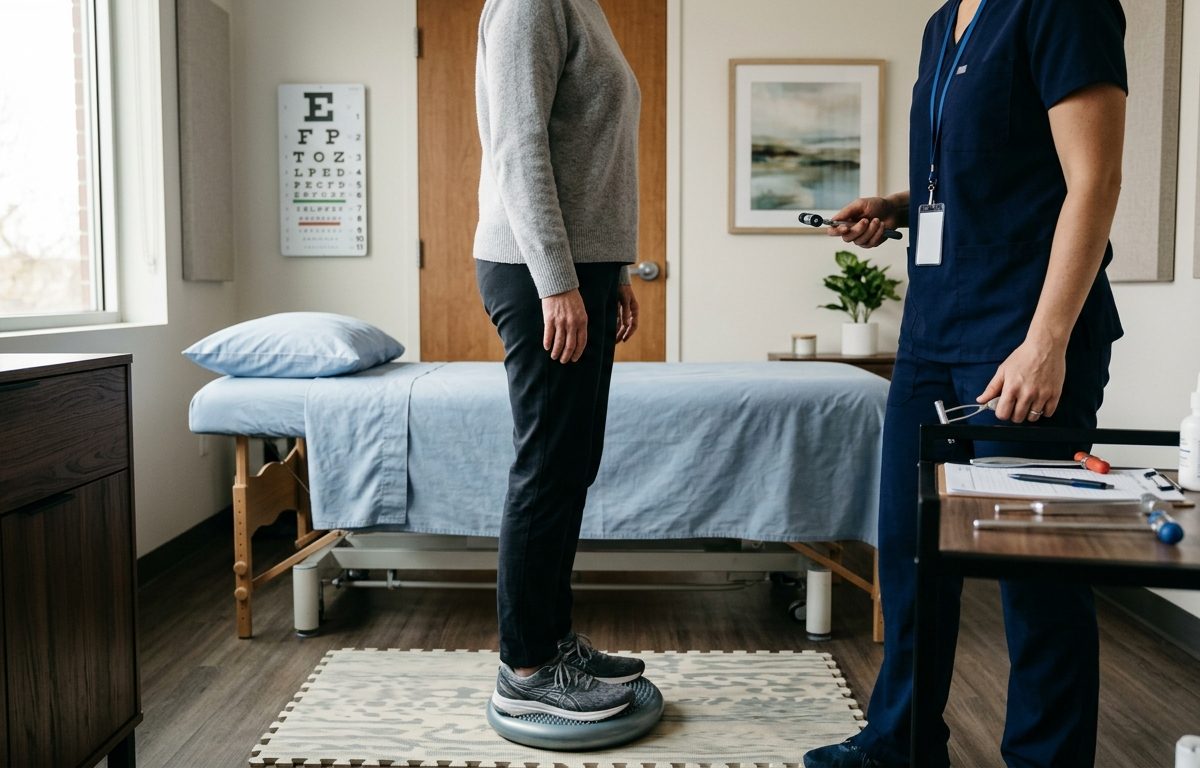
A structured concussion evaluation should do more than confirm that symptoms exist. It should help explain why they are persisting and what systems may be involved. Depending on the case, that can include looking at:
- symptom timeline and injury history
- visual tracking, convergence, and near-point strain
- balance, motion sensitivity, and dizziness triggers
- neck irritation, posture, and headache patterns
- exercise tolerance and recovery after exertion
- sleep quality and fatigue patterns
- stress response patterns and daily activity tolerance
At this clinic, that evaluation is used to guide rehabilitation planning, not to force every symptom into one explanation. Some patients need more emphasis on vestibular therapy. Others need more support for visual symptoms through neuro-visual rehabilitation. Others need pacing, graded exposure to activity, and strategies to improve tolerance while the nervous system becomes less reactive. Patients dealing with broader concussion care often benefit when those pieces are connected rather than addressed in isolation.
Where Conventional Care Fits In
Conventional medical care still matters. A primary care clinician, urgent care, emergency clinician, neurologist, psychologist, psychiatrist, or licensed therapist may all play important roles depending on symptom severity and timing. If anxiety is severe, worsening, associated with panic, causing major sleep loss, or interfering with safety, more direct mental health support may be appropriate.
That is especially important when there is a history of anxiety, depression, trauma, or significant life stressors that may affect recovery. Evidence reviews support psycho-education, cognitive behavioral therapy, and graded return-to-activity strategies in appropriate persistent post-concussion cases. In other words, emotional symptoms should not be minimized, and they also should not automatically replace a full neurologic and rehabilitation workup.
The Clinic’s Functional Neurology and Rehabilitation Role
For concussion-related symptoms, the clinic’s role is to assess and support the systems involved in neurologic performance and recovery. That may include helping improve visual-vestibular tolerance, motion processing, balance, symptom pacing, exertional tolerance, and regulation of the nervous system during daily activity. The focus is on rehabilitation and functional improvement rather than on making broad claims about curing every symptom through one method.
That distinction matters. When a patient has concussion and anxiety symptoms, the question is often: what is keeping the nervous system reactive, and what can be trained or supported more effectively? In some cases, rehabilitation targets are the biggest driver. In others, coordinated mental health care is a major part of recovery. Often, both layers matter.
What Patients in San Diego Often Want to Know
Many people in San Diego are trying to decide whether they should wait it out, return to activity, or book a more complete evaluation. That decision usually becomes clearer when symptoms are lingering, recurring with specific triggers, or affecting work, driving, school, workouts, or family life.
If you feel “emotionally off” after a concussion but also notice dizziness, visual overload, brain fog, poor stamina, or neck-driven symptom spikes, it may be worth looking beyond stress alone. The body and brain often give more clues than people realize when the right questions are asked.
When to Seek Help Sooner
You should seek timely evaluation if anxiety symptoms after concussion are:
- getting worse instead of better
- lasting beyond the early recovery window
- paired with major sleep disruption or panic-like episodes
- triggered consistently by motion, screens, reading, or exertion
- making work, school, driving, or exercise hard to tolerate
- occurring along with significant headaches, dizziness, or neck pain
If there are safety concerns, suicidal thoughts, severe mood changes, fainting, new neurologic red flags, or rapidly worsening symptoms, emergency or urgent medical evaluation is the right next step.
Next Steps
Concussion and anxiety symptoms can be real, disruptive, and confusing. They also can be assessed in a more structured way than many patients are led to believe. When the symptom pattern is broken down carefully, it is often possible to see which triggers are emotional, which are sensory, which are autonomic, and which are tied to specific neurologic or rehabilitation targets.
Call (619) 344-0111 or book a free consultation to discuss whether a focused concussion evaluation is the right next step.
Frequently Asked Questions
Can a concussion cause anxiety symptoms even if I never had anxiety before?
Yes. Anxiety symptoms can begin after a concussion even without a prior history. In some cases they are tied to dizziness, sensory overload, poor sleep, headache, or the stress of unpredictable recovery.
How long can anxiety symptoms last after a concussion?
The timeline varies. Many people improve in the early recovery period, but a smaller group continues to have symptoms beyond that window. If symptoms are lingering or interfering with daily life, a more complete evaluation may help clarify why.
What symptoms suggest post-concussion anxiety is being made worse by other problems?
Common clues include symptoms that flare in busy visual environments, while reading or using screens, after exercise, with fast head motion, or when headaches and neck pain increase at the same time.
When should I seek evaluation for anxiety symptoms after a concussion?
Seek evaluation when symptoms are worsening, not improving, or limiting work, school, driving, sleep, or exercise. You should also seek faster help if symptoms feel severe or are affecting safety.
What kind of non-medication support may help?
Depending on the symptom profile, helpful support may include education, pacing, graded return to activity, vestibular or visual rehabilitation, sleep support strategies, and coordinated mental health care when needed.
Medical disclaimer: This article is for educational purposes only and is not medical advice, diagnosis, or a substitute for individualized care. If you have severe, worsening, or urgent symptoms, seek appropriate medical attention right away.
References
- Counotte M, et al. A Systematic Review of Treatments of Post-Concussion Symptoms. J Clin Med. 2022. https://pmc.ncbi.nlm.nih.gov/articles/PMC9604759/
- Polinder S, et al. Mental Health Outcomes Across the Lifespan in Individuals With Persistent Post-Concussion Symptoms: A Scoping Review. Front Neurol. 2022. https://pmc.ncbi.nlm.nih.gov/articles/PMC9035995/
- Lefebvre M, et al. Athlete Fear Avoidance, Depression, and Anxiety Are Associated with Acute Concussion Symptoms in Athletes. J Clin Med. 2024. https://pmc.ncbi.nlm.nih.gov/articles/PMC11050826/
Not sure what is driving your symptoms?
Talk with our Functional Neurology Trained team on a free phone consultation. We will tell you honestly whether we can help.