Chiropractic Neurology in San Diego: A Brain-Based Approach to Complex Neurologic Conditions
Free phone consultation with our San Diego functional neurology team. No obligation.
Chiropractic Neurology in San Diego: A Brain-Based Approach to Complex Neurologic Conditions
Many patients living with persistent vertigo, post-concussion symptoms, chronic migraines, or POTS have seen multiple providers — primary care physicians, neurologists, ENT specialists — and still don't have a clear rehabilitation plan. Chiropractic neurology, also called functional neurology, is a post-doctoral specialty that addresses exactly this gap. It uses non-invasive, neuroplasticity-based assessments and rehabilitation protocols to target the neurologic mechanisms underlying these conditions.
At San Diego Chiropractic Neurology, the clinical team is Functional Neurology Trained through the American Chiropractic Neurology Board (ACNB) curriculum and applies functional neurology principles to vestibular rehabilitation, concussion recovery, autonomic regulation support, and neuro-musculoskeletal care — without surgery or pharmaceuticals.
What Is Chiropractic Neurology?
Chiropractic neurology is a recognized post-doctoral specialty requiring more than 300 hours of advanced training in clinical neuroscience, neurologic examination, and brain-based rehabilitation, followed by a rigorous examination administered by the ACNB.1 Practitioners who complete this pathway are considered trained in functional neurology.
The specialty is grounded in the principle of neuroplasticity — the brain's and nervous system's capacity to reorganize, adapt, and recover function in response to targeted stimulation. Rather than managing symptoms with medication alone, Functional Neurology Trained chiropractors design individualized rehabilitation programs that stimulate specific neurologic pathways to improve function.
How It Differs from Traditional Neurology
Traditional neurologists are medical doctors who diagnose and treat neurologic diseases — often using imaging, medication, and surgical referral. Functional Neurology Trained chiropractors are doctoral-level clinicians who specialize in non-invasive, rehabilitation-based approaches to neurologic dysfunction. The two specialties complement rather than compete with each other.
A patient with post-concussion syndrome, for example, may receive a clear MRI from a traditional neurologist — ruling out structural injury — but still experience debilitating symptoms. A Functional Neurology Trained chiropractor evaluates the functional deficits driving those symptoms: vestibulo-ocular reflex dysfunction, cervicogenic involvement, oculomotor control deficits, and autonomic dysregulation. From there, a targeted rehabilitation plan addresses each identified deficit.
How It Differs from Standard Chiropractic Care
Standard chiropractic care focuses primarily on the spine, joints, and musculoskeletal system. Chiropractic neurology expands that scope considerably. A functional neurology evaluation includes detailed neurologic examination, vestibular and balance testing, oculomotor assessment, cognitive screening, and autonomic evaluation. Treatment extends beyond spinal manipulation to include sensorimotor rehabilitation, gaze stabilization exercises, vestibular repositioning, proprioceptive training, and brain-stimulation protocols.
Conditions Addressed at San Diego Chiropractic Neurology
The clinic's functional neurology team works with patients across a range of neurologic and neuro-musculoskeletal conditions.
Concussion and Post-Concussion Syndrome
Mild traumatic brain injury (mTBI) and post-concussion syndrome are among the most common presentations in a functional neurology setting. Research shows that multimodal rehabilitation — including vestibular exercises, oculomotor training, and cervicogenic management — significantly accelerates recovery compared to rest alone.2,3
The clinic's post-concussion rehabilitation program is built around a detailed neurologic assessment that identifies which systems are underperforming: vestibular, visual, autonomic, or cervicogenic. Rehabilitation targets those systems directly. Patients who have been symptomatic for months or years following a concussion — experiencing headaches, dizziness, brain fog, light sensitivity, or cognitive difficulty — are common candidates for this approach.
Learn more about the clinic's approach to concussion rehabilitation in San Diego.
Vertigo and Vestibular Disorders
Benign paroxysmal positional vertigo (BPPV), vestibular neuritis, and central vestibular dysfunction require different rehabilitation strategies. Functional neurology evaluation identifies the type and origin of vestibular dysfunction — peripheral versus central, canal versus otolith — and applies evidence-based protocols accordingly.
Vestibular rehabilitation therapy (VRT) has Level I evidence supporting its effectiveness for BPPV and unilateral vestibular hypofunction.4 The clinical team integrates VRT, gaze stabilization training, and balance rehabilitation as part of a comprehensive vestibular program.
Explore the clinic's vertigo and vestibular care and dedicated vestibular therapy services.
Migraines and Headache
Migraine is a complex neurologic condition with identifiable triggers, prodromal patterns, and cortical spreading depression as a core mechanism. Functional neurology evaluations for migraine patients look beyond symptom management to identify sensory hypersensitivity, vestibular involvement, cervicogenic triggers, and autonomic contributions to headache frequency and severity.
Non-invasive rehabilitation approaches — including sensory desensitization, cervical rehabilitation, and vagus nerve stimulation protocols — can reduce migraine frequency and improve functional tolerance. Learn more about migraine care at the clinic.
POTS and Dysautonomia
Postural Orthostatic Tachycardia Syndrome (POTS) and related dysautonomia conditions involve dysfunction of the autonomic nervous system — the system that regulates heart rate, blood pressure, circulation, and gastrointestinal function. Conventional management typically includes volume loading, compression therapy, and medications such as beta-blockers or fludrocortisone.
San Diego Chiropractic Neurology supports patients with POTS by addressing the neurologic and autonomic regulation components of their condition — specifically supporting autonomic performance, tolerance, and rehabilitation through evidence-based conditioning protocols and neurologic rehabilitation strategies.5,6 The clinic's role is to complement conventional medical management by targeting the neurologic mechanisms that contribute to orthostatic intolerance, exercise intolerance, and related dysautonomia symptoms.
This approach integrates recumbent exercise reconditioning, autonomic assessment, and rehabilitation protocols designed to improve cardiovascular and neurologic regulatory capacity. The clinic does not replace a cardiologist or autonomic specialist for medication management or diagnostic workup, but serves as the neurologic rehabilitation component of a broader care team.
Read more about POTS and dysautonomia support and vagus nerve therapy at the clinic.
Sciatica, Disc Conditions, and Neuro-Musculoskeletal Pain
The clinic also provides standard chiropractic care for spinal conditions including herniated discs, sciatica, and degenerative disc disease. When neurologic involvement is present — such as radiculopathy, altered deep tendon reflexes, or sensory deficits — the functional neurology layer informs both diagnosis and rehabilitation planning.
What to Expect at a Functional Neurology Evaluation
An initial evaluation at San Diego Chiropractic Neurology is more comprehensive than a typical chiropractic intake. It typically includes:
- Detailed history review — onset, prior imaging, previous treatments, medication list, and functional limitations
- Neurologic examination — cranial nerve testing, deep tendon reflexes, coordination, and sensorimotor screening
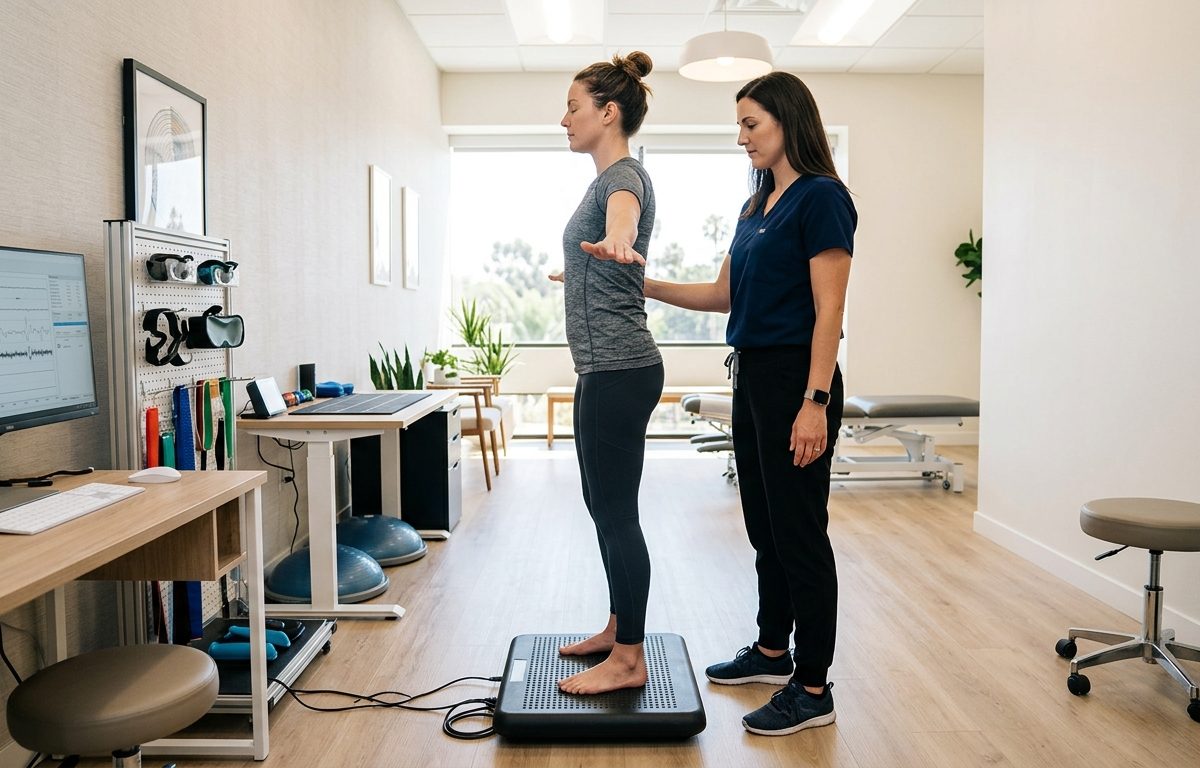
- Vestibular and balance assessment — Dix-Hallpike, head impulse testing, dynamic balance, and gaze stability
- Oculomotor evaluation — saccades, smooth pursuit, convergence, and fixation stability
- Autonomic screening — orthostatic vitals, heart rate variability review when indicated
- Cervical and spinal evaluation — range of motion, segmental assessment, and postural analysis
After the evaluation, the clinical team develops an individualized rehabilitation plan. Programs typically involve a structured series of visits over several weeks, with reassessment checkpoints to measure functional improvement and adjust protocols as needed. The frequency and duration depend on the condition being addressed and the patient's response to care.
Evidence Behind Functional Neurology Rehabilitation
The rehabilitation approaches used in functional neurology are grounded in peer-reviewed evidence across multiple disciplines. Vestibular rehabilitation has Level I evidence for BPPV and vestibular hypofunction.4 Oculomotor rehabilitation demonstrates effectiveness for post-concussion visual dysfunction including convergence insufficiency.7 Exercise-based autonomic reconditioning is a first-line non-pharmacologic recommendation for POTS.5,6 Multimodal concussion rehabilitation programs have been shown to significantly outperform rest-alone protocols.2,3
This training pathway ensures that functional neurology trained doctors are grounded in the current evidence base for these approaches, and that their clinical reasoning is held to the standards of a recognized specialty board.
Why San Diego Chiropractic Neurology
San Diego Chiropractic Neurology is one of a limited number of clinics in the region with Functional Neurology Trained clinicians on staff. The practice integrates functional neurology, vestibular rehabilitation, neuro-visual rehabilitation, vagus nerve therapy, low-level laser therapy, and spinal decompression under one roof — making it possible to address multi-system neurologic presentations without coordinating care across multiple facilities.
The clinic serves patients throughout San Diego County who are looking for a non-invasive, rehabilitation-based approach to complex neurologic, vestibular, autonomic, and concussion-related conditions.
Frequently Asked Questions
What is chiropractic neurology and how is it different from traditional neurology?
Chiropractic neurology is a post-doctoral specialty focused on non-invasive, neuroplasticity-based rehabilitation for neurologic dysfunction. Traditional neurology is a medical specialty that diagnoses and treats neurologic diseases, often using imaging, medication, and surgical referral. The two are complementary: a traditional neurologist rules out structural or pathologic disease, while a Functional Neurology Trained chiropractor designs a functional rehabilitation plan for the deficits that remain.
What conditions does a Functional Neurology Trained chiropractor address?
Common presentations include post-concussion syndrome, BPPV and vestibular disorders, chronic migraines, POTS and dysautonomia (neurologic component), brain fog, and neuro-musculoskeletal conditions such as sciatica and herniated disc with radiculopathy. The evaluation identifies which neurologic systems are underperforming and builds a rehabilitation program around those findings.
Is chiropractic neurology safe and evidence-based?
Yes. The rehabilitation approaches used — vestibular therapy, oculomotor training, sensorimotor exercises, autonomic reconditioning, and spinal rehabilitation — are grounded in peer-reviewed research. They are non-invasive and do not involve surgery or pharmaceuticals. The functional neurology training pathway holds practitioners to rigorous clinical and academic standards.
How many visits does a functional neurology program typically involve?
This varies based on the condition and the patient's response. A post-concussion or vestibular rehabilitation program may involve 8–16 visits over 4–8 weeks, with reassessment at defined intervals. Complex chronic presentations may require a longer program. The clinical team establishes a clear plan with goals and benchmarks at the outset of care.
How is San Diego Chiropractic Neurology different from a standard chiropractic office?
The clinic's doctors are trained in functional neurology and provide a full functional neurology evaluation — including vestibular, oculomotor, autonomic, and neurologic assessment — not available at a standard chiropractic practice. Services extend to vestibular therapy, neuro-visual rehabilitation, vagus nerve therapy, and low-level laser therapy alongside traditional chiropractic and spinal decompression care.
Call (619) 344-0111 or book a free consultation to speak with the San Diego Chiropractic Neurology team about whether a functional neurology evaluation is right for your condition.
Medical Disclaimer: The information provided in this article is for educational purposes only and does not constitute medical advice, diagnosis, or treatment. Individual results vary. Consult a qualified healthcare provider before beginning any new treatment program.
References
- American Chiropractic Neurology Board. Diplomate Certification Standards. acnb.org, 2023.
- Leddy JJ, et al. Rehabilitation of Concussion and Post-concussion Syndrome. Sports Health. 2012. PMID: 23016100.
- Silverberg ND, et al. Management of Concussion and Mild Traumatic Brain Injury. Lancet Neurology. 2020. PMID: 32702338.
- Hall CD, et al. Vestibular Rehabilitation for Peripheral Vestibular Hypofunction. Physical Therapy. 2022. PMID: 35482070.
- Raj SR. Postural Tachycardia Syndrome (POTS). Circulation. 2013. PMID: 23797296.
- Fu Q, Levine BD. Exercise and Non-pharmacological Treatment of POTS. Heart Rhythm. 2018. PMID: 29680487.
- Thiagarajan P, Ciuffreda KJ. Visual Motor Rehabilitation after mTBI. Brain Injury. 2014. PMID: 24397305.
Not sure what is driving your symptoms?
Talk with our Functional Neurology Trained team on a free phone consultation. We will tell you honestly whether we can help.