BPPV Testing San Diego: What to Expect
Free phone consultation with our San Diego functional neurology team. No obligation.
If brief spinning episodes happen when rolling in bed, looking up, bending down, or turning quickly, many people wonder whether they need BPPV testing San Diego patients often search for before booking a dizziness visit. BPPV stands for benign paroxysmal positional vertigo, a common cause of short bursts of vertigo triggered by changes in head position. The key word is testing. Good care starts by confirming whether the pattern really fits BPPV and whether another vestibular or neurologic issue may be contributing.
At San Diego Chiropractic Neurology, the goal of a dizziness evaluation is not to guess. It is to look at symptom triggers, eye movements, balance responses, positional findings, and related neurologic factors so the team can decide whether the pattern matches BPPV, another inner-ear problem, migraine-related dizziness, concussion-related dizziness, or a mixed presentation. Clinical guidelines support positional testing as the main way BPPV is identified, especially the Dix-Hallpike maneuver and the supine roll test when horizontal canal involvement is suspected.
For many people in San Diego, that clarity matters as much as symptom relief. If the problem is truly BPPV, the next step is usually a canalith repositioning approach. If the pattern is incomplete or atypical, the evaluation may need to move beyond a simple positional vertigo label. That is why a structured exam can save time and reduce confusion early in the process.
What is BPPV?
BPPV is a position-triggered vertigo pattern linked to small calcium carbonate particles that move into one of the inner-ear balance canals. When the head changes position relative to gravity, those particles can disturb normal motion signals and create a spinning sensation. National vestibular health sources describe BPPV as one of the most common causes of vertigo, especially when symptoms are brief and clearly tied to head position changes.
People often describe BPPV episodes as:
- spinning for a few seconds after rolling in bed
- vertigo when looking up or tipping the head back
- dizziness when bending forward
- nausea or motion sensitivity after the episode ends
- a lingering off-balance feeling between attacks
That said, not every position-triggered dizziness episode is BPPV. Similar complaints can occur with vestibular migraine, post-concussion dizziness, neck-related dizziness, and other vestibular disorders. That is one reason formal vertigo evaluation matters.
What happens during BPPV testing?
BPPV testing usually starts with a history. The doctor or clinician asks what movements trigger symptoms, how long each episode lasts, whether there is nausea, whether symptoms are tied to one side, and whether there are warning signs that suggest a more complex neurologic or medical picture. A good history helps decide whether classic BPPV testing is likely to be useful or whether additional screening should happen first.
From there, the positional portion of the exam usually includes one or both of these tests:
- Dix-Hallpike test: commonly used when posterior canal BPPV is suspected
- Supine roll test: commonly used when horizontal canal BPPV is suspected
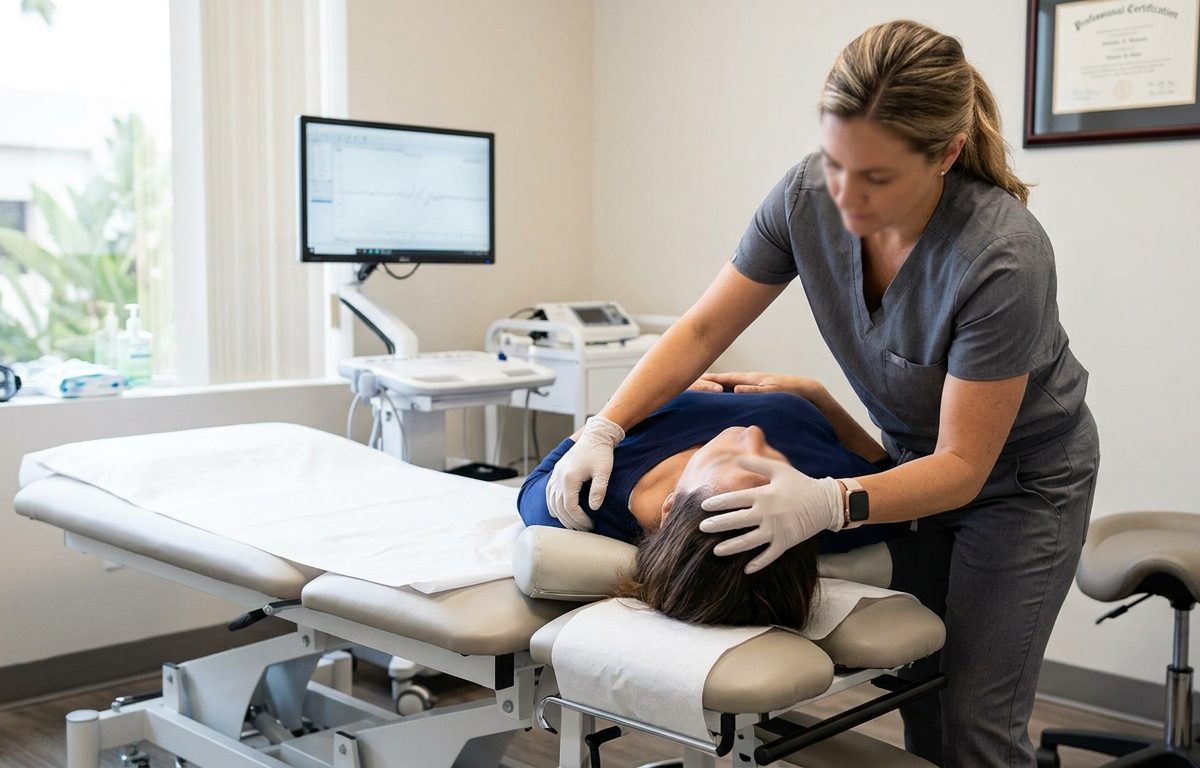
During these maneuvers, the clinician moves the head and body into specific positions while watching for vertigo symptoms and involuntary eye movements called nystagmus. Those eye movement patterns matter. They help determine whether the findings fit BPPV, which canal may be involved, and which side is more likely responsible.
At a clinic that also evaluates neurologic and vestibular function, the exam may include more than positional testing alone. Depending on the presentation, the team may also assess smooth pursuit, saccades, gaze stability, balance, cervical contribution, motion sensitivity, and symptom behavior during transitions. This can be especially useful when symptoms do not follow a textbook BPPV pattern.
Does BPPV testing make you dizzy on purpose?
Yes, sometimes briefly. The point of the test is to reproduce the position that triggers symptoms in a controlled setting. That helps the clinician observe exactly what your eyes and symptoms do in real time. Many patients feel a short burst of spinning during the maneuver, but the episode usually passes quickly. Even so, the test should be performed carefully, with clear instructions and enough support so the patient feels secure.
That temporary symptom provocation is not a sign that something is going wrong. It is often the diagnostic clue that helps distinguish BPPV from more vague dizziness complaints. If no symptoms or nystagmus appear, that does not always mean nothing is wrong. It may mean the issue is intermittent, the affected canal is different than expected, or the cause of dizziness may not be BPPV at all.
Why eye movements matter during positional vertigo testing
One of the biggest differences between a casual dizziness screen and a more precise exam is attention to nystagmus. Nystagmus is an involuntary rhythmic eye movement that can point toward a specific vestibular pattern. In classic BPPV, the direction and timing of nystagmus often help identify the affected canal and whether findings fit a peripheral positional vertigo pattern.
If the eye movement pattern is unusual, absent, persistent, or inconsistent with the history, that can change the next step. Instead of assuming the problem is simple BPPV, the clinician may need to think about alternative explanations such as vestibular migraine, concussion-related vestibular dysfunction, or other neurologic causes. This is where a more complete dizziness exam can prevent the wrong label from sticking.
What if the symptoms do not match classic BPPV?
This is common enough that patients should know about it before the visit. Some people come in expecting a quick repositioning maneuver, but the test findings do not fully match classic posterior canal or horizontal canal BPPV. That does not mean the symptoms are imaginary. It means the pattern needs a better explanation.
Examples of non-classic presentations include:
- dizziness that lasts much longer than expected after position change
- motion sensitivity without clear spinning
- migraine history with light or sound sensitivity
- dizziness after concussion or whiplash
- visual motion sensitivity in busy stores or traffic
- imbalance that persists even when spinning episodes stop
In those cases, the clinic may recommend broader evaluation or rehabilitation planning rather than treating the issue like straightforward BPPV. That can include vestibular rehab strategies, gaze stabilization work, balance training, or further screening depending on the pattern. Patients dealing with dizziness after head injury, for example, may need a pathway closer to concussion evaluation than isolated positional vertigo care.
How long does BPPV testing take?
The positional testing itself is usually brief, but the full appointment may take longer because the history and differential screening matter. A straightforward case may become clear quickly. A more complicated case may require additional exam components to understand why dizziness keeps returning or why previous care did not help.
That is often the difference between a generic dizziness visit and a targeted vestibular assessment. If symptoms are recurrent, mixed, or accompanied by headaches, brain fog, neck pain, or imbalance, a longer evaluation can be more useful than rushing to a one-size-fits-all conclusion.
Can BPPV testing show which ear is involved?
Often, yes. In many cases, the side and canal can be inferred from the symptom response and the nystagmus pattern during testing. That matters because repositioning strategies depend on the suspected canal and side. If the side is unclear or the responses are inconsistent, treatment may be less efficient until the pattern is clarified.
This is one reason patients who have already tried internet self-maneuvers sometimes still feel stuck. If the wrong side or wrong canal is assumed, the maneuver may not match the actual problem. In other cases, the real issue may not be BPPV in the first place.
When BPPV testing is especially important
Testing can be particularly valuable when:
- you have never had a formal dizziness evaluation
- episodes keep recurring
- self-Epley attempts have not helped
- you feel off-balance even between episodes
- you also have headache, migraine, neck pain, or concussion history
- your symptoms happen in crowded visual environments as well as with position change
Many people in San Diego search for BPPV care only after weeks or months of uncertainty. In those cases, the best next step is often not another guess. It is a structured exam that can sort position-triggered vertigo from other vestibular patterns and point toward the right plan, whether that means repositioning, vestibular therapy, or a broader neurologic workup.
What happens after BPPV testing?
If the findings fit classic BPPV, guideline-supported care often includes a canalith repositioning maneuver chosen for the affected canal pattern. If symptoms improve but balance, gaze stability, or motion sensitivity still lag behind, some patients also benefit from a rehabilitation plan that addresses those remaining deficits.
If the exam does not support BPPV, the next step depends on what the evaluation shows. Some patients need more vestibular rehabilitation. Some need a migraine-informed dizziness workup, especially if they also have a history of headache or sensory sensitivity. Others need additional medical evaluation first if the presentation includes red flags. A clinic that looks at more than one system can help keep those branches organized instead of treating every dizzy patient the same way.
How San Diego Chiropractic Neurology approaches dizziness evaluation
At San Diego Chiropractic Neurology, BPPV testing is one part of a broader dizziness assessment. The team looks at how symptoms are triggered, what the eyes do during positional testing, how the balance system responds, and whether the pattern fits a peripheral vestibular problem alone or a more layered neurologic picture. That matters because patients often arrive with overlapping complaints such as vertigo, neck discomfort, visual motion sensitivity, migraines, or post-concussion symptoms.
The clinic uses a conservative, rehabilitation-focused model. If the pattern looks like classic BPPV, the exam helps identify that. If the pattern looks broader, the evaluation can guide the next step without overpromising. Patients who want a better understanding of the process can also review the clinic FAQs before booking.
When to seek care promptly
Not all dizziness should be handled like routine BPPV. Urgent medical care may be needed if dizziness is accompanied by new weakness, facial droop, slurred speech, severe new headache, fainting, chest pain, or other sudden neurologic symptoms. Those features can point away from a routine positional vertigo pattern and deserve immediate medical attention.
For non-emergency dizziness that keeps coming back, proper testing can shorten the path to answers. Instead of guessing whether symptoms are ear-related, migraine-related, concussion-related, or mixed, a structured evaluation can help sort that out early.
Final take
BPPV testing San Diego patients look for should do more than confirm that rolling over makes them dizzy. It should identify whether the pattern truly matches BPPV, which canal and side may be involved, and whether something else may be contributing. That is what turns a frustrating symptom into a more usable care plan.
If you have brief spinning with head movement, or if past repositioning attempts have not solved the problem, a structured vestibular and neurologic evaluation may be the best next step.
Call (619) 344-0111 or book a free consultation.
Medical disclaimer: This article is for educational purposes only and is not medical advice, diagnosis, or a substitute for emergency or physician care. Individual evaluation is needed to determine the cause of dizziness or vertigo symptoms.
FAQ
What is BPPV testing?
BPPV testing is a set of positional maneuvers used to see whether head-position changes trigger vertigo and characteristic eye movements that fit benign paroxysmal positional vertigo.
Does BPPV testing make you dizzy on purpose?
Usually, yes, but only briefly and in a controlled setting. Reproducing symptoms helps the clinician confirm whether the pattern truly fits BPPV.
How long does BPPV testing take?
The positional maneuvers themselves are usually short, but the full appointment may be longer if a broader dizziness or neurologic exam is needed.
Can BPPV testing show which ear is involved?
Often it can. The symptom pattern and the direction of nystagmus may help identify the involved side and canal.
What if my symptoms are not BPPV?
Then the next step may involve a broader vestibular, migraine, cervical, or concussion-related evaluation rather than a simple repositioning approach.
References
- Bhattacharyya N, Gubbels SP, Schwartz SR, et al. Clinical Practice Guideline: Benign Paroxysmal Positional Vertigo (Update). Otolaryngology–Head and Neck Surgery. 2017. https://pubmed.ncbi.nlm.nih.gov/28248609/
- National Institute on Deafness and Other Communication Disorders. Balance Disorders. https://www.nidcd.nih.gov/health/balance-disorders
- von Brevern M, Bertholon P, Brandt T, et al. Benign paroxysmal positional vertigo: diagnostic criteria. Journal of Vestibular Research. 2015. https://pubmed.ncbi.nlm.nih.gov/26485514/
Not sure what is driving your symptoms?
Talk with our Functional Neurology Trained team on a free phone consultation. We will tell you honestly whether we can help.