Cognitive Therapy (CRT) in San Diego, CA
After a brain injury or neurological illness, everyday tasks like remembering appointments or concentrating on work can become a struggle. At San Diego Chiropractic Neurology, we use Cognitive Rehabilitative Therapy (CRT) to help patients rebuild those mental skills. Our fun, gamified brain exercises tap into your brain's natural neuroplasticity to improve memory, focus, and thinking speed so you can regain independence in your daily life.
What Is Cognitive Rehabilitative Therapy?
Cognitive Rehabilitative Therapy is a structured, evidence-based program designed to restore mental skills that have been impaired by brain injury, stroke, neurological disease, or other causes of cognitive decline. Unlike general "brain games" you might find online, CRT is supervised by trained clinicians who assess your specific deficits and design a personalized training protocol that targets exactly the areas where you need improvement.
The brain has an extraordinary ability to reorganize itself—a property called neuroplasticity. When neural pathways are damaged, the brain can form new connections to compensate, but it needs the right stimulation to do so. CRT provides that stimulation through carefully calibrated exercises that progressively challenge your cognitive abilities, encouraging your brain to build stronger, more efficient pathways.
Cognitive Skills We Target
Every patient's cognitive profile is unique. During your initial assessment, we evaluate multiple domains of cognitive function to identify exactly where deficits exist. The primary areas we target include:
1. Memory (Short-Term & Long-Term)
Memory impairment is one of the most common complaints after brain injury. Patients may forget recent conversations, lose track of appointments, or struggle to recall names. Our memory exercises use spaced repetition, visual association techniques, and working memory challenges to strengthen both encoding (getting information into memory) and retrieval (getting it back out).
2. Attention & Concentration
Sustained attention—the ability to stay focused on a task—is often severely impacted after concussion or stroke. We train three types of attention: sustained attention (maintaining focus over time), selective attention (filtering out distractions), and divided attention (managing multiple tasks simultaneously). Exercises progress from simple single-focus tasks to complex multi-stimulus environments.
3. Processing Speed
Many patients describe feeling "mentally slow" after a brain injury—as though their brain is running in low gear. Processing speed exercises use timed reaction tasks, rapid visual scanning, and decision-making drills to help your brain process information faster. Improvement in this area often has the most noticeable real-world impact on daily function.
4. Executive Function
Executive function encompasses the higher-order skills that allow you to plan, organize, prioritize, and make decisions. After brain injury, patients often struggle with multitasking, problem-solving, and managing their schedule. We use task-switching exercises, planning simulations, and organizational strategy training to rebuild these critical life skills.
5. Visuospatial Skills & Verbal Fluency
Visuospatial skills help you navigate environments, judge distances, and understand spatial relationships. Verbal fluency affects your ability to find the right words and express yourself clearly. Both can be impaired after neurological injury, and both respond well to targeted rehabilitation exercises.
Signs You May Benefit from Cognitive Rehabilitation
How Our Cognitive Rehabilitation Program Works
Our CRT program follows a structured 5-phase approach designed to systematically rebuild your cognitive abilities from the ground up:
Phase 1: Comprehensive Cognitive Assessment
We begin with a thorough evaluation of your cognitive function using standardized neuropsychological screening tools. This assessment measures memory, attention, processing speed, executive function, and visuospatial skills—giving us a detailed map of your strengths and weaknesses. We also review your medical history, imaging results, and daily functional challenges to understand the full picture.
Phase 2: Personalized Training Protocol Design
Based on your assessment results, we design a customized training protocol that targets your specific deficits while leveraging your cognitive strengths. We set measurable goals tied to real-world function—for example, "remember a 5-item grocery list without writing it down" or "sustain focused reading for 30 minutes." This ensures every exercise has practical relevance to your life.
Phase 3: Guided Cognitive Training Sessions
During in-clinic sessions (typically 45–60 minutes, 2–3 times per week), you'll work through a combination of computer-based exercises, tabletop activities, and real-world task simulations. These might include memory recall games, attention filtering challenges, timed problem-solving puzzles, and multitasking drills. The exercises feel like games, but each one is scientifically designed to stimulate specific neural networks.
Phase 4: Progressive Difficulty & Complexity
As your brain adapts and strengthens, we progressively increase exercise difficulty. A memory exercise that started with 3 items might advance to 7. An attention task that began in a quiet environment might add background noise and visual distractions. This progressive overload principle—borrowed from physical rehabilitation—ensures continuous neuroplastic adaptation rather than plateau.
Phase 5: Functional Integration & Maintenance
The final phase focuses on transferring your improved cognitive skills to real-world situations. We practice strategies for managing your calendar, organizing your workspace, handling conversations in noisy environments, and other daily challenges. We also provide a home maintenance program of exercises you can continue independently to sustain your gains long-term.
Conditions That Respond to Cognitive Rehabilitation
- Concussion and post-concussion syndrome
- Traumatic brain injury (TBI) of all severity levels
- Stroke recovery (ischemic and hemorrhagic)
- Long-COVID cognitive symptoms ('brain fog')
- POTS and autonomic dysfunction with cognitive involvement
- Early-stage neurodegenerative conditions
- Chemotherapy-related cognitive changes ('chemo brain')
- Chronic migraine with cognitive impairment
Why Choose San Diego Chiropractic Neurology for Cognitive Rehabilitation?
Our clinic combines functional neurology expertise with cognitive rehabilitation to deliver results that standard therapy alone cannot match. Here's what sets our program apart:
- Clinician-supervised protocols: Every CRT program is designed and monitored by Functional Neurology Trained clinicians who understand the underlying brain mechanisms.
- Multi-modal integration: We combine cognitive exercises with complementary therapies like neuro-visual rehabilitation, vestibular rehabilitation, and vagus nerve stimulation for comprehensive brain recovery.
- Objective progress tracking: We re-test cognitive function at regular intervals using the same standardized tools, so you can see measurable improvement—not just subjective feelings of being "better."
- Real-world functional focus: Every exercise ties back to a practical life skill. We don't just improve your test scores—we improve your ability to work, drive, socialize, and live independently.
- Gamified, engaging approach: Our exercises are designed to be challenging but enjoyable, which increases motivation and compliance—two key factors in successful cognitive rehabilitation outcomes.
Frequently Asked Questions
Related Conditions
Concussion Recovery
Cognitive rehabilitation is a core component of concussion and post-concussion syndrome recovery.
Learn about Concussion RecoveryMigraine & Cognitive Symptoms
Chronic migraines can impair concentration and memory—CRT helps restore mental sharpness.
Learn about Migraine & Cognitive SymptomsPOTS & Brain Fog
Autonomic dysfunction often causes cognitive difficulties that respond to targeted rehabilitation.
Learn about POTS & Brain FogTreatments That May Help
Neuro-Visual Rehabilitation
Visual processing deficits often accompany cognitive impairment—neuro-visual rehabilitation complements CRT.
View serviceVestibular Therapy
Balance and spatial orientation training works alongside cognitive rehabilitation for comprehensive recovery.
View serviceVagus Nerve Therapy
Vagus nerve stimulation enhances neuroplasticity and can accelerate cognitive recovery outcomes.
View serviceReady to Rebuild Your Mental Sharpness?
Call us at (619) 344-0111 to schedule your cognitive assessment.
Related Articles From Our Blog
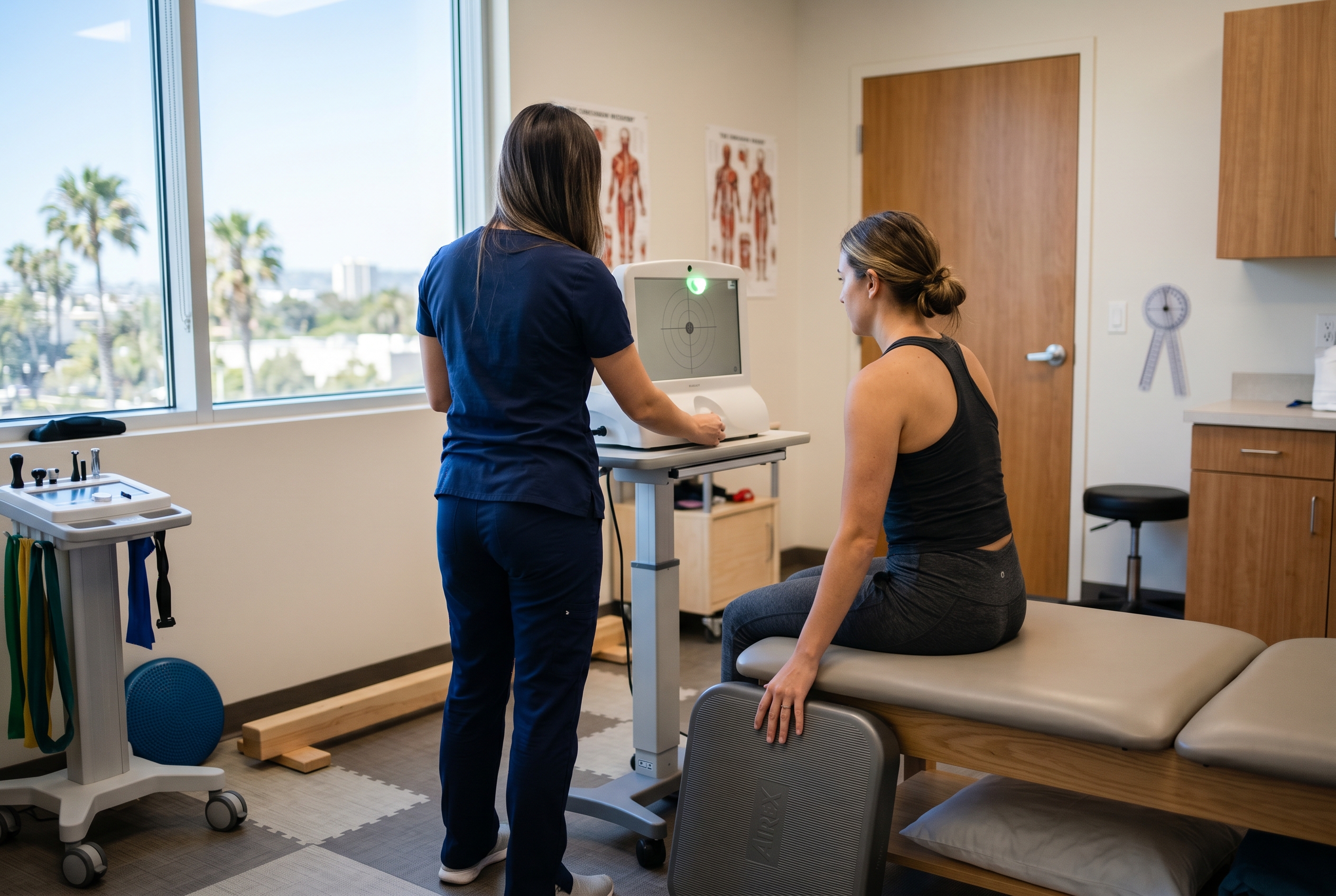
Concussion Symptoms Months Later? What They Actually Mean
Still have concussion symptoms months later? They often point to vestibular, visual, or autonomic issues that rest alone won't fix. Free eval in San Diego.
Read article
4 Benefits of BrainHQ and How It Can Improve Cognitive Health
BrainHQ has become a cutting-edge resource for those looking to improve their brain clarity in the field of cognitive health. We'll explore the reasons for...
Read article
How Does Traumatic Brain Injury Affect Learning?
How a traumatic brain injury affects memory, attention, and learning, plus rehab strategies for students and adults in San Diego.
Read article
Long-Term Effects of a Traumatic Brain Injury (TBI)
Long-term effects of a traumatic brain injury and what influences recovery. Rehab options for persistent post-concussion symptoms in San Diego.
Read article
Inside a San Diego concussion clinic visit
Looking for a concussion clinic in San Diego? Learn what a thorough evaluation covers and when rehabilitation-focused care may help.
Read article